
Magnesium in Prenatal Vitamins: What You Need
Published:Updated:
You're 14 weeks pregnant, exhausted but unable to settle, and suddenly waking with a painful charley horse at two in the morning. You turn your prenatal bottle around under the bathroom light and scan the label. Folate, iron, DHA, iodine, choline. But is there magnesium? And if there is, is it enough?
Most prenatal conversations focus on folate, iron, and DHA. Magnesium in prenatal vitamins often gets less attention, even though it helps the body manage energy, nerves, muscles, blood pressure, and the building work required for a growing baby. It also creates a practical puzzle: your total daily intake comes from food, your prenatal, and any separate magnesium supplement, not from one bottle alone.
This guide will help you understand magnesium's role, compare common forms, think through its relationship with calcium and iron, interpret the research on preeclampsia and preterm birth, and prepare useful questions for your OB or midwife. For broader nutrition context, you may also appreciate this most essential nutrient guide from The Axelrad Clinic, and Feed Mom & Me's guide to minerals during pregnancy.
Table of Contents
- Why Magnesium Deserves a Spot in Your Prenatal
- What Magnesium Actually Does in Your Body During Pregnancy
- How Much Magnesium You Really Need While Pregnant
- Common Forms of Magnesium in Prenatal Vitamins Compared
- How Magnesium Works With Iron and Calcium in Your Stack
- What the Research Says About Magnesium and Pregnancy Outcomes
- Easy Magnesium Rich Foods to Pair With Your Prenatal
- Your Friendly Checklist for Talking Magnesium With Your Provider
Why Magnesium Deserves a Spot in Your Prenatal
You scan your prenatal label after comparing it with a day of meals and a separate magnesium pill. The number on one bottle cannot answer whether your overall intake makes sense. Magnesium in prenatal vitamins deserves attention because pregnancy asks muscles, nerves, energy production, circulation, and growing tissues to work within one changing system.
Magnesium is not a miracle ingredient, and a separate supplement is not automatically necessary. A prenatal can provide nutritional backup, but formulas differ. Some include magnesium, while others provide little or none, so the useful question is how the entire daily intake fits together.
The label question many pregnant women miss
Start with the whole picture:
- How much magnesium is listed?
- Which form does the formula use?
- How much magnesium do I already get from food?
- Am I adding another product that duplicates it?
A U.S. prenatal-formulation review found that women ages 20 to 39 consumed an average of 269 mg of magnesium per day from food in 2017–2018, compared with a pregnancy RDA of 350 to 360 mg per day for adults. That difference helps explain why magnesium may appear in prenatal formulas, while professional guidance does not recommend routine extra supplementation for every pregnancy. For broader context on pregnancy nutrition, see this most essential nutrient guide and Feed Mom & Me's guide to minerals during pregnancy.
The practical takeaway: magnesium may support a well-rounded plan, but more is not automatically better. Add the magnesium from meals, your prenatal, and any separate pill before deciding whether you need another product.
Leg cramps, sleep changes, constipation, and blood-pressure concerns often bring magnesium into the conversation. These symptoms have many possible causes during pregnancy, so they do not confirm deficiency. A label is a starting point, not a diagnosis. If a symptom persists or disrupts your day, share the full supplement list and your questions with your OB or midwife.
What Magnesium Actually Does in Your Body During Pregnancy
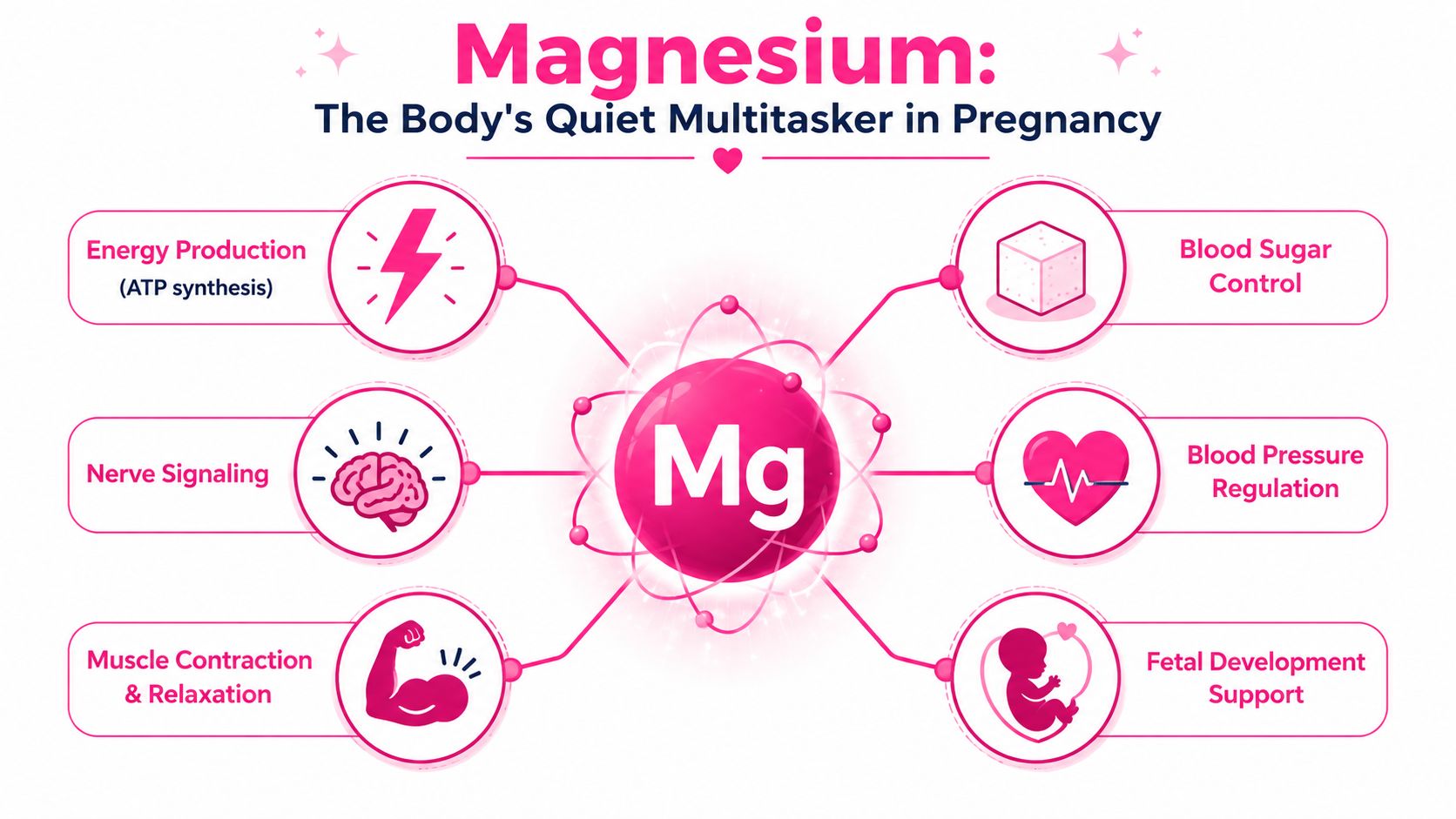
Think of magnesium as the quiet line cook in a busy restaurant kitchen. It isn't the dish customers notice first, but it keeps multiple stations moving. In your body, magnesium supports energy production, nerve signaling, muscle contraction and relaxation, blood sugar regulation, and blood pressure regulation.
At the cellular level, magnesium participates in the reactions that help produce energy, build proteins, copy DNA, and support normal heart rhythm. During pregnancy, those jobs matter for both maternal function and fetal growth. Magnesium doesn't work alone, but it helps many other biological processes run smoothly.
Why pregnancy changes the nutritional math
Pregnancy increases the demand for nutrients used in tissue growth and maternal adaptation. The placenta also becomes an active metabolic organ, and your baby accumulates magnesium as development progresses. Those changes don't turn every symptom into a magnesium problem, but they do make adequate intake worth discussing.
Common concerns such as leg cramps, restless sleep, or constipation may prompt you to investigate magnesium. They can also reflect circulation changes, hormones, hydration, iron supplements, diet, or ordinary pregnancy discomfort. Treat them as conversation starters, not diagnostic clues.
Your daily pool includes more than the prenatal
Your body sees magnesium as a total intake, regardless of whether it came from oatmeal, beans, a prenatal capsule, or a separate supplement. That's why adding a second product without checking the label can create confusion.
A simple record can help. Write down the magnesium amount in your prenatal, note any magnesium-containing products, and describe your usual food pattern. Your clinician can then interpret the information alongside your symptoms, medical history, and any relevant testing.
How Much Magnesium You Really Need While Pregnant
A prenatal label shows one piece of your magnesium intake, not the whole picture. Your daily total comes from meals, the prenatal itself, and any separate magnesium pill or medication. Add those sources together before deciding whether you need more.
U.S. guidance sets pregnancy-specific targets by age. The RDA is 350 mg per day for pregnant teens ages 14 to 18, 350 mg per day for pregnant adults ages 19 to 30, and 360 mg per day for pregnant adults ages 31 to 50.
| Life Stage | RDA (mg/day) | Upper Limit from Supplements (mg/day) |
|---|---|---|
| Pregnant teens ages 14 to 18 | 350 | 350 |
| Pregnant adults ages 19 to 30 | 350 | 350 |
| Pregnant adults ages 31 to 50 | 360 | 350 |
Those RDA figures cover magnesium from food and supplements together. They do not mean you should automatically take a 350 mg magnesium pill. The 350 mg per day upper limit for supplemental magnesium for adults, including pregnant people, applies to supplements and medications, not magnesium naturally present in food. Higher supplemental amounts can cause reversible diarrhea.
Why the target rises
Pregnancy increases the need for nutrients involved in maternal metabolism and fetal development. Kidney function also adapts, changing how the body handles minerals. That combination helps explain why the pregnancy target exceeds the adult nonpregnancy target for some age groups.
Your intake may shift from day to day. Nausea, heartburn, food aversions, and a busy schedule can make meals less predictable. A prenatal may help cover a gap, but one difficult eating day does not require you to chase a perfect number.
Use the limit as a guardrail
Treat the supplement limit as a boundary for self-directed products, not a goal. Start by assessing your usual dietary intake, check the magnesium listed in your prenatal, and record any separate magnesium products or medications. Then ask your OB or midwife whether the prenatal addresses a likely gap or whether another product makes sense.
The National Research Council's 1989 Nutrition During Pregnancy reported that usual magnesium intakes were substantially below the then-current RDA of 300 mg per day and found no justification for routine magnesium supplementation in pregnancy. More recent guidance still does not recommend blanket supplementation for everyone. The practical decision is to compare your food pattern and prenatal label first, then review the combined total with your provider rather than adding a pill automatically.
Common Forms of Magnesium in Prenatal Vitamins Compared
The form on your label affects how much elemental magnesium the product provides and how your stomach may respond. Magnesium compounds pair elemental magnesium with another substance, so the amount of the compound itself isn't always the amount your body counts as magnesium.
That distinction matters because labels may show the salt or compound name prominently while listing elemental magnesium elsewhere in the Supplement Facts panel. Look for the actual magnesium amount, not just the size of the compound.
| Form | Elemental Mg (typical) | Absorption | Tolerability | Typical Prenatal Use |
|---|---|---|---|---|
| Magnesium oxide | Relatively high per compound weight | Generally less readily absorbed | More likely to loosen stools | Used when a compact dose is preferred |
| Magnesium citrate | Moderate | Generally more readily absorbed than oxide | Can cause gastrointestinal upset at higher amounts | Common in supplements and some prenatal formulas |
| Magnesium glycinate | Moderate | Often selected for practical tolerability | Often gentler for sensitive stomachs | Common choice when digestive comfort matters |
| Magnesium malate | Varies by formula | Depends on the product | Individual response varies | Used in some specialized formulas |
| Magnesium lactate | Varies by formula | Depends on the product | Individual response varies | Less common in standard prenatals |
How to compare the three familiar options
Magnesium oxide can deliver a relatively large amount of elemental magnesium in a smaller compound weight, but it's often less well absorbed and may loosen stools. That effect might appeal to someone dealing with constipation, but it can be unpleasant or dehydrating if it becomes excessive.
Magnesium citrate is widely used and is generally more readily absorbed than oxide. It can still cause gastrointestinal upset, especially when the dose is high or your stomach is already sensitive.
Magnesium glycinate is often chosen for tolerability. A chelated or fully reacted glycinate may be a reasonable form to discuss if you're sensitive to digestive side effects or need to divide intake across the day.
Label habit: find the line that states the actual magnesium amount, then identify the form beside it. Don't compare products using the compound name alone.
A whole-food approach still matters, and you can explore how supplement design fits into broader nutrition with Feed Mom & Me's guide to whole-food-based vitamins. If you're considering a switch or an additional product, show both labels to your clinician.
How Magnesium Works With Iron and Calcium in Your Stack
Prenatal minerals share the same daily routine, but they don't always behave identically in the digestive tract. Iron and calcium receive the most attention because both are common prenatal ingredients and both may be added separately.
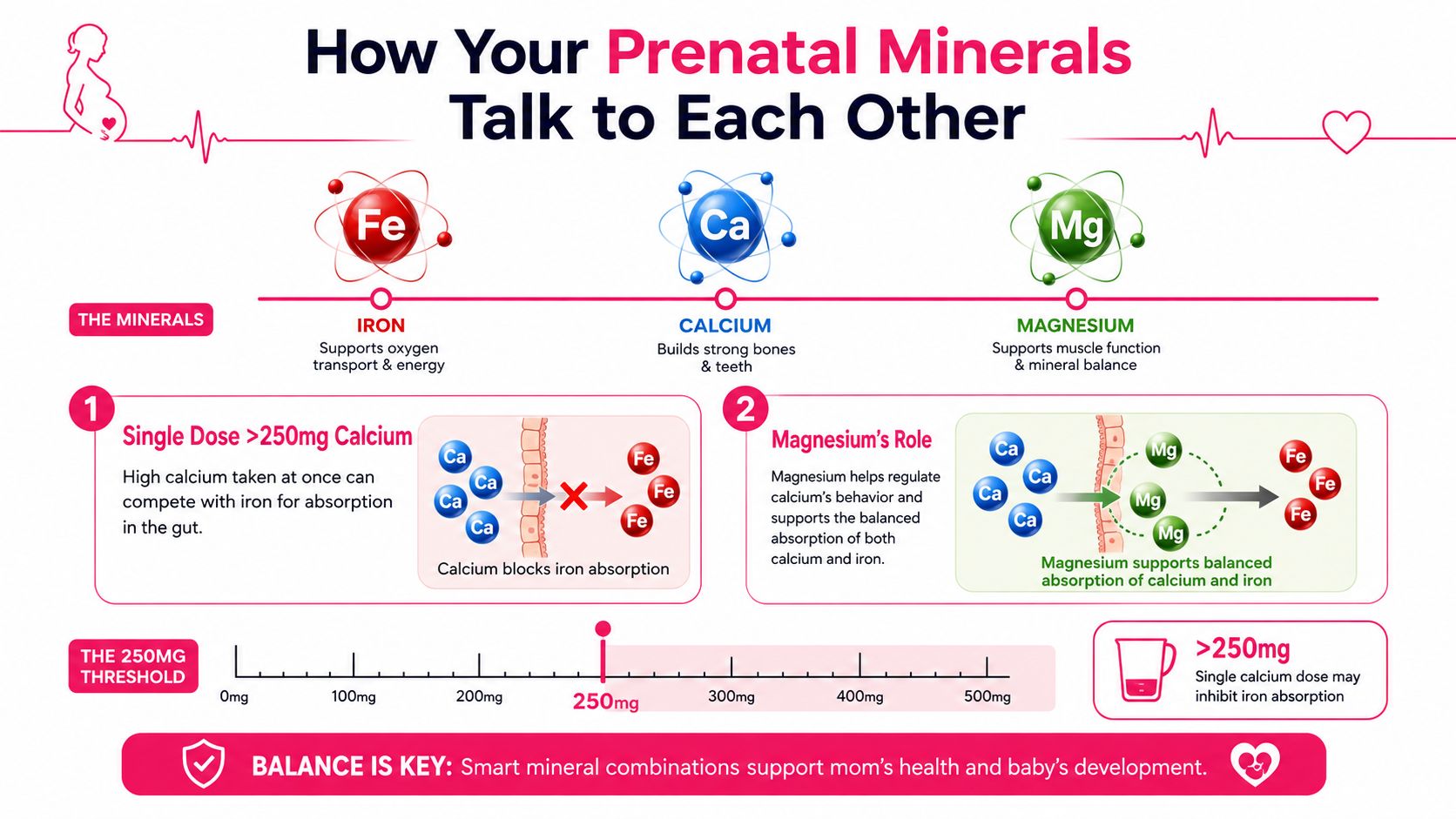
A high single dose of calcium, above about 250 mg, can compete with iron for intestinal transport. That doesn't mean calcium is a problem or that you need to separate every mineral automatically. It means timing can matter when you take a separate calcium supplement or a calcium-heavy product alongside iron.
Magnesium is part of the same conversation, but its effect depends on the amount and context. A balanced prenatal formula isn't the same as taking large, separate mineral doses. Your provider can help you decide whether your particular stack needs spacing.
A routine you can adapt
If your clinician approves the schedule, a simple pattern might look like this:
- Breakfast: Take your prenatal plus DHA with the meal your stomach tolerates best.
- Lunch or dinner: Place a calcium-rich snack or separate calcium supplement away from the prenatal when your provider recommends spacing.
- Evening: If you've been advised to use standalone magnesium glycinate, ask whether evening timing and divided doses suit your needs.
- Every day: Record separate iron, calcium, magnesium, and vitamin D products so your provider can review the complete stack.
These are discussion points, not universal instructions. Your iron needs, calcium intake, medications, digestive symptoms, and lab results all affect the right plan. For additional calcium and vitamin D context, you can browse Calcium Vitamin D from Repose Healthcare.
You can also bring questions about iron timing to this resource on iron during pregnancy, then confirm the final schedule with your OB or midwife.
What the Research Says About Magnesium and Pregnancy Outcomes
Magnesium has a legitimate clinical role in pregnancy, but that role is often confused with the role of an everyday oral supplement. In hospitals, clinicians may use intravenous magnesium sulfate for specific situations, including seizure prophylaxis in severe preeclampsia and neuroprotection when very preterm birth is expected. Those treatments are carefully selected and monitored. They aren't equivalent to taking a magnesium capsule at home.
Research on routine oral magnesium supplementation is less settled. A Cochrane review covering six trials and 2,637 women found that oral magnesium started before 25 weeks was associated with lower preterm birth risk in pooled data, but the review concluded that high-quality evidence was insufficient to establish clear maternal or infant benefits. The Cochrane review explains why a promising signal doesn't automatically become a universal recommendation.
What mixed evidence means for you
More recent reviews and randomized trials have also produced heterogeneous findings. Some trials using approximately 300 mg per day of magnesium citrate found no reduction in preeclampsia or adverse perinatal outcomes. These results don't prove magnesium is useless. They show that dose, form, baseline status, population, timing, and study design all matter.
The practical conclusion is grounded rather than dramatic:
- Foundational nutrition: Adequate magnesium supports normal body functions and can help address dietary gaps.
- Disease prevention: Oral magnesium hasn't been proven as a blanket preventive treatment for preeclampsia or preterm birth.
- Clinical treatment: High-dose or intravenous magnesium belongs in a monitored medical setting.
- Personal decisions: A separate supplement should be considered with your OB or midwife, especially if you have symptoms, risk factors, kidney concerns, or other medications.
You don't need to choose between “magnesium fixes everything” and “magnesium doesn't matter.” The evidence supports a middle path, adequate intake without miracle claims.
Easy Magnesium Rich Foods to Pair With Your Prenatal
Food can make the magnesium conversation feel much less abstract. Instead of treating your prenatal as the entire plan, think of it as one piece of a day that includes grains, legumes, seeds, nuts, leafy greens, and other nutrient-dense foods.
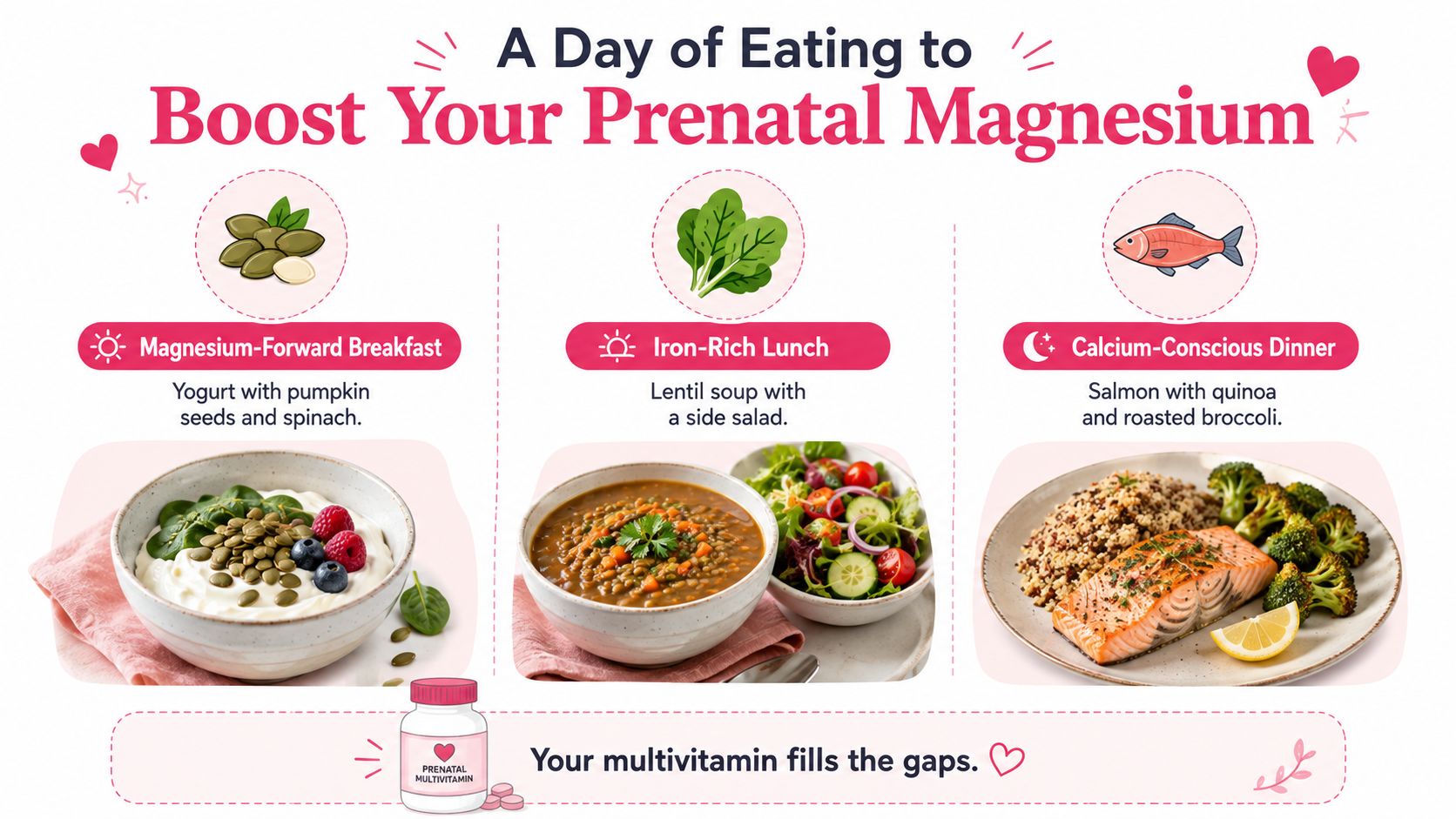
For example, breakfast could be oatmeal topped with pumpkin seeds and a sliced banana. A serving of oatmeal, pumpkin seeds, and banana can provide a meaningful magnesium contribution, and pumpkin seeds are especially concentrated compared with many everyday foods. Add yogurt if it sits well with you, while remembering that calcium-rich foods may deserve separate timing from iron depending on your clinician's advice.
A realistic food pattern
- Breakfast: Oatmeal with pumpkin seeds and a sliced banana. Choose a portion you can tolerate, especially if nausea or heartburn is present.
- Lunch: A spinach and black bean bowl with whole-grain tortillas. Add avocado, salsa, or another pregnancy-safe topping that makes the meal appealing.
- Snack: Almonds with a small portion of dark chocolate and yogurt. Keep the serving comfortable rather than forcing a large snack.
- Dinner: Salmon or mackerel with quinoa and roasted broccoli. These foods can contribute to a broader nutrient pattern alongside magnesium.
- Throughout the day: Water, regular meals, and foods you can keep down matter more than a perfect menu.
Leafy greens, legumes, nuts, seeds, and whole grains can help close the space between typical intake and the pregnancy target. Certain fish, including salmon and mackerel, can also fit into a pregnancy eating pattern when prepared and selected according to your provider's and public-health guidance.
Some foods may look healthy but contribute little magnesium in ordinary portions. Fruit juice and white rice, for example, shouldn't be treated as major magnesium sources because they appear in a balanced meal. For more practical meal ideas, explore foods to eat when you're pregnant.
Your prenatal complements varied food. It doesn't replace the fiber, protein, hydration, and overall nourishment that meals provide.
Your Friendly Checklist for Talking Magnesium With Your Provider
You don't need to arrive at your next appointment with a spreadsheet or a firm supplement decision. A one-page summary of your current prenatal, separate supplements, common meals, and symptoms can give your OB or midwife a much clearer starting point.
Bring the actual bottles or clear photographs of both sides of each label. Include powders, laxatives, antacids, electrolyte products, and sleep products if they contain magnesium or other minerals.
Questions to put on your appointment list
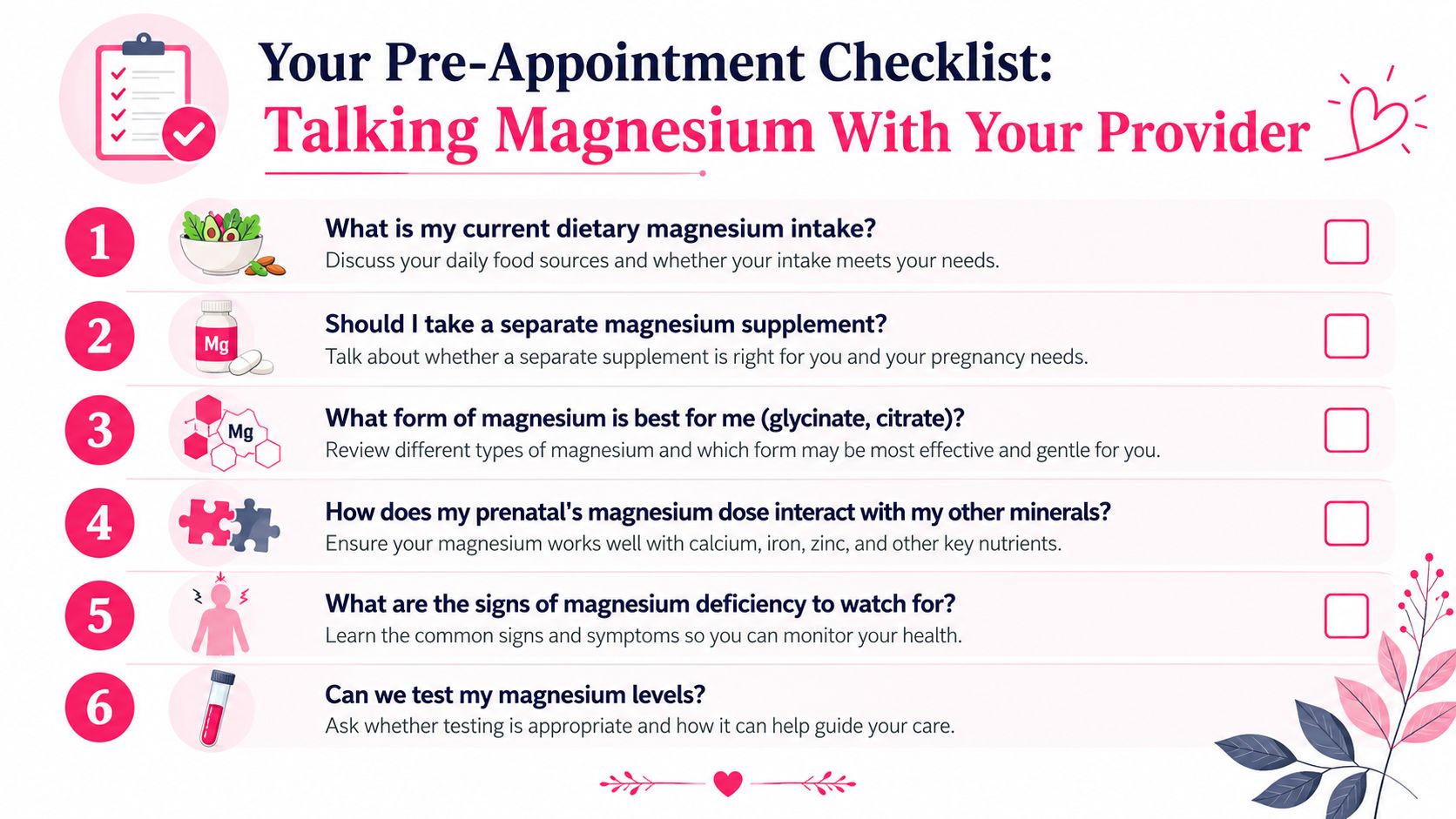
- What's the exact magnesium dose in my prenatal? Ask your provider to help you identify elemental magnesium and the form used.
- How much magnesium might I be getting from food? A rough food pattern can be more useful than trying to track every bite perfectly.
- Am I having digestive side effects? Mention diarrhea, worsening constipation, nausea, or stomach discomfort, especially after starting or changing a product.
- Should I take a separate magnesium supplement? Ask what problem the supplement is intended to address and whether food or a prenatal adjustment could be enough.
- How should I space magnesium, iron, calcium, and vitamin D? Timing may matter more when you're using separate products.
- Would a glycinate-based option make sense for me? If leg cramps or constipation are bothering you, ask about form, dose, timing, and whether testing is appropriate.
Feed Mom & Me Complete Prenatal Vitamin Plus DHA is one option you could ask about because it includes magnesium alongside other pregnancy-focused nutrients, including DHA, choline, selenium, and methylfolate. The formula is positioned for use across preconception, pregnancy, and postpartum, but your provider should confirm whether it fits your individual nutritional needs and current supplement routine.
Bring the whole picture: your prenatal, separate supplements, regular foods, symptoms, and questions give your clinician more useful information than one isolated nutrient number.
Your needs can change with trimester, symptoms, dietary restrictions, medications, and bloodwork. If you're postpartum or breastfeeding, magnesium still belongs in the broader nutrition conversation, but the appropriate plan may differ from pregnancy. For more support, Feed Mom & Me offers nutrition education for pregnant mothers.
Feed Mom & Me offers the Complete Prenatal Vitamin Plus DHA, along with nutrition education and pregnancy-friendly recipes that can help you make sense of your daily nutrient routine. If you're comparing magnesium amounts or looking for a prenatal that also includes DHA, choline, selenium, and methylfolate, visit Feed Mom & Me and bring the product details to your OB or midwife for personalized guidance.