
Raw Organic Protein: A Mama's Guide to Clean Choices
Published:Updated:
Raw organic protein is a label combination, not a safety grade. Recent testing found that organic protein powders averaged about three times more lead and twice as much cadmium as non-organic powders, so the smarter question is what sourcing and testing back the product.
That may sound surprising, especially when you're pregnant or breastfeeding and trying to make the cleanest choice for yourself and your baby. You haven't done anything wrong by trusting the word “organic.” The label can tell you something useful about farming practices, but it can't answer every question about soil contaminants, processing, allergens, digestibility, or whether the finished powder has been tested.
Raw organic protein can still fit your routine. It may also be unnecessary, poorly tolerated, or less transparent than another option. What matters is learning how to look past the marketing language and evaluate the actual product in your scoop. If you're building a thoughtful pregnancy nutrition routine, you may also find this guide to a whole-food multivitamin approach helpful.
Table of Contents
- What Raw Organic Protein Really Means for Mamas
- Understanding the Raw and Organic Labels
- Comparing Protein Sources for Pregnancy and Postpartum
- Safety and Contamination Questions Worth Asking
- How to Choose a Clean Protein Product
- Whole Food Protein Alternatives That Work
- Common Myths Worth Letting Go
- Your Simple Next Steps and a Note from Mama
What Raw Organic Protein Really Means for Mamas
Raw organic protein sounds like a safety promise, but it's really a stack of separate label claims. “Organic” refers mainly to how the ingredients were grown and handled under organic rules. “Raw” generally describes a processing approach. Neither term, by itself, grades the finished powder for heavy metals, pathogens, digestibility, or pregnancy suitability.
That distinction matters because organic certification and raw processing are independent. A powder can come from organically grown peas, rice, or other crops and then be processed at a low temperature. It can still pick up lead or cadmium from the soil where those crops grew. Clean Label Project testing found that certified organic protein powders averaged about three times more lead and twice as much cadmium as non-organic powders in its analysis of protein products. The Clean Label Project protein study explains why organic farming standards and contaminant screening are different questions.
That isn't a reason to panic or throw away every plant-based powder in your pantry. It's a reason to replace a simple assumption with a better checklist.
Practical rule: Treat “raw” and “organic” as clues about production, not proof that the powder is clean.
The four questions that matter most
When you're pregnant or nursing, ask:
- What do the labels promise? Farming and processing claims have limits.
- Which protein source fits your body? Whey, pea, rice, egg, hemp, and collagen behave differently.
- What does contamination testing show? Batch-level results matter more than a front-label slogan.
- Do you need a powder at all? Food can often cover your needs, while a powder can serve as a convenience bridge.
The relief here is that you don't need to become a food scientist. You need a few focused questions, a product with transparent documentation, and a healthcare provider who understands your pregnancy, postpartum recovery, allergies, and dietary pattern.
Understanding the Raw and Organic Labels
Think of the two words as describing different parts of a journey from farm to scoop. Organic is about the farm. Raw is about the factory. Knowing that difference helps you read the label without giving either word more power than it deserves.
What organic usually tells you
Organic certification addresses agricultural practices. In broad terms, USDA organic standards restrict synthetic pesticides, genetically modified organisms, and sewage sludge, and certified operations undergo review by accredited certifiers. The claim can be meaningful if you want to limit certain farming inputs.
But organic certification doesn't mean that every finished powder has passed a heavy-metal panel. Plants absorb minerals from soil, and protein powders can concentrate components of the original crop during manufacturing. A certified organic pea or rice ingredient can therefore require the same careful contaminant screening as a conventional ingredient.
What raw usually tells you
“Raw” is a processing term, and brands don't always use it in exactly the same way. Some describe raw products as processed below roughly 40 to 48°C, or approximately 104 to 118°F, although the exact standard varies by brand. The intended message is usually that the ingredient wasn't exposed to high heat for an extended period.
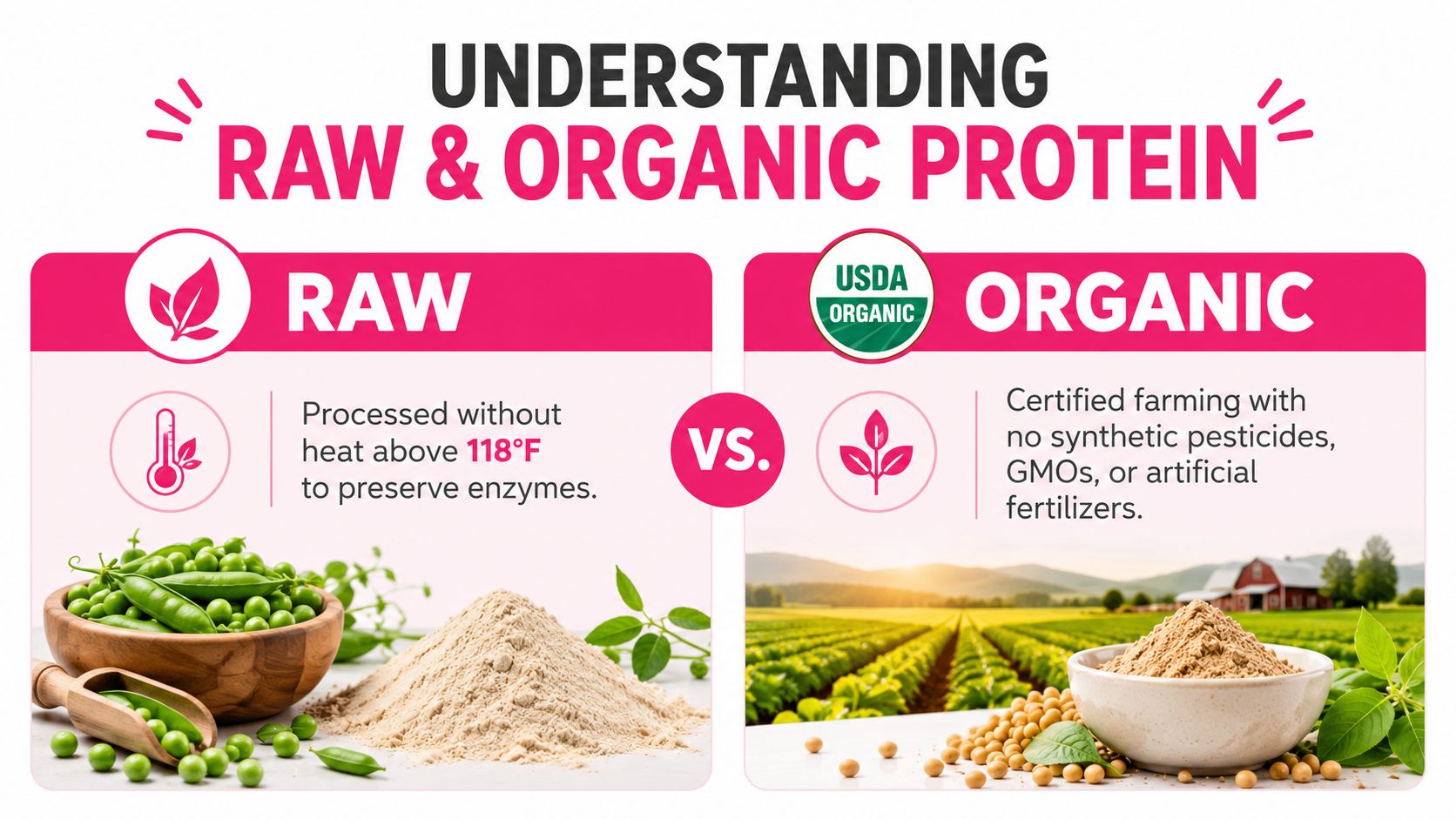
Low-temperature processing may help a brand preserve a minimally processed identity. It doesn't automatically remove lead, cadmium, pesticides, or microbes. In fact, food-technology research emphasizes that thermal processing can be important for microbiological safety in plant proteins, while controlled coagulation can improve protein concentration and digestibility. The research on processing plant proteins supports looking at validated safety controls, not avoiding every form of heat.
A tub can carry both claims because the source was organically farmed and then cold-processed. The key takeaway is simple: organic describes how the food was grown, and raw describes how it was handled. Neither one tells you exactly how clean or safe the powder in your scoop is. For a deeper look at verification, explore this resource on third-party testing.
Comparing Protein Sources for Pregnancy and Postpartum
The best protein source for you isn't necessarily the one that's most popular with athletes. During pregnancy and postpartum, your practical questions are different. Can you digest it comfortably? Does it trigger an allergy? Does it contribute useful amino acids? Will it fit a nauseated morning, a breastfeeding schedule, or a sensitive gut?
Whey isolate is a complete milk protein with all essential amino acids, including leucine and lysine, and it typically contains less lactose than whey concentrate. It can be a convenient choice if you tolerate dairy, but milk allergy and lactose sensitivity still matter. Its contaminant profile depends on the quality of the source and the filtration process, so “whey” alone isn't a testing guarantee.
Plant blends can combine pea, rice, hemp, or sprouted proteins to balance amino acids. Pea protein often contributes lysine, while rice can help complement the blend, but formulas vary. Plant powders are also more variable for heavy metals, especially when rice or cocoa ingredients are included, because crops can take up soil-derived contaminants.
Egg white protein offers a complete amino acid profile without dairy lactose, but it isn't suitable if eggs trigger you. It may work well for someone who wants an animal-based protein without milk, provided the product has clear allergen controls.
Collagen-style powders deserve a careful distinction. Collagen can contribute specific amino acids, but it isn't a complete protein and shouldn't replace a protein source that supports broader tissue, muscle, or milk-protein needs. It belongs in a different category from whey, egg, or a well-formulated plant blend.
| Pregnancy and Postpartum Protein Source Comparison | Amino Acid Profile | Heavy-Metal Risk | Gut Tolerance | Best Fit |
|---|---|---|---|---|
| Whey isolate | Complete, rich in essential amino acids | Often lower than plant powders, but source and filtration matter | Usually comfortable for dairy-tolerant users | Dairy-tolerant mamas wanting a complete protein |
| Pea and rice blend | Can be complementary when properly formulated | More variable, especially with rice or cocoa | May cause bloating depending on fibers and additives | Plant-based diets needing a broader amino acid profile |
| Hemp or sprouted blend | Useful plant protein, but formula quality varies | Requires finished-product testing | Fiber may bother a sensitive gut | Mamas who tolerate higher-fiber plant products |
| Egg white | Complete protein | Depends on sourcing and finished-product testing | Avoid with egg allergy or sensitivity | Dairy-free, egg-tolerant users |
| Collagen | Incomplete, not a stand-in for complete protein | Depends on source and testing | Often easy to mix, but individual tolerance varies | Supplemental collagen use, not primary protein coverage |
Sweeteners and added fibers can matter as much as the protein itself. A powder that looks ideal on paper may worsen bloating, constipation, reflux, or nausea. If you're rebuilding strength after birth, this practical guide to complete protein sources can help you think beyond the trendiest tub.
Your best choice is the product you tolerate, digest comfortably, and trust because the brand shares meaningful testing, not because an influencer calls it clean.
Safety and Contamination Questions Worth Asking
Heavy metals are naturally occurring elements that can enter crops through soil and water. Protein manufacturing can then concentrate parts of those crops, which means the finished powder deserves its own testing. Organic farming practices may reduce exposure to certain agricultural chemicals, but they don't guarantee low lead or cadmium.
Clean Label Project's analysis found that organic protein powders averaged about three times more lead and twice as much cadmium as non-organic powders. Its broader category screen included 160 protein powders, and 47% exceeded at least one regulatory level for lead. These findings don't mean every organic product is hazardous. They mean the organic seal can't substitute for a finished-product contaminant report. The Clean Label Project heavy-metal findings provide the relevant context for that counterintuitive result.
What to ask before you buy
A confident product check can be quick:
- Ask about origin: Where was each protein crop or animal ingredient grown?
- Ask about the testing panel: Does it cover lead, cadmium, arsenic, mercury, pesticides, glyphosate, and microbes?
- Ask what was tested: Was testing performed on ingredients during production, or on the finished powder from a specific lot?
- Ask for documentation: Can the company provide a lot-specific Certificate of Analysis?
- Ask about publication: Does the brand post results publicly or provide them promptly when requested?
| Contamination Risk by Protein Source | Lead Risk | Cadmium Risk | Key Reason |
|---|---|---|---|
| Rice-based protein | Requires careful screening | Requires careful screening | Rice can take up soil-derived metals |
| Cocoa-containing blends | Requires careful screening | Requires careful screening | Cocoa ingredients have raised contaminant concerns in independent testing |
| Pea-based protein | Variable | Variable | Growing conditions and soil uptake differ by source |
| Hemp or sprouted blends | Variable | Variable | Crop origin and processing controls influence results |
| Whey isolate | Often lower than plant powders | Often lower than plant powders | Dairy source and filtration affect the final product |
| Egg white | Source-dependent | Source-dependent | Animal sourcing and finished-product controls matter |
| Collagen | Source-dependent | Source-dependent | The raw material and purification process determine exposure |
Vague “natural” language, no lot information, missing third-party verification, and an ingredient list built around inexpensive concentrates should make you slow down. A company that answers clearly can help you evaluate the product. A company that ignores specific questions isn't giving you the transparency you need.
Country of manufacture is useful, but it isn't the whole story. A product can be made in one country using ingredients grown elsewhere. If you want to understand manufacturing claims more clearly, review this explanation of supplements manufactured in the USA.
How to Choose a Clean Protein Product
You don't need a perfect pantry. You need a repeatable way to screen products when you're tired, hungry, or standing in a store aisle with a baby on your hip.
Start with certification clarity
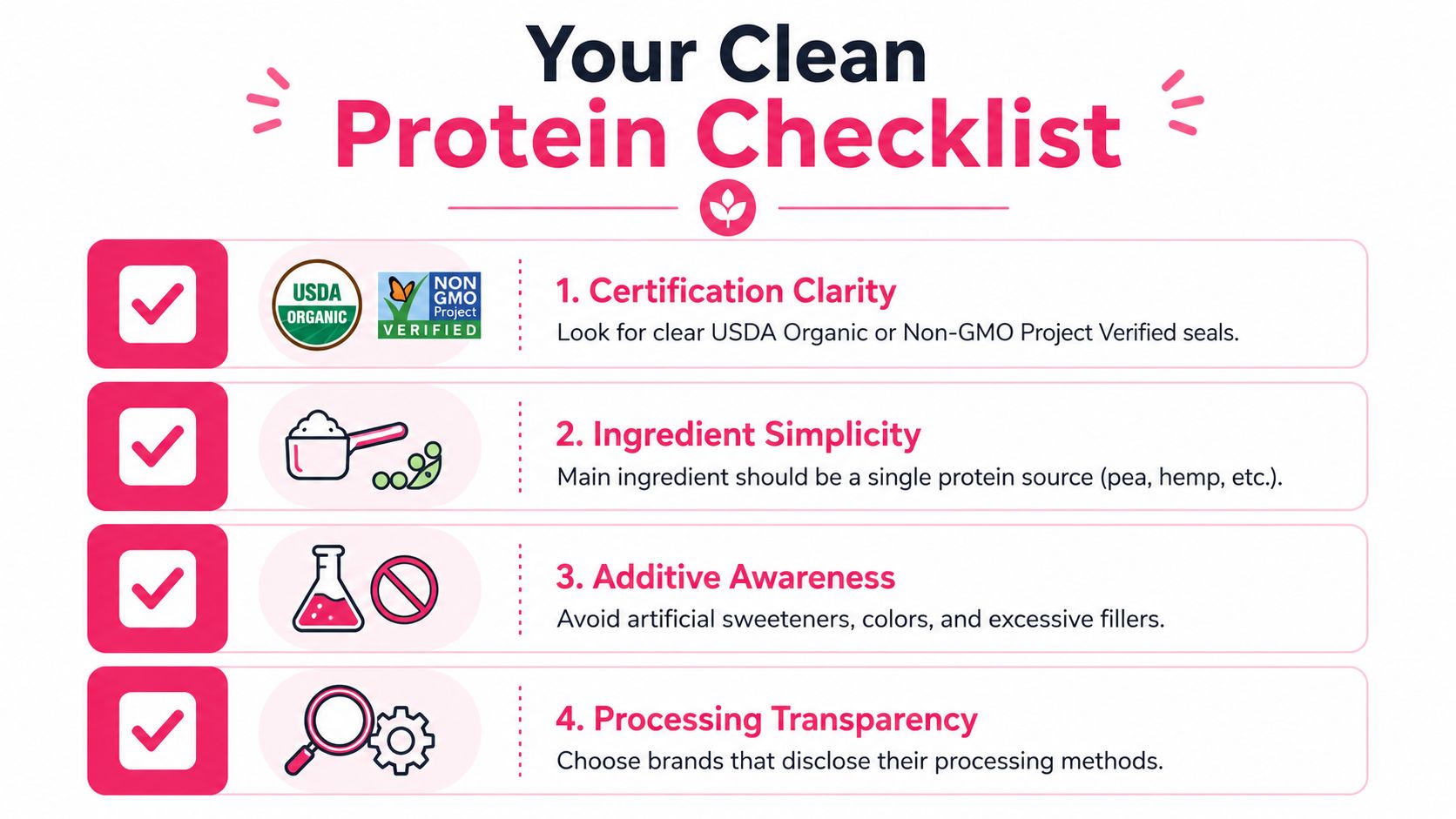
Look for a clear USDA Organic or Non-GMO Project Verified seal if those standards matter to you. Independent certifications such as NSF or Informed Sport may add useful quality information, but no single badge answers every question. Certification should open the conversation, not end it.
Check the ingredient list
A short list is easier to understand. Ideally, the first ingredient is a named source such as pea protein, whey isolate, egg white, or hemp protein. Be cautious with vague blends, unnecessary fillers, artificial sweeteners, and “natural flavors” that the company won't explain.
Match the nutrition to your needs
For a protein powder used as a snack or meal bridge, many mamas look for at least 15 grams of protein per serving, low added sugar, and a formula that fits their broader diet. If you're vegan or mostly plant-based, check whether the product supplies or complements nutrients such as iron and vitamin B12. Don't assume a protein powder replaces a prenatal vitamin or a balanced meal.
If postpartum healing is part of your planning, this resource on protein intake for tissue healing offers helpful context for discussing protein with your care team.
Send the brand a short email
You can write:
“Can you share the country of origin for each protein ingredient, a finished-product Certificate of Analysis for the lot I'm considering, and your testing results for lead, cadmium, arsenic, mercury, pesticides, and microbes?”
A useful reply should identify the testing laboratory, explain whether the sample was a finished product, and connect the report to a lot or batch. Silence, vague reassurance, or a link to a generic quality page doesn't answer the question.
Processing details matter too. Ask whether the product is cold-pressed, enzymatically processed, or exposed to high heat, and how the company validates pathogen reduction. For a broader look at prenatal ingredient transparency, see this discussion of raw-code prenatal vitamins.
Whole Food Protein Alternatives That Work
Protein powder can be useful, but it doesn't have to carry your entire nutrition routine. Whole foods bring protein alongside fats, carbohydrates, fiber, minerals, and the sensory satisfaction of a real meal. On a queasy day, that may mean a few bites at a time rather than a beautifully balanced plate.
Animal-based options often provide complete protein in familiar portions:
- Pastured eggs: Scrambled eggs or an egg sandwich can work when cooking energy is limited.
- Slow-cooked meats: Shredded chicken, beef, or turkey can become several easy meals.
- Bone broth: Useful as a warm fluid, though its protein content varies by preparation.
- Low-mercury fatty fish: Salmon and sardines provide protein and useful fats. Follow your provider's seafood guidance.
- Full-fat dairy: Yogurt, milk, and cheese can add protein when appetite is small.
Plant foods work well through pairings. Lentils with rice, hummus with pita, beans with corn tortillas, tofu with quinoa, and peanut butter on sprouted toast create satisfying combinations. You can also keep Greek yogurt, cottage cheese, edamame, or chia pudding ready for snacks.
A realistic food-first day
A sample day could include eggs at breakfast, Greek yogurt with fruit, lentil soup with rice at lunch, cottage cheese as a snack, salmon with quinoa at dinner, and a glass of milk or a dairy-free fortified alternative. Together, those choices can provide roughly 80 grams of protein, depending on portions and the exact foods selected. Because the amount varies, use this as a planning example rather than a prescription.
A powder is best viewed as a convenience bridge. It can help when nausea makes cooking difficult, food aversions limit your choices, or newborn life turns lunch into a handful of crackers. It shouldn't crowd out the variety that whole foods provide, and it shouldn't pressure you to eat beyond comfort.
Common Myths Worth Letting Go
Myth one, raw always means safer
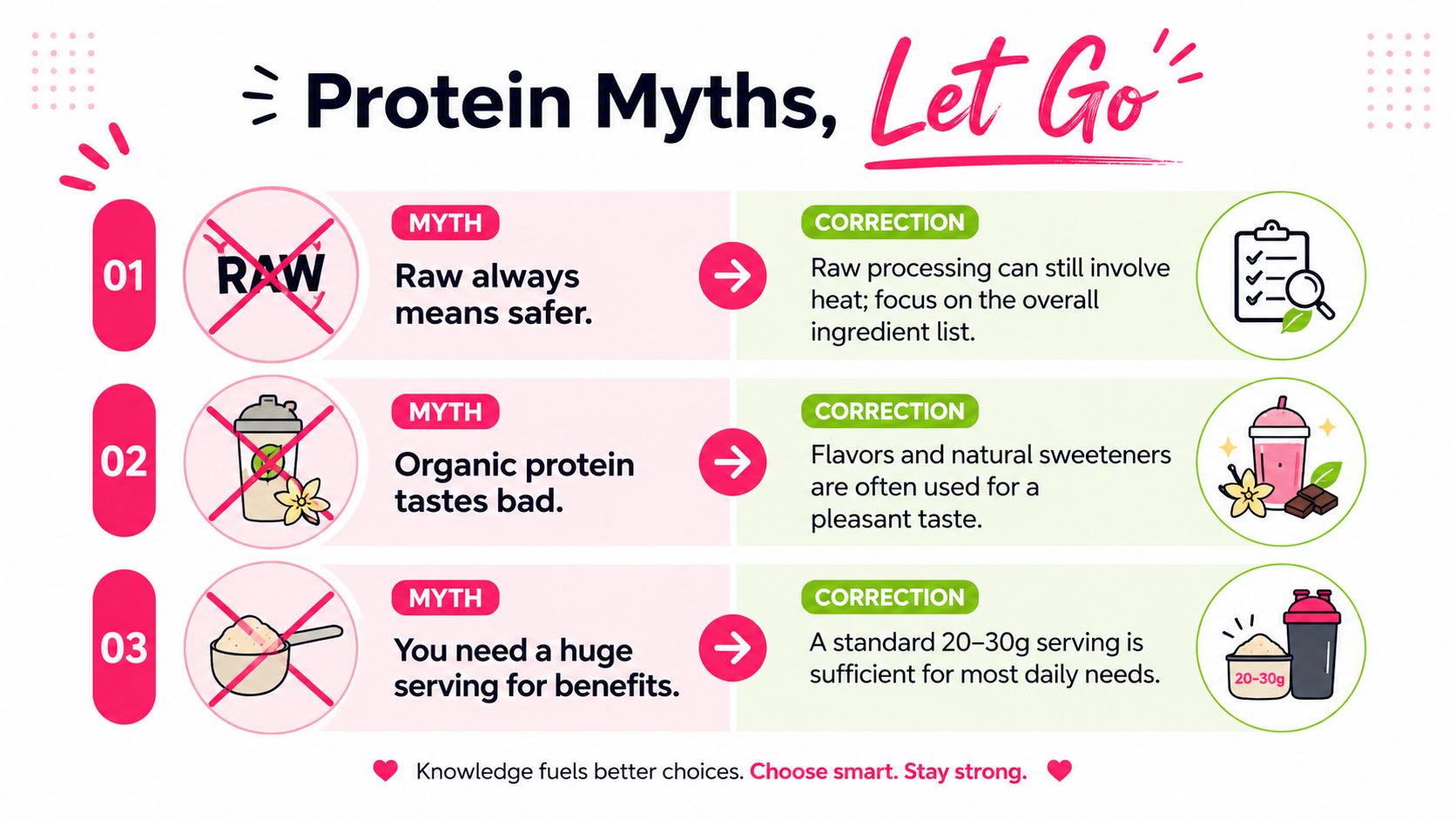
Raw processing may limit heat exposure, but it doesn't automatically address heavy metals or pathogens. Food-technology research describes heat as an important tool for microbiological safety in plant proteins, while controlled processing can also affect digestibility. A minimally processed label needs to be paired with evidence that the manufacturer controls contamination and consistency.
Myth two, organic means a cleaner heavy-metal profile
Organic certification can describe farming practices without measuring the finished powder's lead or cadmium content. The Clean Label Project findings discussed earlier are a useful reminder that organic products can still carry meaningful contaminant exposure. Organic is not the same as contaminant-tested.
Myth three, plant protein is always incomplete
Individual plant proteins may be limited in one or more essential amino acids, but thoughtfully designed blends can complement those gaps. Pea, rice, hemp, and sprouted ingredients can serve different roles in a formula. Read the amino-acid information when it's available, and consider your overall diet instead of judging a product by whether it comes from a plant.
Myth four, more protein is always better
Protein matters for maintaining tissue and supporting recovery, but a giant scoop can displace carbohydrates, fats, fiber, fluids, and micronutrients. Pregnancy and breastfeeding nutrition is a full pattern, not a single nutrient contest. Your provider or a prenatal dietitian can help you decide whether you need a supplement and how it fits your meals.
Label wisdom: Buzzwords describe features. They don't assign a safety grade.
You don't need to feel embarrassed if a product you bought doesn't meet every ideal. Use the label as a starting point, ask better questions next time, and choose an option that supports your actual life.
Your Simple Next Steps and a Note from Mama
You can make this decision without turning it into another exhausting project. Start with three actions:
- Check third-party testing. Look for finished-product, lot-specific results that include heavy metals and microbial safety. If the company won't share meaningful documentation, choose a different product.
- Build meals around whole-food protein. Add eggs, yogurt, fish, beans, lentils, tofu, cottage cheese, or another food you tolerate. Small, regular choices count.
- Use powder as a bridge. Reach for it when nausea, appetite changes, recovery, or newborn care make a regular meal difficult. Stop or change products if it worsens bloating, reflux, constipation, or other symptoms.
Bring your shortlist and your questions to your prenatal, midwife, postpartum, or lactation appointment. Your provider can consider allergies, kidney health, dietary restrictions, nausea, breastfeeding plans, and any medical reason to adjust your supplement routine.
The same thoughtful approach applies to prenatal vitamins. Folic acid timing matters before pregnancy, and ACOG recommends at least 400 micrograms daily beginning at least 1 month before pregnancy and continuing through the first 12 weeks. For someone who previously had a child affected by a neural tube defect, ACOG describes a clinician-guided dose of 4 milligrams daily, beginning at least 3 months before pregnancy and continuing through the first 3 months. Read the ACOG prepregnancy guidance and discuss your personal needs with your provider.
DHA deserves a label check too. The NIH Office of Dietary Supplements recommends at least 250 mg per day of DHA plus EPA for women of childbearing age, with an additional 100 to 200 mg per day of DHA during pregnancy. Choline needs rise from 425 mg per day before pregnancy to 450 mg during pregnancy, and reach 550 mg during lactation, according to peer-reviewed reviews in PubMed Central. Prenatal formulas don't always provide enough choline, so food and supplement planning may need to work together.
If nausea makes your prenatal hard to take, Mayo Clinic guidance suggests trying it at night or with a snack. If nausea is severe, the guidance notes that you may temporarily stop and restart when symptoms improve, while staying in touch with your healthcare provider. You already have the instincts to make a careful choice, mama. Give yourself information, flexibility, and support instead of chasing perfection.
Feed Mom & Me Complete Prenatal Vitamin Plus DHA offers a vegetarian, soy-free, gluten-free, dairy-free option with DHA, choline, selenium, and methylfolate, plus delayed-release capsules with peppermint and organic ginger for a more comfortable routine. Visit Feed Mom & Me to explore a prenatal option created by women and built by moms for the pregnancy and postpartum seasons.