
Bergamot Tea Benefits for Pregnancy and Postpartum
Published:Updated:
A fragrant cup of bergamot tea is mostly flavored tea: the headline health benefits usually come from concentrated bergamot extracts, not one mug. In pregnancy, the practical considerations are caffeine and avoiding bergamot oils or supplements unless your provider says otherwise.
Could a tea that smells like citrus offer the same benefits as a bergamot capsule? It's an easy mix-up, especially when headlines use “bergamot tea” to describe products that aren't tea at all. For you, mama, the useful distinction is what's in the cup: tea leaves, dried peel, or concentrated oil.
Table of Contents
- What Is Bergamot Tea
- Which Bergamot Tea Benefits Hold Up
- How Earl Grey Differs From Herbal Bergamot Tea
- What Bergamot May Do in Your Body
- Is Bergamot Tea Safe in Pregnancy and Postpartum
- How to Brew Bergamot Tea in Moderation
- What to Ask Your Provider Before Another Cup
What Is Bergamot Tea
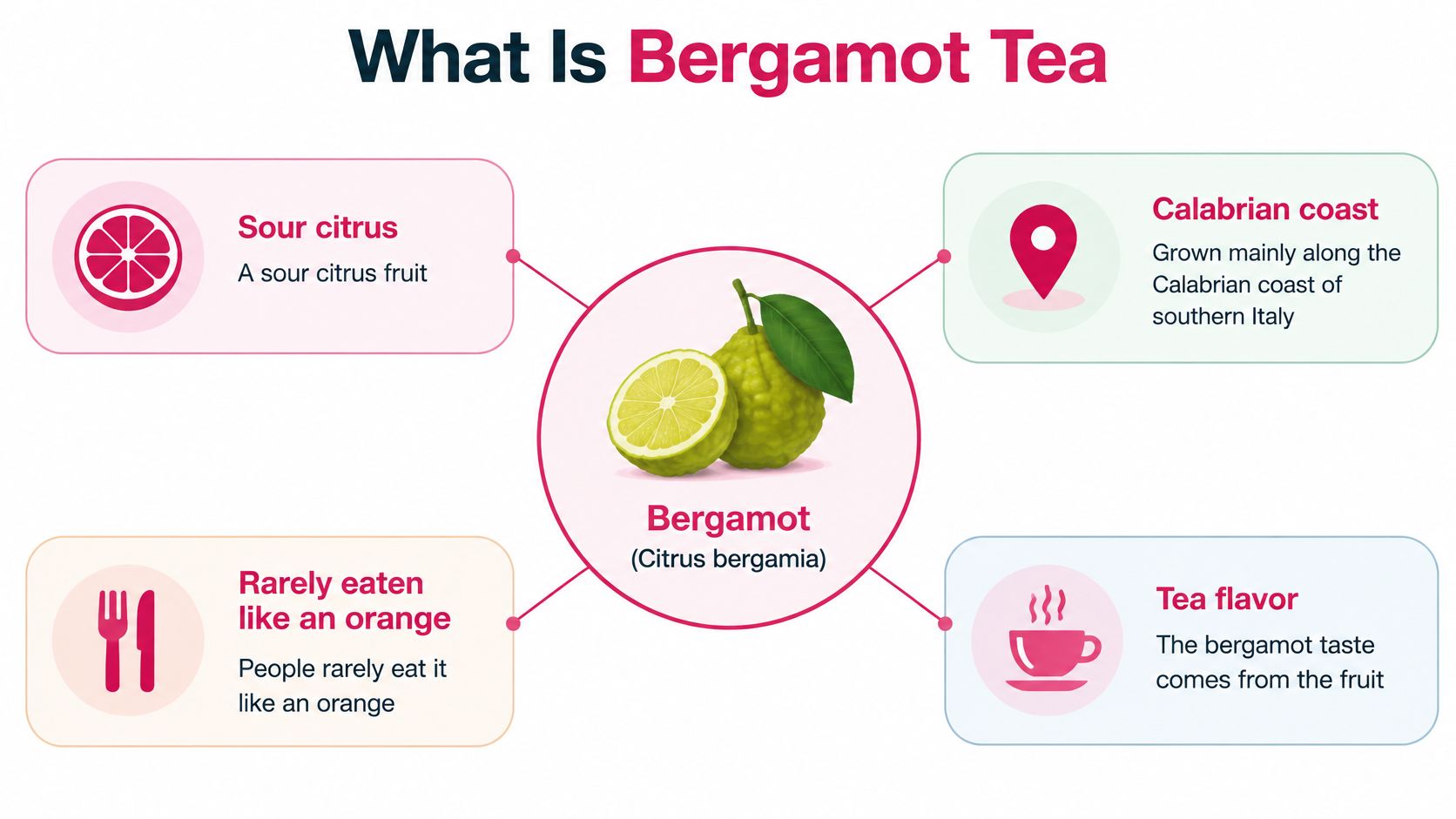
Bergamot is a sour citrus fruit called Citrus bergamia, grown mainly along the Calabrian coast of southern Italy. Its flesh is very tart, so people rarely eat it like an orange. The peel is prized for its fragrant essential oil, which is used in perfume and as a flavoring.
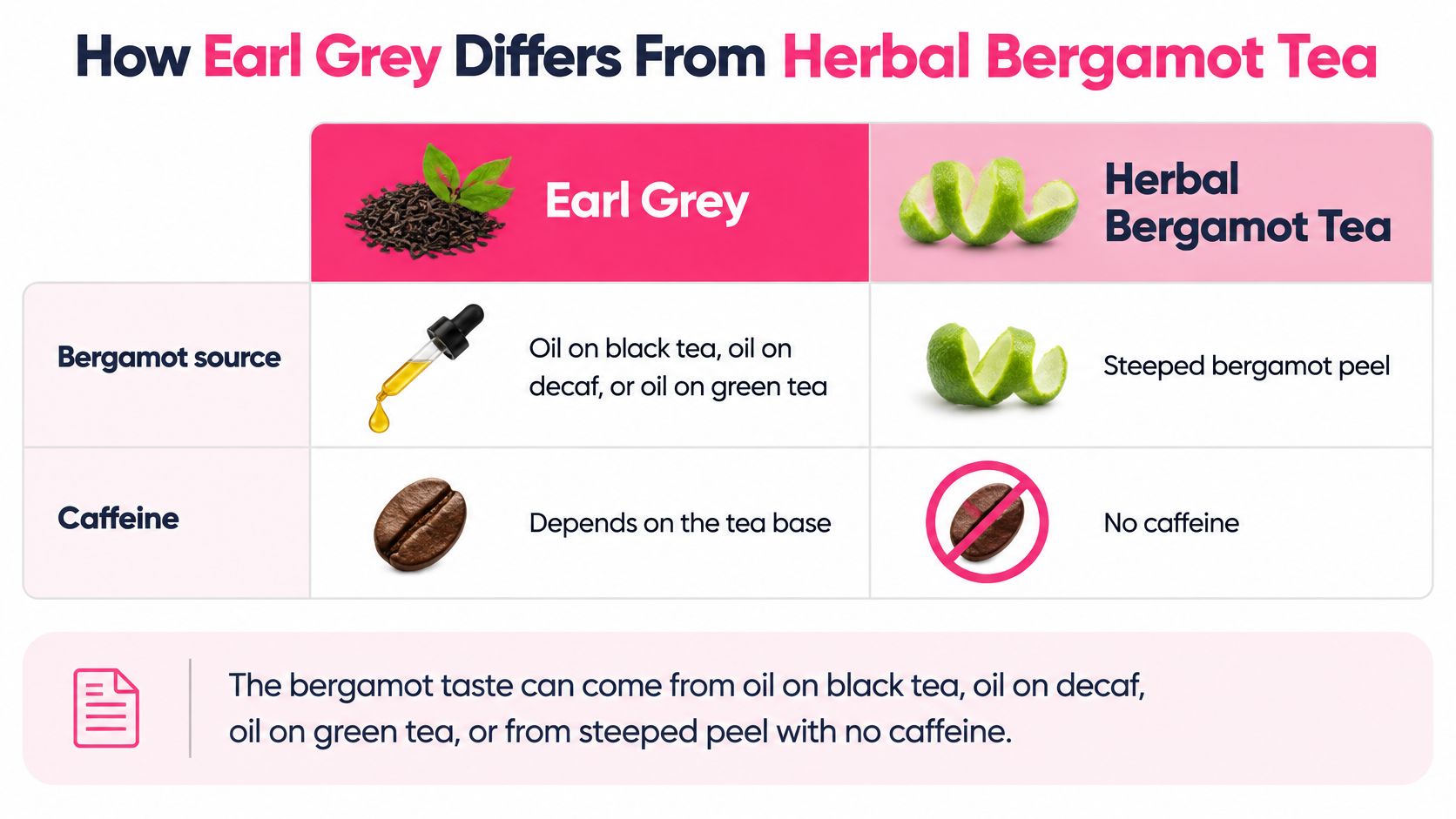
Most drinks called bergamot tea are Earl Grey. That's real tea from the Camellia sinensis plant, commonly black tea, scented with a small amount of bergamot oil or flavor. A less common option is an herbal infusion made from dried bergamot peel, sometimes blended with other herbs and made without tea leaves.
A perfume analogy can help: the oil is the scent on the scarf; the leaf or peel is the drink in the mug. A little flavoring can make a cup smell strongly of bergamot without supplying the concentrated compounds found in a supplement.
What's in the fruit and the tea leaf?
Bergamot fruit contains plant compounds called flavonoids. If your Earl Grey is based on black or green tea, the leaves also contribute polyphenols. Those are different ingredients from the concentrated extracts used in many wellness claims.
So when you read that bergamot supports cholesterol, blood sugar, or stress, check whether the product studied was a cup of tea, an extract capsule, or an essential oil. Those forms aren't interchangeable. The bergamot tea benefits you can reasonably expect from a mug are different from what researchers have explored using extracts. You can enjoy the aroma without treating the tea as medicine.
Which Bergamot Tea Benefits Hold Up
A cup can provide tea antioxidants and a soothing ritual, but it isn't a treatment for cholesterol, blood pressure, or blood sugar. The evidence changes with the product: findings about extracts or aromas don't automatically apply to drinking flavored tea.
| Claimed benefit | Where the evidence comes from | How strong it is | What it means for you |
|---|---|---|---|
| Antioxidants in the cup | Polyphenols in black or green tea, plus a little citrus flavor | Fair for tea itself | A flavored tea, not a superfood dose |
| Calmer mood | Small trials of bergamot aroma, not of drinking the oil | Limited and early | The ritual may feel soothing; it isn't anxiety treatment |
| Easier digestion | Traditional use of citrus peel | Traditional, little clinical proof | A mild cup is fine if it sits well; don't swallow oil |
| Cholesterol support | Human studies of bergamot fruit extracts and capsules | Moderate for extracts, weak for tea | Don't start bergamot supplements in pregnancy for cholesterol |
| Blood pressure | Lab and limited human work on citrus flavonoids | Limited | Could add to blood-pressure medicine; ask before relying on it |
| Blood sugar | Some extract studies | Limited | Not a substitute for glucose screening or prenatal nutrition |
The table's central point is that a mug and a capsule deliver different forms and amounts of plant compounds. A tea's flavor doesn't make it a substitute for care, and increasing the strength of a brew won't turn it into a studied extract.
If cholesterol or glucose is your concern, talk with your care team about food patterns and prenatal care rather than relying on bergamot flavoring. For practical postpartum food ideas, this guide to nutrients and foods for postpartum recovery can help you think about nourishing meals as part of the bigger picture.
How Earl Grey Differs From Herbal Bergamot Tea
The bergamot taste can come from oil on black tea, decaf, or green tea, or from steeped peel with no tea leaf at all. That distinction matters because caffeine comes from the tea plant, not from the citrus flavor.
| Drink | What is in the cup | Caffeine per 8 oz | Fit in pregnancy |
|---|---|---|---|
| Earl Grey | Black tea plus bergamot oil or flavor | About 40–70 mg | Occasional if all daily caffeine stays near or under 200 mg |
| Decaf Earl Grey | Decaf black tea plus bergamot flavor | About 2–5 mg | The easier everyday choice for most mamas |
| Green tea with bergamot | Green tea plus bergamot flavor | About 25–45 mg | Count it toward the same daily caffeine cap |
| Bergamot peel infusion | Dried food-grade peel, no tea leaf | Usually 0 mg | Fine to discuss if the product is truly caffeine-free |
| Bergamot oil in water | Concentrated essential oil | None from caffeine | Not a tea and not recommended to drink |
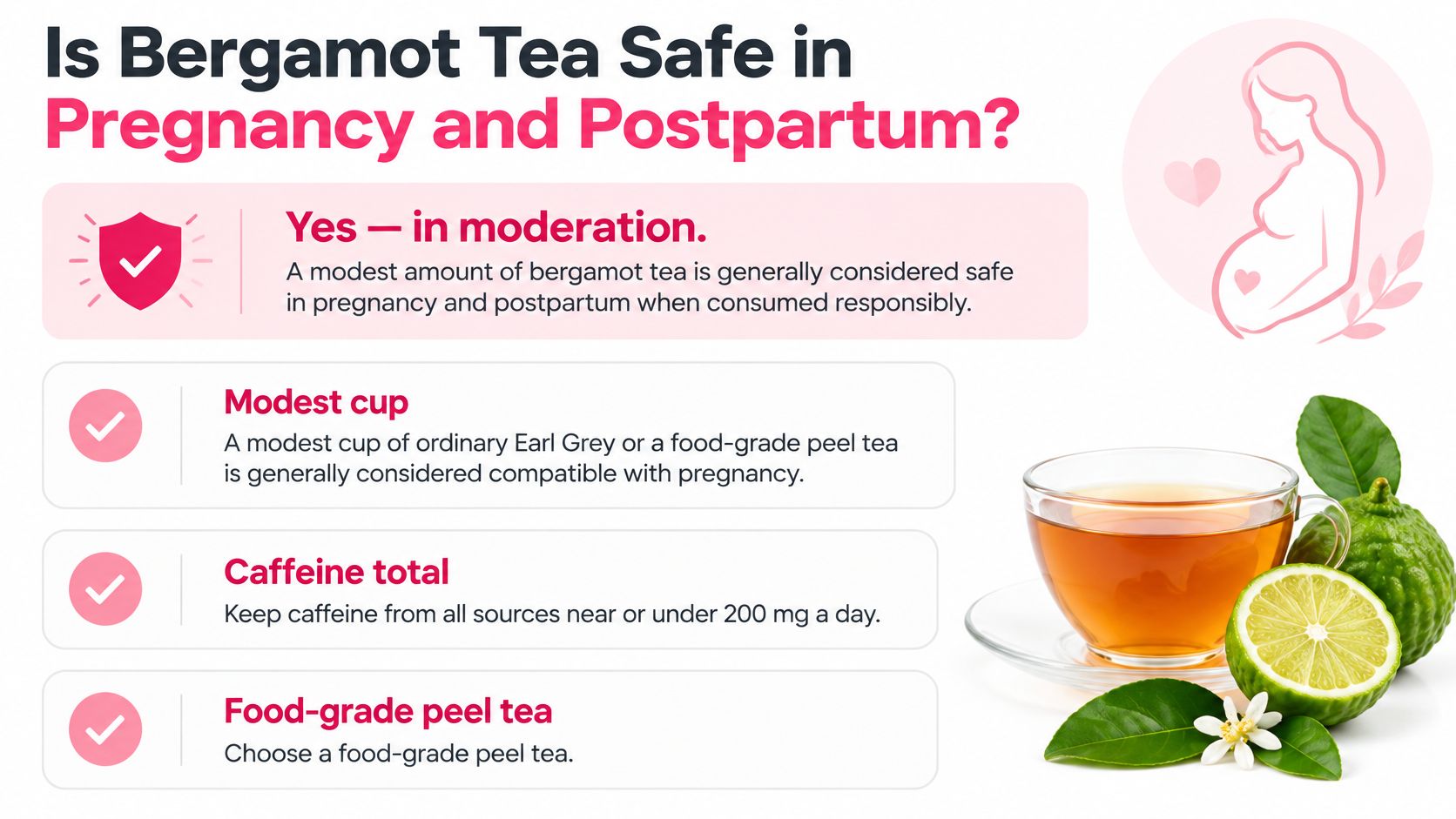
For pregnancy, prenatal guidance generally advises keeping total caffeine from all sources near or under 200 mg a day. That total includes coffee, tea, chocolate, and other caffeinated drinks. Two strong Earl Grey mugs plus coffee could push your intake past that point. If you're breastfeeding, caffeine can pass into milk, and some babies are more sensitive to it. If you're weighing your options, this guide to caffeine during pregnancy offers more context.
Read the ingredient list for Camellia sinensis, “natural flavor,” or bergamot essential oil. A food-grade flavoring used in tea is not the same as drops of essential oil from an unlabeled bottle. Essential oil stirred into water is concentrated, not a tea, and isn't a good drink to experiment with.
Photosensitizing compounds in citrus oils, including bergapten, are mainly a skin concern when oil is applied before sun exposure. You don't need to treat a normally flavored cup as a skin product. If you want the taste with less caffeine, decaf Earl Grey or a food-grade peel infusion is a simple starting choice.
What Bergamot May Do in Your Body
Plant flavonoids are a little like pigments in fruit: they help give plants their character, and researchers study how they interact with the body. In concentrated bergamot extracts, two names you may encounter are brutieridin and melitidin. They're associated with bergamot fruit extracts, not present in meaningful amounts in a scented teacup.
If your cup is based on black or green tea, you're drinking tea polyphenols, including catechins. Think of those as a gentle contribution from the tea leaf, not as a medicine with the targeted dose of a capsule.
Scent, sipping, and digestion
Smelling bergamot is different from swallowing it. Aroma reaches your nose and may change how relaxed you feel in the moment, much like the fresh scent of citrus in a kitchen. A cup of tea also offers warmth, fluid, and a pause in a busy day. That ritual may feel comforting, but it isn't a treatment for anxiety or depression.
Citrus peel has a traditional association with easing a heavy feeling after a meal. A bright-tasting drink may feel pleasant, but that doesn't mean it treats reflux. If citrus makes your heartburn worse, choose another drink.
Essential-oil compounds such as linalool and limonene are studied in laboratory and aroma research. But concentration matters. One drop of vanilla can flavor a smoothie; a bottle of extract is another product altogether. A drop of bergamot oil isn't equivalent to a sip of tea.
If a study used capsules, a mug can't copy that pathway or dose. Don't chase a laboratory result by making your tea stronger or adding oil. For another familiar example of how an herb's form affects how people use it, see this guide to ginger during pregnancy.
Is Bergamot Tea Safe in Pregnancy and Postpartum
A modest cup of ordinary Earl Grey or a food-grade peel tea is generally considered compatible with pregnancy when caffeine from all sources stays near or under 200 mg a day. Bergamot supplements and swallowed essential oil are different products, not do-it-yourself prenatal remedies.
Citrus flavor can feel refreshing when nausea is around, but it can also worsen reflux. If a cup burns or makes heartburn worse, stop and switch to something that sits more comfortably. Black-tea caffeine later in the day may also disrupt sleep, so an evening cup may not feel like the calming ritual you hoped for.
What to mention at a medication visit
A normally flavored cup and a concentrated extract don't pose the same questions. Still, mention the tea to your clinician if you take medication or have a condition that affects your choices.
- Blood-pressure medicine: Concentrated bergamot products may affect how the body processes some medicines, and any blood-pressure effect could add to medication effects.
- Statins: Tell your care team about bergamot products, especially extracts, because citrus compounds can affect medicine processing.
- Diabetes medicine: Don't use bergamot as a blood-sugar plan or add an extract without medical advice.
- Potassium or kidney concerns: Check before trying an unfamiliar citrus supplement.
- Planned surgery: Tell your care team about supplements you take and avoid starting unfamiliar ones without their guidance.
Photosensitivity is mainly a concern when citrus oil is put on skin and exposed to sunlight, not from drinking an ordinary cup. First-trimester nausea doesn't make essential oil safer to swallow. Skip capsules marketed for cholesterol unless your clinician specifically recommends them.
Breastfeeding adds another practical consideration: caffeine can reach breast milk. If your baby seems jittery or has trouble settling after you drink regular Earl Grey, try decaf or pause the tea and discuss the pattern with your provider. Aroma may be a comfort postpartum, but it isn't a treatment for anxiety or depression. Contact your provider if low mood persists. You can also read about ginger and peppermint tea safety when comparing common herbal drinks. For broader pregnancy food guidance, see foods to avoid during pregnancy.
For an appointment, you can say: “This is the brand I drink, it is caffeinated” or “it's decaf,” and “I'm not taking bergamot oil or pills.” That gives your provider useful details without making a comforting cup feel more complicated than it needs to be.
How to Brew Bergamot Tea in Moderation
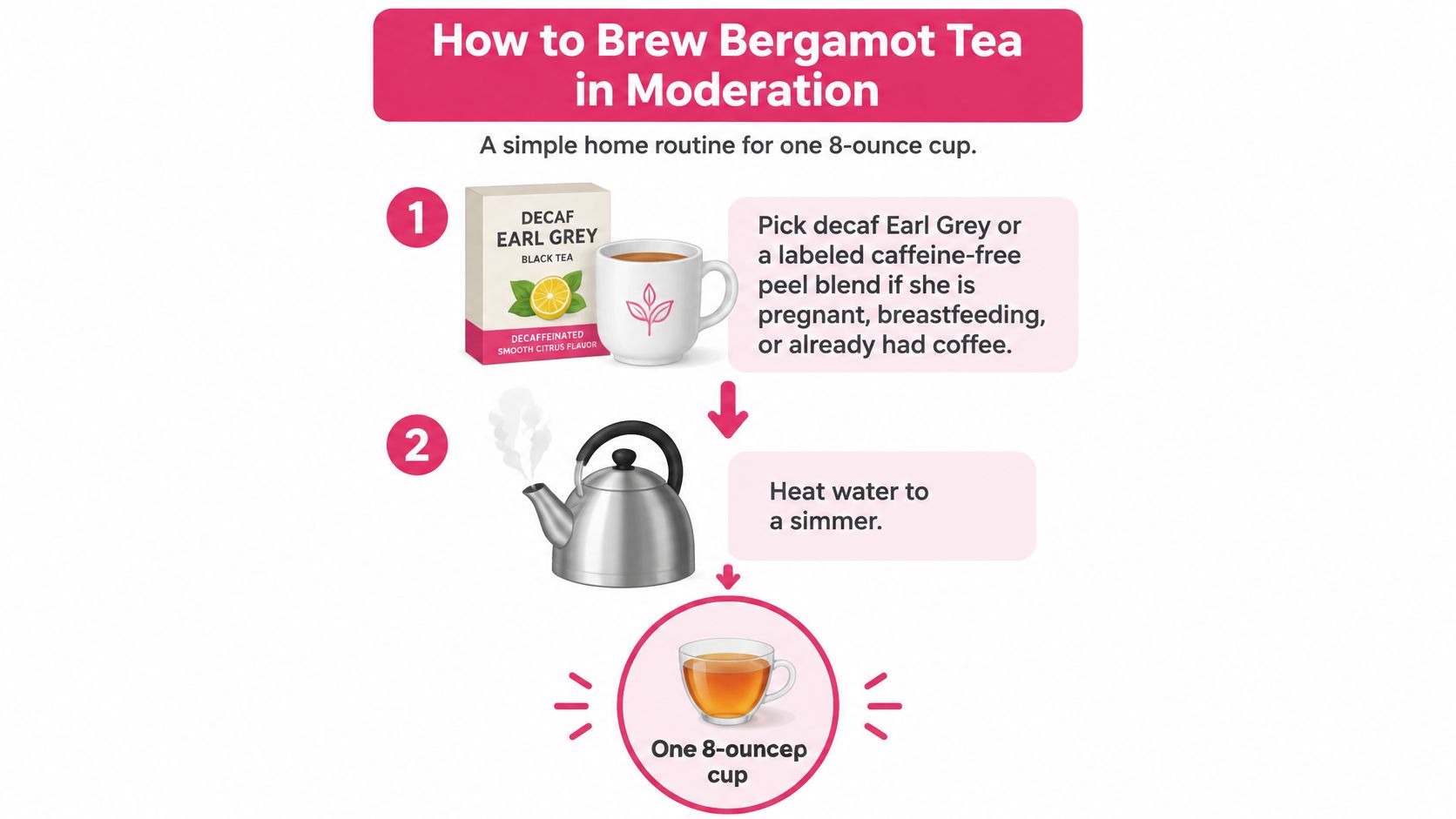
For a gentle cup, start with the kind of tea that fits your day, then brew it without adding concentrated oil. These steps make a single 8-ounce cup.
- Pick a lower-caffeine option. Choose decaf Earl Grey or a labeled caffeine-free peel blend if you're pregnant, breastfeeding, or have already had coffee. This makes it easier to keep track of caffeine.
- Heat the water to suit the tea. Bring water to about 200°F for black tea or 175°F for green tea. For green blends, avoid a rolling boil; the cooler water can help preserve a smoother taste. If you're unsure what “simmer” means, these simmering basics for weeknight soups explain the difference between a simmer and a full boil.
- Measure the leaf. Use one teaspoon of loose tea or one tea bag per 8 ounces of water. A consistent amount helps the cup taste familiar.
- Steep briefly. Give black tea or Earl Grey 3 to 5 minutes, and green tea 2 to 3 minutes. Longer steeping can make tea taste bitter and extract more caffeine from real tea leaves.
- Remove the bag or strainer. Don't leave the leaves sitting in the cup if you want to avoid an overly strong, bitter brew.
- Add only what you like. Lemon or a little honey is fine if it suits you. Skip extra bergamot oil drops.
- Count the cup before pouring another. Keep it in your daily caffeine total, alongside coffee, chocolate, and any other caffeinated drinks. For more on fluids during pregnancy, this pregnancy hydration guide may help with your overall routine.
You might prefer your cup in the morning or early afternoon, with food if citrus bothers your stomach. If sleep is fragile, don't make caffeinated tea your nightcap. A modest one or two cups on days you want them is a more sensible picture than sipping a large pitcher all day, and tea shouldn't replace water. A warm decaf mug during a feed can be a comforting postpartum pause, not a supplement.
Choose a blend with food-grade ingredients, a clear caffeine statement, and no instruction to ingest essential oil. If you develop heartburn, palpitations, jitters, or a rash, stop and ask your provider. If your baby seems more restless after you drink regular Earl Grey, switch to decaf or pause and ask your provider.
What to Ask Your Provider Before Another Cup
A useful appointment question helps you make a decision that fits your body, your medicines, and your day. You can ask your OB, midwife, or dietitian:
- “Does my full caffeine intake, including this tea, stay near or under 200 mg a day?”
- “Would decaf Earl Grey or a peel infusion be a better fit for my reflux, blood pressure, or mood?”
- “Could any of my medicines be a reason to avoid citrus extracts, even if a cup of tea is fine?”
Enjoy a moderate food-grade cup if it feels good to you, and leave bergamot capsules and essential oil off the menu unless a clinician recommends them. A tea can be a comforting ritual, but it can't cover the nutrients a prenatal supplement is designed to provide.
If you're looking for an option to discuss with your provider from preconception through postpartum, Feed Mom & Me Complete Prenatal Vitamin Plus DHA is a women-owned, mom-built formula in a vegetarian delayed-release capsule. DHA is essential in the development of your baby's brain, eyes, and nervous system, and it also helps support your immune system and mood; the formula also contains choline, selenium, and methylfolate.
The formula includes organic ginger and peppermint powders to help relieve queasiness due to morning sickness. If swallowing capsules is hard, they can be opened into a smoothie, with the full powder consumed. Bring your questions to your clinician for a personal yes. In a community built by moms for moms, asking informed questions is a strength, not a worry.
Feed Mom & Me offers prenatal nutrition support designed for the journey from preconception through postpartum, including Complete Prenatal Vitamin Plus DHA. If you're weighing a comforting tea against nutrients a mug can't supply, talk the formula over with your provider and visit Feed Mom & Me.