
Can You Mix Protein Powder with Water? a Pregnancy Guide
Published:Updated:
Yes, you can mix protein powder with water, and water adds no calories, so the scoop's label sets the protein amount. Adding more water changes the drink's consistency, not how much protein you've put in.
Maybe you're standing in the kitchen with a shaker bottle, a queasy stomach, and a tub that promises an easy nutrition boost. You want something manageable, but you also want to know whether it's appropriate for you and your baby. That's a sensible question, mama, and the most important answer is on the ingredient panel, not in your choice of mixing liquid.
Table of Contents
- Is Water a Good Liquid for Protein Powder?
- How to Mix Protein Powder With Water Without Clumps
- Why Do Some Protein Powders Mix Thin and Others Thick?
- Does Mixing With Water Change How You Digest Protein?
- How Much Protein Do You Need During Pregnancy?
- Is Protein Powder Safe to Drink During Pregnancy?
- Confirm Your Protein Plan With Your Provider
Is Water a Good Liquid for Protein Powder?
Choosing a mixing liquid is a bit like choosing a base for a meal: it changes the drink's taste, texture, and added nutrients, but not the protein powder inside it. Water is a good, simple option for a lighter shake without extra calories. Milk makes the drink creamier and adds nutrients, while juice brings sweetness and carbohydrates. The powder's label and your healthcare provider's advice, especially during pregnancy, are what matter for deciding whether it suits you.
In a randomized crossover study published in the International Journal of Sport Nutrition and Exercise Metabolism, 12 healthy young women consumed protein as a liquid or a solid bar. Both forms increased circulating amino acids, with no significant difference between treatments. Amino acids are the building blocks your body uses after digesting protein.
The study doesn't show that every drink and food is digested identically. It does suggest that drinking protein does not automatically give it a special absorption advantage.
Which liquid suits your appetite?
Protein powder mixed with 240 mL of different liquids
These amounts describe the liquid only, not the protein powder. Packaged drinks can vary by formulation, so check the carton for the values in your actual serving.
| Liquid (240 mL) | Added calories | Added protein | Texture and taste |
|---|---|---|---|
| Water | About 0 kcal | 0 g | Thin and neutral, easy to carry |
| Skim milk | About 80–90 kcal | About 8 g | Lighter and creamier |
| Whole milk | About 145–150 kcal | About 8 g | Rich and creamy, adds fat |
| Unsweetened almond milk | About 30–40 kcal | About 1 g | Light with a nutty flavor |
| Orange juice | About 110 kcal | About 2 g | Sweet, adds carbohydrate |
Milk can make a shake feel more substantial; almond milk offers a lighter, nutty taste. Orange juice may pair well with fruit-flavored powder, though its acidity and flavor may not suit every stomach. If nausea makes drinking difficult, your provider can help you choose fluids that work for you. You can also read more about hydration during pregnancy.
- Water's advantages: It's readily available, portable, and adds no calories.
- Water's trade-offs: It can leave a shake tasting plain or feeling thin.
- Milk's advantages: It adds creaminess and protein.
- Milk's trade-offs: It adds calories, and whole milk also adds fat.
For a lighter shake, choose water; for a richer one, choose milk. Consider your appetite and your care team's nutrition advice, and treat Flourish-Everyday protein powder picks as a runner-focused product guide, not pregnancy-safety advice.
How to Mix Protein Powder With Water Without Clumps
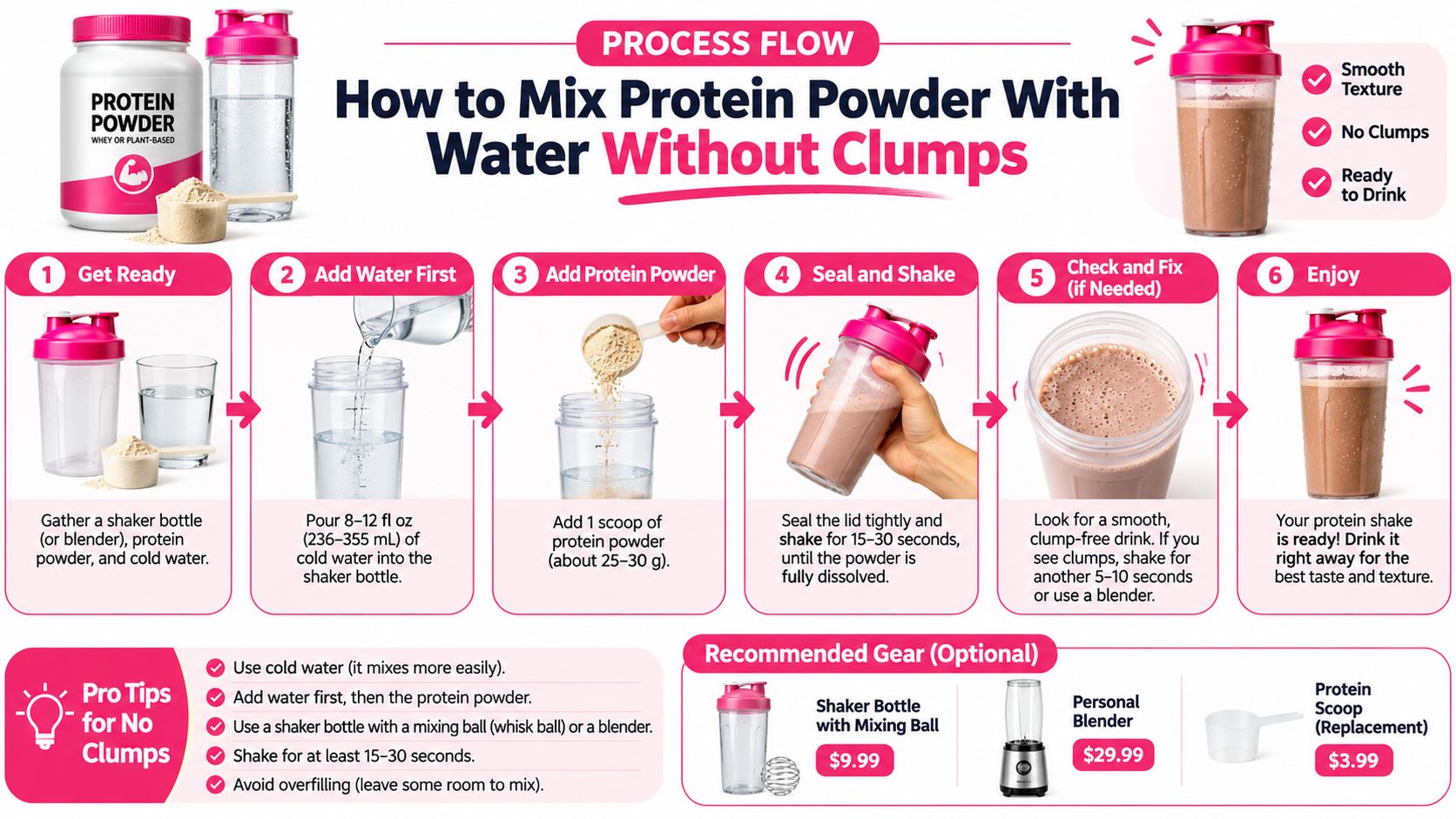
A smooth shake starts with the order you add the ingredients. Putting dry powder into an empty bottle can leave a stubborn layer stuck beneath the liquid, especially around the base.
Water is a practical carrier, not a precise nutritional prescription. For example, a randomized, double-blind trial published in 2013 used 20 grams of protein powder mixed with 237 milliliters of water. That preparation illustrates a workable mixture, not a recommended pregnancy dose.
Build your shake in this order
- Start with the water. Pour about a cup into a clean shaker bottle, or use the powder's suggested liquid amount as your starting point. Water first helps wet the powder instead of trapping it against the bottom.
- Measure the labeled serving. Add the powder after the water, checking whether the serving calls for a level scoop or a different measure. A scoop is a measuring tool, not a universal protein dose.
- Close the lid securely and shake vigorously. Check that the drinking cap is shut before you begin. Keep shaking until you can't see pockets of dry powder along the sides or base.
- Choose a comfortable temperature. Cool water is often more pleasant, especially if strong smells bother you. If you prefer warm water, avoid boiling water, which can encourage clumping, and never shake hot liquid in a sealed bottle.
- Let the foam settle. Give the drink a brief rest before deciding it needs more mixing. Otherwise, you may keep shaking air into a drink that's already blended.
- Drink it or refrigerate it promptly. Use a clean, covered container if you're saving it for later. Follow the product's storage directions and any food-safety advice from your provider.
Fix the texture without starting over
- Stubborn lumps: Add powder more slowly next time, or use a shaker with a wire ball to break up dry pockets.
- Too thick: Add a small splash of water, shake, and reassess rather than filling the bottle all at once.
- Too foamy: Let the bottle stand or gently tap it on the counter.
- Grainy texture: Try a brief blend instead of prolonged shaking, then allow any foam to settle.
Practical rule: Fix the texture with mixing technique before adding extra powder or other ingredients.
A well-mixed shake should pour evenly without dry clumps, although some powders naturally retain a slightly sandy texture. You don't need to chase a milkshake-perfect result, mama. Drink it within the storage window on the product label or the timeframe your provider recommends.
Why Do Some Protein Powders Mix Thin and Others Thick?
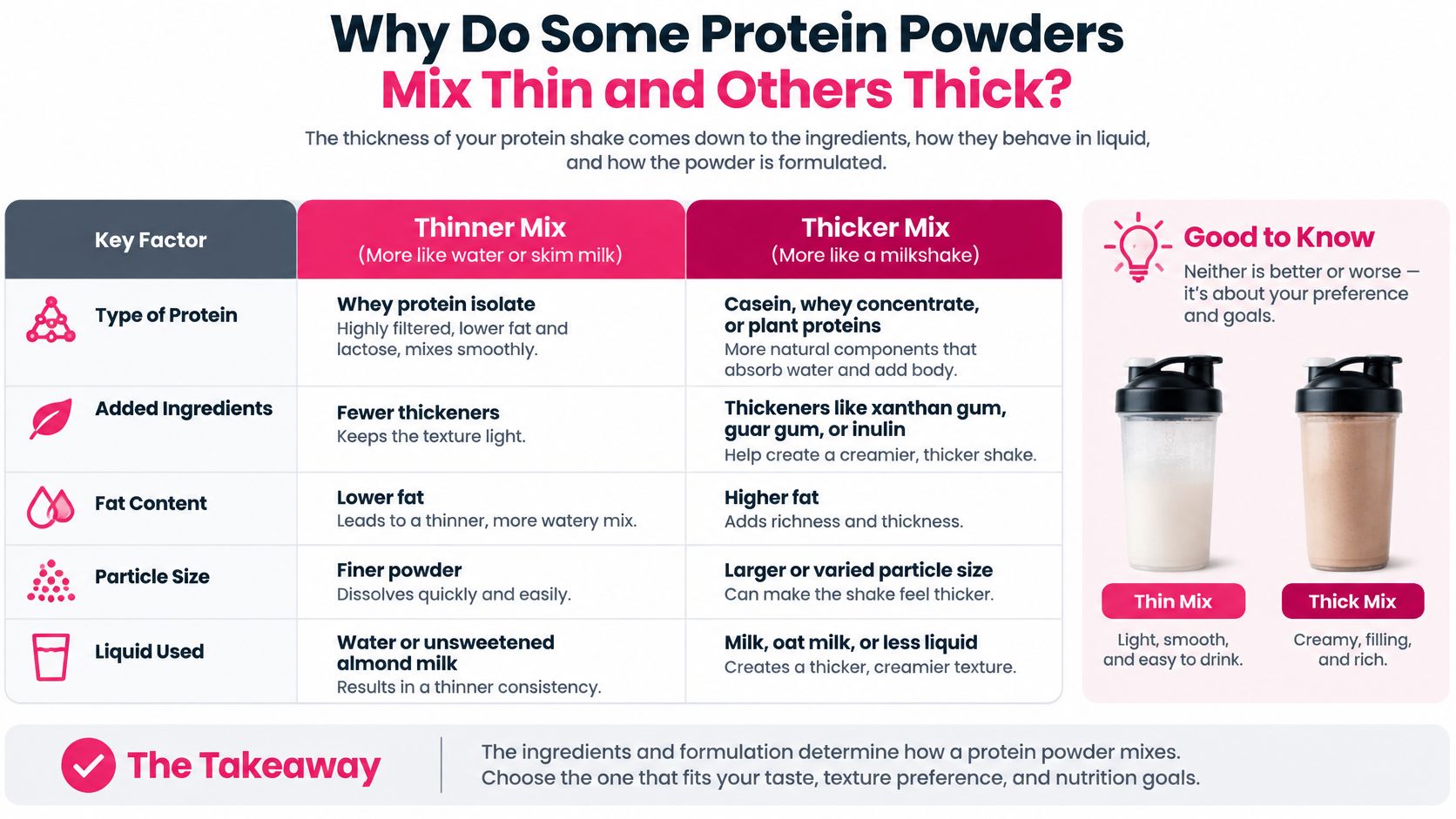
Your usual scoop may turn thin with one powder and thick with another, even when you use the same amount of water. The difference often comes from the protein source and how the finished powder is made. Similar to how flour and cornstarch behave differently in a recipe, protein powders can take up water, disperse, foam, and thicken in different ways.
What water absorption can tell you
The comparison below shows water absorption for several plant and yeast protein samples. These laboratory measurements can help explain why powders behave differently, but they are not instructions for how much water to use with a serving.
How much water different proteins absorb
| Protein source | Water-absorption capacity | What that means in the cup |
|---|---|---|
| Pea protein | Higher in this comparison | May contribute to a thicker mixture |
| Soybean protein | Higher in this comparison | May contribute to a denser texture |
| Faba-bean protein | Higher in this comparison | May hold more water in the mixture |
| Yeast protein | Lower than the plant proteins shown | May produce a comparatively thinner mixture |
These comparisons describe the samples, not every product made from those ingredients. A finished powder may also include thickeners, flavorings, and other ingredients that change its texture.
Adjust the drink, not your nutrition target
The comparison covers plant and yeast proteins. It does not establish corresponding water-absorption values for whey or casein, and it cannot tell you which protein is best during pregnancy. For that, check the product label and ask your healthcare provider.
For the texture, the practical difference is straightforward:
- More water: A thinner drink with a less concentrated flavor.
- Less water: A thicker drink with a stronger flavor.
- The same measured powder: The same amount of protein, as long as you consume the full mixture.
A thicker shake isn't automatically more nutritious. It may simply contain less water.
If you're weighing up a different formulation, this guide to raw organic protein can help you consider product details. “Organic” alone doesn't answer whether a product is suitable during pregnancy. Read the full ingredient list and discuss the choice with your healthcare provider.
Start with the liquid amount suggested on the label, then adjust gradually to a consistency you can comfortably drink. Water changes how the powder is prepared, not what the product contains. The label and your provider's guidance can help you decide whether that product fits your needs during pregnancy.
Does Mixing With Water Change How You Digest Protein?
Water changes the drink, not the protein's underlying quality. The more useful question is how the protein source, serving size, and other ingredients affect your own comfort and appetite.
In a randomized crossover study summarized in a peer-reviewed Nutrients article, participants drank 35 g of whey, soy, or krill protein in 400 mL of water. Whey and krill produced higher circulating amino-acid concentrations than soy during parts of the first hour, but hunger and fullness didn't differ significantly over time between treatments. Separate randomized research discussed in the same article found that 20 g of casein or pea protein reduced later food intake compared with water alone, while whey and egg didn't show that same effect.
The useful message isn't that one powder will keep every mama full. It's that identical mixing liquid doesn't create identical digestive experiences.
Let comfort guide the experiment
These findings largely come from small studies in healthy adults, not studies designed to establish pregnancy recommendations. They can help explain differences, but they can't predict whether a particular shake will settle your stomach.
- If nausea makes thick drinks difficult: Try a thinner mixture and notice whether it's easier to finish.
- If you feel hungry afterward: Pair the shake with a meal or snack rather than assuming the powder must replace food.
- If you feel bloated: Look at the protein source, lactose, sweeteners, and overall drink volume instead of blaming water alone.
- If symptoms repeat: Write down the product, serving, accompanying food, and how you felt so your provider can review the pattern.
For exercising adults, the International Society of Sports Nutrition position stand identifies 20–40 g of high-quality protein per serving as a practical target. That's sports-nutrition guidance, not an automatic serving recommendation during pregnancy or breastfeeding.
Don't turn fullness into the goal
A slower-digesting protein such as casein may feel different from whey, but feeling fuller isn't always what you need during pregnancy. If you're already struggling to eat enough, a shake that displaces meals may not help your overall intake.
Use your provider's recommended portion, and consider taking it alongside food. You're looking for nourishment you can tolerate, not a fat-loss trick or a way to suppress your appetite.
How Much Protein Do You Need During Pregnancy?
Your daily protein target depends on more than whether you use a shaker bottle. Pregnancy stage, body size, activity, health conditions, and breastfeeding all belong in that conversation.
A peer-reviewed review of protein requirements during pregnancy discusses reference intakes of approximately 46 grams daily in the first trimester and 71 grams daily in the second and third trimesters for a reference-weight woman. These reference amounts are a starting point for discussion, not a personalized prescription.
Daily protein reference by life stage
| Life stage | Daily protein (reference weight) | Where a shake fits |
|---|---|---|
| Non-pregnant adult woman | 46 g | One convenient piece of your daily total |
| Pregnancy, first trimester | 46 g | Helpful when food feels hard to manage |
| Pregnancy, second and third trimesters | 71 g | Fills a gap after food sources are counted |
| Breastfeeding | 71 g | Adds protein without extra calories from a milk mixer |
Count food before choosing a supplement
Grams of protein describe a nutrient amount, not the weight of the whole food. An egg or glass of milk contains protein alongside water and other nutrients, so you wouldn't count its entire weight toward your protein target.
You can spread protein-containing foods across meals and snacks:
- Eggs and dairy: Eggs, yogurt, cheese, and milk.
- Beans and soy foods: Beans, lentils, tofu, and other soy foods.
- Meat and fish: Options prepared according to pregnancy food-safety guidance.
- Nuts and grains: Nuts, nut butters, and whole grains contribute to your total too.
You don't have to eat every category. Your preferences, cultural foods, allergies, budget, and appetite all matter, mama.
Our guide to pregnancy protein requirements offers more context for discussing your needs. If you're organizing meals around dietary restrictions, IT'S A CHEF! special diet support may also provide meal-planning ideas to review alongside clinical advice.
Find the gap rather than assuming one
Say you manage yogurt at breakfast, beans at lunch, and tofu at dinner. A shake may be useful on a day when nausea interrupts those meals, but it isn't automatically necessary on a day when food meets your needs.
Write down what you eat on a typical day, using food labels where available. Then check how much a labeled serving of powder would add and ask your provider whether that addition makes sense.
A shake is one piece of your daily intake, not a replacement for dietary variety. During postpartum recovery, revisit the plan rather than assuming your pregnancy routine still fits unchanged.
Is Protein Powder Safe to Drink During Pregnancy?
Pregnancy doesn't make every protein powder unsuitable, but it does make product-specific review important. A plain protein powder raises different questions from a blend containing herbs, stimulants, and added vitamins.
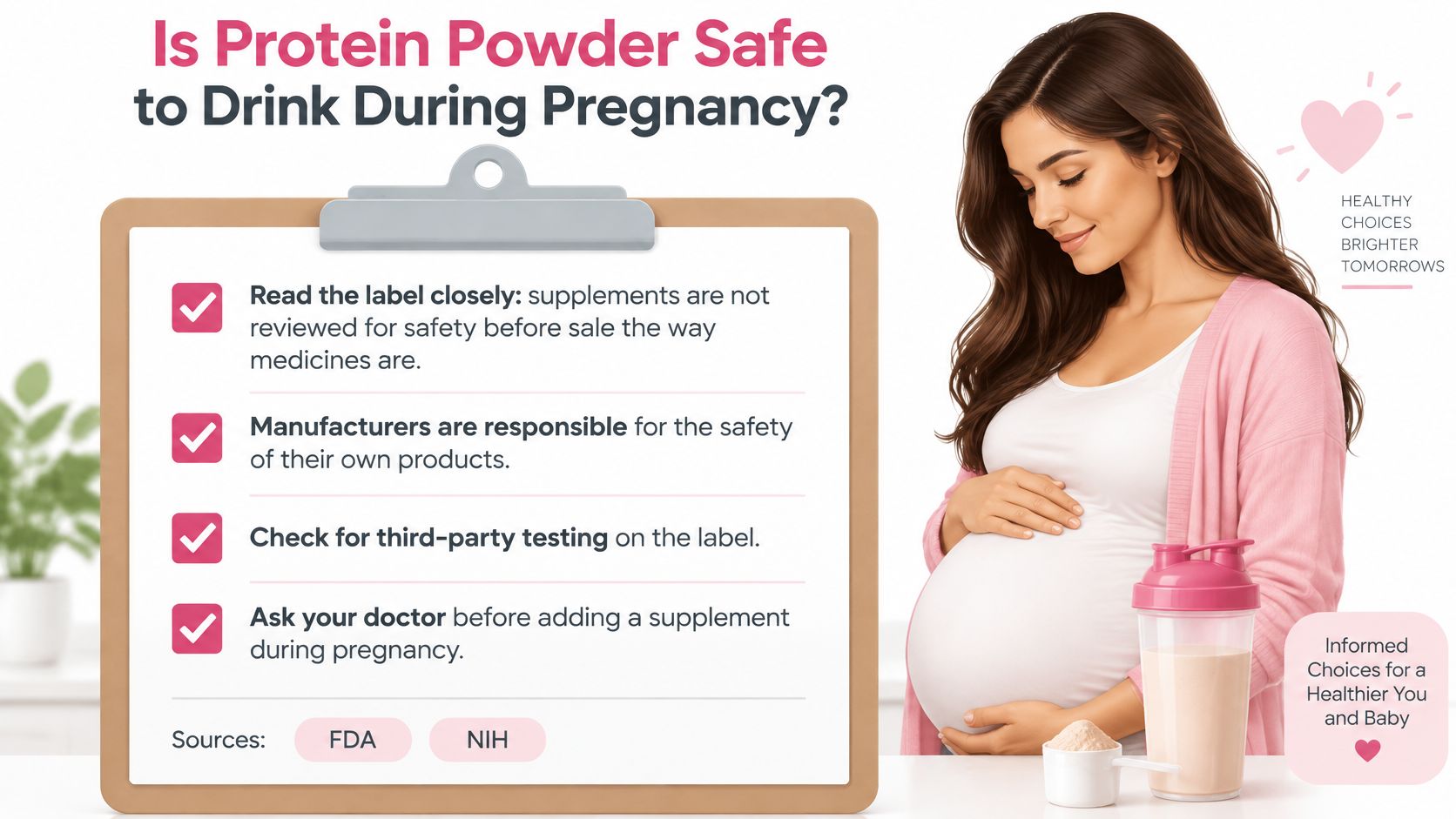
The FDA's dietary supplement guidance for women explains that supplements aren't reviewed or approved for safety before sale and that manufacturers are responsible for their products' safety. NIH's Office of Dietary Supplements also advises caution with supplements beyond a standard prenatal because many haven't been well tested in pregnant or breastfeeding women.
That's a reason to make an informed choice, not a reason to panic. You can bring clear, practical questions to your care team.
Read beyond the protein claim
- Read the full Supplement Facts panel: Look at everything included, not just the protein amount on the front.
- Check the serving size: Confirm how much powder the listed amounts describe.
- Review the allergen statement: Pay particular attention to milk, soy, and any allergens relevant to you.
- Scan for added blends: Herbs, caffeine, stimulants, and vaguely described performance ingredients deserve a closer discussion.
- Check added vitamins and minerals: These may overlap with your prenatal and other supplements.
- Stay within the agreed amount: Don't exceed the label serving or your provider's recommendation.
- Look for independent testing: Check what was tested rather than treating a testing logo as a pregnancy-safety guarantee.
Understand what testing does and doesn't establish
At Feed Mom & Me, a third-party lab tests each batch of our prenatal vitamins twice for heavy metals, microbes, allergens, and other contaminants. That's a concrete example of contaminant testing, not evidence that an unrelated protein powder is appropriate for pregnancy.
Independent testing and clinical suitability answer different questions. Testing can provide information about the product, while your clinician considers whether its ingredients and amounts fit your health needs.
Water changes preparation, not the product's underlying safety profile.
If you're considering specialty water as well, Praz Pure Water, Inc.’s discussion of is alkaline water safe while pregnant is another resource to bring into that conversation. Don't assume a specialty mixing liquid makes a questionable powder safer.
Our guide to whether pregnant women can drink protein shakes can help you organize broader product questions. Bring the actual label to your OB-GYN, midwife, or registered dietitian, especially if you have kidney disease, food allergies, diabetes, or take medications.
You deserve advice about the product in your hand and your own circumstances, not a blanket yes or no about every powder.
Confirm Your Protein Plan With Your Provider
Bring the protein powder container, or a clear photo of its Supplement Facts panel, ingredient list, and allergen statement, to your next appointment. A typical day's food list can help your provider see how the powder fits into the rest of your routine.
Your OB-GYN, midwife, or registered dietitian can review the serving, check for added herbs or vitamins, and consider how pregnancy symptoms or postpartum needs affect what you can comfortably eat. Water changes how the powder is prepared, not what it contains. The label and your provider's guidance are what matter when deciding whether it suits you.
Bring these questions to your appointment
- Is this product appropriate for me? Ask whether it fits your trimester, postpartum recovery, or breastfeeding stage.
- Does it overlap with my prenatal? Include all vitamins, fortified drinks, and supplements you currently use.
- Should my health history change the plan? Mention kidney disease, allergies, diabetes, medicines, and digestive symptoms.
If your food already meets your needs, you may not need protein powder. If a supplement could help, ask for a clear plan: which product to use, how much, how often, and what to do if it bothers your stomach.
Our guide to nutrition education for pregnant mothers can help you prepare questions without turning every meal into a calculation. The aim is a routine you can manage, not perfect tracking.
Keep your prenatal and protein decisions separate
You may also want to discuss prenatal nutrition while sorting out meals and protein. Feed Mom & Me Complete Prenatal Vitamin Plus DHA, from our women-founded brand, is one option to review with your provider.
The prenatal provides 50 mg of DHA per serving, choline, and 15 other key nutrients. Its formula uses L-Methylfolate Calcium instead of synthetic folic acid. It is a prenatal supplement, not a meal replacement or a substitute for personalized protein advice.
Take the product label and food notes to your appointment. Together, they can help your provider suggest a practical plan for you and your baby.
Feed Mom & Me offers prenatal supplements and nutrition education for pregnancy and early parenthood. Explore the Complete Prenatal Vitamin Plus DHA and pregnancy-friendly resources, and discuss your questions with your healthcare provider as you build a routine that works for you.