
Best Organic Vitamins for Toddlers: How to Choose Safely
Published:Updated:
The most popular advice about toddler vitamins starts in the wrong place: pick an organic brand, then decide which bottle looks best. Start with your child's diet instead. The best organic vitamins for toddlers are the ones that fill a real nutritional gap at an appropriate dose, not just the ones with the greenest label.
If you're pregnant, postpartum, or juggling a toddler's changing food preferences, you don't need another purchase to prove you're doing enough, mama. You need a manageable way to decide whether a supplement belongs in your child's routine, what to check, and when your pediatrician should help.
Table of Contents
- Do Toddlers Need a Daily Vitamin and Where Does Overdose Risk Start?
- Which Nutrients Change With a Plant-Based or Restricted Diet?
- What Does Organic Really Mean on a Vitamin Label?
- Which Ingredients Should Make You Pause?
- Choosing Between Gummy, Liquid and Chewable Formats
- How to Give Your Toddler Vitamins Safely Each Day
- Confirm Your Choice With Your Pediatrician Before You Buy
Do Toddlers Need a Daily Vitamin and Where Does Overdose Risk Start?
A healthy toddler who eats a varied diet and grows normally usually doesn't need a routine multivitamin. The American Family Physician review of toddler nutrition supports focusing supplementation on specific needs, such as a restricted diet, diagnosed deficiency, poor absorption, or faltering growth.
That's reassuring if breakfast was uneven and dinner ended with peas on the floor. One difficult meal doesn't mean your child needs a broad supplement, mama. Your pediatrician looks at the overall eating pattern and the growth curve, not at whether every plate comes back empty.
Vitamin D deserves particular attention when reliable dietary sources are limited. Even then, a targeted need usually calls for a targeted product: a toddler who needs vitamin D gains little from a multivitamin that also carries a long list of nutrients their food already covers.
How should you read daily amounts and upper limits?
A daily amount is a nutritional target for total intake from everything your child eats and drinks. An upper limit is the level above which risk begins to rise. It is a boundary rather than a goal, and an accidental ingestion below it can still cause harm, which is why dose matters more than the label's marketing.
For toddlers aged 1–3, NIH Office of Dietary Supplements guidance lists 7 mg of iron daily and an upper limit of 40 mg from food, beverages, and supplements combined. The reference values below are a starting point for a pediatric discussion rather than a shopping list of everything to buy.
Daily amounts and upper limits for toddlers aged 1–3
| Nutrient | Daily amount (ages 1–3) | Upper limit (ages 1–3) |
|---|---|---|
| Vitamin D | 15 mcg (600 IU) | 63 mcg (2,500 IU) |
| Iron | 7 mg | 40 mg |
| Vitamin A | 300 mcg RAE | 600 mcg RAE, applying to preformed vitamin A |
| Zinc | 3 mg | 7 mg |
| Calcium | 700 mg | 2,500 mg |
| Vitamin C | 15 mg | No tolerable upper limit established for this age |
A missing number in that last cell is easy to misread. For vitamin C, no tolerable upper limit has been established at ages 1–3 because the evidence doesn't support setting a firm ceiling, so the practical step is to add up food and supplement amounts and review the total with your pediatrician rather than assume any dose is safe. The vitamin A limit also needs interpretation, because preformed vitamin A and beta-carotene aren't interchangeable for safety comparisons.
Before comparing any product with these targets, add together fortified milk, cereal, other foods, and supplements your child already takes. A supplement tops up a cup that food has already partly filled; there is no separate cup that doesn't count.
For background on how the body stores or clears different nutrients, our explanation of fat-soluble versus water-soluble vitamins can help. Vitamin Planet's guide to safe upper limits for vitamin D is another useful discussion resource, though your pediatrician should set your toddler's actual supplemental dose.
Which safety habits matter most?
Iron deserves special care because excessive intake can cause serious poisoning, and the gap between a helpful dose and a harmful one narrows quickly in a small body. Possible warning signs after an ingestion include:
- Digestive symptoms: Stomach pain, nausea, or vomiting.
- Unusual behavior: Marked sleepiness, weakness, or difficulty waking.
- Severe symptoms: Collapse, seizures, or breathing difficulty require emergency help.
Don't wait for symptoms if your child may have swallowed extra vitamins. In the United States, call Poison Control at 1-800-222-1222 promptly; call emergency services for severe symptoms.
Keep iron-containing products locked away, preferably in a high cabinet as well. Don't leave bottles on counters, in handbags, or beside the breakfast dishes, and never call vitamins candy.
Before shopping: Write down a typical day of food, milk, and supplements. Bring that list to your pediatrician so you can identify a gap rather than guess.
Which Nutrients Change With a Plant-Based or Restricted Diet?
Nutrients to ask about by feeding pattern
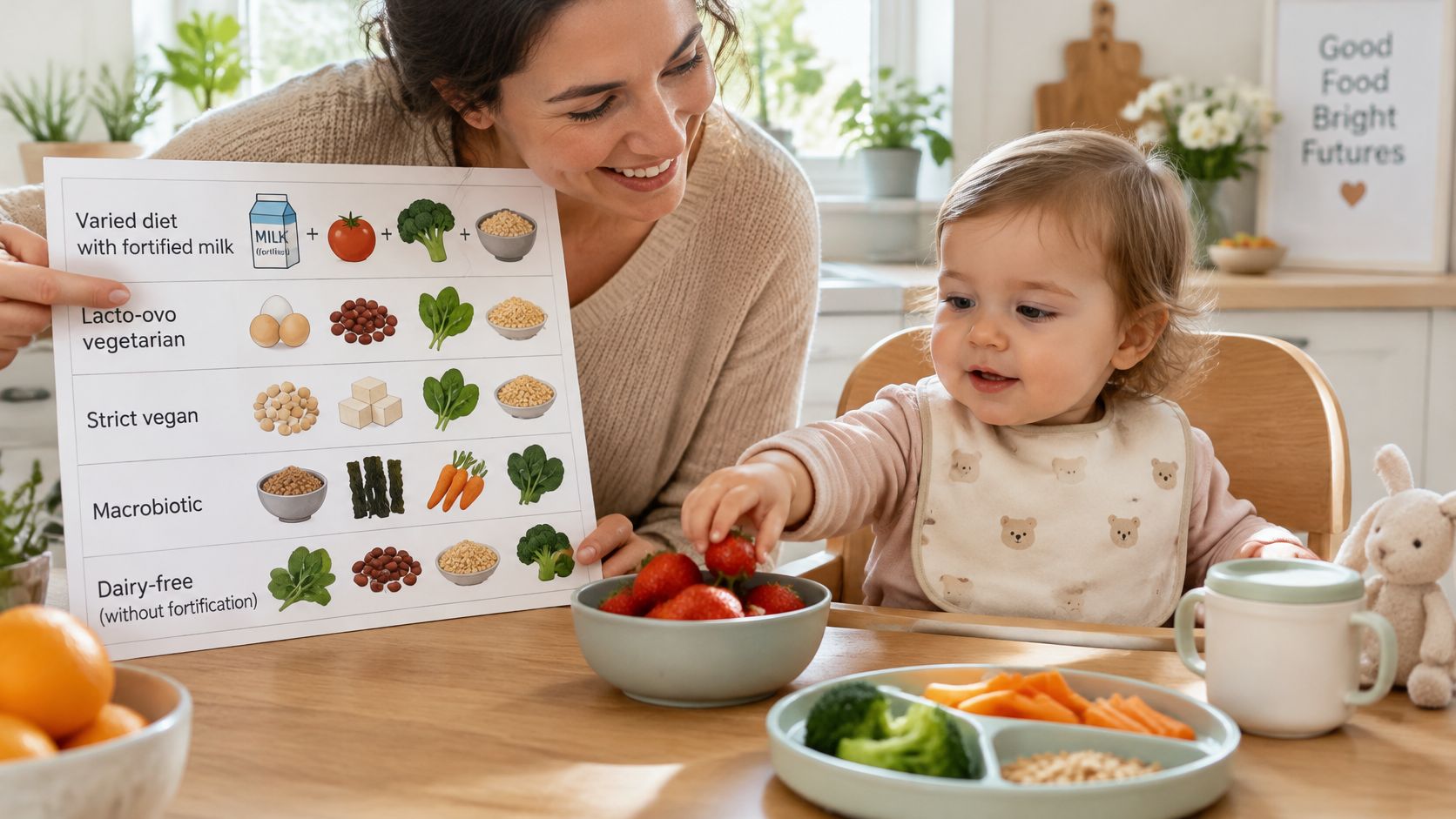
| Feeding pattern | Nutrients to ask about | Discuss before buying |
|---|---|---|
| Varied diet with regular fortified milk | Usually no broad supplement; assess vitamin D intake | Confirm total intake first |
| Lacto-ovo vegetarian | Iron, zinc | Check how often iron-rich foods are eaten |
| Strict vegan | Iron, vitamin B12, vitamin D, DHA | Review whether testing and targeted supplementation are needed |
| Macrobiotic | Iron, vitamins A and D, vitamin B12, DHA | Review testing with a pediatrician |
| Dairy-free without fortified substitutes | Vitamin D, calcium | Discuss appropriate fortified alternatives |
| Food allergy, poor growth, or malabsorption | Nutrients affected by the diagnosis and excluded foods | Get a medical assessment before iron or high-dose products |
These are questions to investigate, not diagnoses. A vegetarian toddler who regularly eats eggs, dairy, beans, and fortified foods has a different nutritional picture from a child eating a very narrow selection of unfortified plant foods.
A systematic review of plant-based diets in children linked strict vegan and macrobiotic diets in early childhood with risks involving iron, vitamins A and D, vitamin B12, and DHA, while lacto-ovo vegetarian diets were associated with normal growth in the reviewed evidence. The review also noted uncommon iron supplementation in plant-based groups, an important reminder that buying a general gummy doesn't necessarily address the nutrient a child needs.
Food-pattern discussions are easier when you can see the choices together.
What foods belong in the conversation?
Bring actual food examples to the appointment rather than saying only that your child is picky.
- Plant-based iron: Beans, lentils, dark leafy greens, and iron-fortified cereals are useful options.
- Vitamin C partners: Strawberries, peppers, and other vitamin C-rich foods help with absorption of plant-based iron.
- Vitamin B12: Discuss reliable fortified foods or an appropriate supplement when animal foods are excluded.
- DHA: Fish or algae-derived options may fit different family eating patterns.
Our guide to omega-3 fatty acids for kids can help you prepare questions about DHA without assuming every child needs the same product.
For dairy-free toddlers, bring the beverage carton or a photo of its nutrition label. A drink that looks like milk may not provide the same nutrient profile, and replacing milk involves more than finding a similar taste.
A restricted diet is a reason for a personalized plan, not automatic permission to give high-dose vitamins. Your pediatrician can decide whether dietary changes, a dietitian referral, testing, or supplementation makes sense, particularly when allergies or growth concerns complicate feeding.
What Does Organic Really Mean on a Vitamin Label?
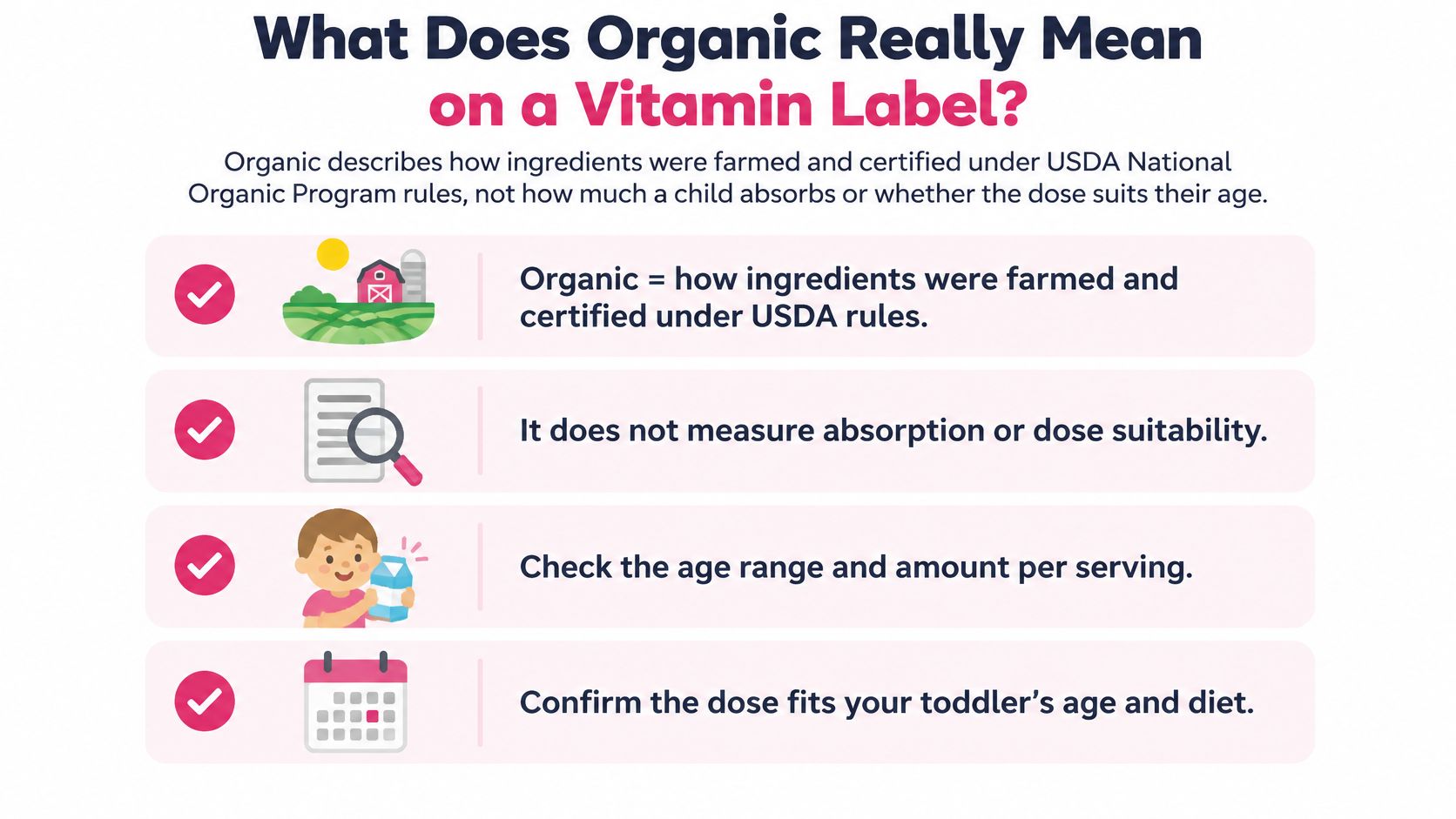
Organic describes sourcing and certification, not whether a vitamin is right for your child. The label is like free-range on an egg carton: it tells you something about production, but it doesn't tell you the serving your toddler needs.
In the United States, the USDA National Organic Program sets standards for products marketed as organic, with applicable claims verified by accredited certifying agents. Organic certification doesn't establish superior absorption, prove a nutritional need, or make an excessive dose safe.
This distinction is easier to remember when you separate farming claims from dosing questions.
What should you verify beyond certification?
The Supplement Facts panel is where your practical evaluation begins. The FDA's dietary supplement questions and answers explain supplement labeling and oversight, which are separate from organic certification.
Use this shopping checklist:
- Age range and serving size: Confirm that the product is intended for your child's age and identify what makes up a complete serving.
- Nutrient amounts: Read the amount per serving, not just a prominent claim on the front.
- Daily value context: Check which age group the label uses before interpreting percentages.
- Independent testing: Look for identifiable third-party verification of purity and potency, rather than an unexplained testing badge.
- Batch transparency: Check whether testing information or a certificate of analysis is available for the relevant product or lot.
- Packaging and dates: Prefer child-resistant packaging and a clear expiration date.
- Ingredient information: Review allergens, other ingredients, and manufacturer or distributor details.
A certificate of analysis is a record of testing, not a pediatric recommendation. Check what was tested and whether the report matches the bottle you're considering.
A non-organic product with transparent testing and an appropriate dose may be a better choice than an organic product with little verification.
That doesn't mean your preference for organic ingredients is unimportant. It means organic can be a preference after nutritional suitability and safety checks, rather than a substitute for them.
The same distinction matters when you shop for yourself. Our guide to natural prenatal vitamins offers another opportunity to separate appealing label language from the information that helps you make a decision with your healthcare provider.
Which Ingredients Should Make You Pause?
A toddler vitamin doesn't need to resemble a pantry full of superfoods. A clear formula with a defined purpose is easier to evaluate than a long list of extras with uncertain amounts.
The National Center for Complementary and Integrative Health's guidance on supplements for children explains that supplements aren't preapproved for safety or effectiveness and may contain contaminants, undeclared ingredients, or amounts that differ from their labels. That's a reason to verify products carefully, not a reason to panic.
What deserves a closer look?
- Added sugars and sweeteners: Check both Supplement Facts and other ingredients. A sweetener isn't automatically dangerous, but sweetness doesn't provide a nutritional reason to choose the product.
- Artificial colors and flavors: These don't fill a dietary gap. If you prefer a simpler product, they're reasonable ingredients to leave out without assuming every colored vitamin is harmful.
- Proprietary herbal blends: A total blend weight doesn't tell you the amount of each botanical. Avoid buying a toddler product when you can't evaluate its active ingredients.
- High preformed vitamin A or iron: Don't choose a stronger formula on the assumption that more support is better. These ingredients need particular attention to age, need, and total exposure.
- Unclear extras: Be cautious about products promising appetite, immunity, or developmental benefits through poorly explained blends.
You can't identify an undeclared ingredient by reading a label, because it isn't disclosed there. That's why manufacturing transparency and testing matter alongside a readable ingredient list.
Our guide to third-party testing explains what verification can contribute. Testing helps evaluate product quality; it doesn't establish that your toddler needs the formula.
An unfamiliar chemical name isn't automatically a warning sign, either. Some are technical names for nutrients or formulation ingredients.
Shelf-side rule: If you can't identify the purpose and amount of an active ingredient, pause the purchase and ask your pediatrician or pharmacist to interpret it.
Choosing Between Gummy, Liquid and Chewable Formats
Toddler vitamin formats compared
| Format | Dosing accuracy | Added sugar or thickeners | Choking and handling risk | Best fit |
|---|---|---|---|---|
| Gummy | Fixed per piece; difficult to divide accurately | Check for sugars, sweeteners, gelatin, or pectin | Can pose a choking risk and resemble candy | Children who meet the labeled age range and chew reliably |
| Liquid drops | Adjustable only as the product instructions allow | Check for sweeteners and other ingredients | Requires careful measurement and administration | Children who can't manage solid formats |
| Chewable tablet | Fixed per tablet unless instructions permit splitting | Check for sweeteners and flavors | Choking risk when chewing skills are insufficient | Children who can reliably chew the specific tablet |
| Powder mixed into food | Use the labeled scoop or packet | Check the full ingredient list | Incomplete mixing or unfinished food can affect intake | Children who reliably finish the small food portion used |
The easiest format isn't always the most accurate format. A toddler may happily accept a gummy but refuse a liquid, while another child notices any powder added to yogurt. Choose around your child's abilities, the prescribed amount, and the actual product instructions.
How do the trade-offs work at home?
- Gummies: Their taste and texture can make them appealing, but they can also encourage snack-like expectations. Daily Powers' discussion of toddler gummy vitamin safety offers questions to discuss before choosing this format.
- Liquid drops: These can be practical when a child can't chew a supplement. Use the supplied measuring device and check the concentration carefully, because a drop and a dropperful aren't interchangeable.
- Chewable tablets: Consider the tablet's size and texture, not just whether your child chews ordinary food. Stay with your child during administration and don't offer a tablet beyond their chewing ability.
- Powders: Mix the labeled amount into a small portion your child is likely to finish, if the instructions allow it. Stirring it into an entire bowl can leave you unsure how much was consumed.
Don't assume you can give half a gummy to deliver an exact smaller dose. The product may not be intended for splitting, and a visibly equal piece doesn't establish a verified nutrient amount.
If your pediatrician recommends a different format, compare the new serving instructions, not the appearance of the product. A familiar-looking dropper can deliver a different concentration, and a replacement gummy can contain a different amount per piece.
The tired-parent decision rule is simple: choose an age-appropriate format your child can take safely and consistently, then confirm the dose before switching. Taste matters for cooperation, but it doesn't override dosing or choking considerations.
How to Give Your Toddler Vitamins Safely Each Day
A good supplement routine should reduce guesswork, not add another complicated household system. Once your pediatrician has confirmed the need and product, assign a clear caregiver and a consistent place to record each dose.
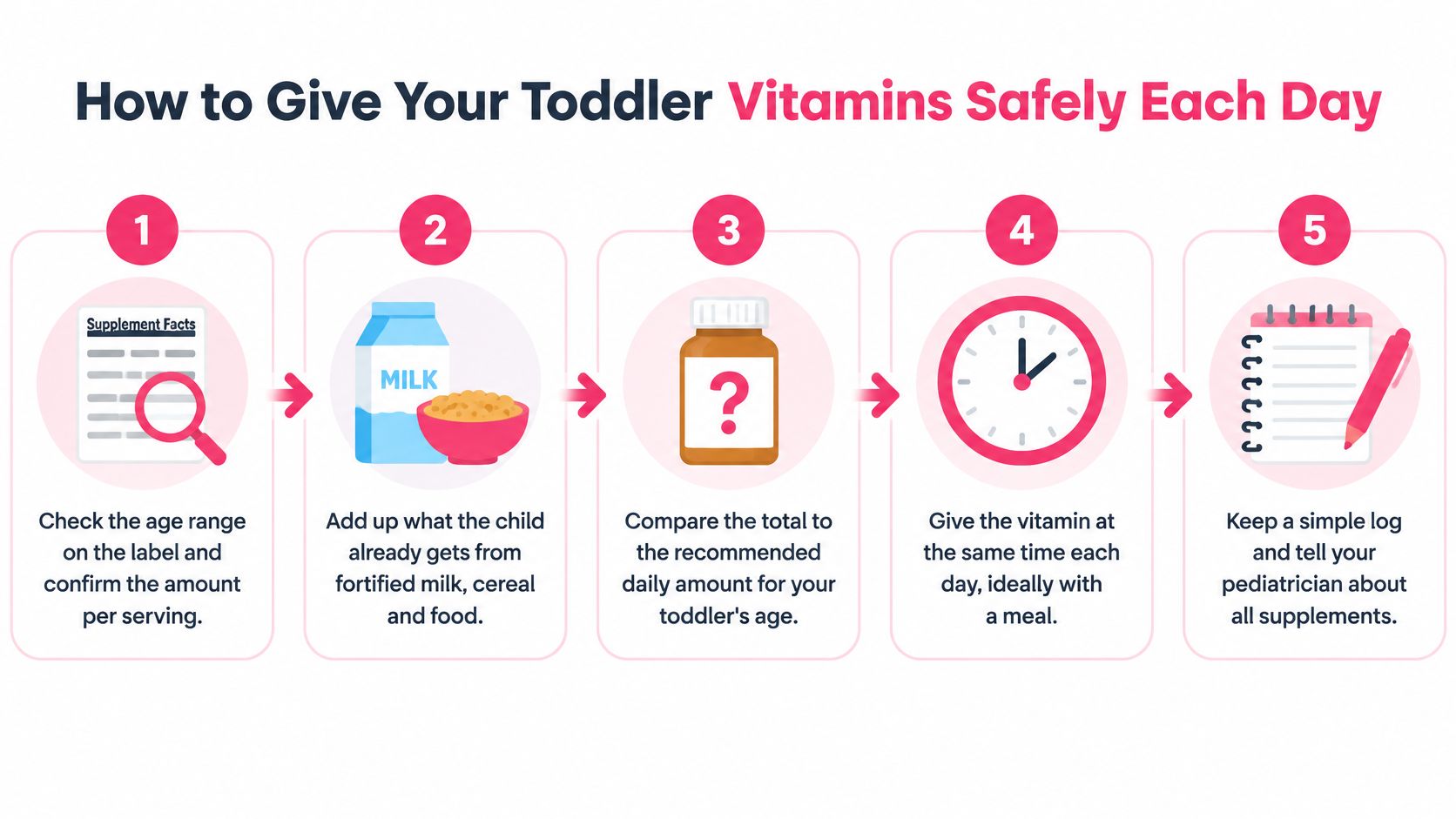
Keep the main checks visible where adults prepare the supplement, but keep the bottle itself inaccessible to children.
What should your daily routine include?
- Check the current label. Confirm the age range, serving size, and concentration, particularly after a refill or product change; the common slip is using instructions from the previous bottle.
- Account for the day's other products. Include fortified foods and any separately prescribed supplements so caregivers don't accidentally overlap products.
- Prepare the suitable format. Have your child seated and supervised, rather than handing over a gummy to eat while running around.
- Measure with the correct device. Use the supplied dropper, oral syringe, or scoop as directed, never a kitchen spoon or an estimated amount.
- Use a consistent time. Give it with a meal if the product and clinician's instructions allow, and don't double the next dose after a missed day unless specifically directed.
- Return it to locked storage immediately. Keep it in its original child-resistant container, rather than transferring toddler vitamins into an accessible pill organizer.
- Record the dose as soon as it's given. A shared paper checklist or phone note prevents another caregiver from giving it again.
A pill organizer may seem convenient, but it can separate supplements from their labels and child-resistant protection. A dose log is the safer organizational tool for this routine.
Check dates during refills, too. Our guide to whether supplements expire can help you decide what to review before continuing an older bottle.
If you're using video resources to prepare for a healthcare conversation, keep the product label and your clinician's directions beside you.
A calm, successful week doesn't require flawless parenting. It means nobody guesses the amount, missed doses don't trigger improvisation, and the record shows what your child received.
Confirm Your Choice With Your Pediatrician Before You Buy
Your pediatrician is the simplest way to turn all this information into a decision for your child. You don't have to arrive knowing which bottle is best. Arrive with enough information to ask a useful question.
Bring a photo of the complete label, including Supplement Facts and other ingredients. Add a typical food-and-drink record, your child's feeding pattern, relevant allergies, medicines, and every supplement already used at home.
Which questions should you bring?
- Does my toddler need a supplement at all? Ask how diet, growth, medical history, and any relevant blood tests affect the decision.
- Is vitamin D needed? Show the actual fortified foods and beverages your child consumes.
- Which nutrient should we address? Ask for a specific amount, rather than a general suggestion to buy a children's vitamin.
- Would you accept this product and format? Have the clinician review the labeled serving and your child's ability to take it safely.
- What should we monitor? Clarify whether follow-up, repeat testing, dietary changes, or a stopping point belongs in the plan.
- What should other caregivers know? Ask how to handle missed doses and what instructions to share with childcare providers.
For additional reading before your appointment, Children Psych's collection on pediatric supplements for kids can help you identify topics to raise. Educational articles are preparation for that conversation, not a replacement for individualized pediatric care.
If the answer is that your toddler doesn't need a supplement, that's a useful result. You've avoided an unnecessary product and can focus on practical feeding support instead.
What if you also need nutritional support?
Your needs during pregnancy or breastfeeding are separate from your toddler's. Feed Mom & Me Complete Prenatal Vitamin Plus DHA is intended for maternal use, not toddler dosing, and it shouldn't be shared with your child.
Our prenatal provides DHA, choline, folate, and other key nutrients, using L-methylfolate calcium rather than synthetic folic acid. If you're pregnant or postpartum, consider it as an option to discuss with your own healthcare provider, not as part of your toddler's supplement plan.
Choosing carefully is an act of love, mama, whether you leave the appointment with a targeted supplement or no bottle at all. The best toddler vitamin is the one your pediatrician confirms fits your child's actual needs.
At Feed Mom & Me, we're women-owned and built by moms, for moms, offering maternal nutrition education and Complete Prenatal Vitamin Plus DHA for pregnancy and postpartum support. While you confirm your toddler's needs with their pediatrician, visit us to explore support for your own nutrition and ask your healthcare provider whether our prenatal fits your routine.