
Are Natural Prenatal Vitamins Really Better for You?
Published:Updated:
Natural prenatal vitamins usually lean on food-derived or plant-based ingredients instead of lab-made forms. But "natural" does not automatically mean safer, more complete, or better absorbed. Knowing what the label is actually telling you is the first step, and you're already taking it, mama.
Table of Contents
- What Will You Find in This Guide?
- Why Does the Vitamin Aisle Feel So Overwhelming?
- What Does Natural Really Mean on a Prenatal Label?
- Are Whole-Food or Synthetic Ingredients the Better Choice?
- Which Nutrients Matter Most During Pregnancy?
- Why Does DHA Show Up in So Many Prenatal Vitamins?
- How Do You Read a Natural Prenatal Label Safely?
- What Do Moms Commonly Ask About Natural Prenatal Vitamins?
What Will You Find in This Guide?
- Why Does the Vitamin Aisle Feel So Overwhelming?
- What Does Natural Really Mean on a Prenatal Label?
- Are Whole-Food or Synthetic Ingredients the Better Choice?
- Which Nutrients Matter Most During Pregnancy?
- Why Does DHA Show Up in So Many Prenatal Vitamins?
- How Do You Read a Natural Prenatal Label Safely?
- What Do Moms Commonly Ask About Natural Prenatal Vitamins?
Here is the good news: you do not need to become a label expert overnight. This guide walks you through each step, from the key nutrients to the small details that matter on the bottle.
Your healthcare provider remains your best partner for personalized advice, so bring all of your questions along, mama.
Why Does the Vitamin Aisle Feel So Overwhelming?

Picture yourself in the vitamin aisle, a list of questions in one hand and three bottles in the other. Every label makes a different promise. And you want the very best for the little one you are growing.
Long ingredient lists, unfamiliar chemical names, and bold claims on social media can leave even confident mamas feeling stuck. Wanting the best is already a strong start. You do not have to decode everything on your own.
What Does Natural Mean on Your Label?
Think of a whole-food ingredient like a fresh apple. It comes with fiber, water, and plenty of companion compounds alongside its nutrients. A synthetic ingredient is more like a precisely measured recipe component, made to deliver a consistent, known dose.
"Natural" describes where an ingredient comes from, not a guaranteed standard of safety or quality.
Neither approach is automatically the better choice. The differences are easier to see side by side, so here is a quick snapshot.
Natural vs. Synthetic Prenatal Vitamins at a Glance
This table shows how whole-food or plant-based prenatals and synthetic prenatals typically differ. Use it as a quick reference before you read the details.
| Feature | Whole-Food or Plant-Based Ingredients | Synthetic Ingredients |
|---|---|---|
| Source | Foods, plants, or yeast | Lab-manufactured |
| Dose | Can vary by batch and food source | Precisely measured |
| Extra Compounds | May include naturally occurring food compounds | Usually the isolated nutrient only |
Notice that the table tells you about origin and consistency, not about who wins. Plenty of synthetic prenatal nutrients, including folic acid, have decades of research behind them. Natural labels can be a great fit for some families, but they still need to be checked against the nutrients you need.
When you pick up a bottle, such as a Feed Mom & Me prenatal, the same checklist applies. Look past the front-of-package wording and read the ingredient panel.
What Does Natural Really Mean on a Prenatal Label?
Here's something that catches a lot of moms off guard: "natural" doesn't have one strict definition on dietary supplement labels.
Think about your kitchen pantry for a moment. A whole-food ingredient is a lot like a fresh apple. It comes bundled with fiber, water, and a crowd of companion compounds that work together. A synthetic ingredient is more like a measured spoonful of baking soda. It's consistent, predictable, and made to a precise dose.
Why Can Natural Still Include Synthetic Forms?
This one surprises plenty of shoppers. A product can carry a natural claim and still contain synthetic folic acid, the lab-made form of vitamin B9. That's because "natural" usually describes the overall product story, not every single ingredient inside the bottle.
Ask yourself: what does this bottle contain, and in what amount?
What Does "Natural" Usually Cover?
In practice, the word tends to speak to a few specific areas:
- Sourcing: where the vitamins or minerals came from, such as plants, yeast, or marine sources
- Colorants and flavors: whether the capsule uses plant-based or synthetic dyes and flavors
- Additives: whether fillers, preservatives, or other extras were left out
Common Natural Label Claims and What They Actually Mean
Front-of-bottle phrases can sound like a promise of purity. The table below is a quick translation guide. Each row pairs a familiar claim with what it typically signals and what you should check next.
| Label Claim | What It Usually Means | What to Check Next |
|---|---|---|
| Vegetarian | Contains no meat, fish, or gelatin-based ingredients | Check the capsule type and the source of vitamin D3 |
| Non-GMO | Ingredients are not genetically modified | Look for a third-party verification seal |
| Free of artificial colors | No synthetic dyes added to the capsule or coating | Scan the color sources listed in the ingredients |
| Whole-food based | Some ingredients come from food sources, but synthetic nutrients may still be included | Compare the listed form and amount of each nutrient |
A table can only do so much, though. Each claim is a starting point, and the ingredient panel is where your real answers live.
Reading Beyond the Front of the Bottle
Skip past the big promises and head straight to the specific ingredient names and amounts. A label that lists folic acid or methylfolate in micrograms tells you far more than the word "natural" ever will.
Start with three quick checks:
- Ingredient names: Find the exact form of each nutrient, like folate or iron.
- Amounts: Confirm the milligrams or micrograms per serving.
- Serving size: Check how many capsules make up one day's dose.
The ingredient list, not the front label, tells you what's truly inside the bottle.
Your healthcare provider can help match these details to your needs. Bring the bottle along to your next appointment, mama.
Are Whole-Food or Synthetic Ingredients the Better Choice?
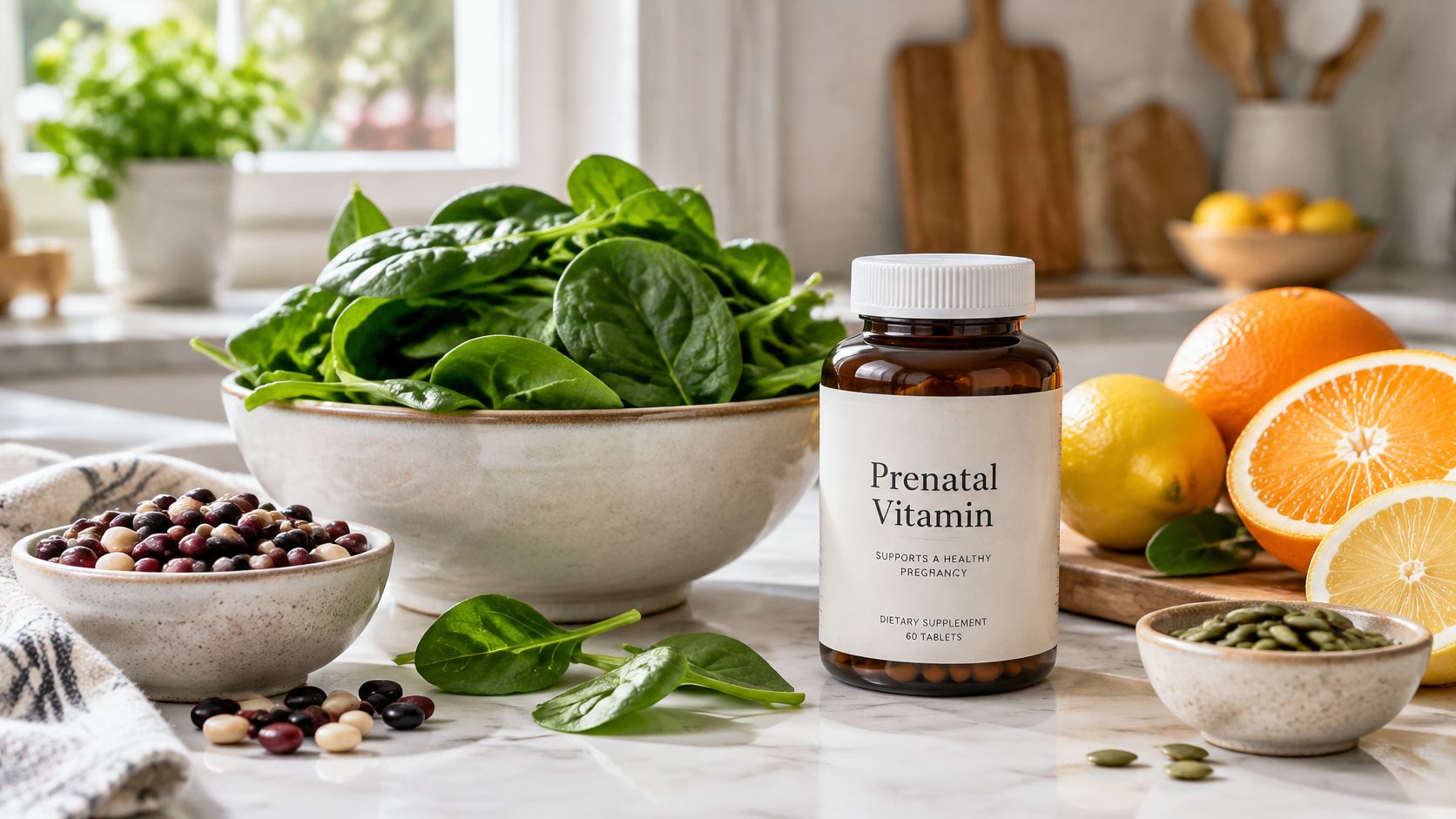
Think of your nutrition like a building project. Whole-food ingredients are a crew that shows up with its own tools, plus a few extra helpers who already know the site. Synthetic ingredients are more like a stack of pre-cut lumber, sized exactly to the plan you handed over.
Both approaches have their place. The right choice depends on what your diet looks like, what your body needs, and what your provider recommends.
How Does Food Folate Compare to Supplements?
Folate is a good place to start. Leafy greens, beans, and citrus fruits all provide this B vitamin, and they bring fiber and other nutrients along for the ride.
The catch is that food amounts swing from meal to meal. A supplement gives you a steady, measured dose every day, which is why it's so useful during pregnancy.
Folic acid is the most established prenatal nutrient. Neural tube development begins very early, often before most people realize they are pregnant, so getting enough beforehand matters.
The CDC recommends 400 micrograms daily for anyone who could become pregnant, rising to 600 micrograms once you are pregnant. A WHO evidence review found that folic acid taken around conception reduced the risk of neural tube defect-affected pregnancies by more than two-thirds. Learn more about folic acid on the NIH Office of Dietary Supplements website.
Is Methylfolate an Option Worth Considering?
Some people prefer methylfolate, sometimes listed as L-5-MTHF. It's already in the active form, so your body skips the conversion step.
Research on methylfolate is still thinner than the research on folic acid, and current guidelines continue to recommend folic acid for routine use. It's worth a conversation with a qualified professional before you decide which form suits you.
Read also: our guide on methylfolate vs. folic acid for a deeper look.
Pros and Cons of Each Approach
Here's how the two stack up side by side.
Whole-food ingredients
- Pros: Familiar to many families, come packaged with naturally occurring food compounds, and may feel gentler on sensitive stomachs for some people.
- Cons: Doses can vary from batch to batch, they often cost more per serving, and absorption depends on what else you ate that day.
Synthetic ingredients
- Pros: Consistent, measurable doses that are easy to standardize, and usually more budget-friendly.
- Cons: They lack the extra food compounds, and some people find them harder to tolerate.
Why Can a Well-Formulated Product Use Either?
A well-formulated prenatal can use either whole-food or synthetic ingredients, as long as every amount is clearly listed.
There's no single winner for every family. Flip the bottle over and read the ingredient panel to see which approach you're getting. Then bring that information to your healthcare provider, who can help you figure out what fits your body and your routine best, mama.
Which Nutrients Matter Most During Pregnancy?
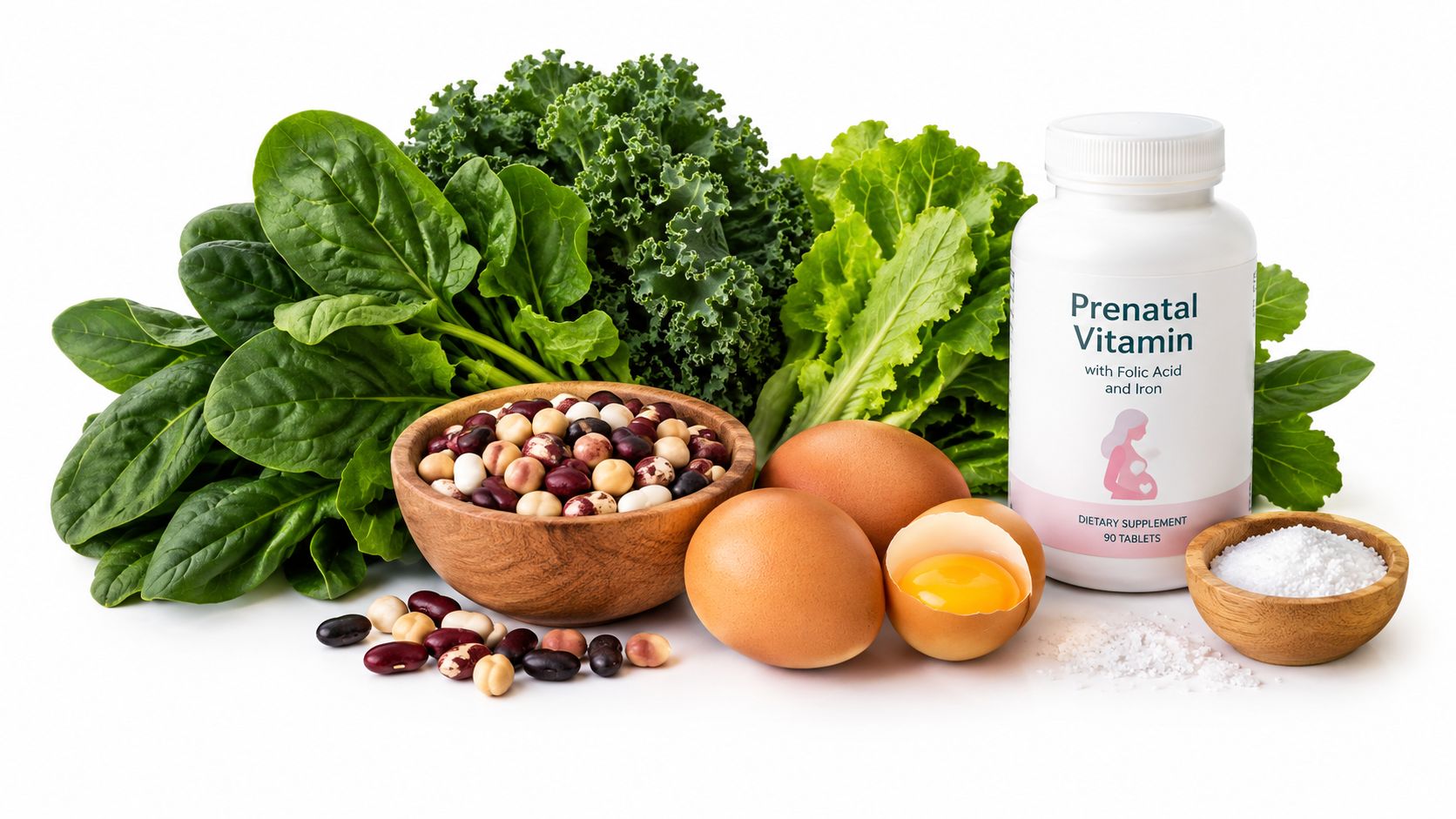
Picture your body as a busy construction site. Folate, iron, and iodine are the core building materials and specialized tools that keep the project moving on schedule.
Why Do Your Iron Needs Increase?
Your blood volume grows quite a bit during pregnancy, and the placenta is taking shape at the same time. That means your body needs more iron than it ever has before. Iron also passes along to your baby, so your stores are working double duty.
The U.S. recommended dietary allowance for pregnant women is 27 milligrams of iron per day. Think of it as a daily top-up that keeps your energy and oxygen delivery steady.
Iron acts like a delivery truck, hauling oxygen to every tissue you and your baby need.
How Does Iodine Support Your Baby's Brain?
Iodine helps your thyroid make hormones that guide the development of your baby's brain and nervous system. For that reason, your provider may ask about your thyroid health before you even start trying.
The NIH Office of Dietary Supplements lists 220 micrograms of iodine per day for pregnancy. Meanwhile, the American Thyroid Association has recommended a 150-microgram daily iodine supplement for pregnant and breastfeeding women. Discover more about iodine and iron needs in pregnancy.
Comparing Key Nutrients at a Glance
Here's where things get practical. The table below pulls these nutrients together, so you can match each target to the numbers on your product label.
Key Prenatal Nutrients at a Glance
| Nutrient | Main Role in Pregnancy | Commonly Cited Daily Target | Good Food Sources |
|---|---|---|---|
| Folate (folic acid) | Helps the neural tube form early on | 600 micrograms | Leafy greens, beans, citrus |
| Iron | Builds red blood cells and supports rising blood volume | 27 milligrams | Lean red meat, lentils, fortified cereals |
| Iodine | Supports thyroid hormones and fetal brain development | 220 micrograms | Iodized salt, dairy, seafood, eggs |
| Choline | Supports brain development and placental function | 450 milligrams | Eggs, salmon, chicken, broccoli |
Notice that the table lists targets, not requirements. Your personal needs can shift depending on your diet, health history, and stage of pregnancy. Use the table as a starting point for your conversations and your label checks.
Why Doesn't Natural Always Mean Risk-Free?
Here's a detail many moms miss: iodine levels in kelp-based products can vary widely from one bottle to the next. Too much iodine can cause problems too, so more is not always better.
"Natural" on a label doesn't automatically account for this. Always check the amount listed on the panel.
Kelp is a natural source, but a natural source is not always a consistent one.
Who Should Talk With Their Provider First?
Bring this table to your provider, especially if you have thyroid disease, anemia, or take medications that affect how your body absorbs nutrients.
Mama, you don't need to memorize every number. Start with three anchors: folate, iron, and iodine. Build from there.
Questions to bring along:
- Is my iodine intake from food and salt enough?
- How much iron do I need right now?
- Should I check my thyroid before or during pregnancy?
For more on choline, check out our guide on choline's role during pregnancy.
Why Does DHA Show Up in So Many Prenatal Vitamins?
Think of DHA as a nutritional backup plan. It's an omega-3 fatty acid that your baby's developing brain and eyes pull in steadily throughout pregnancy.
How often did you eat fish or other omega-3-rich foods last week? For most of us, the honest answer is "not as often as I should." When meals come up short, DHA can help fill that gap, which is a big reason you see it in so many natural prenatal vitamins.
What Does the Research Show So Far?
Here's the thing about DHA: the science is still catching up. Folic acid has decades of research behind it, while DHA studies are newer and still filling in the details. A little curiosity and patience go a long way.
The NIH Office of Dietary Supplements notes that some studies of DHA or other omega-3 supplements linked them to slightly higher birth weight and a modestly longer pregnancy. What's less clear is how these supplements affect a child's health or development later on. Read the NIH's omega-3 FAQ for pregnancy
How Much DHA Do Guidelines Suggest?
Recommendations from international groups often mention 200 to 1,000 milligrams of DHA and EPA combined each day. Many guidelines also call for at least 200 milligrams of DHA specifically, so that's a number worth keeping in your back pocket.
How Do You Choose the Right DHA Source?
Most DHA falls into one of two camps:
- Marine-derived DHA: Comes from fish oil, so it may not work for vegetarians.
- Algae-derived DHA: Grown from microalgae, which makes it a plant-friendly choice.
Where the DHA comes from matters almost as much as how much you take. If you rarely eat fish or simply don't enjoy it, algae-based DHA gives you the same omega-3 without the seafood.
Some capsules are also designed with comfort in mind. Delayed-release capsules, along with ginger and peppermint, are popular with moms who want a smoother daily routine. These features are about comfort, not treating a medical problem.
Daily comfort matters, especially when your routine already feels full.
How Can You Build DHA Into Your Daily Routine?
Consistency beats perfection every time. Tie your capsule to a meal you already enjoy, and it quickly becomes automatic. If memory is slippery some days, a phone reminder works wonders.
Read also: our full guide on DHA benefits during pregnancy for more detail.
Your healthcare provider is the best person to help you decide how much DHA fits your body and lifestyle, and which source suits your diet. Bring your current prenatal bottle and any questions with you to that conversation, mama.
How Do You Read a Natural Prenatal Label Safely?

Think of the supplement label as a recipe card. Once you know what each line means, the bottle stops feeling like a puzzle.
The ingredient list tells you what is inside. The serving size tells you how much to take, and the percent daily value shows how that amount stacks up against your needs.
Where Should You Start With the Ingredient List?
Begin by scanning the name of each nutrient. Look for specific forms, like folic acid or methylfolate, instead of vague phrases such as "proprietary blend." A blend can hide how much of each nutrient you're actually getting.
Next, check the serving size. It spells out exactly how much product makes up one dose, so you know what a single serving looks like.
Then look at the percent daily value. It compares each amount to a typical daily target, which makes gaps or excess much easier to spot.
Which Key Nutrients Should You Check on the Panel?
Work through these checkpoints every time you compare bottles:
- Folate form: Look for folic acid or methylfolate (L-5-MTHF), plus the amount in micrograms.
- Iron and iodine: Compare the milligrams of iron and micrograms of iodine with the targets your provider gives you.
- DHA source: Confirm the milligrams of DHA and whether it comes from fish or algae.
- Capsules per day: Make sure the number of pills matches the dose you plan to take.
Each checkpoint takes about a minute. Before long, you'll be reading bottles with a lot more confidence.
How Do You Spot Allergens and Vague Marketing Terms?
Common allergens like soy, gluten, and dairy can sneak in through fillers, coatings, or carriers. If any of these foods are a concern for you, read the allergen statement carefully.
Words like pure and clean sound reassuring, but they don't have a fixed meaning on supplement labels. Let the specific ingredient names guide your decision instead.
A label with exact amounts tells you far more than any slogan on the front.
Can More Be a Problem?
Some nutrients have upper limits, which means too much can cause problems. Iodine is a good example, so it pays to keep track of your total intake.
Multiple prenatals, fortified foods, and even certain multivitamins can add up faster than you'd expect. Keep a simple written list of everything you take, including amounts and timing. Your healthcare provider can help you decide whether the combined total makes sense for you.
What Should You Share With Your Provider and How Should You Store Vitamins?
Bring every product you use to your appointment. Your provider can often spot overlaps you would have missed.
Include these on your list:
- Herbal teas and over-the-counter medications
- Fortified cereals, bars, and other foods that add nutrients
- Any dietary restrictions, such as avoiding soy, gluten, or dairy
Store vitamins in a high cabinet, out of reach of children. Many kids mistake colorful capsules and gummies for candy, so a locked cabinet is a smart habit to keep.
Feed Mom & Me as One Option to Discuss
Feed Mom & Me Complete Prenatal Vitamin Plus DHA is one option you can talk through with your provider. Its formula features methylfolate, choline, selenium, and DHA, and it is vegetarian, soy-free, gluten-free, and dairy-free.
As a women-owned brand built by moms, Feed Mom & Me encourages you to get personalized medical advice before starting any prenatal supplement.
Before you decide, check out our guide on third-party testing for prenatal vitamins. You deserve clear answers, mama, and your provider is your best partner.
What Do Moms Commonly Ask About Natural Prenatal Vitamins?
Are Natural Prenatal Vitamins Safer Than Synthetic Ones?
It's a fair question, but neither type wins on its own. A prenatal can be safe whether its nutrients come from food-based sources or lab-made forms, as long as it delivers the amounts your body needs. The NIH encourages people to read the supplement facts panel rather than rely on the wording on the front of the bottle, and that's solid advice. "Natural" on a label doesn't tell you much by itself.
Do Vegetarian Prenatals Provide Enough DHA?
They can, as long as the DHA comes from algae. Marine DHA usually comes from fish oil, so vegetarian formulas typically use algae instead. Flip the bottle over and look for the number of milligrams of DHA per serving. That number tells you more than any claim printed on the front.
What Should I Do If My Prenatal Causes Nausea?
You are not alone in this, mama. Nausea is very common, and plenty of people struggle with the same thing. Some find it helps to:
- Take the vitamin with a small snack
- Try taking it at bedtime instead of first thing in the morning
- Ask your provider about a different form or a gentler formulation
Never stop taking a prenatal without guidance first.
When Should I Start Taking a Prenatal?
The CDC recommends 400 micrograms of folic acid daily for anyone who could become pregnant. Starting at least one month before conception is ideal, because early neural tube development happens before many people even know they are pregnant. Think of it like laying a foundation before the house goes up.
Every day of preparation counts, and it's never too late to begin where you are.
Where Can I Learn More?
If you want more background, check out the importance of iodine during pregnancy to see how this mineral supports your baby's thyroid and brain development.
Choosing a prenatal is a personal decision, and you don't have to figure it out alone. Your healthcare provider is your best partner for guidance that fits your body and your history.
Bring your questions, take notes, and lean on your care team. Feel free to bring this list along to your next appointment, mama.
Feed Mom & Me offers the Complete Prenatal Vitamin Plus DHA, a formula with methylfolate, choline, selenium, and DHA that's worth talking through with your provider. When you're ready, Explore the collection at Feed Mom & Me and see what fits your routine.