
What Is Preconception Health? a Friendly Guide Before Baby
Published:Updated:
Preconception health is your physical, nutritional, emotional and social health before conception, plus the steps that help a healthy pregnancy and baby.
Why do we so often treat pregnancy preparation as something that starts only after you decide to try? Your health matters even when a baby isn't on your calendar, and useful care shouldn't depend on having a perfectly planned pregnancy.
Whether you're thinking about your first baby, recovering postpartum, or looking at an unexpected positive test, you can start with the support you need today, mama.
Table of Contents
- What Preconception Health Means for You
- When to Start Preparing and Why Timing Matters
- Which Nutrients Matter Most Before Conception
- How Everyday Habits Shape Your Starting Point
- Which Conditions, Medicines and Vaccines to Review
- Support, Money and Mental Health Before You Try
- Book a Preconception Visit This Month
What Preconception Health Means for You
Think of tending a garden. Preparing the soil before planting gives you a helpful starting point, but you don't need a flawless garden to grow something beautiful. Preconception health takes that same preparation-first approach, without treating your body as a project that needs fixing.
The World Health Organization's preconception care policy brief describes biomedical, behavioral, and social interventions for women and couples before conception, addressing health, habits, and personal or environmental risks. It also reports that approximately 4 in 10 pregnancies are unplanned, which means care offered only after someone decides to conceive may arrive too late for about 40% of pregnancies.
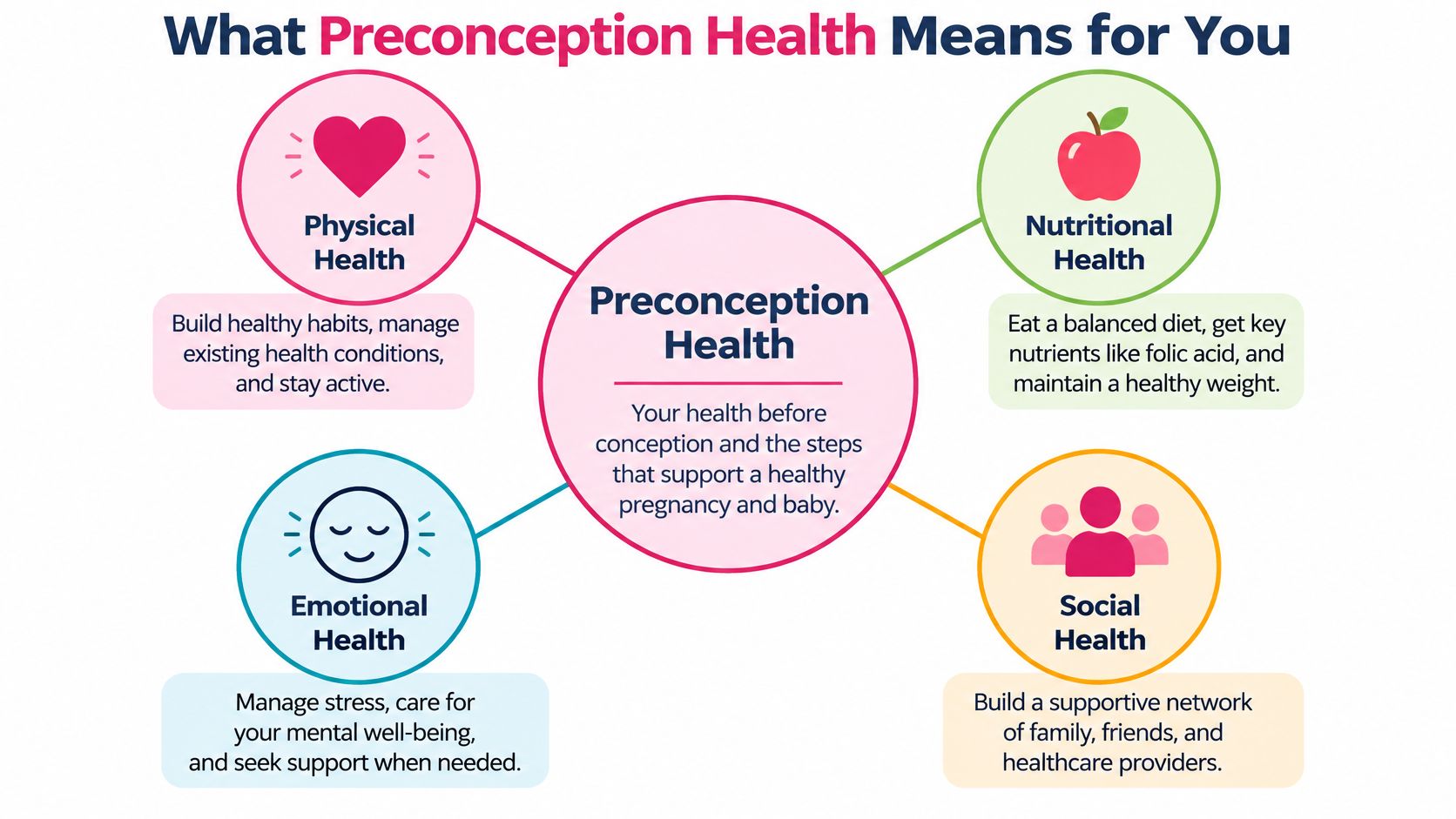
These connected areas help explain why preparation is broader than a supplement.
What does ongoing care include?
Your care might involve:
- Physical health: Managing chronic conditions, reviewing medicines, checking vaccinations, and getting support to stop tobacco or harmful substance use.
- Nutrition: Eating regularly, discussing weight without judgment, and identifying nutrient gaps.
- Emotional well-being: Getting help with anxiety, depression, stress, or grief.
- Social safety: Having safe housing, supportive relationships, and access to healthcare.
For an optional self-care resource alongside professional support, you can explore Luno: Self Care. A partner can participate, too, including learning about preconception vitamins for men and sharing responsibility for preparation.
Preconception care is support you deserve, not a test you must pass.
If you're postpartum, this can mean caring for your recovery before deciding whether another pregnancy is right for you. If you're not trying, your preferences still belong at the center of the conversation. You don't need to commit to pregnancy to benefit from good healthcare.
When to Start Preparing and Why Timing Matters
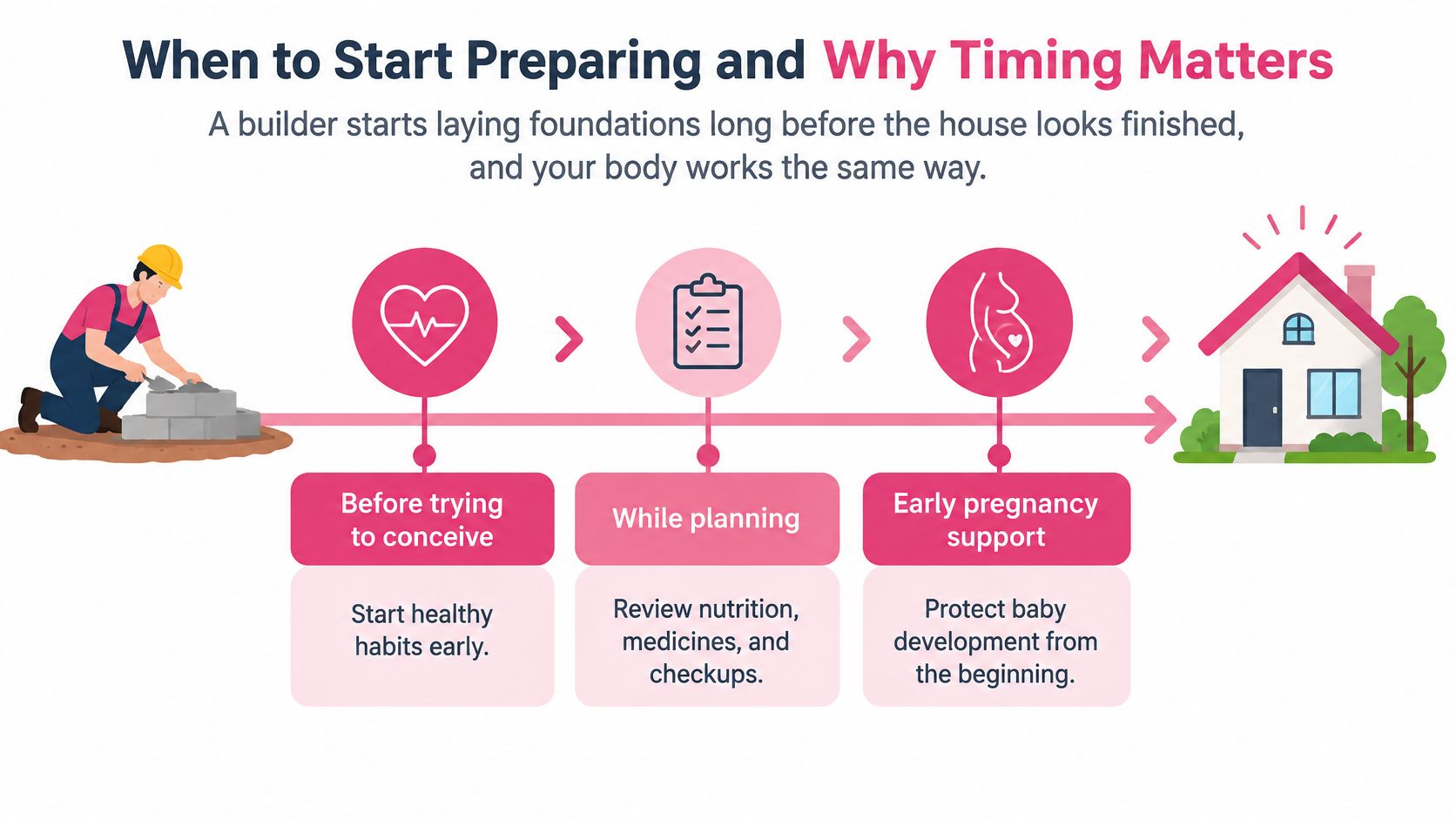
A builder lays foundations long before a house looks finished. Pregnancy preparation works similarly: an early conversation gives you and your provider room to make changes without rushing.
The American College of Obstetricians and Gynecologists recommends arranging prepregnancy care at least 3 months before trying, while a visit up to 1 year in advance can also help. Start with an earlier appointment if you need time to coordinate specialists, gather records, or discuss previous pregnancies.
This timeline shows the overall flow.
Preconception Timeline at a Glance
| When | What to Do | Why It Matters |
|---|---|---|
| Up to a year before | Book an early preconception visit | Time to review medicines and chronic conditions |
| At least three months before | Arrange prepregnancy care with your provider | Recommended lead time from ACOG |
| At least a month before | Start a daily folic acid routine | The neural tube forms very early |
| Any time pregnancy is possible | Begin recommended folic acid and book a visit | Supports preparation even when pregnancy isn't planned |
| After a positive pregnancy test | Contact your provider right away | Care can be adjusted from that point |
The timing matters because the neural tube, the early structure that becomes the brain and spinal cord, normally closes about 26–28 days after fertilization; the U.S. Preventive Services Task Force recommends starting folic acid at least 1 month before anticipated conception. WHO guidance recommends beginning about 3 months beforehand, so the shorter interval is a minimum rather than a reason to wait, according to its preconception recommendations.
For practical reading, The Axelrad Clinic offers steps to support fertility before pregnancy, and our guide explains the benefits of prenatal vitamins before pregnancy.
If you prefer a video format, you can watch this alongside your planning notes.
Already pregnant? Call for care now. Starting later doesn't mean you've failed, and you don't need to complete a preparation calendar before asking for help.
Which Nutrients Matter Most Before Conception
Think of nutrients as building materials you keep available before a project begins. Food supplies a varied mix, while a supplement can help address particular needs. Neither replaces the other.
Folic acid is the clearest starting point. The CDC's clinical overview recommends 400 micrograms (mcg) daily for everyone capable of becoming pregnant, from supplements, fortified foods, or both, to help prevent neural-tube defects.
Food folate and folic acid aren't interchangeable terms. Folate occurs naturally in foods such as beans and leafy greens; folic acid is the form used in fortified foods and many supplements. Keep eating folate-rich foods while following the recommended folic acid routine.
Key Nutrients Before Conception
A single dose chart doesn't fit every stage of adulthood, pregnancy, and breastfeeding. Use these food choices and dosing rules to guide a personalized conversation rather than treating every nutrient as another pill to add.
| Nutrient | Common Daily Amount | Food Sources |
|---|---|---|
| Folic acid | Follow the CDC recommendation stated above | Fortified cereals and supplements provide folic acid; beans, leafy greens, and oranges provide food folate |
| Iron | Set your supplement amount with your provider using diet, health history, and blood tests | Lentils, spinach, lean red meat, fortified cereals |
| Iodine | Confirm the appropriate life-stage amount and check your supplement label | Iodized salt, dairy, seafood, eggs |
| Vitamin D | Confirm your needs with your provider, including whether testing is appropriate | Fortified milk, salmon, egg yolks, supplements |
| Choline | Review dietary intake and your life-stage needs | Eggs, soybeans, milk, beef liver |
| DHA (omega-3) | No formal daily requirement; discuss an appropriate intake with your provider | Salmon, sardines, trout, algae-based supplements |
Make your meals do more
You don't need expensive powders or a completely new grocery routine. Start with foods you already enjoy and make practical additions:
- Plant iron plus vitamin C: Pair lentils with peppers or spinach with citrus.
- Affordable fish: Try canned salmon in sandwiches, patties, or rice bowls.
- Choline-rich meals: Add eggs or soybeans when they suit your diet.
- Iodine awareness: Check whether your household salt is iodized rather than assuming all salt provides iodine.
Our nutrition prior to pregnancy guide offers more meal-planning context.
Don't stack multivitamins without checking ingredient totals. Avoid high-dose vitamin A supplements unless prescribed, and bring every supplement label to your appointment. If you've had a pregnancy affected by a neural-tube defect, your folic acid plan needs clinician direction rather than self-adjustment.
Mama, the aim isn't a perfectly tracked diet. It's a reliable routine that fits your appetite, budget, health, and everyday life.
How Everyday Habits Shape Your Starting Point
Daily habits are like watering a garden: steady attention is more useful than an occasional overhaul. You don't need to change everything at once, especially if you're caring for a baby, working shifts, or managing fatigue.
The Office on Women's Health's preconception guidance places nutrition, physical activity, substance exposure, environmental risks, and health management within the same preparation plan. Choose a manageable action, then build from there.
- Approach weight gently: Being underweight or carrying extra weight can affect pregnancy care. Ask for a realistic, individualized plan rather than starting a crash diet.
- Choose enjoyable movement: Walking, swimming, dancing, or adapted exercise can fit into daily life. Your provider can help tailor activity if you have pain, disability, medical conditions, or postpartum recovery needs.
- Avoid alcohol when trying: There's no established safe amount during pregnancy. If stopping feels difficult, ask for confidential support rather than trying to handle it alone.
- Get help with smoking and vaping: Tell your provider what you use and when cravings are strongest. Ask about counseling and treatment options appropriate for your situation.
- Review caffeine: Count coffee, tea, energy drinks, and relevant medicines together. Our guide to the effects of caffeine during pregnancy can help you prepare questions about your usual drinks.
- Check exposures: Ask someone else to handle cat litter when possible, and discuss workplace chemicals, solvents, pesticides, or other exposures with your clinician and occupational health team.
Make room for rest
Sleep and emotional recovery deserve attention alongside food and exercise. If you're postpartum, advice to just sleep more may be unrealistic. A more useful step might be asking someone to take a household task or protect a rest period.
Practical rule: Pick a change you can repeat on an ordinary, tiring day.
A short walk after lunch or a regular breakfast can be a workable beginning. You're building support, not proving willpower, and needing help doesn't cancel out your progress.
Which Conditions, Medicines and Vaccines to Review
Medical checks are preparation, not a declaration that pregnancy is unsafe for you. A well-supported plan protects your health while helping your care team anticipate what you'll need.
ACOG's prepregnancy guidance identifies diabetes, high blood pressure, thyroid disease, and psychiatric illness as conditions to manage before pregnancy, as summarized in this prepregnancy counseling publication. Tell your provider about prior pregnancy complications, pregnancy loss, epilepsy, surgery, or other ongoing care, too.
Bring the whole medicine list
Include prescriptions, pain relievers, allergy products, vitamins, herbs, and anything you take occasionally. Photos of labels can be easier than trying to remember names during an appointment.
Don't abruptly stop prescribed treatment. Insulin, thyroid replacement, blood-pressure medicines, antiseizure treatments, and mental-health medicines need individual review. Ask which treatments should stay the same, which need adjustment, and who will coordinate changes.
If you've had a neural-tube-defect pregnancy, flag that history explicitly so your clinician can prescribe the appropriate folic acid plan.
Vaccine Timing Before and During Pregnancy
The NCBI Bookshelf summary of preconception counseling describes checking rubella, varicella, and hepatitis B immunity, giving rubella and varicella vaccines at least 28 days before conception, allowing about 2 months to begin a two-dose varicella course, and administering Tdap during each pregnancy at 27–36 weeks.
| Vaccine or Test | Timing | Why It Matters |
|---|---|---|
| Rubella | At least four weeks before conception if immunity is missing | Infection can seriously affect pregnancy |
| Varicella (chickenpox) | Begin the vaccine course about two months before trying | This live vaccine needs lead time |
| Hepatitis B | Check immunity and vaccinate if needed | Helps protect you and your baby |
| Tdap | During each pregnancy within the recommended window above | Helps protect your newborn from whooping cough |
| Influenza | Yearly, as your provider recommends | Protection remains relevant during pregnancy |
Missing records don't mean you need to guess. Ask your provider to retrieve records or arrange testing when appropriate.
If you discover pregnancy during treatment or vaccination planning, make a calm call to your healthcare team. Give them the medicine or vaccine name and when you received it so they can advise you specifically.
Support, Money and Mental Health Before You Try
Appointments cost money. So can transportation, supplements, childcare, and taking time off work. Food insecurity, grief, discrimination, and inaccessible services can make ordinary preparation advice feel far removed from real life.
The NHS Somerset preconception care toolkit identifies inequalities affecting Black and Asian communities and people living in deprived areas, alongside mental-health needs and complex social circumstances. Better care requires practical access, not just more reminders to make healthy choices.
Ask for help that removes a barrier
- Limited income or deprived-area services: Ask a community health center or public clinic about sliding-scale appointments, fee waivers, transport assistance, and nutrition support.
- Black or Asian community concerns: If you've experienced dismissal or discrimination, ask about patient advocates, culturally responsive care, or bringing a trusted support person.
- Disability-related access: Request an accessible examination room, communication accommodations, or a longer appointment when booking.
- No partner or reliable childcare: Ask whether a support person can join remotely and whether the clinic knows of childcare or community assistance.
- Food or supplement costs: Consider dried beans, lentils, frozen spinach, oats, and canned fish. Ask a pharmacist about lower-cost folic acid options, and use our prenatal vitamin cost guide to frame budget questions.
Anxiety, depression, or grief after loss deserve care in their own right. You don't need to wait until distress feels unbearable before mentioning it. For readers comparing local payment options, reVIBE Mental Health's information about mental health insurance coverage in Phoenix may help you prepare coverage questions.
You don't have to build your village before asking for help. Asking can be the beginning.
A partner, friend, relative, or community worker can help with meals, reminders, and appointments. Mama, support isn't an extra reward for preparing well. It's part of the care itself.
Book a Preconception Visit This Month
You don't need a completed checklist to book. Bring your questions, your uncertainties, and whatever records you can find.
- Choose a provider you trust. An OB/GYN, midwife, or primary care clinician can help you begin and coordinate specialist support when needed.
- Explain your situation when booking. Say whether you're planning pregnancy, could become pregnant, are postpartum, or already have a positive test.
- Gather useful records. Bring medicine and supplement labels, vaccine history, information about past pregnancies, and relevant family health history.
- Write down your questions. Ask which medicines need changes, which vaccines or screenings apply, and whether your folic acid routine fits your history.
- Choose a realistic nutrition routine. Agree on what to take, how to take it, and what to do if nausea, cost, or swallowing capsules gets in the way.
Choose support that fits your life
As a women-owned brand built by moms, for moms, we recommend considering Feed Mom & Me Complete Prenatal Vitamin Plus DHA as an option to discuss with your provider. Our prenatal contains folic acid, DHA, choline, and 15 other key nutrients, and was formulated with an OB/GYN and a Registered Dietitian.
DHA is essential for the development of your baby's brain, eyes, and nervous system, and helps support your immune system and mood. A supplement is one part of preparation, alongside meals, medical care, and the support you deserve.
Confirm your supplement choice with your healthcare provider, mama, particularly if you take other products or need an individualized dose.
At Feed Mom & Me, we offer prenatal nutrition support and approachable education for preconception, pregnancy, and postpartum life. Visit us to explore our prenatal and nutrition resources, then bring your preferred option to your healthcare provider so you can build a routine that fits you.