
Best Prenatal Multivitamin with DHA
Published:Updated:
You're standing in the supplement aisle with a bottle in one hand and your phone in the other. One label says “prenatal,” another says “with DHA,” and a third promises methylated vitamins, organic ingredients, or a complete formula. Yet the most important question is still unanswered: does this product provide the nutrients you need, in useful amounts, and in a form you can take every day?
That's why searching for the best prenatal multivitamin with DHA can feel so exhausting. Friends recommend different brands, online discussions focus on different ingredients, and higher prices don't always make quality easier to judge. The smarter approach isn't ranking colorful bottles. It's learning which nutrients belong in your formula and how to verify them on the label.
Table of Contents
- Why Finding the Right Prenatal with DHA Feels So Overwhelming
- What Should a Quality Prenatal with DHA Actually Contain
- Why Most Prenatals Fall Short on DHA and Choline
- How to Read a Prenatal Label Like a Pro
- Which Prenatal Type Fits Your Situation Best
- What Quality and Label Accuracy Really Mean for You
- Putting It All Together and Where Feed Mom & Me Fits
- Frequently Asked Questions About Prenatals with DHA
Why Finding the Right Prenatal with DHA Feels So Overwhelming
The prenatal aisle is full of reassuring words, but reassuring words aren't a dosing strategy. “Complete,” “advanced,” and “with DHA” can describe products that differ widely in their amounts of folate, iron, choline, iodine, and omega-3s. Two formulas may look similar from the front of the bottle while serving very different nutritional purposes.
You're also trying to make this decision while dealing with fatigue, nausea, food aversions, or the mental load of preparing for a baby. A giant capsule may be nutritionally thoughtful but impossible to swallow. A gummy may be pleasant but leave out iron or DHA. A formula with an impressive ingredient list may require several pills, while a simpler product may be easier to take consistently.
The practical shift: Don't ask which brand wins. Ask whether the formula covers your priorities, whether the label shows exact amounts, and whether you can tolerate the product well enough to take it regularly.
A useful starting point is this guide to choosing a prenatal vitamin, but you can also use the framework below with the bottle already in your hand. Start with the nutrients, not the branding.
A quick comparison before you buy
| What to compare | What matters most | Why it matters |
|---|---|---|
| DHA | Exact milligrams per serving | “With DHA” doesn't tell you whether the dose is meaningful |
| Choline | Amount listed separately | Many formulas provide little or none |
| Folate | Folic acid or methylfolate form | You need to know which form and how much you're taking |
| Iron | Exact amount and tolerability | Iron supports pregnancy needs but can worsen nausea or constipation |
| Testing | Clear quality verification | A label claim isn't the same as independent verification |
| Daily routine | Pills, timing, and capsule design | The best formula on paper won't help if you can't take it |
You don't need to memorize every nutrient before buying. You do need a short list of measurable checks. Once you know the targets, the marketing becomes much easier to ignore.
What Should a Quality Prenatal with DHA Actually Contain
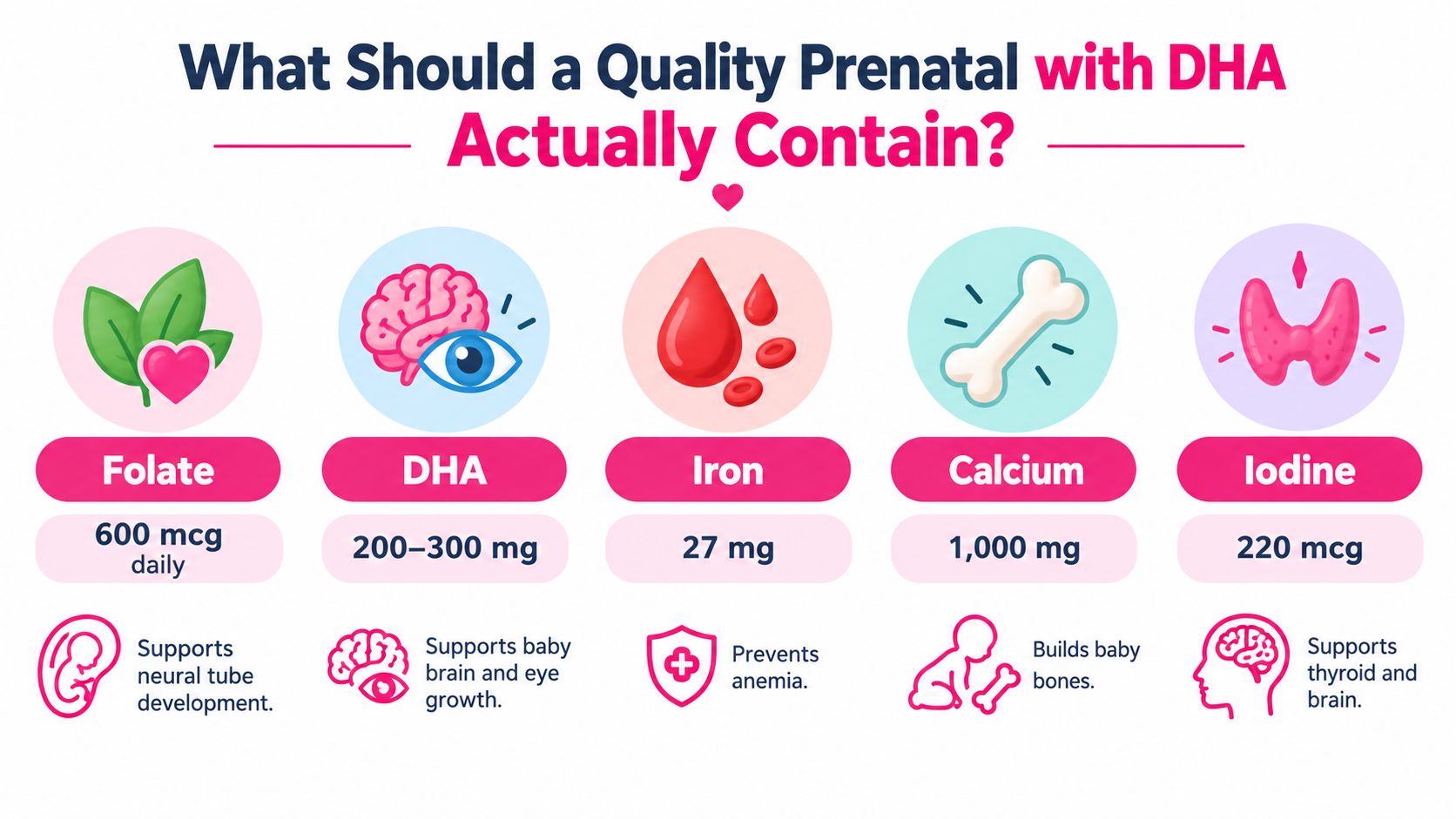
A quality prenatal should cover the nutritional basics first. DHA matters, but it shouldn't distract you from folate, iron, iodine, choline, and the supporting nutrients that help your body manage pregnancy.
Start with folate
Major U.S. guidance recommends 400 micrograms of folic acid daily for women who are pregnant or capable of becoming pregnant, beginning at least one month before conception and continuing through the first two to three months of pregnancy, according to the NIH Office of Dietary Supplements pregnancy guidance. Some products use folic acid, while others use methylfolate, also called L-5-MTHF.
Methylfolate is often a practical preference for people who want the already active form of folate, including those discussing MTHFR variants with a clinician. Still, don't treat the word “methylated” as a substitute for checking the actual dose. The label should clearly identify the form and amount.
Check DHA and EPA separately
DHA is an omega-3 fatty acid associated with fetal brain and eye development. U.S. pregnancy guidance commonly cited by the NIH recommends at least 250 mg per day of DHA plus EPA from food or supplements, with an additional 100 to 200 mg of DHA during pregnancy. Many prenatal formulas don't include DHA at all, so always look for a separate DHA line rather than assuming the front label tells the whole story.
You can learn more about the nutrient in this practical overview of DHA benefits during pregnancy. Fish oil and algae oil can both provide DHA. Algae-derived DHA is especially useful if you avoid fish or follow a vegetarian diet.
Give choline the attention it deserves
ACOG lists 450 mg of choline per day during pregnancy and identifies choline as important for fetal brain and spinal cord development in its healthy eating guidance. Eggs, meat, fish, dairy, beans, nuts, and seeds can contribute, but dietary intake varies.
Don't overlook iron and the supporting cast
Pregnancy increases the need for iron, with guidance identifying 27 mg per day as the pregnancy amount. A prenatal may also include iodine, vitamin D, vitamin B12, calcium, magnesium, zinc, and selenium. These nutrients don't need to turn the label into a chemistry textbook, but they should be considered alongside your diet, medical history, and lab results.
Look for a formula that offers:
- Folate: About 400 to 800 mcg, depending on the product and your clinician's advice.
- DHA: A clearly stated dose, not only “omega-3 blend.”
- Choline: A separately listed amount that contributes meaningfully toward 450 mg.
- Iron: A stated dose that fits your needs and your tolerance.
- Iodine and vitamin D: Amounts that complement your dietary intake and provider guidance.
The right form matters, too. Delayed-release capsules, split dosing, algae-derived DHA, and gentle mineral forms can make a formula more realistic for daily use. Nutrient coverage is the foundation, but tolerability and independent quality checks determine whether that foundation holds up in real life.
Why Most Prenatals Fall Short on DHA and Choline
“Complete prenatal” sounds reassuring, yet the label may leave two nutrients underrepresented. A review of 188 prenatal supplements found that only 1% met or exceeded a 600 mg daily DHA recommendation, while just 2% met or exceeded a 350 mg daily choline recommendation, according to the 2022 evidence review of prenatal supplements.
Among products that included these nutrients, average amounts were 224.1 mg of DHA and 64.3 mg of choline. The ranges were wide: 0 to 1,000 mg for DHA and 0 to 550 mg for choline. Those figures make one point clear. Comparing nutrients matters more than choosing a familiar brand.
Why the front label isn't enough
A prenatal can contain DHA without providing the amount you want. Choline can appear in the ingredient panel while contributing only modestly toward the pregnancy target. A long list of ingredients does not prove meaningful coverage.
Another review reported that about 78% of pregnant patients said they used a prenatal vitamin, yet many still fell short of recommended nutrient intake levels. It described DHA guidance ranging from at least 200 mg per day in consensus recommendations to approximately 600 mg per day in some evidence-based U.S. formulations. Its analysis found DHA supplementation increased neonatal birth weight by a mean of 72.51 g, with a 95% confidence interval of 37.55 to 107.48 g, but did not show consistent improvements in other growth or neurodevelopment outcomes, as detailed in this peer-reviewed review of commercially available prenatal supplements.
A label lesson: “Contains DHA” answers an ingredient question. It does not answer a dose question.
Choline deserves the same scrutiny. A formula may omit it or provide only a small amount while presenting itself as thorough. Our guide to best prenatal choline sources can help you compare options. A lower-choline prenatal is not automatically a poor choice. Assess it alongside food sources and discuss a separate supplement with your healthcare provider when appropriate.
How to Read a Prenatal Label Like a Pro
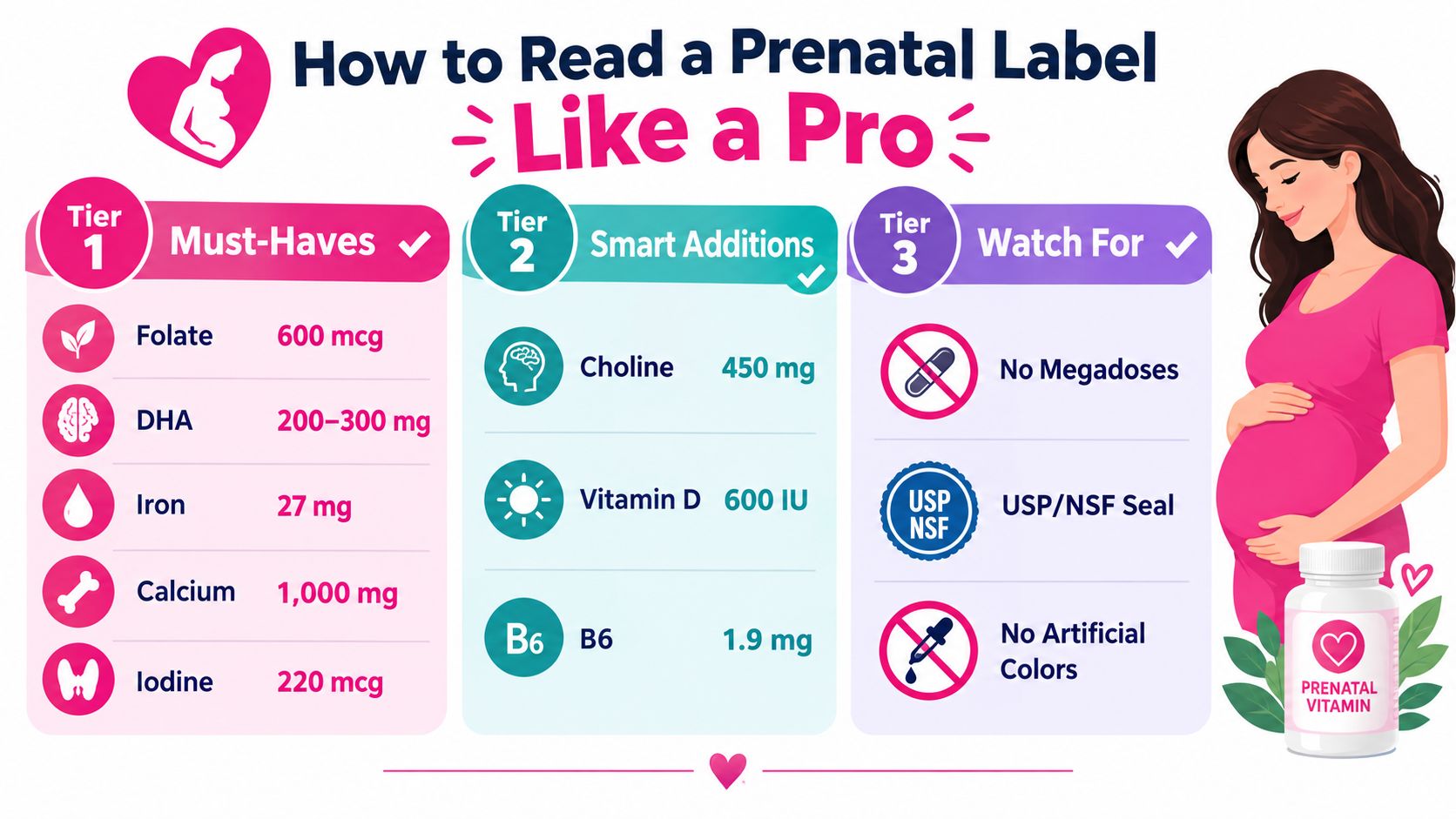
Read the Supplement Facts panel in three passes. This keeps you from getting distracted by front-label language or a long list of minor ingredients.
First pass, confirm the must-haves
Look for exact amounts of:
- DHA: At least 200 mg is a useful initial screening point, with many guidelines and formulations landing around 200 to 300 mg or more.
- Choline: Work toward the pregnancy goal of 450 mg, counting food and supplements together.
- Folate: 400 to 800 mcg of folic acid or methylfolate, unless your clinician recommends a different amount.
- Iron: 27 mg is the pregnancy amount commonly used in U.S. guidance.
- Iodine: 150 mcg in a prenatal is a commonly used label check, while the pregnancy requirement is 220 mcg from all sources.
Those numbers are screening targets, not personalized prescriptions. A prior neural tube defect pregnancy, anemia, thyroid condition, malabsorption issue, or medication interaction can change what you need.
Second pass, inspect the forms
Check whether the product identifies methylfolate rather than listing only “folate.” For minerals, transparent forms can be more useful than vague terms such as “mineral complex.” For DHA, look for algae oil or a clearly identified fish-oil source and confirm whether the listed amount refers to DHA itself or the total oil.
Third pass, assess daily practicality
Scan for artificial colors, allergens, unnecessary proprietary blends, and the number of capsules or softgels per serving. A formula that causes strong nausea or constipation may not be the right fit, even if the nutrient panel looks good.
Here's a simple example. Suppose a label lists 600 mcg folate, 27 mg iron, and “omega-3 oil” without stating DHA. It looks substantial, but you can't confirm the DHA dose. If it lists 40 mg choline, it contributes some choline but leaves most of the pregnancy target to food or another supplement. If the folate line says only “folate” and doesn't identify the form, you also can't tell whether it uses methylfolate.
Independent verification deserves its own check. This explanation of third-party testing for prenatal vitamins can help you understand what a certification does and doesn't establish.
Which Prenatal Type Fits Your Situation Best
There isn't one ideal delivery format for every mama. Your eating pattern, nausea, allergies, fish intake, and stage of motherhood should influence the choice more than a glossy ranking.
| Reader Situation | Top Priority | Form to Look For | Watch Out For |
|---|---|---|---|
| Nausea-prone | Tolerability and consistency | Delayed-release capsules, food-based formula, or split dosing | Large pills, strong odors, taking iron on an empty stomach |
| Vegetarian or vegan | Algae-derived DHA and B12 awareness | Vegetarian capsule with clearly listed algae DHA | Fish oil, unclear choline amount, missing B12 review |
| Gluten-free, dairy-free, or allergen-sensitive | Explicit dietary certification | Clearly stated free-from claims and independent testing | “Made in a facility” language without a clear formula statement |
| Postpartum or breastfeeding | Continued DHA and choline review | A prenatal or postnatal formula suited to lactation | Automatically continuing high iron without checking your needs |
| Regular fatty-fish eater | Total weekly DHA intake | A lower-dose algae or fish-based option if appropriate | Assuming diet makes the supplement label irrelevant |
| Little or no fish intake | Reliable supplemental DHA | A formula with a clearly stated DHA amount | “Omega blend” without individual DHA disclosure |
Match the product to your hardest day
If nausea is your limiting factor, choose the product you can take on a difficult morning, not only the product that looks strongest on paper. Delayed-release capsules, ginger, peppermint, taking the supplement with food, or dividing the serving can make a routine more manageable.
Vegetarians and vegans should pay close attention to DHA source and choline planning. Eggs and fish are common choline sources, so an egg-free or fish-free diet may require a more deliberate food and supplement strategy. This guide to vegetarian prenatal vitamins with DHA offers another way to think through those choices.
If you're preparing for pregnancy, Little Venture Co.’s ultimate guide to pregnancy can complement your supplement research with broader preparation ideas. For postpartum readers, the priority often shifts toward maintaining DHA and choline while reviewing whether the iron amount still fits your bloodwork and provider's advice.
The best formula is the one that fits your actual life. A fish-eating reader and a vegan reader may need different DHA sources. A reader with severe nausea may reasonably prioritize capsule design before chasing a longer ingredient list.
What Quality and Label Accuracy Really Mean for You
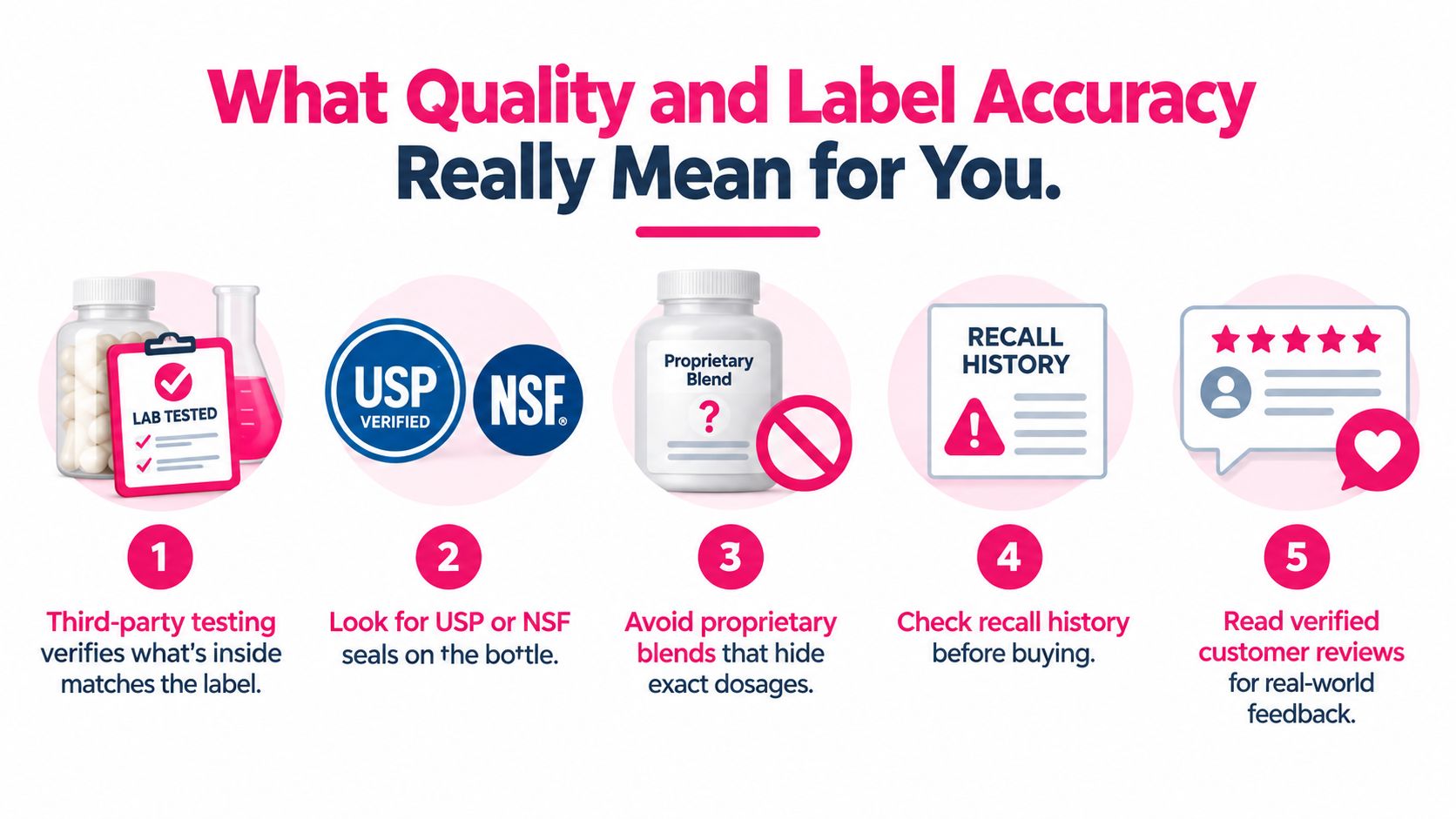
Third-party testing isn't decorative packaging. It's a way to reduce uncertainty about whether the product contains what the bottle says and whether it meets defined quality standards.
A 2026 Consumer Reports analysis found that nearly all prenatal supplements tested had at least one vitamin or mineral outside USP tolerance ranges, including a product carrying USP Verified status, as described in the Consumer Reports prenatal supplement analysis. That result doesn't mean every prenatal is unsafe or ineffective. It does mean a familiar brand name and a polished label shouldn't end your evaluation.
What certification can tell you
USP verification, NSF certification, and independent laboratory testing can address different parts of quality control, including:
- Identity: Whether the listed ingredient is present.
- Potency: Whether the amount falls within the testing organization's accepted range for the label claim.
- Contaminants: Whether testing screens for substances such as heavy metals.
- Dissolution: Whether the product breaks down appropriately for use by the body.
Look for a certification mark you can verify, not just the words “tested for purity.” A company should also be willing to explain who performs the testing and what the certification covers.
Red flags worth slowing down for
Be cautious when a label uses proprietary blends that hide individual amounts, lists “folate” without identifying the form, or fails to explain the DHA source. You should also check the manufacturer's recall history and look for transparent expiration and lot information.
Quality control is part of the nutrient decision. If you're comparing two formulas with similar DHA and choline amounts, the one with clearer testing documentation and better label transparency deserves closer consideration.
Putting It All Together and Where Feed Mom & Me Fits
Use this order when you compare your current prenatal with another option:
- Check DHA first. Confirm the exact DHA amount and whether the source is algae or fish oil.
- Review choline. Add the product's amount to what you regularly get from food.
- Inspect folate. Identify whether the product uses folic acid or methylfolate and confirm the dose.
- Evaluate iron. Consider both the amount and whether your stomach can handle the form.
- Verify quality. Look for independent testing, transparent labeling, and clear sourcing.
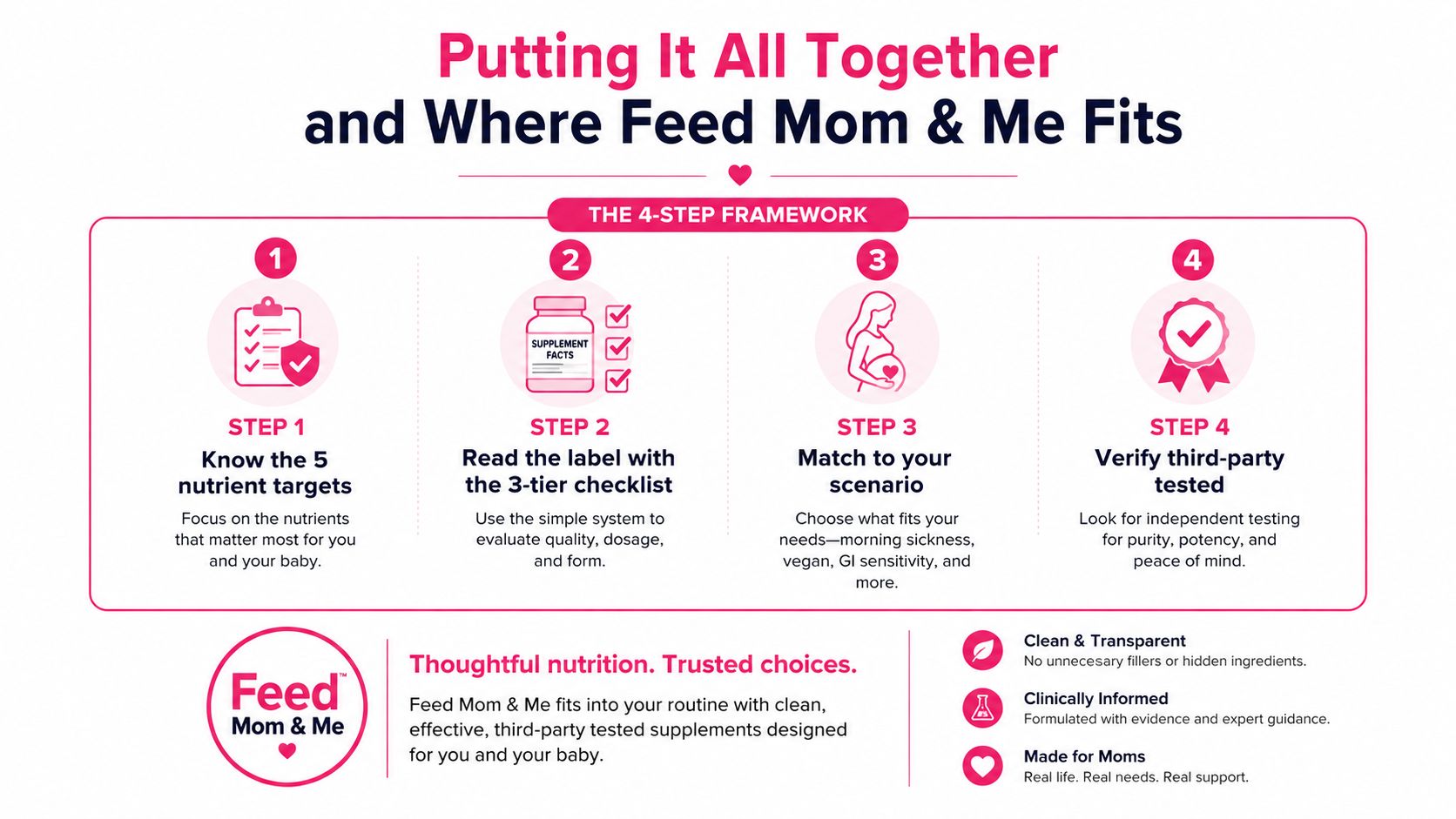
Feed Mom & Me Complete Prenatal Vitamin Plus DHA fits this framework as a vegetarian, soy-free, gluten-free, and dairy-free option with delayed-release vegetable capsules. The product information describes methylfolate, choline, DHA, selenium, peppermint, and organic ginger in the formula, with the design aimed at making daily use easier for people dealing with pregnancy-related nausea. The company is women-owned and built by moms, for moms, with nutrition education and pregnancy resources alongside its supplement products.
Check the product label for the current serving details before buying, especially the DHA amount, choline amount, and iron dose. The available product information has described different DHA amounts, so the bottle you receive should be your final reference. That's a good rule for any brand, including one recommended by a friend or a healthcare professional.
A prenatal doesn't need to solve every nutritional question in one bottle. Your provider may recommend separate DHA, vitamin D, magnesium, iron, or choline based on your diet, symptoms, lab results, and pregnancy history. The strongest choice is the formula that meets your priorities clearly and supports a routine you can maintain.
Frequently Asked Questions About Prenatals with DHA
When should you start? Ideally, begin before conception because folate matters early, then continue through pregnancy. If you're postpartum or breastfeeding, ask your provider how long continuing a prenatal makes sense for you and your baby's needs.
What if iron causes constipation? Take the product with food if the label allows it, drink fluids, and discuss a different iron form or dose with your OB or midwife. Don't stop iron without medical guidance.
Do you need extra DHA, vitamin D, or magnesium? Maybe, but don't stack supplements automatically. Add up your food and prenatal intake, then ask your healthcare provider whether your diet, labs, medications, or symptoms justify more.
What should you bring to your next appointment? Bring the bottle or a clear photo of the Supplement Facts panel, your dietary restrictions, your fish intake, and any side effects. Ask specifically about DHA, choline, folate form, iron, iodine, and possible interactions.
Feed Mom & Me offers a vegetarian Complete Prenatal Vitamin Plus DHA with methylfolate, choline, delayed-release capsules, and a formula designed for pregnancy through postpartum nutrition routines. Visit Feed Mom & Me to review the current label and choose the option that fits your needs, then share the details with your healthcare provider.