
How Much Iron Is in a Prenatal Vitamin and Why It Matters
Published:Updated:
A typical U.S. prenatal vitamin contains about 27 mg of elemental iron, matching the pregnancy RDA. In real life, though, the amount can range from 18 mg in gentler formulas to 60 mg or more in higher-dose or global formulas, so the number on your bottle deserves a closer look.
Maybe you're standing in the prenatal aisle, comparing labels while already tired of making one more pregnancy decision. One bottle says 18 mg, another says 27 mg, and a third seems to contain much more. Which one is right for you, mama? The answer depends on your country, your iron status, your pregnancy history, and the form of iron your body tolerates.
This guide will help you read the label without feeling overwhelmed. You'll learn what elemental iron means, why U.S. products often use the 27 mg benchmark, how global guidance differs, why iron forms can feel different, and which questions to bring to your healthcare provider.
Table of Contents
- Why the Iron Number on Your Prenatal Matters
- How Much Iron You Actually Need During Pregnancy
- Why Iron Amounts Vary So Much From Bottle to Bottle
- The Different Forms of Iron and How They Feel
- What Iron Actually Does for You and Baby
- Common Side Effects and How to Take Iron More Comfortably
- Questions to Ask Your Provider About Your Iron Dose
- Putting It All Together for a Confident Pregnancy
Why the Iron Number on Your Prenatal Matters
Imagine comparing two bottles at home after a long day. One lists 18 mg of iron, and another lists 27 mg. The larger number might look automatically better, but prenatal nutrition isn't a simple contest to find the highest dose.
Iron is a working nutrient. Your body uses it to make hemoglobin, the part of red blood cells that carries oxygen through your body. During pregnancy, your blood volume expands to support the placenta and growing baby, so your need for iron rises with it. The NIH Office of Dietary Supplements explains how pregnancy increases iron needs, which is why prenatal formulas commonly include a dedicated iron dose.
Low iron intake during pregnancy raises the risk of iron deficiency anemia. The NIH also connects inadequate iron with risks for the baby, including low birth weight, premature birth, low iron stores, and impaired cognitive and behavioral development. Those possibilities can sound frightening, but the label gives you a useful starting point rather than a reason to panic.
The number is a starting point, not a verdict
Think of the iron amount as a dial. A standard prenatal may be designed for routine nutritional support, while a provider may recommend a different product or an additional treatment dose when blood tests show deficiency. Your diet, previous pregnancies, menstrual history before pregnancy, and current lab results all help determine where that dial should sit.
You can also learn more about building a nourishing routine with these holistic nutrition tips from The Axelrad Clinic. Food and supplements work best as parts of the same conversation, especially when nausea or food aversions make meals unpredictable.
A reassuring rule: A lower number isn't automatically wrong, and a higher number isn't automatically better. The right amount is the one that fits your health needs and your provider's advice.
How Much Iron You Actually Need During Pregnancy
The U.S. pregnancy RDA for iron is 27 mg per day. That target includes iron from food, drinks, and supplements, not just the capsule or tablet in your prenatal.
For context, the adult nonpregnant female RDA is 18 mg per day, while the adult male RDA is 8 mg per day. Pregnancy therefore raises the female target from 18 mg to 27 mg, reflecting the extra demands of expanded blood volume, the placenta, and fetal growth. The NIH provides these life-stage comparisons in its pregnancy guidance.
The RDA is a population-based target for generally healthy people. It isn't a personalized prescription, and it doesn't tell you exactly how much extra iron you need if your ferritin or hemoglobin is low. A history of anemia, heavy periods before pregnancy, multiple gestation, or closely spaced pregnancies may change the conversation with your clinician.
Daily Iron Recommendations by Life Stage
| Group | Recommended Daily Iron (mg) |
|---|---|
| Adult nonpregnant females | 18 mg |
| Pregnant adults | 27 mg |
| Adult males | 8 mg |
A standard U.S. prenatal is often built around 27 mg of elemental iron, because that amount matches the national pregnancy RDA. The word elemental matters. It tells you how much actual iron the body can receive from the compound, rather than the total weight of the entire iron ingredient.
Global guidance isn't identical to U.S. labeling. The World Health Organization recommends 30 to 60 mg of elemental iron with folic acid during pregnancy, with the higher end preferred in settings where anemia among pregnant women is a severe public-health problem. For diagnosed anemia, treatment-level dosing can be substantially higher and requires medical supervision.
For a practical food-first approach, you can also review this guide on how to increase iron intake during pregnancy. Food can support your intake, but confirmed anemia generally needs an individualized plan rather than guesswork.
Why Iron Amounts Vary So Much From Bottle to Bottle
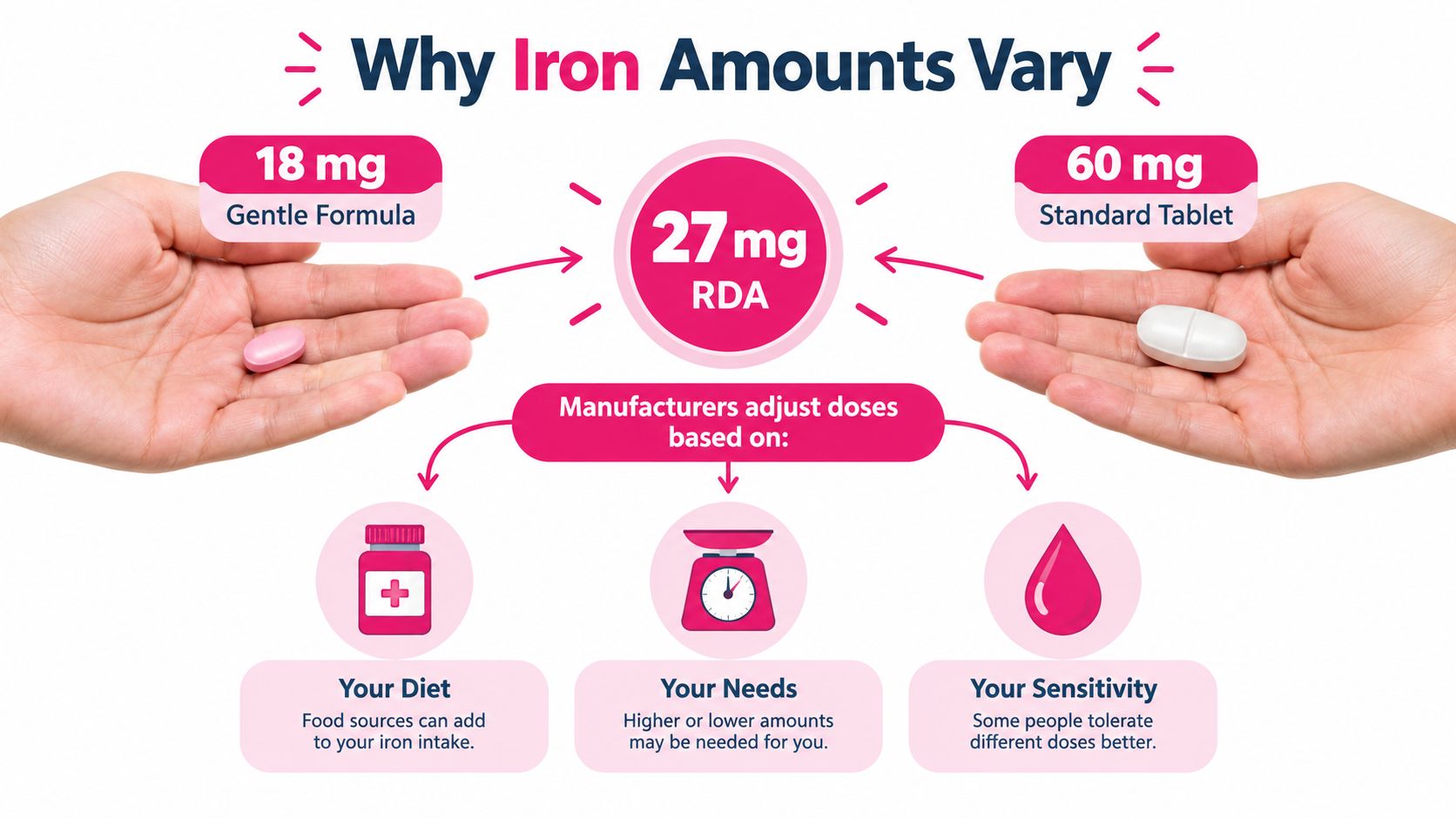
The difference between an 18 mg gentle formula and a 60 mg tablet can look like a manufacturing mistake. Usually, it reflects a deliberate choice about the intended user, the local guideline, the iron compound, and how much stomach discomfort the formula may cause.
U.S. products commonly cluster around the 27 mg pregnancy RDA. Some gentler products use less, while higher-dose products may be intended for people with documented deficiency or for healthcare systems that follow broader global guidance. WHO guidance supports 30 to 60 mg of elemental iron during pregnancy in many settings, so geography and anemia risk can influence the label.
What manufacturers are balancing
A prenatal designer may have to balance several practical factors:
- Routine coverage: A formula may aim to provide the U.S. pregnancy benchmark for everyday prevention.
- Digestive comfort: A lower or gentler formula may suit someone who feels nauseated or constipated with standard iron.
- Clinical need: A provider may recommend a higher-dose product when testing identifies iron deficiency or anemia.
- Serving format: Some products divide nutrients across several capsules, while others place them in one tablet.
- Absorption conditions: Calcium-containing products, coffee, antacids, and some foods can affect how iron is absorbed, so timing and label directions matter.
A higher label number can also reflect the fact that not every form of iron behaves the same way in the digestive tract. The chemical form, the serving size, and the rest of the formula all matter. That's why comparing only the large milligram number can leave you with an incomplete picture.
Read the Supplement Facts panel for elemental iron, check the serving size, and note whether one serving means one pill or several. The best prenatal vitamins with iron should be judged by the full label and your personal needs, not by dose alone.
The Different Forms of Iron and How They Feel
A prenatal can list the same elemental iron amount as another product yet feel very different in your stomach. The reason is the iron compound. Each form contains a different share of elemental iron, and the body handles each one differently.
Ferrous sulfate and ferrous fumarate are common iron salts. Ferrous sulfate contains about 20% elemental iron, while ferrous fumarate contains about 33%. That means a smaller amount of ferrous fumarate compound can provide a similar iron dose. Either form may cause nausea, constipation, cramping, or a metallic taste, although some people tolerate them without trouble.
Ferrous bisglycinate attaches iron to amino acids, a structure called chelation. It typically provides about 20% elemental iron and is often chosen by people who find traditional iron salts hard on the stomach. The product label still matters because the amount per serving can differ.
Carbonyl iron is nearly 100% elemental iron by weight, but it is absorbed differently from ferrous salts. Polysaccharide iron uses another structure and may be selected for its release characteristics or tolerability. Vitamin C and acidic ingredients such as citric acid may support iron uptake, while the full formula determines how much iron you receive.
Comparing Common Iron Forms in Prenatals
| Iron Form | Typical Elemental Iron % | Absorption Notes | Tolerability |
|---|---|---|---|
| Ferrous sulfate | About 20% | Common salt; absorption depends on the product and meal timing | May cause digestive upset for some people |
| Ferrous fumarate | About 33% | More elemental iron by weight than ferrous sulfate | Nausea or constipation can occur |
| Ferrous bisglycinate | About 20% | Chelated with amino acids; often used when gentleness matters | Many people choose it for better stomach comfort |
| Carbonyl iron | Nearly 100% | Absorbed differently from ferrous salts | May suit some people, but individual response varies |
| Polysaccharide iron | Varies by product | Uses a different iron structure and release pattern | May be considered when tolerability is a concern |
Use the table for comparison, not as a substitute for reading the label. Check the elemental iron amount, serving size, and specific form. If you are comparing supplements with food, this guide to plant based iron foods can help you consider options beyond a prenatal.
What Iron Actually Does for You and Baby
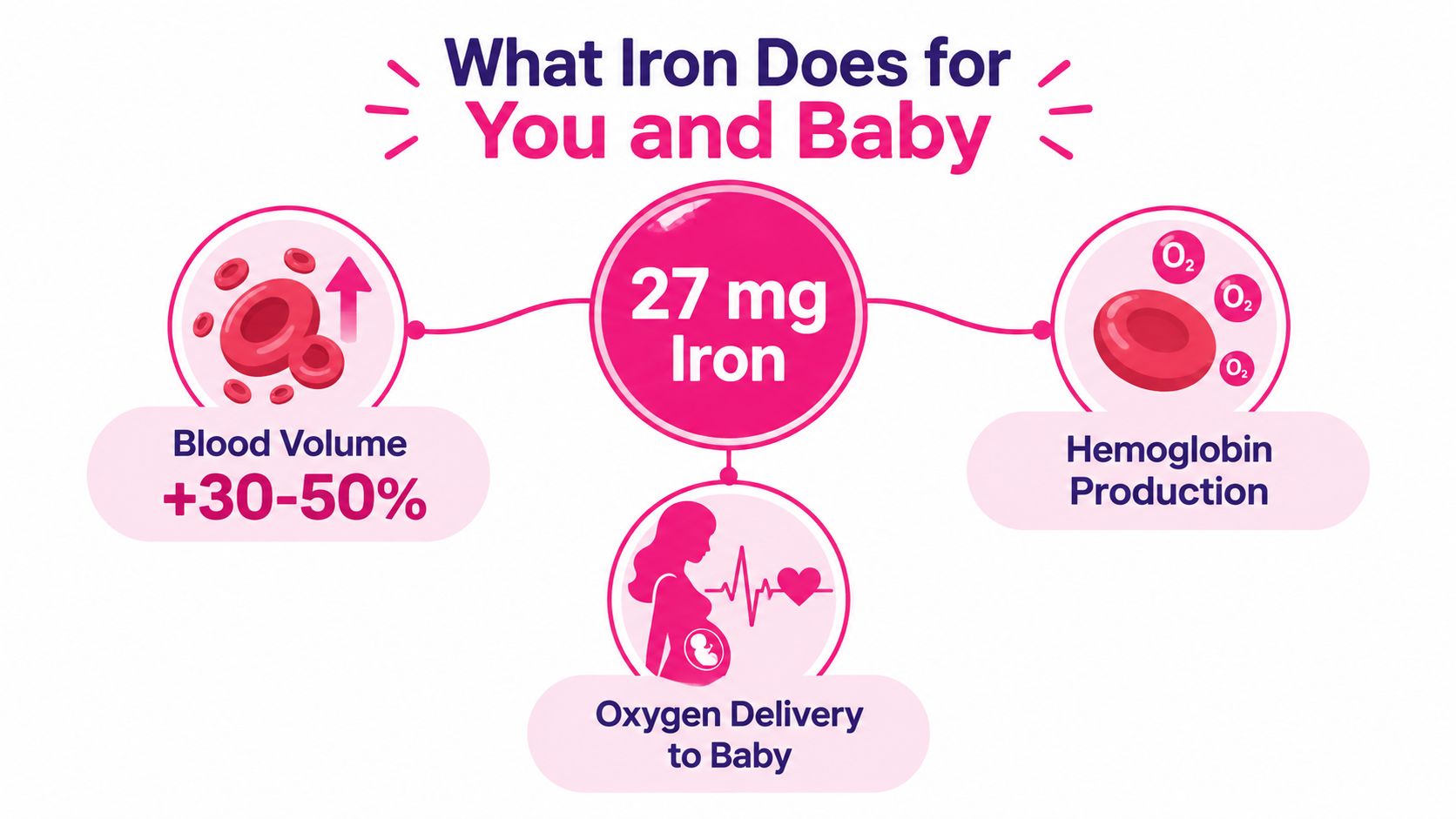
Iron helps your body make hemoglobin, which carries oxygen through your blood. During pregnancy, your body produces more blood to support your changing circulation, the placenta, and your baby. Without enough iron available, your body may struggle to keep up with that demand.
Iron also supports the placenta and the baby's developing tissues. The NIH describes low iron intake as a risk factor for maternal iron deficiency anemia and connects inadequate iron with low birth weight, premature birth, low infant iron stores, and impaired cognitive and behavioral development.
Why steady intake matters
Iron isn't a nutrient you want to think about only after you feel exhausted. Some people with low iron notice fatigue, weakness, dizziness, or breathlessness, while others have few obvious symptoms. That's why prenatal care and blood testing are more reliable than trying to diagnose yourself from how you feel.
A prenatal can help provide consistent nutritional support, but it doesn't replace testing or treatment. If your clinician finds anemia, they may recommend a different dose, a separate iron supplement, or another approach. Don't add a high-dose iron product on your own, especially if your prenatal already contains iron.
For a broader explanation of iron's role during pregnancy, you can read iron during pregnancy.
This short video offers another visual way to think about how iron supports pregnancy nutrition.
Common Side Effects and How to Take Iron More Comfortably
Iron can be wonderfully useful and still be hard on the stomach. Constipation, nausea, stomach cramping, dark stools, and a metallic taste are common complaints, but you don't have to accept severe discomfort as the price of taking your prenatal.
One mama may do best with her capsule after dinner, while another may need a smaller snack and a different iron form. The goal is to find a routine you can maintain, not to prove that you can tolerate the harshest tablet.
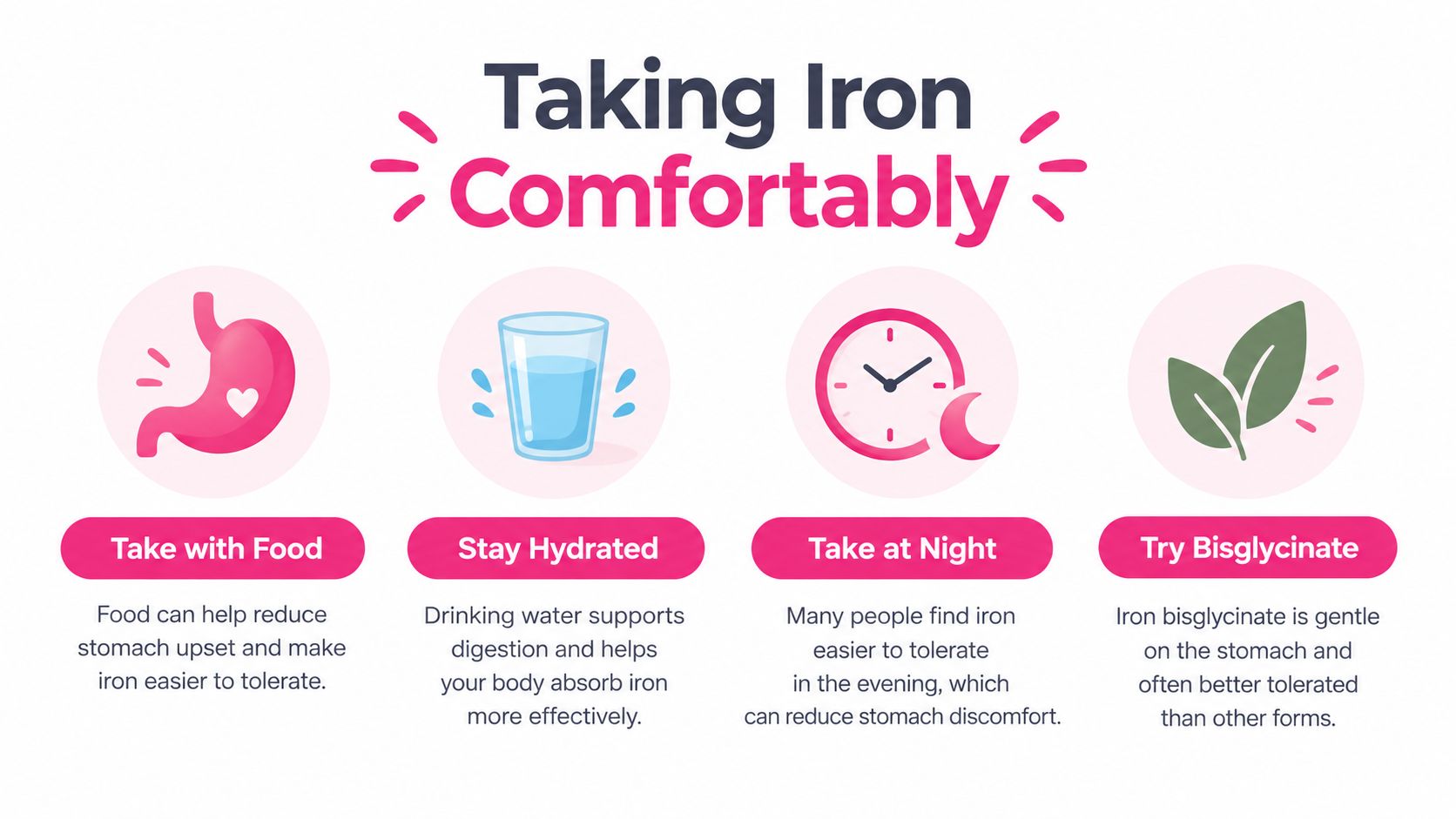
Small changes that can make a difference
- Use a small snack: Taking iron with a little food may feel easier than taking it on a completely empty stomach. Follow your product directions, because some formulations have specific instructions.
- Pair it with vitamin C foods: Orange slices, strawberries, tomatoes, or peppers can be easy companions when your stomach accepts them.
- Separate competing nutrients: Ask your provider how to space iron from calcium-rich foods, calcium supplements, coffee, or antacids.
- Try evening timing: Taking iron with dinner or later at night may reduce the chance that nausea disrupts your morning.
- Ask about another form: Ferrous bisglycinate, a delayed-release product, or a coated tablet may be worth discussing if a standard form causes persistent discomfort.
- Address constipation early: Fluids, fiber, movement, stool softeners, or magnesium may be appropriate for you, but check with your healthcare provider first.
Don't double up because you missed a dose unless your provider specifically tells you to. One missed capsule isn't a failure. A sustainable routine over time matters more than perfect adherence every single day.
If constipation is taking over your pregnancy routine, this guide on constipation from prenatal vitamins offers additional practical ideas to discuss with your care team.
Questions to Ask Your Provider About Your Iron Dose
Your prenatal label gives you a starting point, but your healthcare provider can help translate that number for your body. A quick conversation can prevent you from switching products repeatedly or adding iron that you may not need.
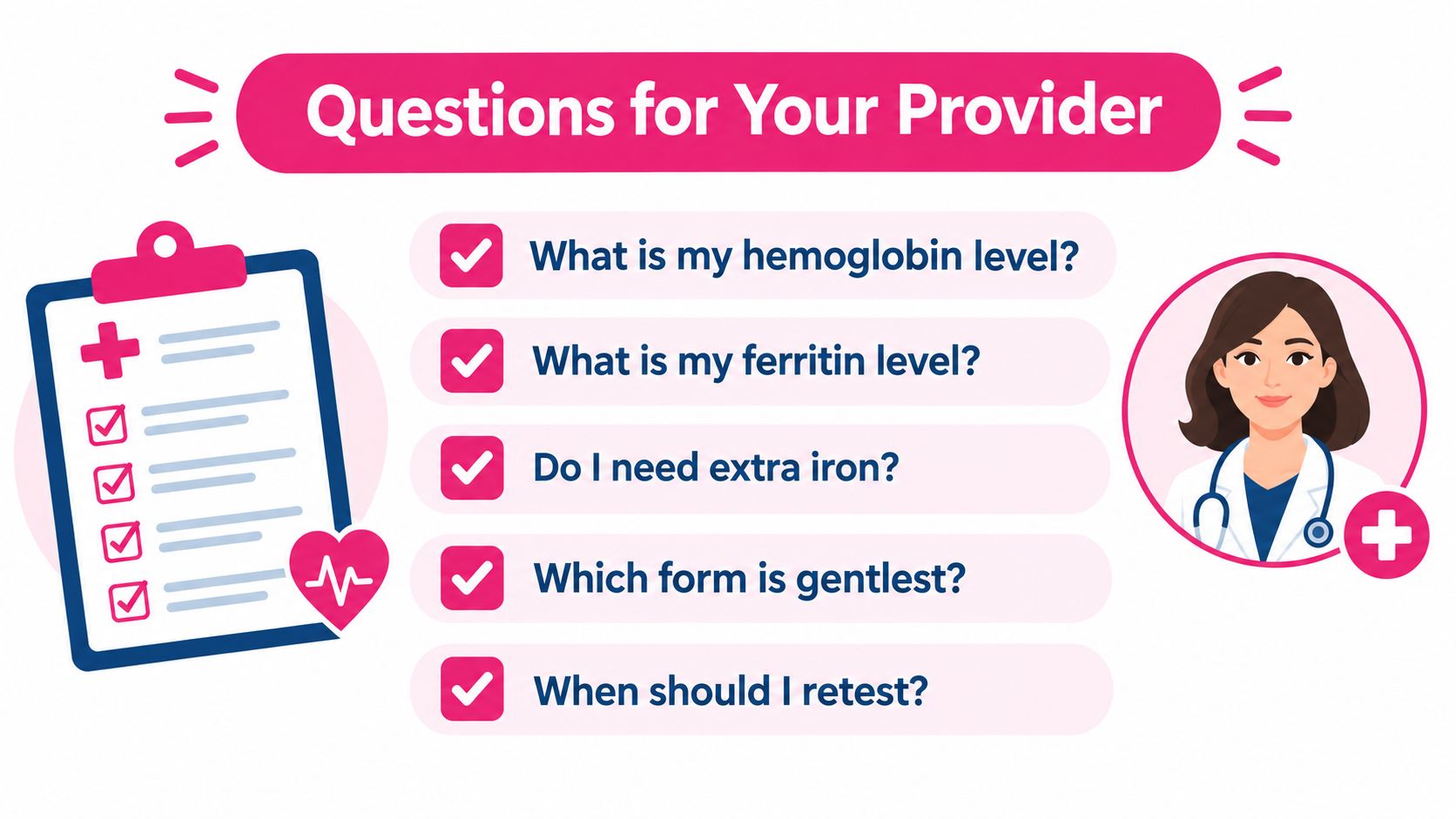
Bring the bottle or a clear photo of its Supplement Facts panel to your appointment. Then ask:
- What is my hemoglobin level? This helps show how your blood is carrying oxygen.
- What is my ferritin level? Ferritin can help your provider assess stored iron.
- Does a standard 27 mg prenatal fit my results? A routine dose may be reasonable for one person and insufficient for another.
- Do I need extra iron? Ask whether an over-the-counter prenatal is enough or whether you need a separate or prescription-strength plan.
- Which form may be gentlest for me? Your history of nausea, constipation, reflux, or sensitive digestion matters.
- When should I retest? Your provider can choose a schedule based on your results, symptoms, and stage of pregnancy.
- How should I space iron from calcium, coffee, antacids, or other supplements? Clear timing instructions can make your routine easier to follow.
Contact your provider sooner if you develop concerning or persistent symptoms such as marked weakness, shortness of breath, dizziness, or a racing heartbeat. Those symptoms can have several causes in pregnancy, so testing is more useful than guessing.
You can also use this guide on how to choose a prenatal vitamin to prepare for a more informed label discussion.
Putting It All Together for a Confident Pregnancy
So, how much iron is in a prenatal vitamin? A typical U.S. formula contains about 27 mg of elemental iron, the pregnancy RDA. Some products contain 18 mg, while higher-dose or global formulas may contain 60 mg or more. That range reflects different goals, not necessarily different levels of quality.
The amount matters, but so does the form. Ferrous sulfate and ferrous fumarate are common choices, ferrous bisglycinate may appeal to people focused on gentleness, and carbonyl or polysaccharide options offer other formulation approaches. Your provider can help you weigh the label number against your bloodwork, pregnancy history, diet, and digestive comfort.
You also have practical ways to make iron easier to live with. Try a small snack, vitamin C foods, evening timing, or a different form if nausea or constipation makes your current routine difficult. Ask before adding extra iron, and remember that your prenatal is only one part of the bigger picture. Folate, choline, DHA, and vitamin B12 support pregnancy nutrition alongside iron, while a varied diet adds protein, fiber, and naturally occurring nutrients.
As a women-owned brand built by moms for moms, Feed Mom & Me offers a Complete Prenatal Vitamin Plus DHA that includes iron along with DHA, choline, selenium, and methylfolate in a vegetarian formula. Visit Feed Mom & Me to review the product details and choose a prenatal routine you can discuss confidently with your healthcare provider.