
Constipation from Prenatal Vitamins
Published:Updated:
You take your prenatal faithfully, hoping it will help support you and your baby. Then, sometime during the first couple of weeks, bathroom trips become frustratingly unproductive. You may wonder whether pregnancy itself is responsible, whether the vitamin is making things worse, or whether you should stop taking it.
Constipation from prenatal vitamins is common, understandable, and often manageable. Iron is usually the main contributor, but pregnancy hormones, calcium, and inactive ingredients such as fillers or binders can add to the burden. The answer usually isn't to suffer in silence or abandon prenatal nutrition. It's to understand what your body is reacting to, then work with your healthcare provider on a gentler plan.
For a broader look at normal bowel changes, Bummed on pregnancy stool changes offers helpful context. You can also review the benefits of prenatal vitamins so the purpose of daily supplementation stays clear while you troubleshoot comfort.
Table of Contents
- Why Your Prenatal Vitamin Might Be Backing You Up
- How Iron and Pregnancy Hormones Team Up on Your Gut
- What the Research Says About Iron Dose and Tolerability
- Gentle Everyday Habits to Get Things Moving Again
- Formulation Features That Make a Prenatal Easier to Take
- When Constipation Is a Sign to Call Your Provider
- A Calm Recap and a Gentler Prenatal to Consider
Why Your Prenatal Vitamin Might Be Backing You Up
Maya began taking her prenatal after seeing her first positive pregnancy test. She took it with breakfast, kept her usual water routine, and expected a simple daily habit. Within several days, though, her stools became harder, straining increased, and bloating made her question whether the supplement was helping or hurting.
That timing can feel confusing. Pregnancy changes digestion on its own, and symptoms may build gradually instead of appearing right after a capsule. Still, a new bowel change that follows regular prenatal use can point to the formula, especially its iron content. The goal is a prenatal routine that supports nutrition and remains tolerable enough to follow.
What may be contributing
Iron is a common culprit. The body does not absorb all the iron in a supplement. The remainder moves through the digestive tract and may contribute to firmer stool that is harder to pass.
Other parts of the formula can matter too:
- Calcium: Some prenatal formulas include calcium, which may add to stool firmness for certain people.
- Fillers and binders: These ingredients keep a tablet or capsule intact. Sensitive digestion may respond to the overall formula rather than one nutrient alone.
- The prenatal format: A large tablet, concentrated dose, or particular coating may feel harder to tolerate than a smaller capsule.
- Pregnancy changes: Slower digestion can make a mild supplement effect feel much more noticeable.
Symptoms often begin within the first one to two weeks of consistent use, while hormonal changes are also becoming more apparent. That overlap makes it difficult to identify one cause. You have not done anything wrong, mama. Your body is responding to several changes at once.
A useful distinction: The aim is to find a nutrient plan you can take consistently without making daily life miserable. A provider can help you adjust the dose, format, or timing rather than stopping prenatal nutrition on your own.
Constipation is also a recognized part of the pregnancy experience. A 2007 longitudinal study reported constipation during each trimester and after birth (PubMed). For a broader look at bowel changes, Bummed on pregnancy stool changes provides additional context.
Your prenatal still has a purpose, as explained in this overview of the benefits of prenatal vitamins. The practical question is which combination of nutrients and formulation lets you keep taking it comfortably.
How Iron and Pregnancy Hormones Team Up on Your Gut
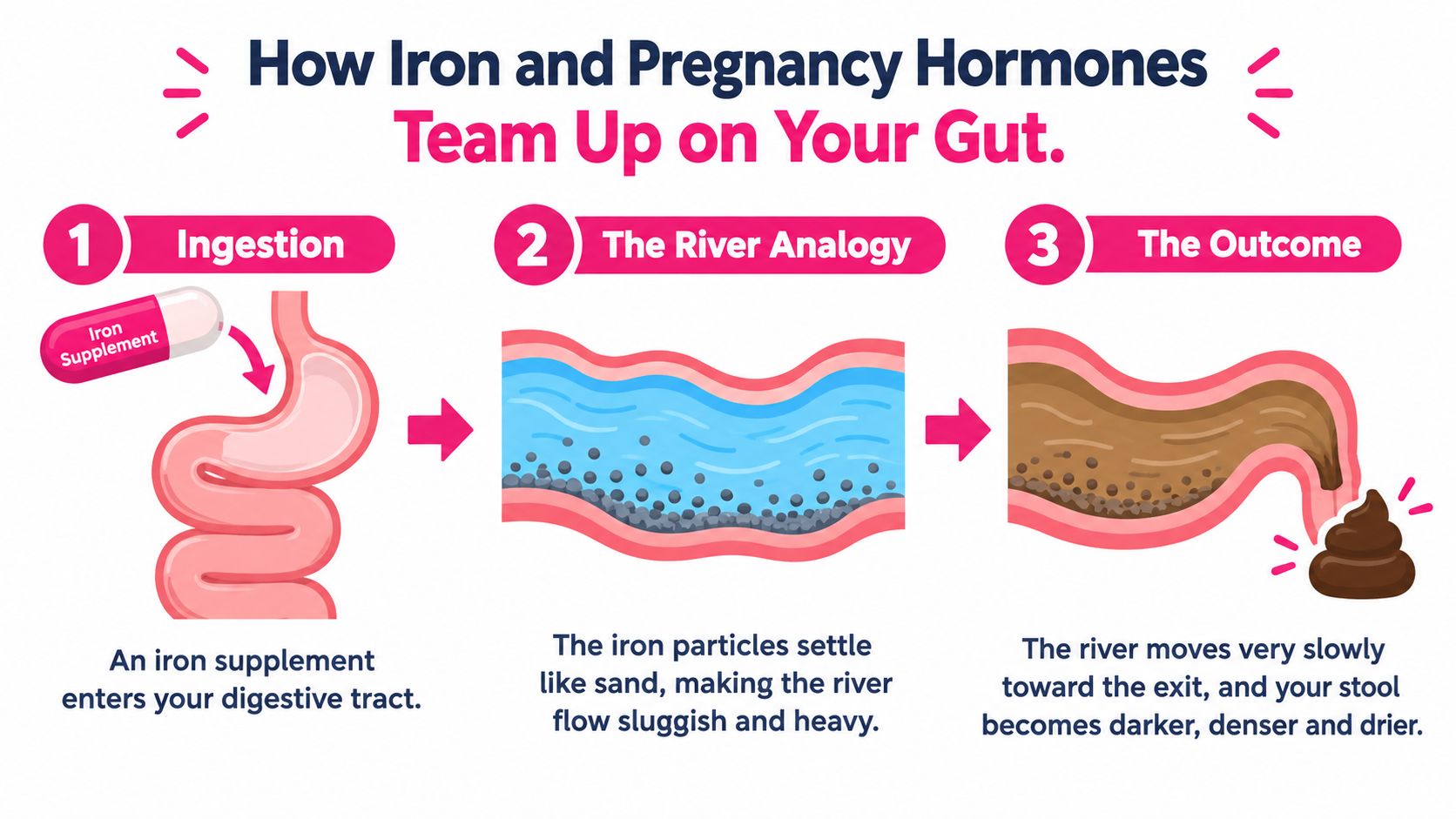
Your intestines move stool through a narrow, fluid-filled path. Iron that is not absorbed can make the contents denser, while pregnancy can slow the current that carries them forward. Together, these changes may leave stool drier, firmer, and harder to pass.
The process is more involved than saying iron "dries you out." Some unabsorbed iron reaches the lower small intestine and colon, where it may be poorly soluble and interact with water and dietary fiber. The result can be harder stool and weaker forward movement (pregnutri guidance).
Pregnancy adds a slower current
Pregnancy hormones relax smooth muscle throughout the body, including the digestive tract. With less muscular movement, stool may spend longer traveling through the bowel. As the uterus grows, pressure in the lower abdomen and pelvic area can add discomfort to an already slower process.
That timing explains why a prenatal you tolerated before conception may feel different now. Before pregnancy, your digestive tract may have moved material along quickly enough that the iron effect was barely noticeable. During pregnancy, slower transit gives the stool more time to lose moisture and become firm.
Your own history can matter too. A prior tendency toward constipation may make these changes easier to notice, so symptoms do not point to iron alone. As noted earlier, constipation is common during pregnancy, and the goal is to identify what combination of nutrient amount, formulation, and routine you can take consistently.
For background on why iron remains part of many prenatal plans, see this guide to iron during pregnancy. It can help frame the practical question: how can you support iron needs while making the prenatal easier on your digestion?
The burden is not fixed. The amount of elemental iron, the way a capsule releases it, and supportive ingredients such as ginger may all affect how manageable the routine feels. Delayed-release capsules can also change where the supplement opens in the digestive tract. These features are useful topics to discuss with your provider, especially if constipation is making daily prenatal use difficult.
What the Research Says About Iron Dose and Tolerability
You may be taking your prenatal faithfully, then notice that bowel movements become harder and less predictable. Iron can play a part, but “lower iron” is not automatically the right answer. Your needs depend on your health, lab results, diet, and provider's recommendation. Research does suggest that both dose and formulation can affect how manageable a prenatal feels.
One randomized crossover trial compared a prenatal with 35 mg of iron with one containing 60 mg. The lower-iron formula reduced constipation by 30% compared with the higher-iron formula (peer-reviewed trial). A separate tolerability study reported constipation in 5% of one group and 15% of another (peer-reviewed study). These findings point to a possible tradeoff: a moderate dose may feel gentler for some people, while a higher dose may cause more digestive discomfort.
The numbers do not tell you to change your prenatal on your own. They give you a useful question for your next appointment: if you are not being treated for diagnosed iron deficiency, could a moderate-iron formula meet your needs with fewer side effects? If anemia is present, your provider may recommend more iron and a plan for managing constipation alongside it.
The World Health Organization recommends 30 to 60 mg of iron per day during pregnancy. NIH pregnancy guidance explains that the higher end is used where anemia is a serious public-health problem (NIH Office of Dietary Supplements). The same guidance describes a weekly option of 120 mg of iron plus 2,800 mcg of folic acid in populations where anemia prevalence is under 20%, when daily iron causes unacceptable side effects.
Dose is only one part of tolerability. A delayed-release capsule may change where the supplement opens in your digestive tract, and ginger may be a supportive ingredient for some routines. Those features do not replace medical advice, but they can make consistent prenatal use easier to discuss with your provider.
For a practical overview of what a prenatal dose may include, see this guide to prenatal vitamin dose. The goal is a supplement you can take consistently while meeting your nutritional needs.
Gentle Everyday Habits to Get Things Moving Again
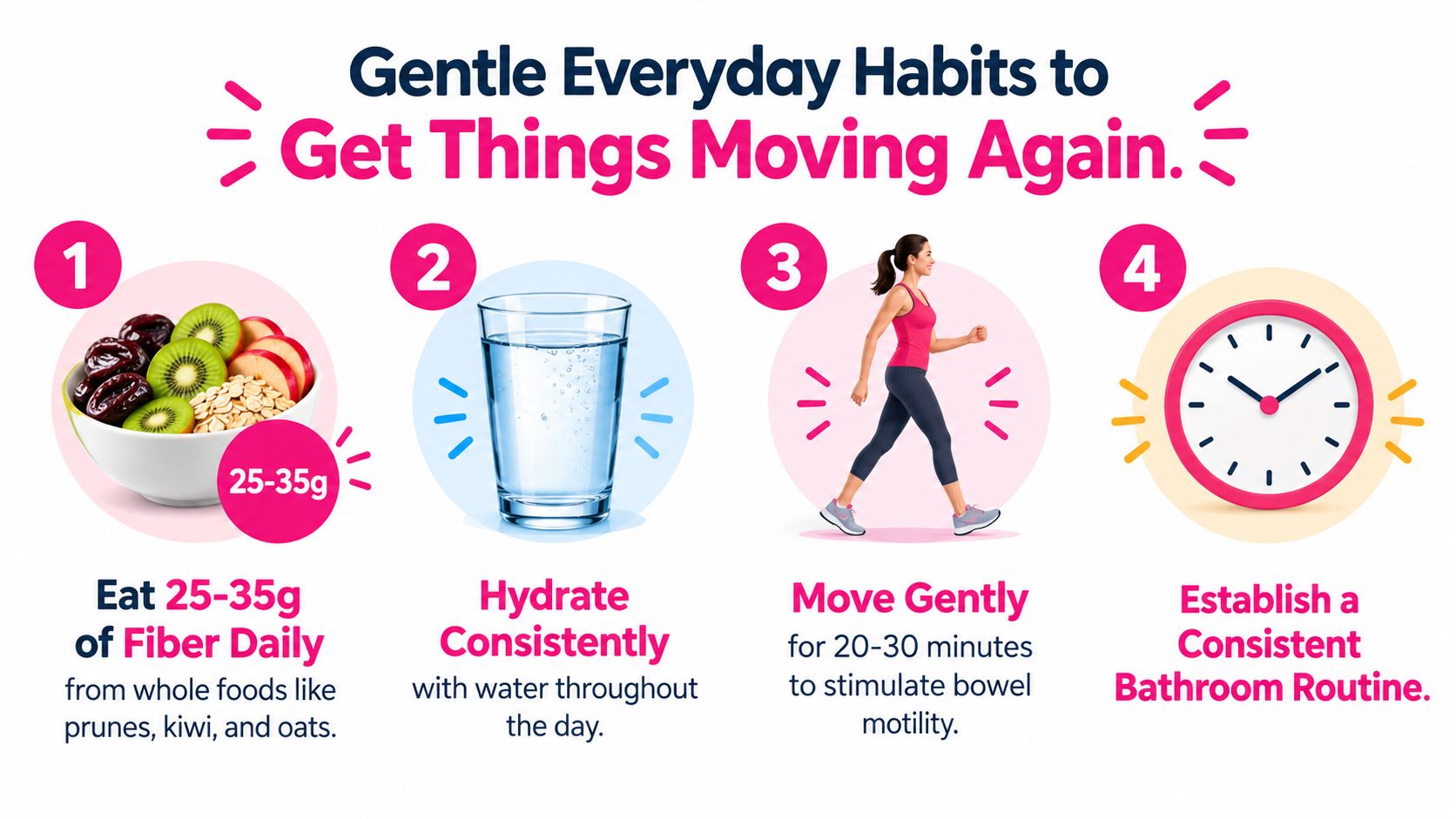
A prenatal vitamin can fit into your routine without making every bathroom visit harder. Begin with small changes that soften stool and encourage regular movement. A sudden increase in fiber without enough fluid can leave you feeling more blocked, so build the plan gradually.
Start with food and water
Work toward a fiber-rich pattern using foods that provide both bulk and moisture. Prunes, kiwi, oats, chia seeds, leafy greens, and lentils are practical choices. Increase portions over several days if your stomach is sensitive, rather than changing everything at once.
- Pair fiber with fluid: Water helps fiber swell and soften stool. Keep a bottle nearby and sip throughout the day instead of waiting until thirst catches up.
- Create a morning cue: Warm water, lemon water, or prune juice may help your body settle into a predictable routine.
- Make meals easier to plan: These top foods to help naturally relieve pregnancy constipation can turn general advice into breakfast, snacks, and meals you will eat.
The benefits of psyllium husk may also be worth discussing if food-based fiber does not provide enough support. Psyllium adds bulk, much like giving stool a soft framework that can hold water. Introduce it with adequate fluid, and ask your provider before adding any supplement during pregnancy.
Move, then consider extra help
If your pregnancy care team has cleared activity, try walking, prenatal yoga, or gentle pelvic tilts for part of most days. Movement can encourage intestinal activity without requiring an intense workout. A short walk after a meal may feel more manageable than trying to fit in one demanding session.
If these habits are not enough, ask your provider about options that may fit your symptoms and medical history:
- Bulk-forming fiber: Psyllium may add stool-softening bulk when taken with enough water.
- Osmotic options: Polyethylene glycol 3350 may be appropriate for some pregnant people under professional guidance.
- Stool softeners: Docusate may be recommended when iron needs to continue.
- Stimulant laxatives: Use these only with provider guidance, because the suitable choice depends on your situation.
Choose one change first and observe how your body responds. You do not need to try every option together. Contact your healthcare provider if constipation persists, becomes painful, or makes it difficult to keep taking the prenatal your care plan requires.
Formulation Features That Make a Prenatal Easier to Take
Switching brands blindly can create a new problem while solving the old one. Instead, compare the label and look for the feature most likely to address your specific symptoms.
A delayed-release or enteric-coated capsule is designed to move beyond the stomach before releasing some of its contents. That may reduce upper-stomach irritation for certain users, although evidence about whether delayed release consistently improves iron absorption is mixed. A lower-iron formula may feel easier on digestion, but it may not provide enough iron if your provider is treating anemia.
Ginger and peppermint can make a prenatal more pleasant, particularly for people whose main barrier is nausea or taste. They aren't a guarantee against constipation, but a supplement you can take consistently is more useful than one you avoid because it makes you feel unwell.
| Feature | How It Helps Tolerability | Best For | Trade-Off to Know |
|---|---|---|---|
| Delayed-release capsule | Moves release farther along the digestive tract and may reduce upper-GI irritation | People bothered by stomach upset | Absorption performance may vary by product |
| Moderate iron dose | May reduce the constipation burden compared with a higher dose | People without a provider-directed need for high-dose iron | May not meet treatment needs when anemia is present |
| Ginger or peppermint | Can support palatability and may ease nausea | People who struggle to take a prenatal consistently | These ingredients don't replace iron or other core nutrients |
| Simplified ingredient list | Makes it easier to identify possible triggers | People with sensitive digestion | A shorter list doesn't guarantee perfect tolerability |
Your provider can help interpret the label, especially if you have anemia, a history of heavy menstrual bleeding, digestive disease, or take other supplements. The question isn't “Which prenatal is gentlest?” It's “Which complete formula fits my nutrient needs and the way my body responds?”
Some people also wonder whether magnesium belongs in the conversation. Magnesium in prenatal vitamins explains why the nutrient's form and amount matter, but don't add a separate magnesium product without checking first.
When Constipation Is a Sign to Call Your Provider
Mild constipation can be part of pregnancy and may improve after changes to food, fluid, movement, or the prenatal formula. A symptom becomes more concerning when it is severe, persistent, or accompanied by signs that point beyond routine supplement intolerance.
Contact your obstetric provider or midwife promptly if you notice:
- No bowel movement for more than a week: This deserves evaluation when home measures haven't helped.
- Severe or persistent abdominal pain: Pain or cramping that doesn't ease with rest, food, or a bowel movement shouldn't be dismissed.
- Vomiting with bloating: Constipation paired with repeated vomiting or significant swelling may need urgent assessment.
- Blood in the stool: Bright red blood, maroon stool, or black tarry stool should be reported rather than assumed to be a normal iron effect.
- Alternating constipation and diarrhea: A changing pattern can require a closer look.
- New sharp pain during bowel movements: This may reflect irritation, hemorrhoids, or an anal fissure.
- A sudden bowel change after a prenatal switch: Tell your provider when symptoms began and which formulation or dose changed.
Constipation can contribute to hemorrhoids and anal fissures, both of which can make bowel movements painful. Rarely, severe constipation can occur alongside a bowel obstruction, so intense symptoms, vomiting, and marked bloating should never be managed by taking more fiber.
Bring the bottle or a clear label photo to your appointment. The iron amount, release design, calcium content, and inactive ingredients can help your provider choose a practical adjustment.
A provider may recommend a different formulation, a different dose, or a stool-softening strategy rather than asking you to stop iron completely. The Cochrane evidence base for constipation treatment during pregnancy remains limited because available studies are few and small, so confident “fix it fast” promises deserve caution (NHS Lothian pregnancy guidance).
Calling isn't an overreaction. It's a sensible way to protect your comfort and make sure an important nutrient plan stays appropriate.
A Calm Recap and a Gentler Prenatal to Consider
If your prenatal leaves you sitting uncomfortably, start with a kinder explanation than “my body is failing.” Iron can add to firmer stools, pregnancy hormones can slow intestinal movement, and calcium or other ingredients may make one formula harder to tolerate than another. A product that worked before pregnancy may feel different now.
Try a layered plan:
- Soften stools: Work gradually toward 25 to 35 grams of fiber daily, rather than increasing it all at once.
- Add fluids: Fiber needs enough fluid to do its job.
- Keep moving: Gentle walking or other pregnancy-approved activity may support regular bowel movements.
- Review the label: Ask your provider about the iron amount, release pattern, calcium, and other ingredients.
- Choose bowel aids carefully: A provider may suggest docusate, psyllium, polyethylene glycol 3350, or another option suited to your situation.
- Ask for help early: Severe pain, vomiting with bloating, bleeding, or symptoms that persist should prompt medical advice.
The earlier iron research gives this plan useful context. It supports treating tolerability as part of prenatal care, not as a reason to ignore your nutrient needs or stop iron without guidance. A lower dose is not automatically right for everyone, so the practical question is whether your provider can match the amount and formulation to your needs.
One option to discuss is Feed Mom & Me Complete Prenatal Vitamin Plus DHA. It uses a delayed-release vegetable capsule and includes ginger and peppermint, features that may make daily use easier for some people. The formula also provides DHA, choline, selenium, and methylfolate, and is described as vegetarian, soy-free, gluten-free, dairy-free, and free of artificial colors, flavors, and chemical additives. Check the current label with your healthcare provider, especially to confirm that its iron level fits your plan.
Feed Mom & Me is women-owned and built by moms, for moms, with educational resources intended to support conversations with healthcare professionals. The goal is a prenatal routine you can follow consistently while still paying attention to discomfort. Small formulation details, such as delayed release or ginger, can matter when taking a supplement every day.
If constipation is making your prenatal routine difficult, explore Feed Mom & Me for the Complete Prenatal Vitamin Plus DHA and pregnancy nutrition resources. Review the label with your OB, midwife, or dietitian, then choose an approach that supports both your nutrient needs and everyday comfort.