
DHA vs Fish Oil Pregnancy Guide for Healthy Moms
Published:Updated:
You're standing in the prenatal aisle with a bottle in each hand. One says DHA, another says fish oil, and both seem to promise support for your baby's brain. You're already doing plenty, mama. The labels are using different ways to describe related omega-3 fats, and the difference matters because pregnancy guidance focuses on the amount and type of omega-3 you receive, not just the words “fish oil.”
A DHA-only supplement may be enough for one person, while someone with very low seafood intake or a specific preterm-birth risk profile may need a different plan discussed with an obstetrician or midwife. Fish oil can provide both DHA and EPA, but its proportions vary from product to product. Algal DHA can offer a vegetarian or vegan route to DHA without using fish.
This guide will answer the questions that usually come up in the pharmacy aisle: What are DHA and EPA? How does DHA compare with broad fish oil? How much may you need at different points in pregnancy? What should you check for on a label, and when should you ask your provider about safety? You can also read this plain-language overview of DHA benefits during pregnancy as a companion resource.
Table of Contents
- What Are DHA and EPA and Why Do They Matter During Pregnancy
- How Do DHA Supplements and Fish Oil Differ for Pregnancy
- How Much DHA Do You Need During Pregnancy and When
- Are DHA and Fish Oil Safe Regarding Contaminants and Late Pregnancy Concerns
- Which Option Fits Your Pregnancy Journey Best
- How to Choose a Prenatal With DHA You Can Stick With
What Are DHA and EPA and Why Do They Matter During Pregnancy
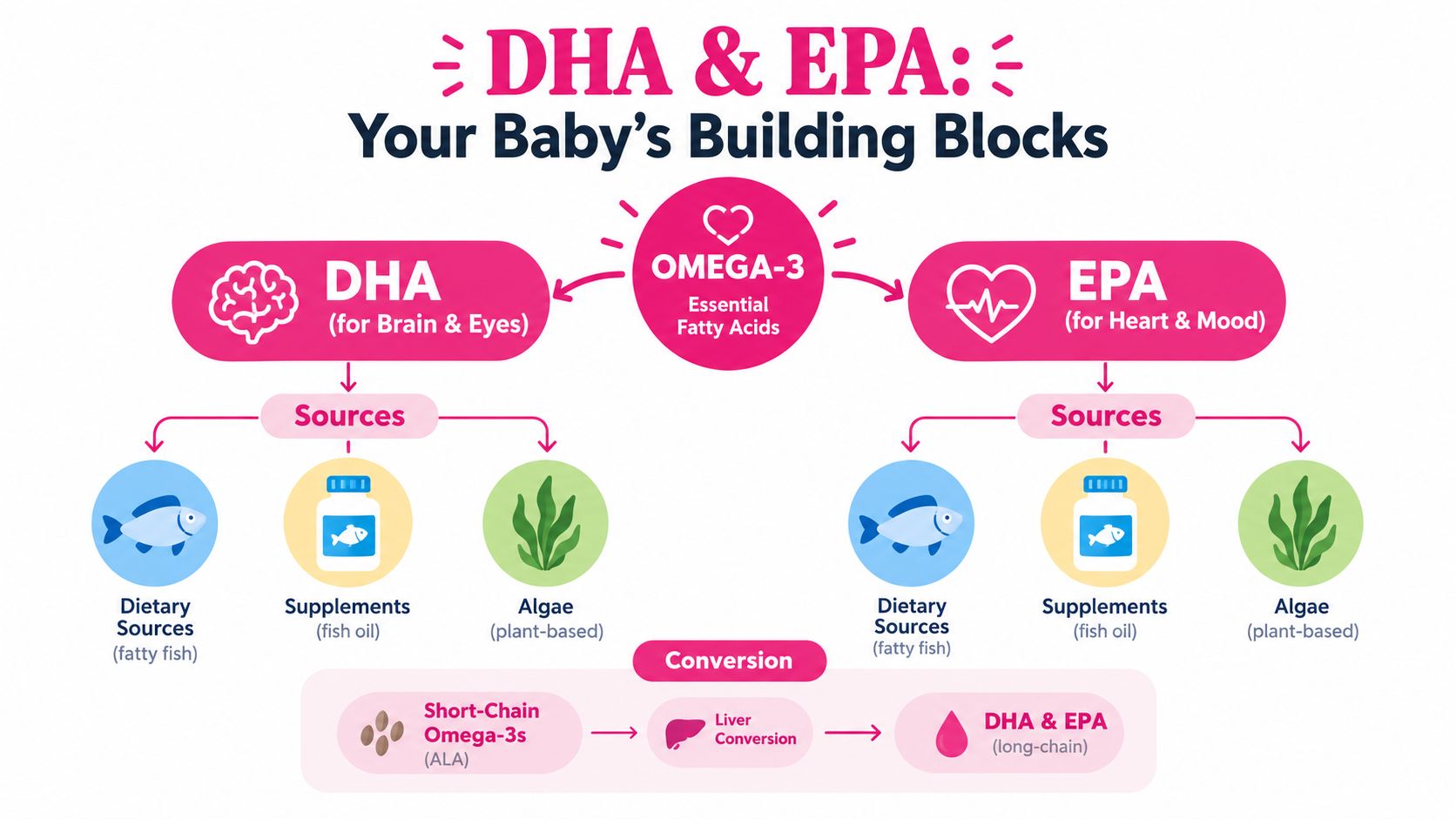
DHA, or docosahexaenoic acid, and EPA, or eicosapentaenoic acid, are long-chain omega-3 fatty acids. They're found in seafood and marine-based supplements, while algal oil is a direct source of DHA. Plant foods such as flaxseed and walnuts provide another omega-3 called ALA, but the body's conversion of ALA into DHA and EPA is limited, so pregnancy guidance generally discusses preformed DHA and EPA from food or supplements.
A simple analogy helps. Think of DHA as a flexible building material used in tissues that need fast communication and delicate structure. It's especially concentrated in the brain and retina, which is why DHA receives particular attention during fetal development. EPA supports other functions, including cardiovascular and inflammatory pathways, and it commonly appears alongside DHA in fish and fish oil products.
The two fats work together, but they aren't interchangeable on a supplement label. A capsule may contain plenty of total oil while delivering a smaller amount of DHA than you expect.
Where can you get DHA and EPA
Food can contribute meaningful omega-3s, although the amount depends on the type and portion of seafood. Common sources include:
- Fatty fish: Salmon, sardines, herring, and other oily fish can provide DHA and EPA.
- Lower-mercury seafood: Choosing lower-mercury varieties helps you include seafood while managing mercury exposure.
- Fish oil: These products usually contain both DHA and EPA, but the ratio and concentration differ.
- Algal oil: Algae-derived products generally focus on DHA and suit vegetarian or vegan routines.
- Prenatal supplements: Some prenatals include DHA, while others contain no DHA or contain a modest amount that may not match every person's needs.
DHA's role doesn't mean every pregnant person needs a high-dose capsule. It means you'll want to identify what you're already getting from food and your prenatal, then discuss any gap with your healthcare provider. For food ideas, this guide to foods rich in DHA can help you plan meals without turning nutrition into another source of stress.
How Do DHA Supplements and Fish Oil Differ for Pregnancy
The phrase fish oil describes a source and product category. DHA describes a specific omega-3 fatty acid. That's the central distinction in the DHA vs fish oil pregnancy conversation.
A DHA-only product may use fish-derived oil or algae-derived oil. A broad fish oil usually contains both DHA and EPA, but the label is what tells you how much of each is present. Total fish oil weight isn't the same as DHA weight.
The practical difference: Pregnancy targets refer to specific DHA and EPA amounts, not a generic fish oil claim.
DHA-only, algal DHA, and broad fish oil
| Feature | DHA-Only / Algal DHA | Broad Fish Oil |
|---|---|---|
| Main omega-3s | Primarily DHA | DHA plus EPA |
| Source | Fish-derived oil or marine algae, depending on product | Marine fish oil |
| Vegetarian fit | Algal DHA is vegetarian and vegan suitable | Not suitable for vegetarians or vegans |
| Label focus | Check the DHA amount per serving | Check separate DHA and EPA amounts, not only total oil |
| Composition | More targeted when DHA is the main goal | Broader omega-3 profile |
| Product variability | DHA concentration still varies by product | DHA and EPA proportions can vary widely |
| Common consideration | Useful when you want DHA without fish oil | Useful when your provider recommends both DHA and EPA |
Fish oil isn't automatically inferior, and DHA-only isn't automatically superior. The better choice depends on the dose you're trying to reach, your seafood intake, dietary preferences, tolerance, and medical history.
Algal DHA is made from the same original marine source that feeds the ocean's omega-3 pathway, but it doesn't require fish as the dietary source. It can be a comfortable fit for a vegetarian or vegan mama, provided the product label confirms its dietary suitability. You can learn more about this option in the guide to an algae-based DHA supplement.
How to read the label
Look for the Supplement Facts panel rather than relying on the front of the bottle. Find:
- DHA per serving: This is the number to compare with DHA-focused guidance.
- EPA per serving: Record it separately if the product includes EPA.
- Serving size: A label may list the amounts for more than one capsule.
- Source: Check whether the DHA comes from fish or algae.
- Added ingredients: Flavorings, coatings, and oils can affect tolerance or dietary fit.
- Quality information: Look for transparent testing and purification details from the manufacturer.
A bottle labeled “fish oil” may be perfectly reasonable, but you can't know whether it matches your plan until you check its DHA and EPA amounts. Conversely, a DHA product may be too low-dose for someone whose clinician has recommended a higher intake. The supplement category is only the starting point.
How Much DHA Do You Need During Pregnancy and When
There isn't one universal capsule that fits every pregnancy. Your intake from seafood, your prenatal's formulation, your DHA status, and your obstetric history all matter.
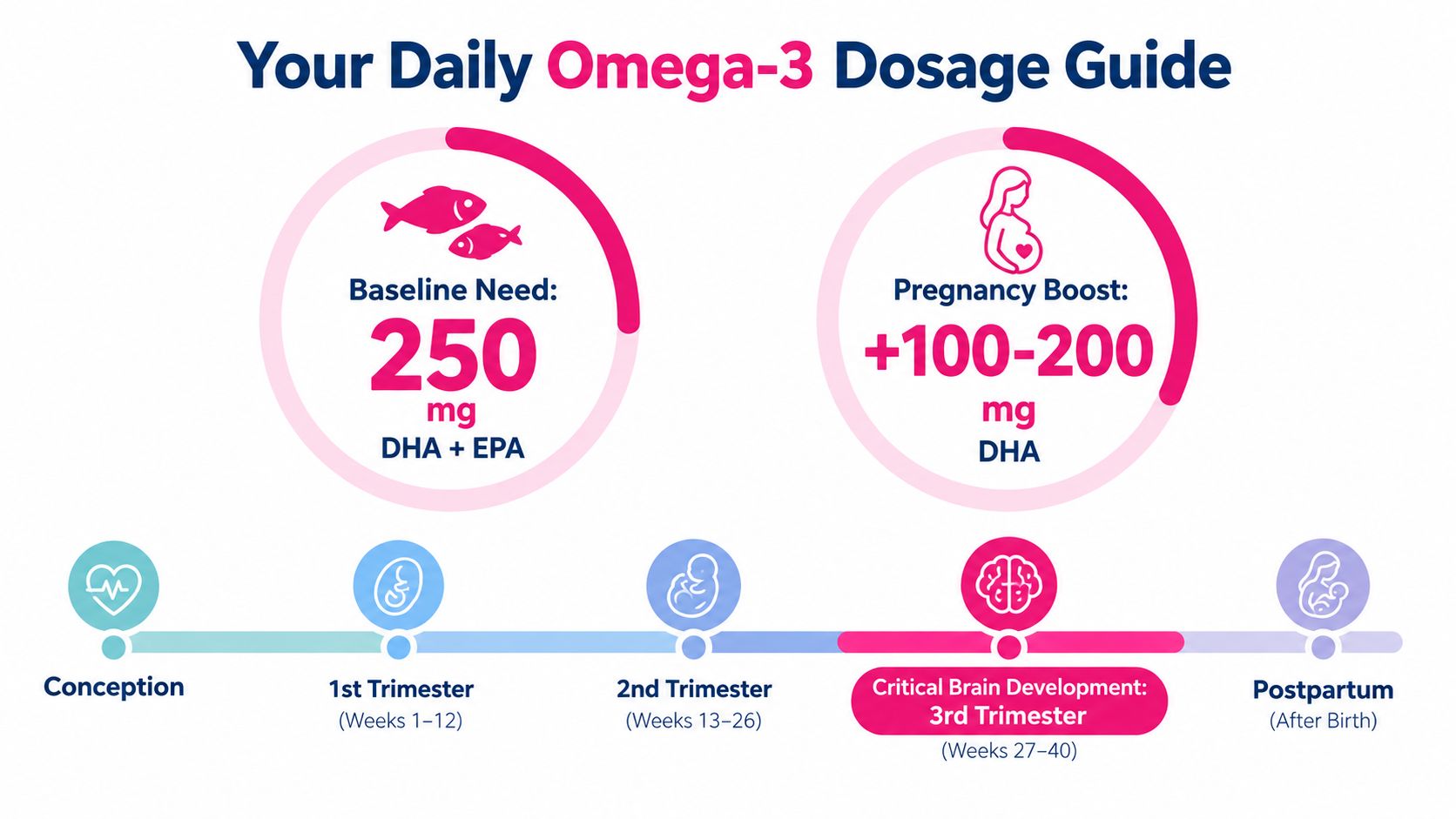
The NIH Office of Dietary Supplements summarizes guidance calling for at least 250 mg per day of DHA plus EPA from diet or supplements for women of childbearing age and pregnant women, along with an additional 100 to 200 mg per day of DHA during pregnancy. The NIH omega-3 guidance also summarizes European guidance that adds 100 to 200 mg per day of DHA during pregnancy on top of 250 mg per day of DHA plus EPA, while FAO guidance calls for at least 300 mg per day of DHA plus EPA, including 200 mg of DHA.
Another NIH-linked review describes consensus guidance recommending at least 200 mg of DHA per day during pregnancy, while a separate review describes a dietary goal of 650 mg per day of omega-3s, including 300 mg of DHA. These differences reflect different frameworks, food assumptions, and clinical contexts, which is why your provider should help interpret the target rather than treating one number as a prescription for everyone.
A simple way to assess your starting point
Write down the DHA and EPA you receive from your current routine:
- From seafood: Note the types and frequency you eat, following your provider's food-safety guidance.
- From your prenatal: Check whether the serving supplies DHA, EPA, or both.
- From a separate supplement: Record the actual DHA and EPA amounts, not the total oil.
- From your health history: Tell your clinician about any previous preterm birth or other pregnancy risks.
If your DHA intake is below 150 mg per day, the NIH Pregnancy Health Professional fact sheet summarizes a guideline recommending 600 to 1000 mg per day of DHA plus EPA or DHA alone, beginning in the second trimester and no later than 20 weeks' gestation, for reducing the risk of preterm and early preterm birth. That is a risk-based clinical recommendation, not a routine dose for every pregnant person. Discuss it with your obstetrician before changing your supplement plan. See the NIH pregnancy nutrition guidance for the summarized recommendation.
What the evidence does and doesn't establish
Studies have used a wide range of marine-oil doses, from 133 mg per day to 3 g per day, with most women in the WHO ELENA review receiving about 2.7 g per day of EPA plus DHA. The WHO review of fish oil in pregnancy concludes that there isn't enough evidence to support routine marine-oil supplementation to prevent pre-eclampsia, preterm birth, or low birth weight, although supplementation may increase gestation length.
That distinction matters. Evidence for a possible change in gestation length doesn't prove that more omega-3 guarantees a healthy outcome, and NIH summaries describe inconsistent randomized-trial findings for infant cognition and visual outcomes. DHA is important nutrition, but it isn't a cure-all or a promise about your baby's future.
Are DHA and Fish Oil Safe Regarding Contaminants and Late Pregnancy Concerns
A mama can make thoughtful choices without treating DHA and fish oil as automatically safe or unsafe. Fish may contain mercury and other environmental contaminants, while properly purified supplements are processed to reduce them. The useful questions are where the oil comes from, how it was purified and tested, how much DHA or EPA it provides, and whether it fits your health situation. For background on processing and product considerations, see this guide to organic cod liver oil.
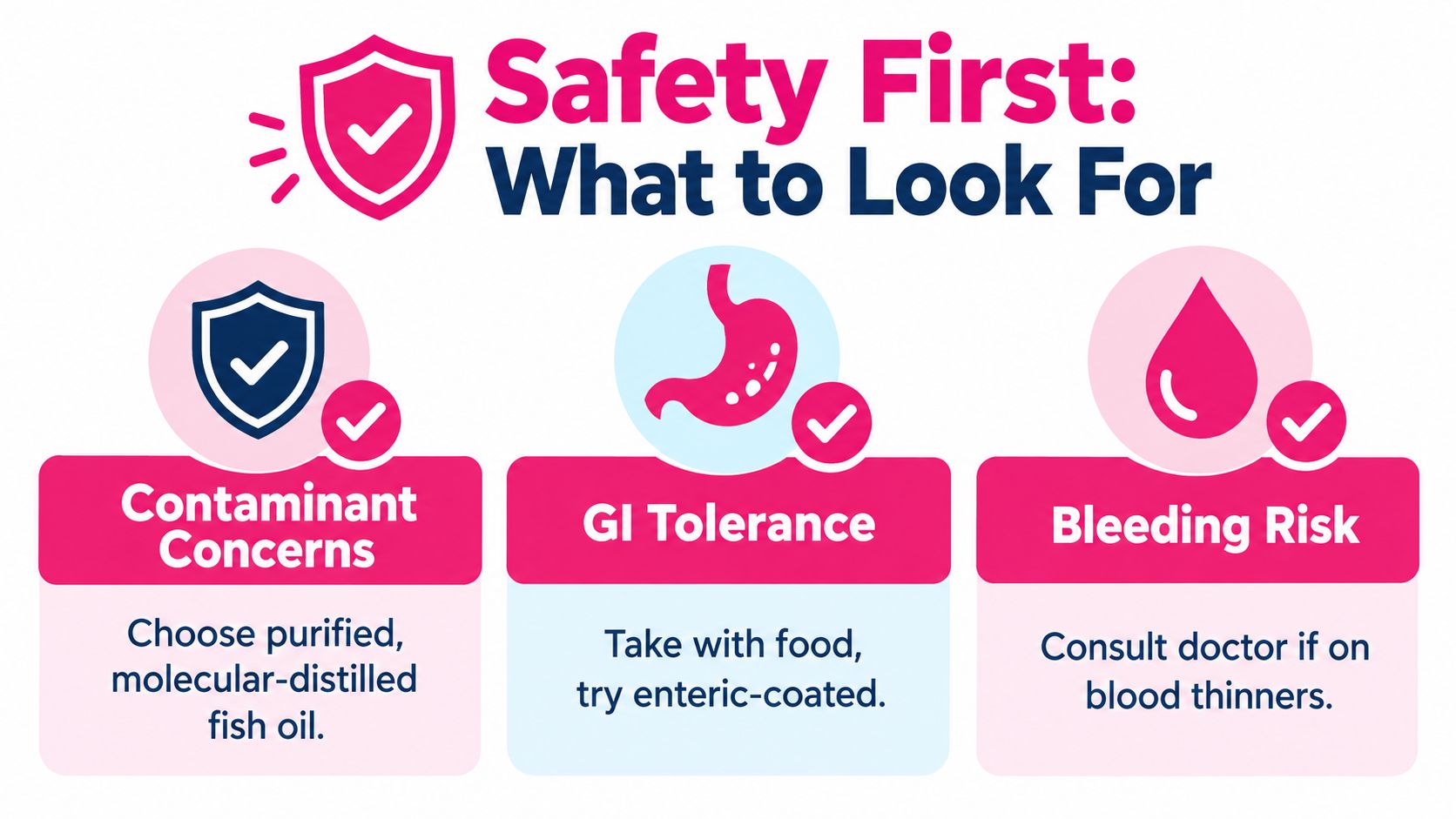
Fish oil can also bring everyday drawbacks, including a fishy aftertaste, reflux, nausea, or loose stools. Taking it with food helps some people, and a delayed-release or enteric-coated capsule may feel gentler. Algal DHA offers another route when fish oil's taste or source feels uncomfortable.
A label and medication checklist
- Purification: Look for clear information about contaminant control and testing.
- DHA and EPA amounts: Confirm the actual dose per serving, rather than relying on the product category.
- Other oils: Check whether the formula contains ingredients you avoid.
- Stomach comfort: Try taking the capsule with a meal, and ask whether a delayed-release format suits you.
- Medications: Tell your clinician if you use blood thinners or have a bleeding disorder.
- Delivery planning: Ask your obstetrician or midwife whether your dose should change near delivery.
A recent cohort study discussed in this GoodRx review of omega-3 supplements in pregnancy raised a possible association between EPA/DHA intake late in pregnancy and postpartum hemorrhage. The finding does not mean every pregnant person should stop omega-3s. It does mean your care team should consider dose, timing, medications, bleeding history, and the plan for delivery.
The WHO evidence review cautions against assuming routine marine-oil supplementation prevents every major pregnancy complication. NIH summaries describe small increases in birth weight and gestation length, without consistent broader maternal or infant benefits. Available clinical summaries do not expect fetal harm based on fish-oil data, but human dosing data for omega-3 therapy during pregnancy remain limited, as noted in StatPearls' omega-3 overview.
Before changing anything near delivery: Bring the bottle, label, medication list, and current dose to your prenatal appointment. Your care team can weigh possible benefits against bleeding, procedure, and medical risks specific to you.
Which Option Fits Your Pregnancy Journey Best
The most useful choice isn't the one with the most impressive front label. It's the product that supplies the DHA or DHA-plus-EPA amount your clinician recommends, fits your diet, and is comfortable enough for you to take consistently.
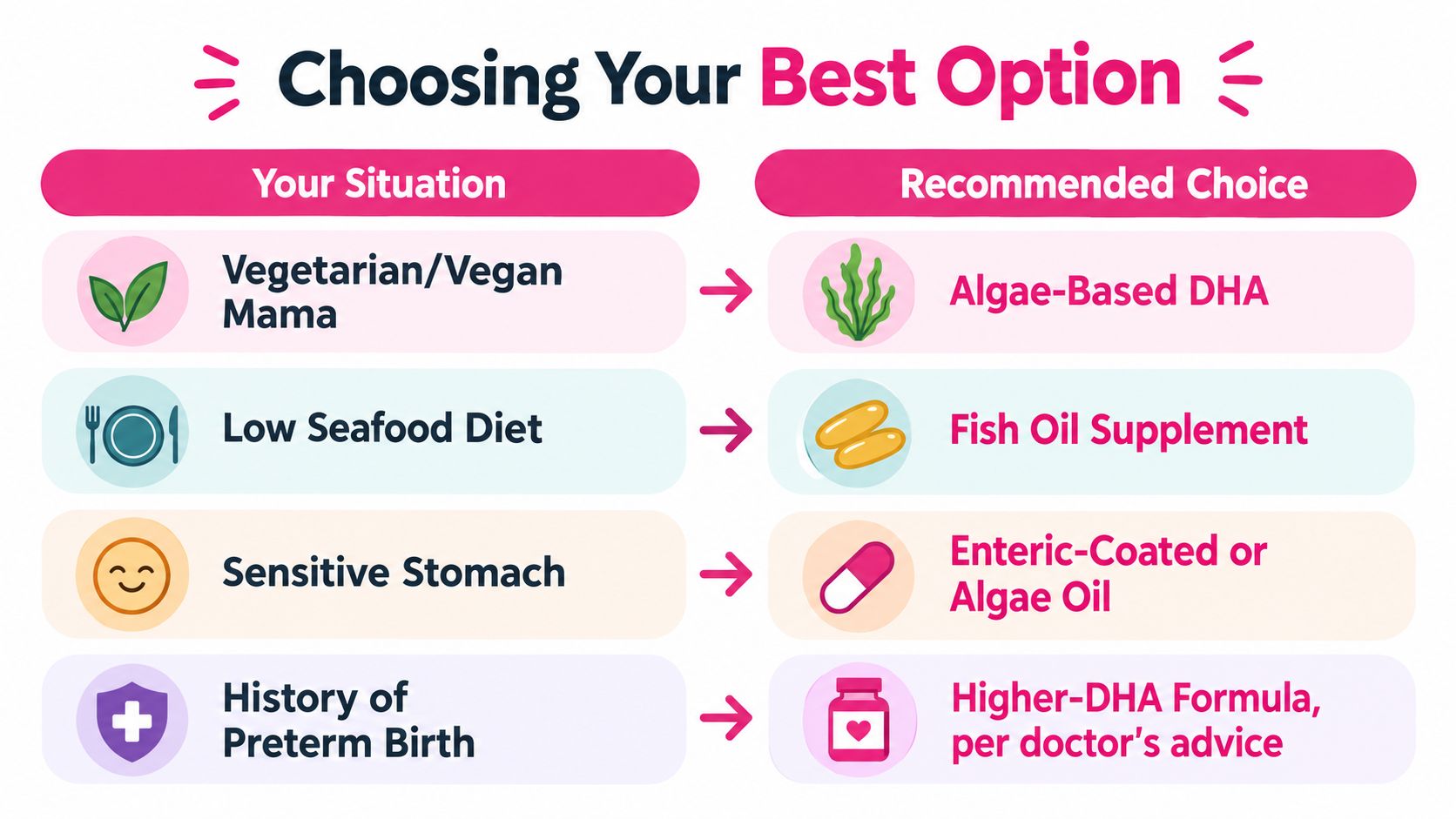
| Your situation | Option to discuss | Why it may fit |
|---|---|---|
| Vegetarian or vegan diet | Algal DHA | Provides a marine-source DHA option without fish-derived oil |
| Low seafood intake | DHA-only, algal DHA, or mixed fish oil | Lets you fill a documented DHA or DHA-plus-EPA gap |
| Sensitive stomach or reflux | Delayed-release fish oil or algal oil | Formulation and meal timing may improve tolerance |
| History of preterm birth or low DHA intake | Higher-DHA plan prescribed by your clinician | Risk-based guidance may differ from routine prenatal intake |
| Preference for one prenatal | Prenatal containing DHA | Simplifies the routine, but you still need to check the amount |
| Regular seafood intake | Food plus a carefully selected supplement, if needed | Helps avoid automatically duplicating nutrients |
A vegetarian mama may choose algal DHA because it meets her dietary values. Someone who rarely eats seafood may prefer broad fish oil if her provider wants both DHA and EPA. Another mama may need a separate product because her prenatal contains DHA but not enough for her individualized plan.
Match the product to the gap, not to the category name.
For a prior preterm birth, low DHA intake, blood-thinner use, bleeding concern, or planned procedure, don't self-direct a high-dose supplement. Bring the exact label to your clinician and ask whether the recommended amount should begin in the second trimester, change later, or be managed differently.
A short visual guide can also help you compare the common routes:
How to Choose a Prenatal With DHA You Can Stick With
Start with the serving panel, not the marketing headline. Confirm the DHA amount, check whether EPA is included, and make sure the source fits your diet. If you're comparing products, put the labels side by side so you can see the actual amounts rather than guessing from words such as “complete” or “advanced.”
Tolerability deserves equal attention. A prenatal with delayed-release vegetable capsules may be easier for some sensitive stomachs, while ingredients such as ginger or peppermint may make the routine more pleasant. Check for dietary needs such as vegetarian, soy-free, gluten-free, and dairy-free requirements, and choose a supply plan you can maintain without running out.
For a single-product approach, Feed Mom & Me Complete Prenatal Vitamin Plus DHA contains DHA along with choline, selenium, and methylfolate in a vegetarian, soy-free, gluten-free, dairy-free formula made in the USA. Feed Mom & Me is women-owned and built by moms, for moms, with prenatal education and maternal wellness products designed to support conversations with healthcare providers. You can also review this practical guide on how to choose a prenatal vitamin.
Ask your OB, midwife, or dietitian to review the complete label, especially if you're adding a separate fish oil or algal DHA product. The right plan is the one that fits your nutrition, health history, trimester, and everyday reality.
Feed Mom & Me offers a Complete Prenatal Vitamin Plus DHA, multi-month supply options, and subscription support for keeping your prenatal routine steady from preconception through postpartum. Visit Feed Mom & Me to explore the formula and choose a DHA-containing prenatal you can discuss with your healthcare provider.