
8 Pregnancy Nausea Relief Natural Remedies
Published:Updated:
What can help when pregnancy nausea takes over when the usual advice sounds too simple to be useful?
If you're dealing with that all-day, hard-to-explain queasiness, you're not imagining how disruptive it can feel. Pregnancy-related nausea and vomiting is one of the most common conditions in early pregnancy, affecting about 50% to 90% of pregnancies according to a peer-reviewed clinical review. Relief often comes from layering small, manageable strategies instead of hunting for one perfect cure.
That's the gap in a lot of conventional thinking. “Try crackers” or “sip tea” can sound dismissive when you're struggling to work, parent, commute, or just get out of bed. A better approach is to sort natural options by how they help: quick sensory relief, physical support, eating-pattern support, and targeted nutrients.
You'll also want to keep one important truth in mind, mama. Natural doesn't automatically mean risk-free, and “gentle” remedies aren't always enough for more severe symptoms. If you have persistent vomiting, signs of dehydration, can't keep fluids down, or something feels off, prompt medical guidance matters.
Table of Contents
- What makes ginger the most evidence-backed natural option?
- Which sensory remedies may help when smells trigger nausea?
- How can acupressure support physical nausea relief?
- Why do eating patterns matter so much for pregnancy nausea?
- Which nutrients deserve special attention for nausea support?
- Can vitamin B12 and prenatal choices affect how you feel?
- When should natural remedies stop being the main plan?
- How can you build a safer nausea-relief routine?
- 8 Natural Remedies for Pregnancy Nausea, Comparison
What makes ginger the most evidence-backed natural option?
Ginger usually sits at the top of the natural-options list for one simple reason. It has been studied in pregnant women more than most other remedies, so you are not relying only on tradition or word of mouth.

One of the stronger summaries of the research looked at 12 randomized controlled trials involving 1,278 pregnant women and found that ginger improved nausea more than placebo, with consistent results across those studies in this review. That matters because pregnancy nausea advice can get noisy fast. Ginger has a better evidence base than many remedies that are widely shared online but barely studied.
A good way to think about ginger is that it is often most useful in the "steady support" category. It may take the edge off nausea for some women, especially when used in planned doses across the day, but it is less reliable as a fix for frequent vomiting.
That pattern shows up in clinical summaries. Research reviews commonly describe about 1 g/day in divided doses for at least 4 days as a practical study-based amount, often with more effect on nausea severity than on vomiting as summarized in this clinical review. A separate review of herbal tea research described a common regimen of 250 mg four times daily for four days, along with other divided-dose schedules in this publication.
How to use ginger in real life
What does that look like on an actual pregnancy morning, mama?
If getting out of bed triggers a wave of nausea, ginger works a bit like setting down a small buffer before your stomach has to deal with motion, brushing teeth, or breakfast smells. You might sip ginger tea before standing up, or keep a ginger chew on your nightstand for the first few minutes of the day. If the hardest moment is your commute, a warm thermos can be easier to manage than trying to force down a full meal.
A few practical options:
- Tea: Sip ginger tea slowly, especially before the part of the day that usually triggers nausea.
- Chews or candies: Useful for car rides, waiting rooms, or work meetings when tea is not realistic.
- Food: Add fresh grated ginger to oatmeal, soup, or a smoothie if stronger flavors still sound tolerable.
- Measured supplements: Check the label carefully so you know how much ginger you are getting per dose.
Safety and supplement notes
More is not always better. Ginger can be gentle for many people, but concentrated products may irritate your stomach or worsen reflux, which is already common in pregnancy. If ginger tea feels soothing but capsules make you feel warmer, more burpy, or more uncomfortable, that difference is useful information.
This is also where personalized choices matter. A food or tea form may fit best if you only need light support. A measured supplement may make more sense if you want a predictable dose to discuss with your clinician.
- Start low and assess: Try a small, clearly measured amount first.
- Watch for reflux or stomach irritation: Stop if it seems to make those symptoms worse.
- Check combination products: Some "nausea" supplements mix ginger with several herbs, which makes safety harder to sort out.
- Use your prenatal care team as a safety screen: Especially if you take blood thinners, have a bleeding disorder, or are unsure how ginger fits with other supplements.
If you want a practical consumer-focused overview, Feed Mom & Me has a guide on ginger during pregnancy.
Practical rule: Ginger tends to work best as a measured, repeatable part of your routine, not an occasional last-minute add-on.
If you enjoy aromatics too, some people pair ginger tea with scent-based comfort tools. There's also broader interest in the benefits of ginger oil everyday use, but essential oils call for extra caution in pregnancy, so check with your healthcare provider before using them.
Which sensory remedies may help when smells trigger nausea?
Do certain smells flip your nausea on like a light switch? If opening the fridge, brushing your teeth, or sitting in the car makes your stomach turn, sensory tools can help lower the intensity long enough to get through the next few minutes.
This group of remedies fits the "immediate sensory and physical relief" part of your plan. They do not treat every cause of pregnancy nausea, and they usually work best as comfort tools you can reach for fast. Reviews of non-drug options describe aromatherapy and related approaches as promising for some pregnant women, but results are mixed and very individual in this review of nausea and vomiting in pregnancy treatments.
A simple way to think about it is this. If smell is the spark, changing the sensory input may help calm the flare.
Peppermint as a cooling reset
Peppermint may feel useful when nausea shows up with bloating, a heavy stomach, or strong aversion to warm food smells. A common real-life moment is late afternoon. Your stomach feels unsettled, dinner smells sound awful, and going too long without eating tends to make things worse.
You can try peppermint a few different ways:
- Tea: Sip warm or cooled peppermint tea after a small snack.
- Smell cue: Use a peppermint tea bag, mint candy, or another clinician-approved product to give yourself a cleaner scent to focus on.
- On-the-go backup: Keep a mint lozenge in your bag for the car, a waiting room, or a work meeting.
A few cautions matter here, mama. Peppermint can relax the valve between the stomach and esophagus, so it may aggravate heartburn or reflux in some people. Strong scents can also backfire. If peppermint makes your stomach lurch instead of settle, that is useful information, not failure.
Lemon as a fast-access cue
Lemon is often the easiest sensory option to test first because it is familiar, inexpensive, and easy to adjust. For some women, the bright smell cuts through the "everything smells wrong" feeling enough to make water or a light food more tolerable.

Practical options include:
- Fresh lemon scent: Smell a cut lemon or lemon peel for a short burst.
- Cold drinks: Add lemon to chilled water if plain water suddenly tastes unpleasant.
- Cold foods: A squeeze of lemon on cold foods may make them easier to get down than hot meals with stronger aromas.
Sometimes success is small. A few sips of cold lemon water can be enough to help you get to the next snack, the next errand, or the next wave of nausea.
Citrus is not a good fit for everyone. If lemon worsens reflux, heartburn, mouth sensitivity, or vomiting, skip it. Pregnancy symptoms often overlap, so the better remedy is the one that helps one problem without stirring up another.
A quick safety screen before you use scent-based remedies
Use sensory remedies in the lightest, simplest form first.
- Choose food-based options before essential oils when possible.
- Avoid applying concentrated oils to your skin unless your clinician says they are okay in pregnancy.
- Stop if a scent makes nausea, headache, dizziness, or reflux worse.
- Bring it up at your prenatal visit if you are relying on scent tools daily but still struggling to eat or drink enough.
The goal is not to force one remedy to work. The goal is to notice which sensory cues settle your stomach, which ones irritate it, and which ones help you function safely enough to build the rest of your routine with your healthcare provider.
How can acupressure support physical nausea relief?
If you want a non-food, non-supplement tool, P6 acupressure is worth knowing. This point, also called Neiguan, sits on the inner forearm near the wrist and is commonly used for nausea.
The reason people like it is simple. You can use it anywhere, it doesn't require swallowing anything, and it can fit into a routine with ginger, snacks, and B vitamins.
What it may help with
The research base supports P6 acupressure as a potentially helpful symptom-reduction tool, but not as a complete answer for everyone. Reviews that compare natural interventions continue to describe ginger, P6 acupressure, and some dietary approaches as useful for symptom reduction, while also stressing that severe cases need medical escalation rather than more self-treatment as discussed in this evidence summary.
A realistic scenario is the mama who feels nausea building in the grocery line, during a meeting, or while waiting to pick up another child from school. That's where a wristband or quick pressure technique can be easier than trying to eat or drink immediately.
Here's a visual guide if you want help finding the spot:
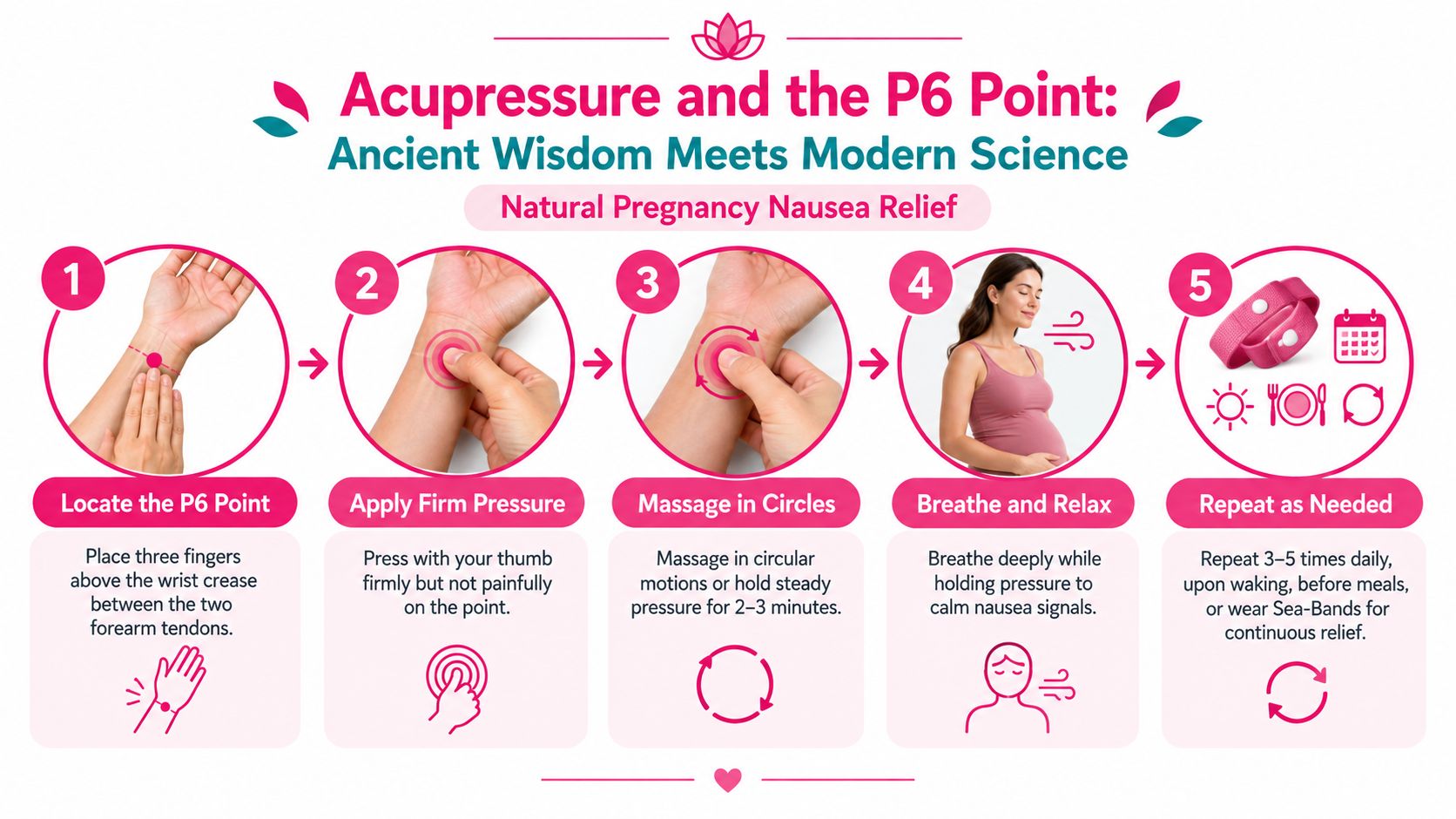
- During a nausea wave: Apply steady pressure when symptoms first start rising.
- For background support: Try acupressure wristbands during work, travel, or errands.
- For practice: Learn the point when you feel okay, not only when you're already miserable.
- Extra support: Feed Mom & Me shares more practical ideas in 10 tips to help reduce morning sickness nausea.
If pressing the point feels helpful, great. If it doesn't, that's useful information too. This is one of those remedies where your own pattern matters.
Why do eating patterns matter so much for pregnancy nausea?
Have you noticed that nausea can hit hardest when your stomach is completely empty, then get worse again after a large meal? That back-and-forth is one reason eating patterns matter so much in pregnancy.
For many women, the goal is not a “perfect” diet during a rough nausea phase. The goal is to keep your stomach from swinging between too empty and too full. A steadier pattern often feels easier on your body, a bit like keeping the volume low instead of letting it spike.

Small amounts, often
Many pregnant women tolerate a few bites every couple of hours better than three large meals. That does not mean you need to force food constantly. It means looking for a rhythm your stomach can handle.
A simple way to picture it is this: a sensitive stomach usually does better with lighter, repeated jobs than one big job.
Here are a few real-life examples:
- First thing in the morning: If standing up on an empty stomach makes you gag, keep a plain snack by your bed and eat a little before getting up.
- Commute or school drop-off: If nausea builds once you are out the door, pack a small carb-based snack plus something with a little protein for later.
- Dinner time: If cooking smells are the problem, a cold or room-temperature plate may go down more easily than a hot meal.
What “eating pattern support” looks like in real life
This natural option is less about a specific food and more about lowering common triggers.
- Eat before you get overly hungry. Long gaps can make nausea feel sharper.
- Keep portions small. A full, stretched stomach can feel miserable too.
- Try mixed snacks. Pairing toast, fruit, or crackers with yogurt, cheese, nut butter, eggs, or beans may feel more sustaining if tolerated.
- Sip fluids in a separate window. If drinking with meals makes you feel sloshy, try sipping between meals instead.
- Use low-smell foods when needed. Cold foods, bland foods, and simple snack plates can reduce the smell burden.
That last point matters more than many mamas expect. If smells are part of your nausea pattern, a turkey sandwich, cottage cheese with fruit, or chilled pasta salad may work better than a steaming plate of food, even if the hot meal sounds more “proper.”
A practical weekday routine
If you are not sure where to start, keep it very simple:
- Before getting up: crackers, dry cereal, toast, or nuts
- Mid-morning: yogurt, cheese, or nut butter with a carb you tolerate
- Lunch: a small meal instead of waiting until you are starving
- Afternoon: another easy snack before nausea ramps up
- Evening: cold leftovers, a snack plate, or another light option if cooking smells bother you
Feed Mom & Me offers more everyday meal guidance in nutrition education for pregnant mothers.
A few safety notes
Eating-pattern changes can support mild to moderate nausea, but they are not enough if you are throwing up repeatedly, getting dizzy, making very little urine, or struggling to keep fluids down. Those are signs to check in with your healthcare provider promptly.
If a food is technically healthy but makes you gag right now, that is useful information, not failure. In this stage, mama, “best tolerated” often comes before “best planned.” A workable routine is often the base layer that lets the other natural options help more.
Which nutrients deserve special attention for nausea support?
Some nutrients do double duty in pregnancy. They support you nutritionally, and a few may also help with nausea itself. That distinction matters, because “good for pregnancy” and “helps nausea” are not always the same thing.
Vitamin B6 gets special attention for a reason
Vitamin B6, also called pyridoxine, is one of the better-established nutrient options for pregnancy nausea. A current review summarizes commonly used doses of 10 mg to 25 mg, taken 3 or 4 times daily. The same review also describes the prescription-style combination of doxylamine plus pyridoxine as 20 mg/20 mg at night, with extra 10 mg/10 mg doses in the morning and at lunchtime if needed in this guideline-focused review.
That makes B6 different from a casual home remedy. It sits closer to the “targeted nutrient” category in your nausea plan. In other words, this is one to use with a dose in mind, not by guessing.
A realistic example helps here. If you are eating small snacks, trying ginger tea, and still feeling that steady low-grade queasiness by midmorning, B6 is one of the options many clinicians consider because it has a more defined place in nausea care.
- Why B6 stands out: it is both a nutrient and a commonly recommended nausea support option.
- Safety screen: check your prenatal label before adding a separate B6 product, so you do not accidentally stack doses.
- Best next step: ask your clinician what total daily amount fits your routine.
Feed Mom & Me explains more in do prenatal vitamins help with nausea.
If you're shopping separately for a single nutrient, you may also see standalone vitamin B6 products. That can be useful, but it is still smart to review your full supplement list with your provider.
Folate still matters, even though it is not a nausea remedy
Folate is a good example of the difference between nausea support and pregnancy support. It does not usually calm nausea directly. It still deserves attention because a prenatal routine only works if you can tolerate it often enough to keep taking it.
A prenatal can fail for very practical reasons. The smell may turn your stomach. The tablet may feel too big. The aftertaste may linger and set off another wave of nausea. If that is happening, the question is not whether you are trying hard enough. The question is whether the formula fits this season of pregnancy.
Methylfolate is one form of folate used in some prenatals. For some women, the bigger issue is the whole product design, not just the folate form.
- If the pill itself triggers nausea: ask whether a different form, such as a smaller capsule or another format, is available.
- If the smell is the problem: store it away from the kitchen or open the bottle only when you are ready to take it.
- If it feels harsher on an empty stomach: ask whether taking it with a tolerated snack or later in the day makes more sense.
- If you keep skipping it: bring that up directly. A tolerable prenatal is usually more helpful than an ideal one you cannot keep down.
That is the larger pattern for this section, mama. Some nutrients target nausea more directly, like B6. Others matter because they help you keep a steady, realistic supplement routine while you work through nausea with your healthcare provider.
Can vitamin B12 and prenatal choices affect how you feel?
Could a nutrient issue be making a hard week feel harder, mama? Sometimes, yes. Vitamin B12 is not one of the main natural remedies for nausea itself, but it can matter in the background, especially if low appetite or food aversions are shrinking what you can eat.
B12 helps support nerve function and red blood cell production. During pregnancy, that matters even more if you are vegetarian, vegan, or going through a stretch where meat, eggs, or dairy suddenly sound impossible. A low intake will not explain every wave of nausea. It can still be part of the larger puzzle your provider should review if you feel wiped out, your diet has become very narrow, or your prenatal routine keeps falling apart.
Where B12 fits in a practical nausea plan
This category is less about fast relief and more about smart supplement decisions.
A simple way to look at it is this: some options help in the moment, like sensory tricks or acupressure. Nutrients and prenatals help support the routine underneath. If the routine is hard to tolerate, even a well-formulated prenatal may end up sitting in the bottle instead of helping you.
Here are a few real-life situations where B12 and prenatal choices are worth discussing:
- If animal foods are off the table right now: ask whether your B12 intake still looks adequate for your current eating pattern.
- If your prenatal makes you gag: ask about a smaller capsule, a different coating, or a simpler formula you can keep down more reliably.
- If mornings are the worst: taking your prenatal later in the day, or with a tolerated snack, may feel easier.
- If the smell sets you off: keep the bottle away from heat and food smells, and open it only when you are ready to take it.
- If you are skipping doses often: bring that up plainly. A prenatal you can take regularly is usually more useful than one that looks perfect on the label but keeps coming back up.
Folate and iron often get most of the attention, but B12 deserves a mention because pregnancy nausea can turn balanced eating into survival eating for a while. Your provider can help sort out whether you need a change in product, timing, or nutrient focus rather than guessing on your own.
For a general consumer-friendly overview, Feed Mom & Me shares vitamin B12 benefits during pregnancy.
The best prenatal routine is the one that supports pregnancy and still fits the reality of your nausea.
When should natural remedies stop being the main plan?
What if your body is no longer asking for small comfort measures, but for medical help?
Natural options can be useful for the milder end of pregnancy nausea. They are more like handrails than rescue equipment. If you are vomiting often, getting dehydrated, or struggling to do basic daily tasks, the plan needs to change.
Earlier research on ginger helps set expectations. It may ease nausea for some women, but that does not mean home remedies can reliably control repeated vomiting or prevent dehydration. That difference matters, mama, because nausea is miserable, but ongoing fluid loss can become a safety issue fast.
Signs that need prompt care
Contact your healthcare provider promptly if you have:
- Trouble keeping liquids down
- Very little urination
- Dizziness, faintness, or weakness
- Vomiting that is becoming more frequent or more forceful
- Weight loss or a sharp drop in how much you can eat or drink
- Symptoms that make it hard to function at home, work, or school
A practical way to judge this is to ask yourself one question: Am I still uncomfortable but coping, or am I starting to fall behind on fluids, food, and daily function? If you are falling behind, natural remedies should no longer be the main plan.
That does not mean you failed or did not try hard enough. It means your symptoms may need treatment that works more directly, such as medication, hydration support, or evaluation for a more severe form of pregnancy vomiting. Your clinician can help you decide what belongs in the background as supportive care, and what needs to move to the center of the plan.
How can you build a safer nausea-relief routine?
A good routine usually starts smaller than you think. Begin with the most tolerable basics: food timing, sensory support, and hydration habits that don't make your stomach revolt. Then add one change at a time so you can tell what helps.
For many women, that means starting with a simple morning plan. Keep a snack by the bed. Get a few bites in before standing. Use a scent or temperature cue that feels calming, like ginger tea, peppermint tea, or chilled lemon water if those agree with you. If your clinician recommends it, add a structured nutrient option like vitamin B6 rather than guessing your own supplement amounts.
The next step is tracking patterns without becoming obsessive. Write down when nausea hits, what you tried, and whether it helped your nausea, your vomiting, or both. That matters because these symptoms don't always respond the same way. A remedy may ease queasiness but do very little for repeated vomiting, and that difference should shape what you discuss with your provider.
A safer plan also means knowing your stop signs. Contact your healthcare provider promptly if you have:
- Dehydration signs: very little urination, dry mouth, or trouble keeping up with fluids
- Ongoing vomiting: especially if you can't keep food or drinks down
- Faintness or weakness: dizziness, feeling close to passing out, or struggling to stand
- Weight loss or decline: noticeable loss of weight or intake dropping sharply
- Blood in vomit: even a small amount deserves attention
- Pain or fever: severe abdominal pain, fever, or symptoms that feel unusual for you
- Anything that worries you: pregnancy is not the time to sit on a gut feeling that something isn't right
You don't need to earn help by getting “sick enough.” If symptoms are interfering with your day, your sleep, your work, or your ability to care for yourself, that already matters.
If you're also thinking about your prenatal routine, it may help to discuss a formula designed with tolerability in mind. Feed Mom & Me Complete Prenatal Vitamin Plus DHA is one option to review with your provider. It includes DHA, choline, selenium, methylfolate, organic ginger, and peppermint, and it uses delayed-release vegetarian capsules that some women may find easier to tolerate. It's made by a women-owned brand built by moms, for moms, which fits the practical, community-driven approach many families want. It should complement, not replace, medical advice and a balanced diet.
If you're also using comfort tools for cramps, aches, or tension while nausea is wearing you down, it's worth checking practical pregnancy safety topics too, such as whether heating pads are safe during pregnancy.
8 Natural Remedies for Pregnancy Nausea, Comparison
| Remedy | 🔄 Implementation Complexity | ⚡ Resource Requirements | 📊 Expected Outcomes | 💡 Ideal Use Cases | ⭐ Key Advantages |
|---|---|---|---|---|---|
| Ginger: Nature's Anti-Nausea Champion | Low, simple prep (tea, chews, capsules) | Low, widely available, affordable | Moderate–High; rapid onset (30–60 min) | Acute morning sickness; quick, food-based relief | Strong clinical support; multi-form; GI & anti‑inflammatory benefits |
| Peppermint: The Cooling Digestive Soother | Low, brew or inhale; simple aromatherapy | Low, herb or essential oil readily available | Moderate; fast for aroma-based relief, good for bloating | Nausea with cramping/bloating; on‑the‑go aromatherapy | Cooling, soothing; effective both ingested and inhaled |
| Vitamin B6 (Pyridoxine): The Nutrient Your Body Needs | Low, daily oral dosing, consistent use required | Low, OTC supplement; often in prenatals | Moderate; evidence‑based but slower onset (2–3 days) | Persistent nausea; first‑line evidence‑based option | Clinically supported; also essential for fetal development |
| Small, Frequent Meals: The Eating Strategy That Works | Medium, requires planning and frequent prep | Low–Moderate, food access and prep time | Moderate; prevents hunger/fullness triggers and stabilizes energy | Everyday management when nausea linked to blood sugar | No cost; supports nutrition and steady energy |
| Vitamin B12: Supporting Energy and Reducing Nausea | Low, oral supplementation; injections if malabsorption | Low–Moderate, supplements, testing or injections if needed | Moderate; benefits for deficiency in 2–4 weeks | Vegetarians/vegans or suspected deficiency | Supports fetal neural development and reduces fatigue |
| Acupressure and the P6 Point: Ancient Wisdom Meets Modern Science | Low–Medium, learn point and technique; Sea‑Bands optional | Very Low, free technique; bands inexpensive | Moderate; immediate relief possible but individual variability | Acute nausea episodes; when meds not desired; travel/work | Fast‑acting, non‑pharmacologic; evidence from RCTs |
| Lemon: Aromatherapy and Flavoring for Instant Relief | Very Low, cut, sniff, or mix into water | Very Low, inexpensive, widely available | Low–Moderate; immediate sensory relief, short duration (15–30 min) | Quick on‑the‑spot nausea, morning sniffing, travel | Instant effect; hydrating and portable |
| Folate/Methylfolate: The Essential Nutrient That Reduces Nausea | Low, daily supplementation; consider genotype guidance | Low–Moderate, prenatal or methylfolate (methylfolate costlier) | Moderate; long‑term nausea improvement in weeks + fetal protection | Preconception/pregnancy; MTHFR variants or long‑term management | Essential for neural tube prevention; methylfolate more bioavailable for some |
If you want a prenatal routine that supports both nourishment and tolerability, take a look at Feed Mom & Me. They offer Complete Prenatal Vitamin Plus DHA, plus pregnancy nutrition education created by a women-owned, mom-built brand, which can make it easier to talk through nausea-friendly options with your healthcare provider.