
Vitamin D Supplement for Vegans: Mama's Guide
Published:Updated:
You're pregnant, committed to a vegan lifestyle, and already thinking carefully about every bite, prenatal appointment, and supplement label. Then you turn over a vitamin bottle and find two unfamiliar choices: vitamin D2 or vitamin D3. If you've been told that D2 is the vegan option, you may wonder whether it's enough for you and your baby.
The reassuring answer is that plant-based pregnancy can be well supported. Vitamin D deserves deliberate planning, particularly during seasons or in places where sunlight is limited. A thoughtfully chosen vitamin D supplement for vegans, combined with medical guidance and appropriate testing, can help close this specific nutritional gap without suggesting that your diet has failed.
Table of Contents
- Why Is Vitamin D So Important During Pregnancy?
- What Is The Difference Between Vegan D2 And D3?
- How Much Vitamin D Do Vegan Mamas Actually Need?
- Can I Get Enough Vitamin D From Vegan Food Sources?
- How Do I Choose A Safe And Effective Vegan Supplement?
- What Is The Best Prenatal Vitamin With Vegan D3?
Why Is Vitamin D So Important During Pregnancy?
You may be doing everything “right,” eating beans, tofu, leafy greens, fortified foods, fruit, and whole grains, while still feeling unsure about vitamin D. Pregnancy adds another layer of complexity because your body is supporting your own bones and tissues while helping your baby build a growing skeleton. It's natural to want a clear answer rather than another vague instruction to “eat a balanced diet.”
Vitamin D works a little like a key. Calcium is the building material, but vitamin D helps your body take in and use that calcium for bone development. The NIH Office of Dietary Supplements explains that vitamin D is crucial for fetal bone growth and reports that deficiency has been associated with congenital rickets, preeclampsia, gestational diabetes, and preterm birth.
That information can sound alarming, but it isn't a reason to panic. It's a reason to make vitamin D part of your prenatal plan, just as you already consider folate, iron, iodine, choline, and DHA. Needing a supplement isn't a failure of vegan eating. It's often a practical response to the fact that the natural food sources of vitamin D are limited on a plant-based diet.
A helpful mindset: supplementation is a safety net, not a verdict on the quality of your diet.
Vitamin D also supports your own health beyond pregnancy bone development. If you're interested in how this nutrient relates to oral wellness, this guide to vitamin D for gum health offers useful background on the connection between vitamin D and teeth.
Why pregnancy changes the conversation
A vegan diet can provide abundant fiber, antioxidants, minerals, and plant proteins, yet vitamin D exposure depends heavily on factors outside your plate. Fortified foods may not appear in your routine every day, sunlight varies by season and location, and pregnancy nausea can make even familiar foods difficult to tolerate.
You can also read more about the importance of vitamin D during pregnancy as you prepare questions for your obstetrician, midwife, or registered dietitian. The most useful next step is not guessing. It's discussing your intake, supplement form, and whether a 25-hydroxyvitamin D blood test makes sense for you.
What Is The Difference Between Vegan D2 And D3?
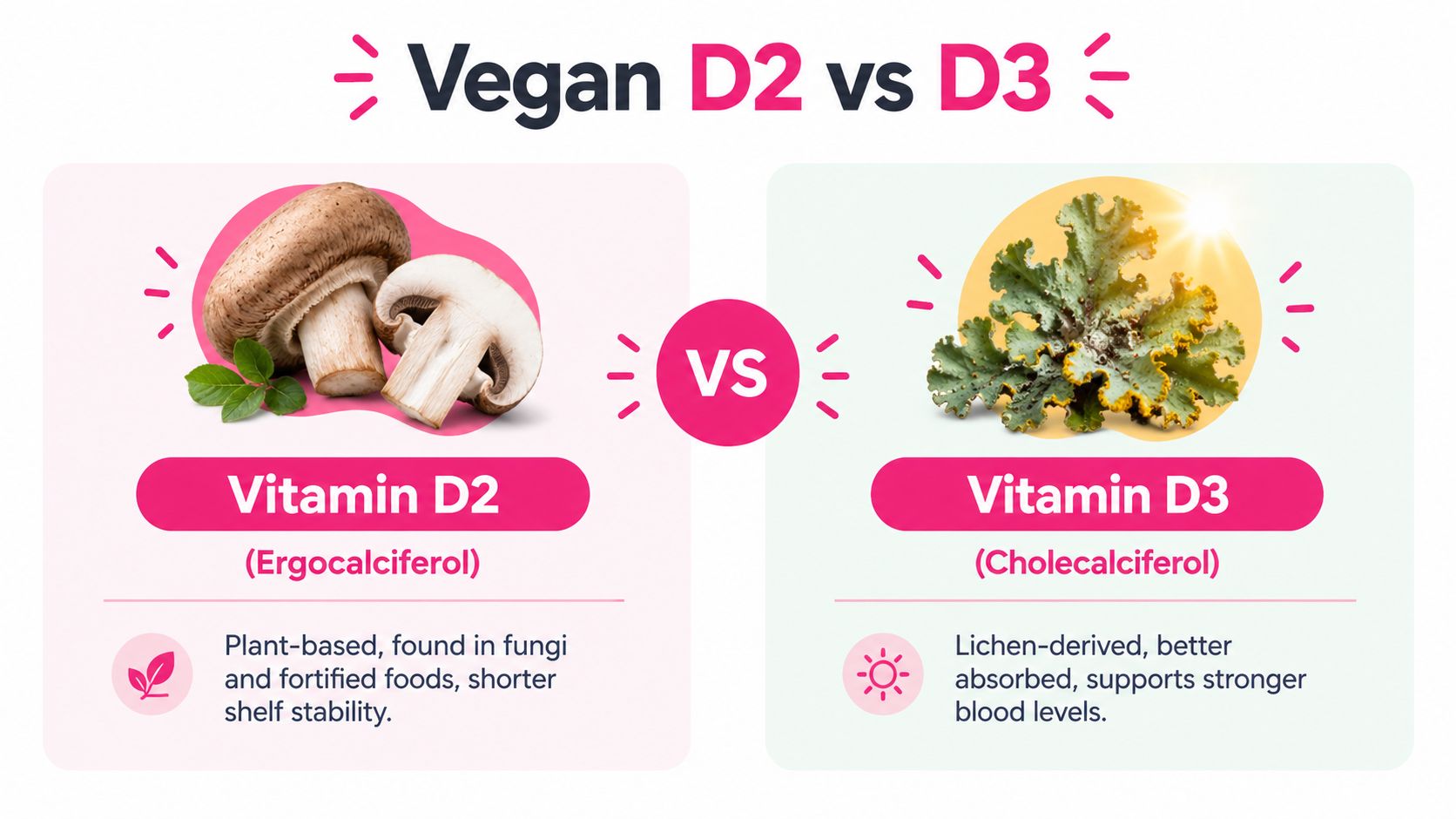
Vitamin D2, also called ergocalciferol, and vitamin D3, called cholecalciferol, are both used in supplements. The important distinction for vegan shoppers is that D3 is often associated with lanolin, a sheep's-wool source, while lichen-derived D3 provides a vegan alternative.
Vitamin D2 is naturally plant-compatible and may come from fungi or fortified foods. Lichen-derived D3 is also suitable for vegans when the product and capsule materials are verified. The choice isn't just about whether a bottle carries a vegan label. It's about which form is more likely to raise and maintain your circulating vitamin D level.
Think of D2 and D3 as different fuels
Your body is the engine, and vitamin D is part of the fuel system. D2 can work, but it may behave more like a slow-burning log. D3 is more like a high-efficiency fuel pellet, giving the body a form that tends to raise and maintain blood levels more effectively.
A 2026 narrative review summarizes the practical difference clearly. D2 and D3 are absorbed with similar efficiency, but D3 is more effective at raising and maintaining circulating 25(OH)D concentrations (review of vitamin D2 and D3 evidence). For a vegan mama, that makes lichen-derived D3 a logical option when the goal is dependable blood-level support.
This doesn't mean every D2 supplement is useless, or that you should switch without guidance. It means D2 may call for closer attention to your blood test response, especially if you're correcting low status rather than just maintaining an adequate level.
What to look for on the label
Read beyond the front of the bottle. A useful label check includes:
- Form: Look specifically for “vitamin D3,” “cholecalciferol,” and “lichen-derived” if you want vegan D3.
- Source: Confirm that the manufacturer hasn't used lanolin, fish oil, or another animal-derived ingredient.
- Capsule: Check for gelatin. A vegan vitamin can still be unsuitable if its capsule contains animal ingredients.
- Serving size: Compare the stated daily amount with your prenatal and any separate supplements.
- Testing: Look for transparent quality information and independent verification.
Vitamin D is fat-soluble, so it behaves differently from nutrients that dissolve readily in water. This guide to fat-soluble versus water-soluble vitamins can help you understand why consistency and sensible dosing matter.
How Much Vitamin D Do Vegan Mamas Actually Need?
You are comparing prenatal labels late at night, wondering whether the vitamin D amount is enough for both you and your baby. Start with the general benchmark, then adjust it with your clinician. NIH consumer guidance lists 15 mcg (600 IU) per day during pregnancy and breastfeeding, with an upper limit of 100 mcg (4,000 IU) per day for pregnant and breastfeeding teens and women (NIH vitamin D consumer fact sheet).
That benchmark is a starting point, not an individualized prescription. Your blood level, prenatal formula, fortified food intake, sun exposure, medical history, and any documented deficiency all affect the plan. Vegan pregnancy also deserves a closer look because a standard D2 supplement may not raise and maintain circulating vitamin D as effectively as lichen-derived D3.
A peer-reviewed review of vegan nutrition in mothers and children discusses maintenance and deficiency-correction approaches (vegan nutrition in mothers and children). The table translates those options into a practical framework.
| Goal | Daily dosage | Source / context |
|---|---|---|
| General pregnancy and breastfeeding intake | 15 mcg (600 IU) | NIH consumer guidance lists this recommended intake. |
| Maintenance suggested in the same vegan maternal nutrition review | 1,000 to 2,000 IU | Suggested supplementation during pregnancy and lactation when maintaining status. |
| Deficiency correction option described in the same review | 2,000 IU daily for 5 months | A correction approach reported in the review. |
| Another deficiency correction option described in the same review | 4,000 IU daily for 2.5 months | Requires clinician oversight, particularly during pregnancy. |
| Upper limit for pregnant and breastfeeding teens and women | 100 mcg (4,000 IU) | NIH consumer guidance, not a target dose. |
A separate peer-reviewed review reports randomized trial data supporting 4,000 IU per day of vitamin D3 during pregnancy as a safe dose under study conditions. It also cites circulating 25-hydroxyvitamin D targets of 40 to 60 ng/mL during pregnancy (vitamin D supplementation in pregnancy). Those findings support clinician-guided care, not self-prescribing. Your healthcare provider can match the dose to your laboratory results and total intake.
Bring this question to your appointment: “What is my 25(OH)D level, what form of vitamin D am I taking, and does my prenatal already contain enough for my individual needs?”
Check the full daily total across your prenatal, separate supplement, and fortified foods. A zinc and vitamin D pregnancy guide can help you organize questions before discussing your personal plan with your healthcare provider.
Can I Get Enough Vitamin D From Vegan Food Sources?
Food can contribute, but it's often difficult to rely on food alone for consistent vitamin D during pregnancy. Natural dietary sources are limited, and vegan choices depend mainly on fortification or special preparation.
A broader review of plant-based adults found vitamin D deficiency among vegans ranging from 3% to 67% across studies, with the highest prevalence in Finnish women. The same review notes that geography, season, latitude, and fortification policy strongly influence results (review of plant-based diets and vitamin D). In Spain, one study found 93.7% of participants overall had vitamin D deficiency or insufficiency at a 75 nmol/L cutoff, while severe deficiency was significantly higher among vegans than lacto-ovo vegetarians and omnivores.
Vegan sources worth including
- Fortified plant milks: Check the nutrition panel because fortification varies by brand and serving.
- Fortified plant yogurts: These can add vitamin D while also fitting a convenient breakfast or snack.
- UV-exposed mushrooms: Mushrooms treated with ultraviolet light can provide vitamin D, but ordinary mushrooms shouldn't automatically be assumed to contain a meaningful amount.
- Fortified cereals: Some products provide vitamin D, though the amount depends on the specific label.
- Fortified spreads: Plant-based margarines may be fortified, so compare products rather than relying on category names.
Nausea, reflux, food aversions, and a changing appetite can make daily consistency harder. Even if fortified plant milk is part of your routine, you may not drink the same amount every day, and a food serving may not provide enough to correct a low blood level.
Use food as support, not pressure
A sensible approach is to include fortified foods when they work for you, enjoy UV-exposed mushrooms if you like them, and use a vegan supplement to make intake more dependable. A large cross-sectional study of long-term vegetarians found 84.6% had vitamin D deficiency, defined as 25(OH)D below 20 ng/mL, and only 15.4% were not deficient (long-term vegetarian vitamin D study).
In that same dataset, deficiency was high in both vegan and lacto-ovo vegetarian groups, 85.7% versus 80.0%, so this isn't a concern limited to one version of plant-based eating. If you want a broader picture of your diet, you can explore resources that help you check your nutrient levels, then discuss any testing with your healthcare team. The pregnancy-specific context in this guide to vegetarian and pregnancy nutrition can also help you build a complete plan rather than focusing on vitamin D in isolation.
How Do I Choose A Safe And Effective Vegan Supplement?
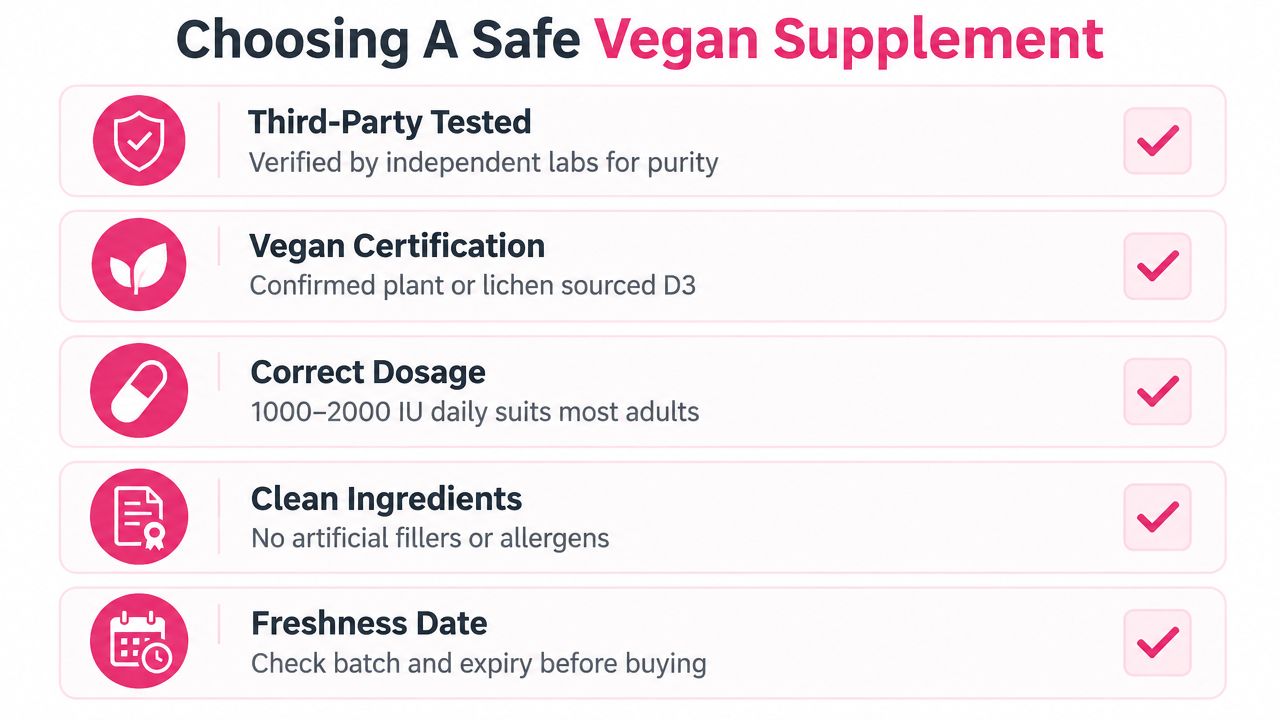
A supplement should fit your values, your medical needs, and your actual daily routine. Start with the form. If you're choosing D3, verify that it's lichen-derived, not lanolin-derived, and confirm that the capsule itself is free from gelatin.
Next, look at quality markers. Third-party testing can add useful reassurance because independent laboratories assess whether a product meets stated standards. No supplement label replaces medical advice, but a transparent manufacturer makes it easier for you and your clinician to understand what you're taking.
Your label-reading checklist
- Confirm the source: Look for vegan certification or explicit lichen sourcing.
- Check the amount: Add the supplement to the vitamin D already present in your prenatal and fortified foods.
- Inspect inactive ingredients: Watch for gelatin, lanolin, dairy, soy, or ingredients that conflict with your needs.
- Review freshness details: Check the batch information and expiry date before buying.
- Ask about testing: Prefer products that provide clear independent quality documentation.
A product can be vegan and still be inconvenient. If morning nausea is intense, a delayed-release capsule may feel gentler for some people, although tolerability is individual. Products without artificial colors, flavors, and unnecessary additives may also be easier to fit into a simplified prenatal routine.
Take vitamin D with a meal
Vitamin D is fat-soluble, so take it with a meal that contains some fat, such as avocado, nuts, seeds, tahini, or a meal prepared with plant oil. This practical habit helps your body process the supplement and is usually easier to remember than creating a separate dosing ritual.
For additional background on vitamin D formulations and product considerations, you can review this Lifeworks Integrative Health vitamin D resource. If you're pregnant, ask your OB, midwife, or pharmacist to review the full ingredient list, especially if you take medication or have a condition affecting calcium metabolism.
This short video can provide another visual explanation of supplement considerations:
What Is The Best Prenatal Vitamin With Vegan D3?
The most useful prenatal is the one that covers your broader needs without making your routine impossible. For a vegan mama, that means checking vitamin D form and amount alongside folate, iron, iodine, choline, DHA, and other nutrients your provider has recommended. An all-in-one formula can reduce the number of separate bottles you need to coordinate, but it still deserves a label review.
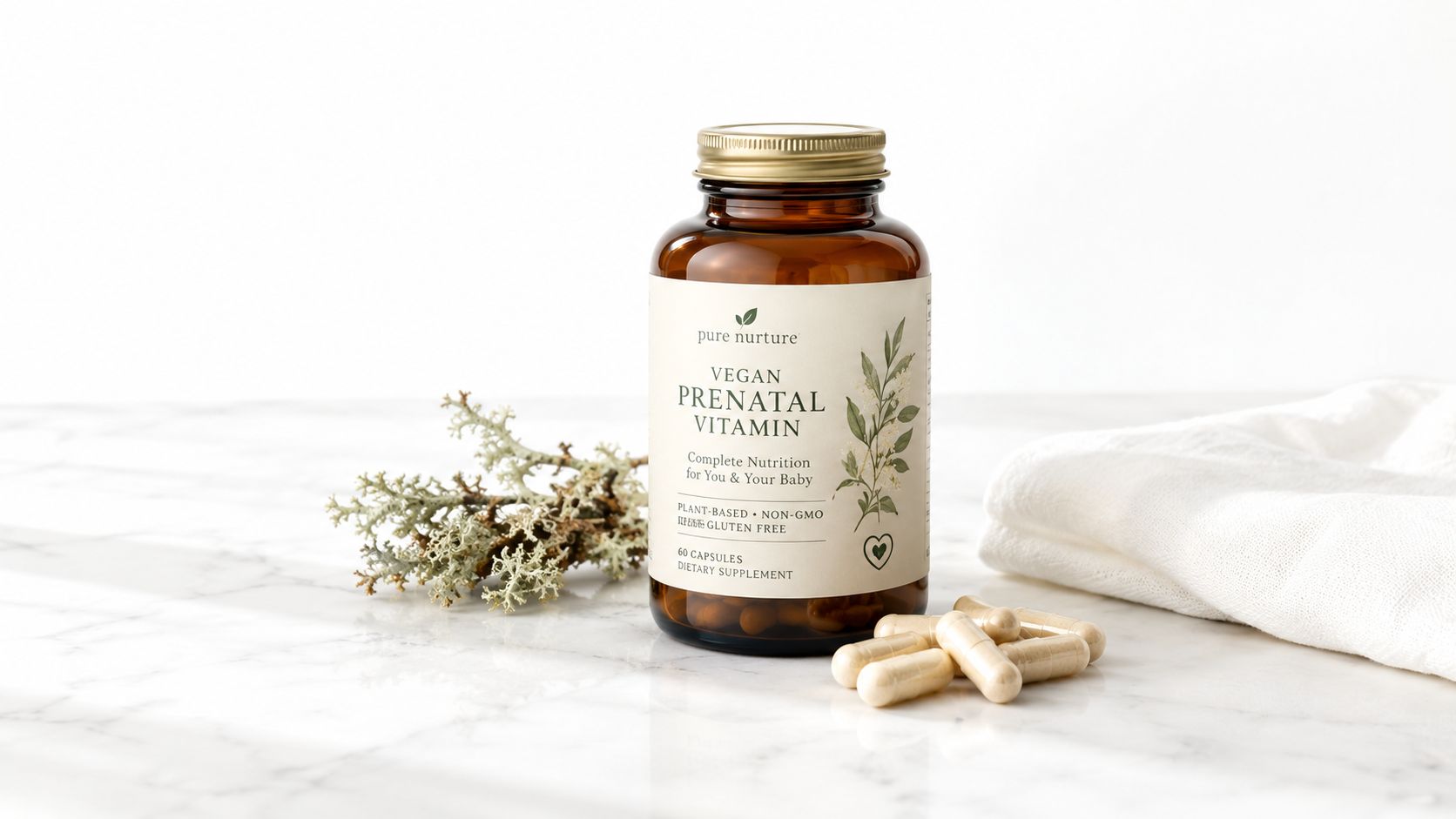
The Feed Mom & Me Complete Prenatal Vitamin Plus DHA is a vegetarian, soy-free, gluten-free, and dairy-free prenatal formula. The product information describes a delayed-release vegetable capsule and includes nutrients such as DHA, choline, selenium, and methylfolate, with peppermint and organic ginger added for palatability and pregnancy-related nausea support. Feed Mom & Me's vitamin D pregnancy content describes the formula as containing 125 mcg of vitamin D3, so you should confirm the current label and ask your healthcare provider whether that amount suits your total intake.
Keep life-stage needs in view
Pregnancy isn't the only time that vitamin D planning matters. A 2025 review of vegan diets and nutritional status notes that even supplemented vegan children can show lower 25(OH)D than omnivores and recommends age-appropriate supplementation from birth through adolescence. Pregnancy, breastfeeding, infancy, and adolescence each call for individualized guidance rather than copying an adult routine.
The NIH also notes that vitamin D-containing supplements may help pregnant women meet recommended intake and may be especially useful for people following a vegan diet. That makes your prenatal choice part of a wider family nutrition conversation, not a single isolated purchase.
For more support choosing a broader multivitamin for vegan women, review the formulation with your clinician and avoid stacking products without checking totals. Feed Mom & Me is women-owned and built by moms, for moms, with prenatal education designed to make these decisions feel more manageable.
Feed Mom & Me offers a Complete Prenatal Vitamin Plus DHA with a vegetarian, soy-free, gluten-free, dairy-free formula that includes nutrients such as vitamin D3, DHA, choline, methylfolate, peppermint, and ginger. Visit Feed Mom & Me to review the current formula, then bring the label and your vitamin D questions to your healthcare provider.