
Multivitamin for Vegan Women: What You Really Need
Published:Updated:
You're standing in the supplement aisle with your phone in one hand, a growing baby bump, and several bottles promising to be “complete.” One label has folic acid but no DHA. Another has iron but no iodine. A third looks vegan, yet you can't tell whether it contains enough vitamin B12 or whether its serving size means four capsules a day.
Choosing a multivitamin for vegan women shouldn't feel like a guessing game. A well-planned vegan diet can provide plenty of fiber, antioxidants, protein, and plant compounds, but pregnancy and breastfeeding create nutritional demands that food alone may not reliably meet. The right supplement acts as a practical safety net, not a judgment on how you eat.
Table of Contents
- Why Vegan Women Need a Thoughtful Multivitamin
- Understanding the Nutrient Gaps on a Vegan Diet
- The Seven Nutrients You Cannot Afford to Miss
- How to Read a Prenatal Label With Confidence
- Tolerability and Ingredient Considerations That Matter
- Matching Your Formula to Your Life Stage
- A Prenatal-Friendly Vegetarian Option Worth Exploring
- Your Nourished Mama Confidence Plan
Why Vegan Women Need a Thoughtful Multivitamin
A thoughtful prenatal starts with your actual diet rather than a generic checklist. Animal foods are natural sources of vitamin B12 and DHA, while iron from plants comes in a form the body generally absorbs less efficiently. Iodine, vitamin D, calcium, choline, zinc, and long-chain omega-3 fats can also require deliberate planning when dairy, eggs, fish, and meat aren't part of your routine.
That doesn't make vegan nutrition inadequate. It means your supplement needs to be designed with the same care you bring to your meals. Fortified plant milks, tofu, beans, lentils, leafy greens, nuts, seeds, whole grains, and algae products can all contribute, but their amounts and absorption vary from product to product and from person to person.
A supplement is a bridge, not a replacement. Your meals provide the foundation. Your prenatal helps cover predictable gaps when appetite, nausea, busy days, or changing nutrient needs get in the way.
Pregnancy also changes the context. Folate supports early fetal development, iron helps you make more red blood cells, iodine supports thyroid hormone production, and DHA contributes to the supply of long-chain omega-3 fat available during pregnancy and lactation. You may need to pay attention to these nutrients before a positive test, during pregnancy, and after birth.
If you're weighing plant-based eating and pregnancy, this guide to vegetarian diets during pregnancy can help you think through the broader nutrition picture. Your healthcare provider or a registered dietitian can then connect that general framework to your food intake, symptoms, bloodwork, and medical history.
The useful question isn't “Is vegan nutrition safe?” The better question is, “Which nutrients need a reliable plan in my particular life stage?” Once you answer that, a crowded shelf becomes much easier to sort through.
Understanding the Nutrient Gaps on a Vegan Diet
The nutrient gaps associated with vegan diets have structural explanations. Vitamin B12 is naturally found only in animal foods, and the NIH identifies vegans and vegetarians as having a higher risk of deficiency when they don't use fortified foods or supplements. During pregnancy and lactation, an unaddressed B12 gap can affect the baby as well as the mother. NIH vitamin B12 guidance explains why this nutrient deserves a prominent place on your label.
Iron requires a little more strategy. Plants provide non-heme iron, while meat provides heme iron, which the body absorbs differently. Beans, lentils, tofu, pumpkin seeds, and fortified cereals still matter, but pairing them with vitamin C rich foods, such as citrus, peppers, tomatoes, or broccoli, can support iron absorption.
Match each nutrient to its job
A simple way to understand the gaps is to connect each nutrient with the work your body is doing:
- Vitamin B12: Supports blood and nervous-system function. Fortified foods and supplements are the dependable vegan sources.
- DHA: Supplies a preformed long-chain omega-3 fatty acid. Algae oil provides a vegan alternative to fish oil.
- Iron: Helps build hemoglobin as your blood supply expands. Plant sources contribute, but absorption deserves attention.
- Iodine: Helps produce thyroid hormones, which support fetal growth and development. Intake depends heavily on iodized salt, fortified foods, or a measured supplement.
- Vitamin D: Supports calcium use and bone health. Food choices can be limited, and sunlight exposure isn't consistent for everyone.
- Zinc and choline: Support cell growth, metabolism, nervous-system development, and other maternal and fetal functions. They're easy to overlook when menus become repetitive.
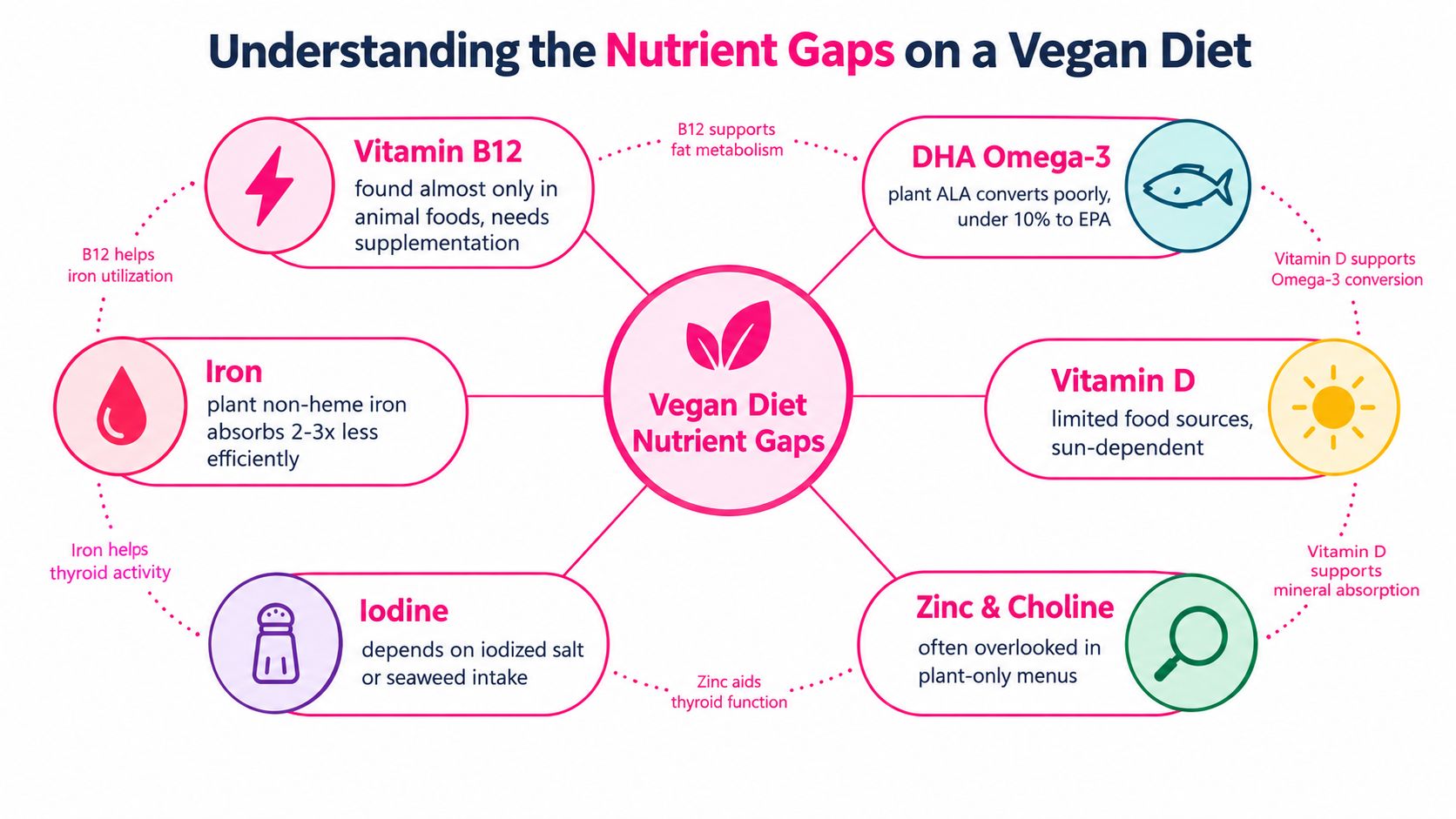
Folate deserves a special mention because early fetal development begins before many people know they're pregnant. A prenatal should also be evaluated for iron, iodine, B12, DHA, calcium, vitamin D, choline, and zinc, not just folate.
You don't need to abandon whole foods to address these issues. Think of your diet as the garden and your supplement as the trellis. The garden supplies variety and nourishment, while the trellis gives a few climbing nutrients dependable support.
For a plain-language explanation of why B12 matters during pregnancy, this pregnancy B12 resource offers a helpful starting point. Bring questions to your provider, especially if you have a history of anemia, thyroid disease, digestive conditions, or nutrient deficiencies.
The Seven Nutrients You Cannot Afford to Miss
A label can look impressive and still leave important vegan-priority nutrients underrepresented. Use the seven below as a screening tool, then compare the amounts with your personal diet and medical guidance.
Vitamin B12
The NIH lists 2.6 mcg per day during pregnancy in the U.S. system, while peer-reviewed vegan-pregnancy guidance commonly advises 4 mcg per day for vegan pregnant and lactating women. The form may be methylcobalamin or adenosylcobalamin, although your clinician may recommend a different approach based on labs and history.
Fortified nutritional yeast, plant milks, cereals, and meat alternatives can help, but you need to check their labels. For additional help understanding supplement amounts, DoseRoutine's vitamin B12 dosage guide provides a useful reference.
Iron
The pregnancy target commonly used in U.S. guidance is 27 mg per day. Plant foods such as lentils, beans, tofu, tempeh, pumpkin seeds, and fortified grains can contribute, but non-heme iron has different absorption characteristics from heme iron. A formula using a gentler form, such as ferrous bisglycinate, may be easier for some people to tolerate than ferrous sulfate.
DHA omega-3
A 2018 peer-reviewed review recommends 100 to 200 mg of DHA daily for pregnant or breastfeeding women, including vegans, because conversion from plant ALA to long-chain omega-3 fats may not provide enough DHA during this demanding period. Many people look for 200 to 300 mg from algae oil, with EPA considered separately when relevant.
Chia, flax, hemp, and walnuts provide ALA. Algae oil supplies DHA directly, so check that the label says algae-derived DHA, not fish oil.
Iodine
The NIH lists 220 mcg per day during pregnancy. For a vegan formula, potassium iodide offers a measured form, while kelp can vary substantially in iodine content. Iodized salt may contribute, but sodium intake, cooking habits, and product choice make it difficult to assume that food alone covers your needs.
Calcium
Aim for 1,000 mg total per day from food plus supplements, unless your provider gives you a different target. Calcium-set tofu, fortified plant milk, fortified orange juice, tahini, leafy greens, and beans can all help. A prenatal doesn't need to supply the entire amount if your diet already contributes meaningfully.
Vitamin D3
A vegan-friendly lichen-sourced vitamin D3 can help you avoid lanolin-derived D3. Labels may show amounts in micrograms or IU, so check the serving size carefully. Some formulas use 1,000 to 2,000 IU, but your ideal amount depends on your blood level, medical history, sun exposure, and provider's recommendation.
Methylfolate
Folate supports early fetal development, and many labels use either folic acid or 5-methyltetrahydrofolate, also called methylfolate or L-5-MTHF. Some people specifically seek methylfolate because of concerns about folate metabolism or an MTHFR variant, but the right form and amount should be discussed with your clinician rather than selected from internet advice alone.
| Nutrient | Daily Target | Preferred Form | Food Context |
|---|---|---|---|
| Vitamin B12 | 2.6 mcg pregnancy reference; 4 mcg commonly advised for vegan pregnancy and lactation | Methylcobalamin or adenosylcobalamin | Fortified foods help, but supplementation is especially important for strict vegans |
| Iron | 27 mg pregnancy reference | Ferrous bisglycinate or another tolerated form | Beans, lentils, tofu, seeds, and fortified grains provide non-heme iron |
| DHA | 100 to 200 mg review recommendation | Algae-derived DHA | ALA foods support omega-3 intake but don't provide preformed DHA |
| Iodine | 220 mcg during pregnancy | Potassium iodide | Iodized salt can help, while kelp is less predictable |
| Calcium | 1,000 mg total from food plus supplements | Label-specific calcium salt | Fortified plant milk, calcium-set tofu, tahini, and greens contribute |
| Vitamin D3 | Provider-guided; some labels use 1,000 to 2,000 IU | Lichen-derived D3 | Sun exposure and fortified foods vary widely |
| Methylfolate | Provider-guided prenatal folate amount | 5-MTHF or L-5-MTHF | Beans, greens, asparagus, and avocado contribute natural folate |
Iron, choline, iodine, and EPA/DHA may need individual consideration rather than automatic trust in a generic prenatal. A dietitian can also help you check whether your meals are supplying enough protein, calories, and mineral-rich foods alongside the supplement.
For a practical guide to formulas and iodine, this explanation of prenatal vitamins with iodine is a useful companion.
How to Read a Prenatal Label With Confidence
Start at the top of the Supplement Facts panel, not at the marketing claims on the front. Confirm the serving size, then multiply the listed amounts by the number of capsules you take each day. A bottle that says “one month supply” may still require several capsules per serving.
Next, locate folate, B12, iron, DHA, iodine, vitamin D, and calcium. Look at both the amount and the form. A familiar nutrient name doesn't tell you whether the dose is meaningful, vegan, well tolerated, or appropriate for your circumstances.
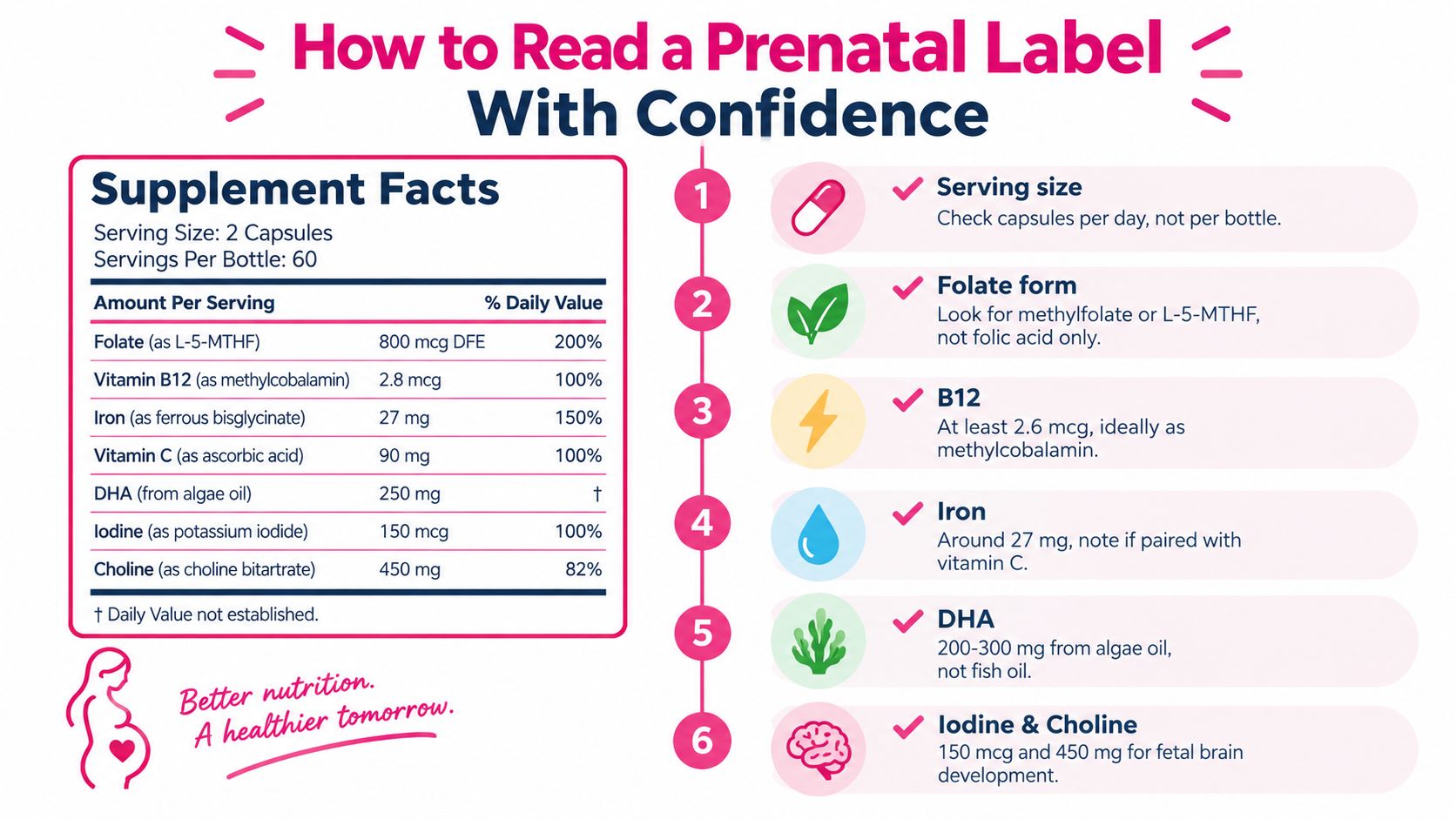
Compare forms, not just totals
Methylfolate or L-5-MTHF may appeal to people who want a methylated folate form. Ferrous bisglycinate is often chosen for tolerability, while ferrous sulfate is another widely used iron form that can cause digestive discomfort for some people. For B12, labels may list cyanocobalamin, methylcobalamin, or another form. Your clinician can help you decide which makes sense for you.
Watch for proprietary blends. They group ingredients under one total and hide the individual quantities, which makes it hard to assess whether a priority nutrient is present in a useful amount. Also be cautious with megadoses, especially when you already use fortified foods or separate supplements.
Check the inactive ingredients as carefully as the active ones. You may want to avoid artificial colors, titanium dioxide, or magnesium stearate from sources you don't trust. Confirm the product is certified vegan or vegetarian, and look for independent quality marks such as NSF, USP, or ConsumerLab when available.
A quick aisle checklist: serving size, seven priority nutrients, ingredient forms, vegan certification, allergen statement, third-party testing, and a dose your provider supports.
For broader label context, Australia's prenatal nutrition essentials offers another perspective on what to inspect. You can also compare your findings with this prenatal selection guide before buying.
Tolerability and Ingredient Considerations That Matter
The best formula is one you can take consistently. Nausea, reflux, constipation, and a sensitive stomach can turn an otherwise suitable prenatal into a bottle that sits unopened in a cabinet.
Delayed-release capsules may move beyond the stomach before releasing their contents. Some people prefer smaller split doses, while others do better taking the full serving with a meal. A small snack can make a difference, especially when iron feels harsh.
Make the routine easier on your body
- Try food timing: Take your prenatal with a meal unless your provider or product instructions say otherwise.
- Use gentle supports: Peppermint, fresh ginger, or a small snack containing B6-rich foods may make the routine feel more manageable.
- Separate competing minerals: Calcium and zinc can compete with iron for absorption, so ask your provider whether spacing standalone minerals makes sense.
- Check shared facilities: Gluten-free, soy-free, dairy-free, and nut-free claims may matter if you have an allergy or sensitivity. A vegan formula isn't automatically free from cross-contact concerns.
- Choose the format you'll use: Tablets may feel familiar, softgels can be easier for some people to swallow, liquids offer flexibility, and gummies may be appealing but often contain fewer nutrients.
| Format | Pros | Cons |
|---|---|---|
| Delayed-release capsule | May be gentler for some sensitive stomachs; can reduce immediate taste | May still require several capsules; not comfortable for everyone |
| Standard tablet | Often compact and stable; easy to compare on a label | Can feel heavy or chalky and may worsen nausea for some people |
| Softgel | Smooth texture and easy swallowing for many users | May contain non-vegan ingredients unless certification is clear |
| Liquid | Flexible serving and useful for people who struggle with pills | Taste, storage, and measuring can make daily use less convenient |
| Gummy | Pleasant texture and easy to take | May provide less complete nutrient coverage and can contain added sweeteners |
If constipation becomes a problem after starting iron, don't just stop the prenatal. Speak with your provider about the form, dose, timing, hydration, fiber intake, and whether labwork should guide a change.
Matching Your Formula to Your Life Stage
Your priorities shift as your body moves from planning to pregnancy to recovery. You don't need a brand-new strategy every few weeks, but you should reassess whether your current formula still matches your diet, symptoms, bloodwork, and feeding plans.
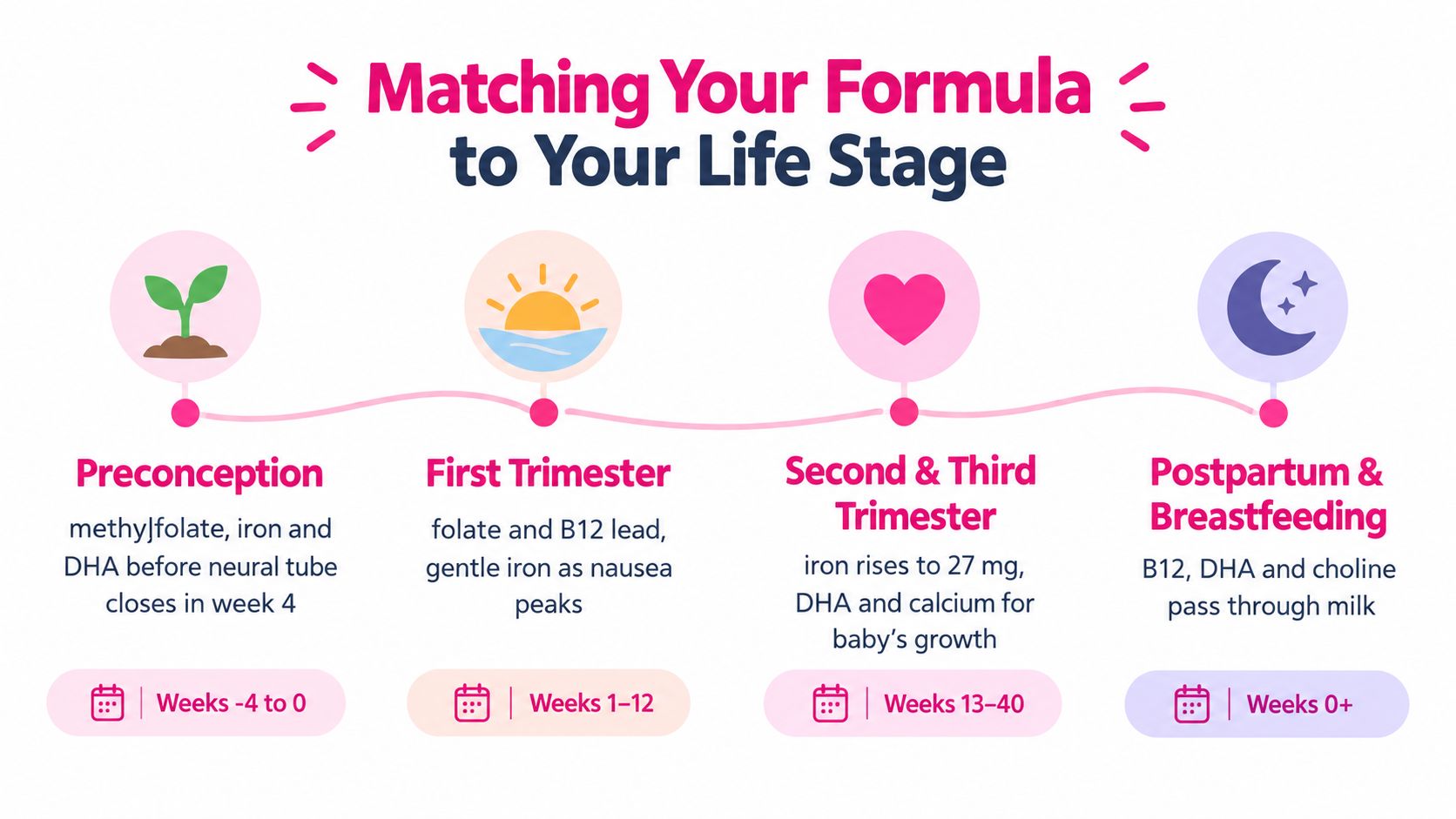
Preconception
Build reliable intake before conception, especially for methylfolate, B12, iron, and DHA. Early fetal development begins quickly, so waiting for a positive test can leave less time to establish a routine. If you menstruate heavily, have had anemia, or follow a strict vegan diet, ask about ferritin and B12 testing.
Pregnancy
During pregnancy, maintain folate and B12 while paying close attention to iron, iodine, DHA, calcium, and vitamin D. Nausea may shape your first-trimester choices, while appetite and blood-volume demands can change later. Your provider may adjust iron or other nutrients based on symptoms and lab results.
Postpartum
After delivery, your body may still be replenishing iron and recovering from a major physical event. Continuing a prenatal can simplify the routine, but your needs may differ depending on blood loss, diet, sleep, medications, and whether you're breastfeeding.
Breastfeeding
Breast milk reflects maternal status for several nutrients, including B12, iodine, and DHA. Continuing a supplement may support your own intake, but don't assume every prenatal covers every breastfeeding priority. Review the label and your diet with a qualified professional.
Nutrition is only one part of a postpartum routine. Sleep support, hydration, movement, emotional care, and practical help belong in the same conversation. These holistic wellness habits can offer ideas for building supportive rituals around the supplement itself.
A Prenatal-Friendly Vegetarian Option Worth Exploring
Once you know how to read a label, you can evaluate a product without relying on a front-of-bottle promise. Feed Mom & Me Complete Prenatal Vitamin Plus DHA is one vegetarian option designed around pregnancy and early parenthood, with nutrients that include methylfolate, iron, vitamin B12, iodine, vitamin D, calcium, choline, and DHA.
The formula uses a built-in DHA source and a delayed-release vegetable capsule. It's also described as free of dairy, soy, gluten, and gelatin, with peppermint and organic ginger included for a more nausea-conscious experience. Those details may matter if you're balancing a plant-based diet with food sensitivities or a stomach that has become unusually particular.
Use the label skills you already have
Look at the actual Supplement Facts panel and compare it with your provider's recommendations. Check the serving size, the amount and form of each nutrient, the source of DHA, and whether the formula fills the gaps your meals don't reliably cover.
The same evaluation works for any brand. A formula may suit preconception and pregnancy but need review after birth. Another may fit your diet yet require a separate conversation about choline, iodine, calcium, vitamin D, iron, or DHA. Your labs and food pattern are more useful than a generic “complete” claim.
You can read more about the product category in this guide to vegetarian prenatal vitamins with DHA. Feed Mom & Me is women-owned and built by moms for moms, but the important decision remains personal: choose the formula that fits your nutrition needs, tolerability, and clinician's guidance.
Your Nourished Mama Confidence Plan
A few months from now, you may still have a half-finished smoothie on the counter, a toddler asking for a snack, and a prenatal waiting beside your coffee. Confidence won't come from memorizing every nutrient interaction. It will come from having a simple process you can repeat.
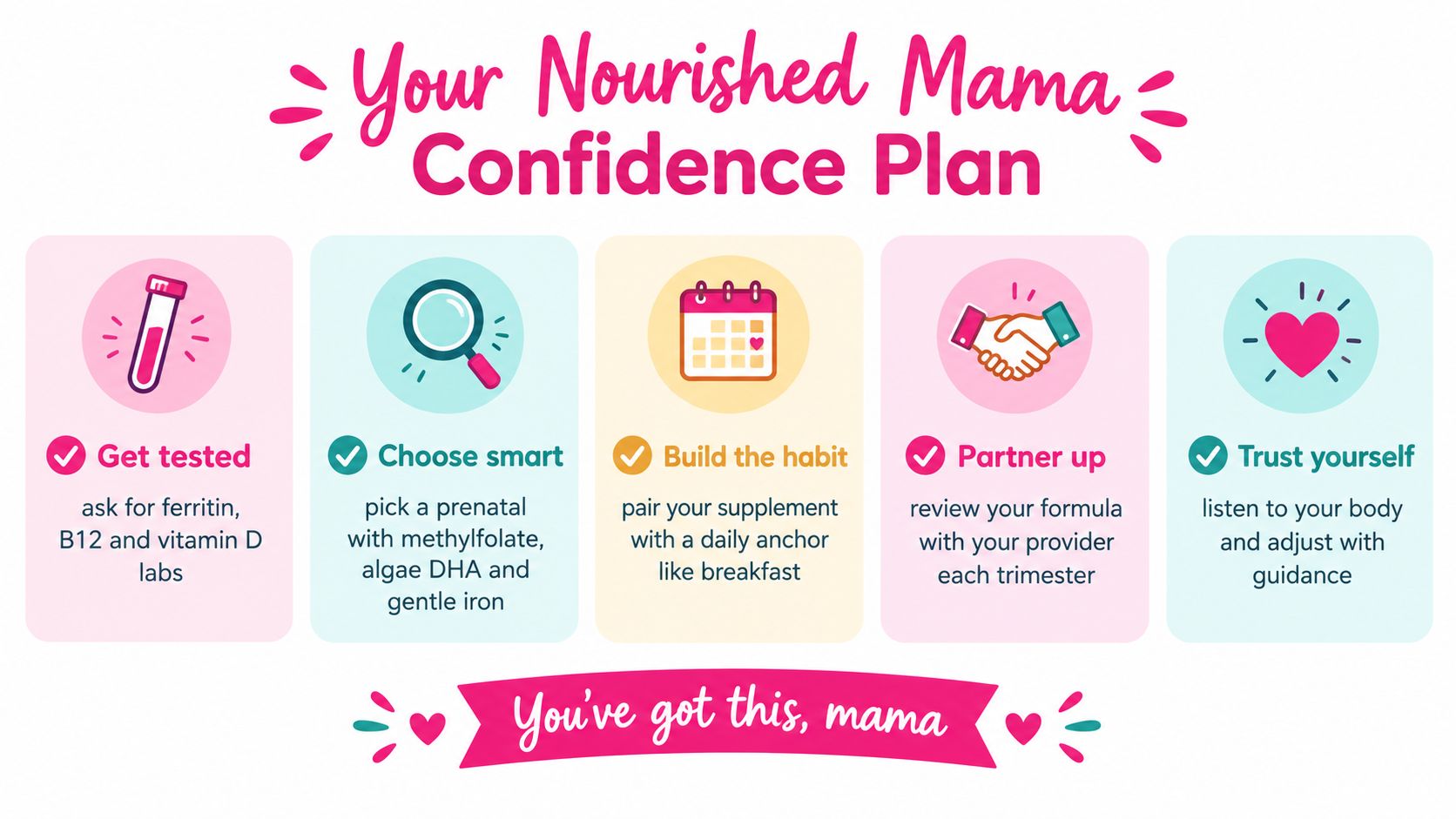
- Get informed: Ask your provider whether ferritin, B12, and vitamin D labs make sense for you.
- Choose deliberately: Look for methylfolate, algae-derived DHA, a tolerable iron form, iodine, B12, vitamin D, and calcium.
- Build an anchor: Pair your supplement with a dependable routine, such as breakfast or brushing your teeth.
- Review the plan: Revisit the formula at trimester changes, after delivery, and when breastfeeding begins.
- Trust your experience: Report nausea, constipation, fatigue, tingling, or other concerns instead of trying to manage them on your own.
Your meals, rest, movement, relationships, and medical care all contribute to nourishment. A well-chosen vegan-friendly prenatal makes the gap-bridging part more manageable, so you can spend less energy decoding bottles and more energy caring for yourself and your growing family.
Feed Mom & Me offers a vegetarian Complete Prenatal Vitamin Plus DHA with pregnancy-focused nutrients, delayed-release capsules, and a mom-centered approach to maternal wellness. Visit Feed Mom & Me to explore the formula and nutrition resources, then review your choice with your healthcare provider.