
DHA Foods for Pregnancy: A Mama's Complete Guide
Published:Updated:
You're sitting at the kitchen table with a half-finished breakfast, one hand on your growing belly and the other scrolling through prenatal nutrition advice. Your provider mentioned omega-3s at your appointment, and now “DHA foods for pregnancy” has become your late-night search. Between nausea, food aversions, and conflicting advice about fish, it's easy to feel as if every meal needs a research degree.
Take a breath, mama. DHA is important, but building a DHA-friendly pregnancy diet doesn't require perfection. A few well-chosen foods, a sensible approach to low-mercury seafood, and a prenatal supplement that fits your routine can help you make informed choices without turning eating into another source of stress.
Table of Contents
- Why DHA Matters During Your Pregnancy
- What Is DHA and How Much Do You Need
- Best Low-Mercury Seafood Sources of DHA
- Non-Seafood DHA Sources and Smart Pairings
- Mercury Safety and Fish Sourcing Tips
- Easy DHA-Packed Meals and Snacks for Busy Mamas
- Your Next Steps and When to Talk to Your Provider
Why DHA Matters During Your Pregnancy
DHA, or docosahexaenoic acid, is a long-chain omega-3 fatty acid that supports your baby's developing brain and eyes. These tissues are under construction throughout pregnancy, and DHA serves as part of the specialized material they use as they grow.
DHA builds up especially quickly later in pregnancy, while development begins much earlier. Including DHA-containing foods across the whole pregnancy therefore makes more sense than waiting for a particular trimester. The NIH Office of Dietary Supplements overview of omega-3 fatty acids identifies DHA as one of the long-chain omega-3 fats involved in fetal brain and eye development.

Many pregnant women get relatively little DHA from food. A major U.S. government evidence summary found that pregnant women ages 20 to 40 averaged 60.3 mg of DHA per day from food. Expert groups commonly recommend seafood intake that supplies about 250 mg per day of DHA plus EPA. The gap helps explain why pregnancy nutrition plans often combine low-mercury seafood with DHA-containing supplements.
The difference is a planning cue, not a reason to panic. It works like checking your fuel gauge before a long drive: you learn what you have, then choose practical ways to add more. A few appealing meals and a suitable supplement can support your baby's development without demanding a perfect diet.
A gentle mindset shift: You're not trying to eat a perfect pregnancy diet. You're giving yourself more ways to support your baby's development.
What Is DHA and How Much Do You Need
During pregnancy, your body can make some omega-3 fatty acids, but it does not always convert other forms into DHA efficiently. Direct options, including seafood, fortified foods, algae-based DHA, and prenatal supplements, can therefore help you meet your intake goal.
DHA is a specialized building material for a baby's developing brain and eyes. General omega-3 intake does not automatically provide the same amount of DHA, much like having basic ingredients does not guarantee the exact recipe you need. Choosing a few reliable sources ahead of time makes meals feel simpler, not stricter.
Pregnancy guidance offers several useful reference points:
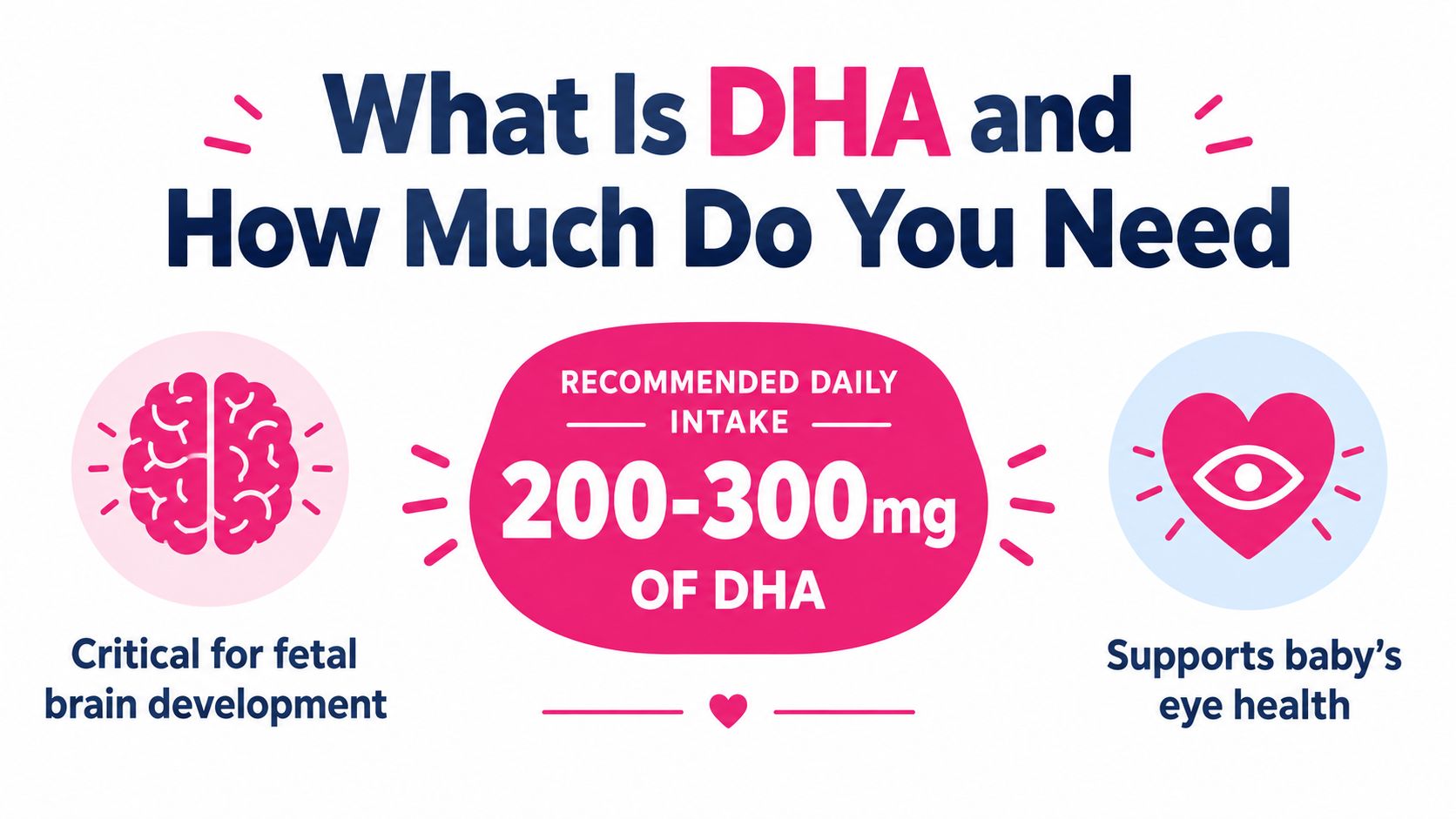
- At least 200 mg of DHA daily is a commonly cited pregnancy target, described in peer-reviewed pregnancy omega-3 guidance.
- Some guidance cites 250 mg per day of DHA plus EPA, with an additional 100 to 200 mg per day of DHA during pregnancy.
- International guidance summarized by the NIH reports that the Food and Agriculture Organization recommended at least 300 mg per day of DHA plus EPA, including 200 mg of DHA specifically.
Use these figures as conversation starters with your healthcare provider, rather than as a daily pass-or-fail test. Your practical target may depend on your usual diet, health history, dietary pattern, and the DHA already included in your prenatal vitamin.
Dose and timing may also matter. One study reported that 1,000 mg of DHA daily in the last half of pregnancy was associated with a lower rate of early preterm birth than a standard 200 mg dose, as discussed in research on omega-3 intake during pregnancy. This result does not mean every pregnant woman should take 1,000 mg. High-dose supplements need personalized medical guidance.
Best Low-Mercury Seafood Sources of DHA
A salmon taco, sardine toast, or shrimp stir-fry can make meeting pregnancy seafood guidance feel like a meal, not a checklist. The FDA recommends 8 to 12 ounces of a variety of lower-mercury seafood per week. Fatty fish, including salmon and sardines, are especially rich in long-chain omega-3s. Pregnancy-focused literature estimates that this weekly amount provides roughly 0.340 to 0.530 g of DHA per day on average, though the amount changes with species and preparation. The NIH pregnancy health professional fact sheet provides the broader guidance.
DHA content differs meaningfully between seafood choices, so variety helps. Salmon and sardines generally offer more DHA per serving than shrimp, while canned light tuna provides a convenient, moderate option. Use the FDA's pregnancy seafood guidance when choosing species and portions, rather than treating one fish as your only source.
A quick comparison for meal planning
| Seafood | Approximate DHA per 3 oz | Practical use |
|---|---|---|
| Salmon | About 1.2 to 1.8 g | A high-DHA main dish, such as a baked fillet or grain bowl |
| Sardines | About 1.0 to 1.5 g | A small, flavorful serving on toast, crackers, or pasta |
| Trout | About 0.8 to 1.0 g | Roast or pan-cook for a mild alternative to salmon |
| Shrimp | About 0.2 to 0.4 g | Add to tacos, rice, or stir-fry for variety |
| Canned light tuna | About 0.2 to 0.3 g | Keep an easy pantry option for sandwiches or salads |
| Anchovies | About 0.4 to 0.6 g | Use a small amount in tomato sauce or dressing for savory depth |
These figures are useful for comparison, not a promise for every package. Species, brand, serving size, and cooking method can shift the final amount. A varied rotation gives you more reliable coverage than trying to calculate every gram.
Try simple formats that suit your appetite:
- Salmon: Bake with lemon and olive oil, then add leftovers to a grain bowl.
- Sardines or anchovies: Stir them into tomato pasta so the flavor blends into the sauce.
- Shrimp: Add cooked shrimp to tacos, rice, or a quick vegetable stir-fry.
- Canned light tuna: Mix it with yogurt or avocado and spoon it over toast.
Choose two or three options you genuinely enjoy, then alternate them across the week. That approach keeps meals practical while giving you different DHA amounts and flavors, without turning pregnancy eating into a math exercise. For more meal inspiration, browse these omega-3-rich foods for pregnancy.
Non-Seafood DHA Sources and Smart Pairings
Fish is not the only way to include DHA during pregnancy. Omega-3-fortified eggs and DHA-enriched dairy or plant-based products can bring it into familiar meals, while algae oil offers a direct, non-fish source.
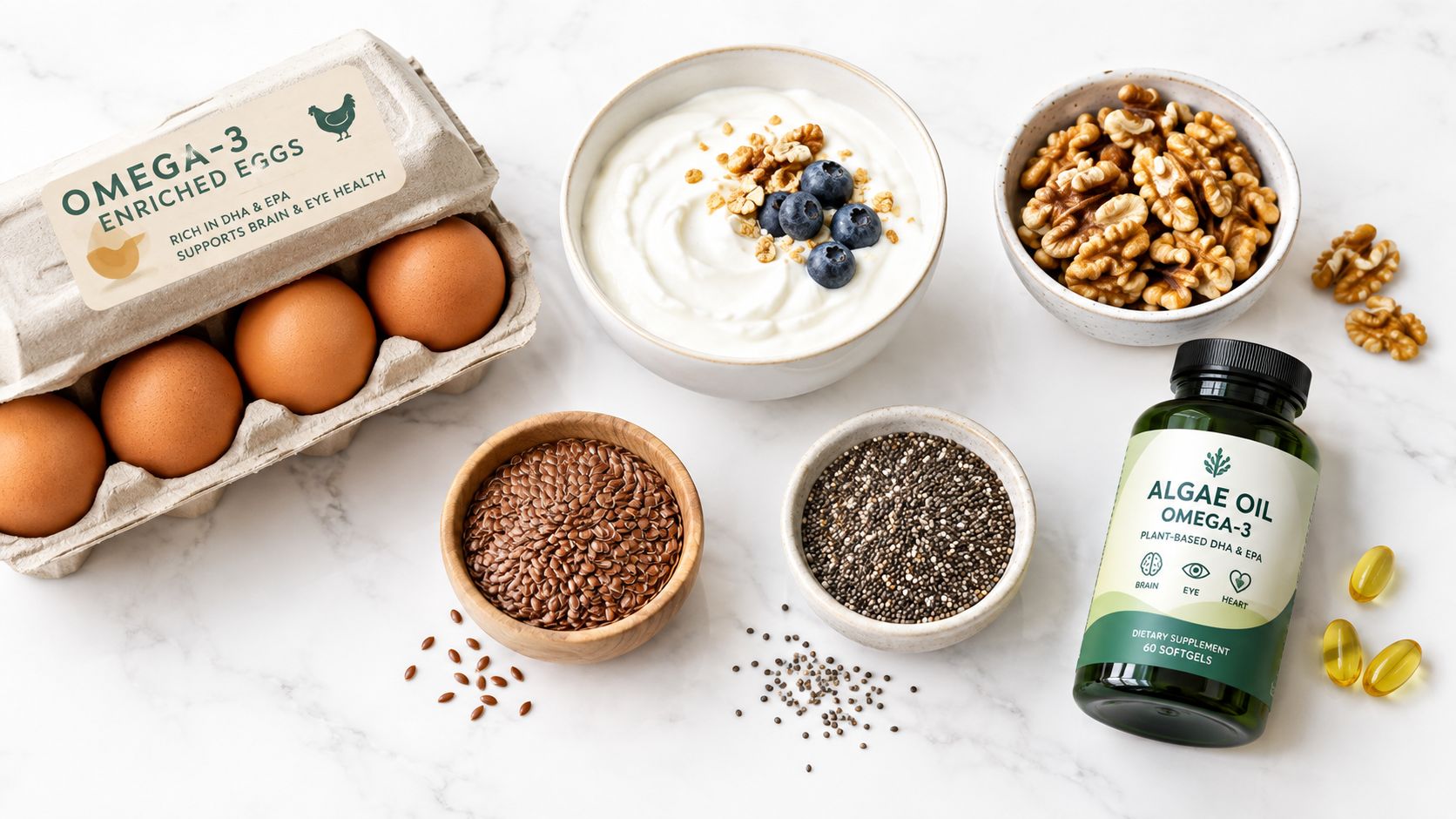
Flaxseeds, chia seeds, and walnuts still deserve a place on your plate. They provide ALA, another omega-3 fatty acid, but the body converts only a limited amount of ALA into DHA. Pair them with a direct DHA source instead of expecting one ingredient to do every job.
A practical day could look like this:
- Breakfast: Omega-3-fortified eggs with whole-grain toast and avocado.
- Lunch: Yogurt topped with chia seeds, walnuts, and fruit.
- Dinner: Vegetables with a serving of salmon or another low-mercury seafood.
- Supplement support: A prenatal containing DHA, chosen with your provider.
You do not need to combine every option daily. Keep a few easy pairings in rotation for mornings when cooking feels like too much. Eggs can provide a direct route, while plant foods add fiber, texture, and ALA alongside that source.
Flexible planning works better than rigid rules: Keep one direct DHA source available, then use fortified foods and omega-3-rich plants to add variety.
Vegetarians, people avoiding fish, and anyone with strong seafood aversions may want to discuss algae-based DHA with a healthcare provider. Learn more about algae-based DHA supplements before choosing a product, since labels and formulations can differ.
You can also watch this short visual guide for another approachable explanation of omega-3 options.
Mercury Safety and Fish Sourcing Tips
Choosing fish during pregnancy can feel like reading a restaurant menu with a calculator beside you. Mercury deserves attention, but it does not mean seafood is off the table. The practical approach is to choose lower-mercury species, vary your choices, and follow pregnancy-specific serving guidance.
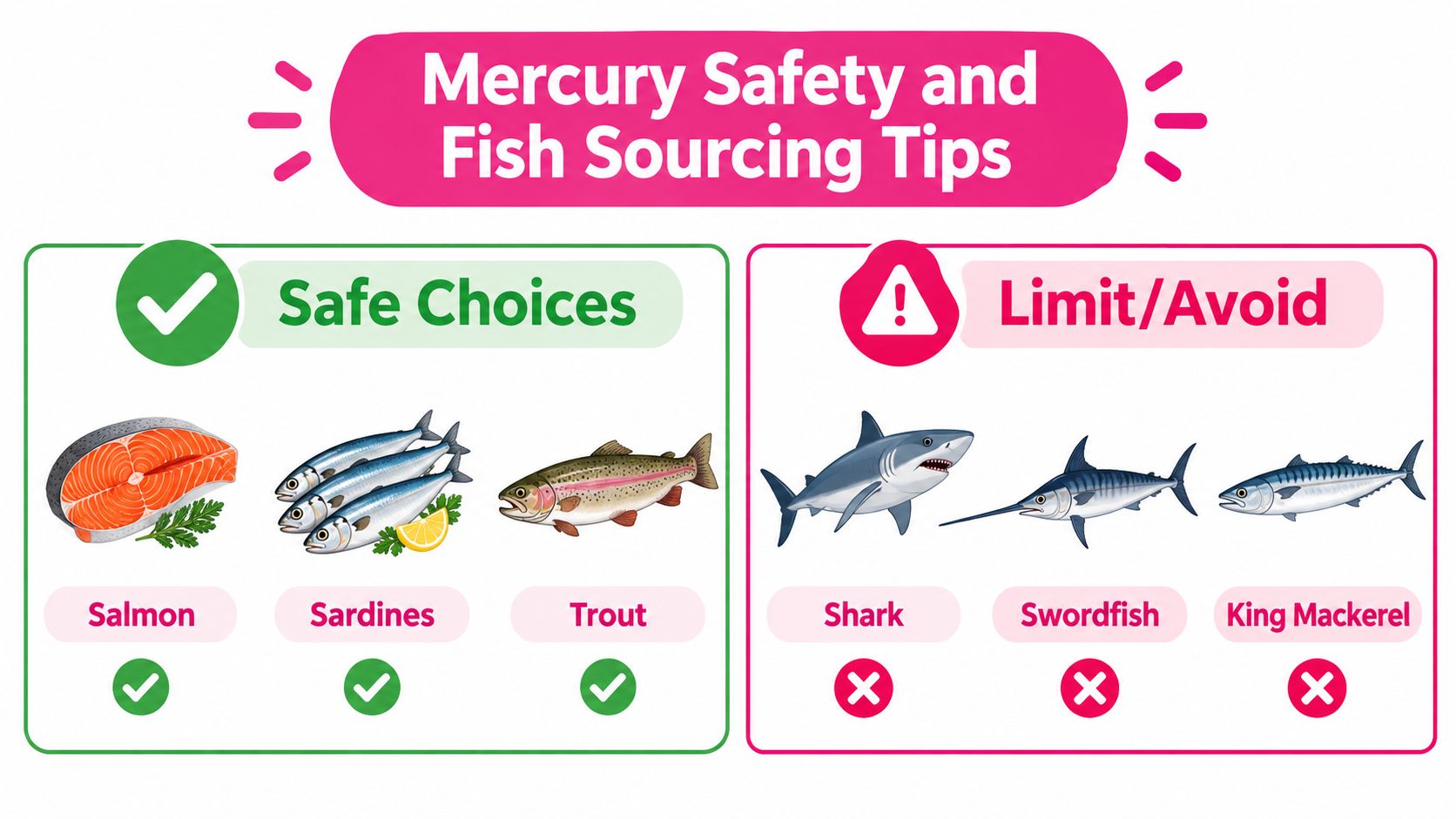
Mercury builds up more in large, long-lived predatory fish because they eat other fish over many years. Avoid shark, swordfish, king mackerel, tilefish, and bigeye tuna during pregnancy. Choose lower-mercury options such as salmon, sardines, trout, shrimp, anchovies, and canned light tuna instead. Variety helps keep one type of fish from becoming your default every time.
As noted earlier, many pregnant women get less DHA from food than they may expect, so safe seafood choices can add meaningful support to an overall plan. If you avoid fish, or regularly eat very little of it, ask your healthcare provider whether an algae-based DHA supplement fits your needs.
Simple sourcing habits
- Choose variety: Rotate lower-mercury fish instead of eating the same species repeatedly.
- Check local advice: Follow regional guidance for fish caught in nearby lakes, rivers, or coastal waters. Local contamination can change the recommendation.
- Ask questions: A fishmonger can identify the species, explain its source, and tell you whether it is wild-caught or farmed.
- Use a trusted guide: Monterey Bay Aquarium Seafood Watch can help you compare sourcing and sustainability information.
- Cook seafood thoroughly: Follow your provider's food-safety advice and avoid raw or undercooked seafood.
Wild-caught salmon can be convenient when available, but farmed seafood can also fit a thoughtful pregnancy eating pattern. Focus on fish you can source confidently, cook thoroughly, and enjoy without fear. For a broader reference on pregnancy food choices, review this guide to foods to avoid during pregnancy.
The key takeaway is simple: skip high-mercury fish, vary lower-mercury choices, check local advisories, and prepare seafood safely. That approach leaves room for nourishing, enjoyable meals without turning pregnancy eating into a list of frightening restrictions.
Easy DHA-Packed Meals and Snacks for Busy Mamas
On a tired evening, choose a meal that asks little of you. Your appetite may change from day to day, so keep a few flexible combinations ready.
- One-pan salmon dinner: Roast salmon, sweet potatoes, and vegetables together. The leftovers can become tomorrow's lunch, with very little cleanup.
- Salmon and avocado toast: Top toast with cooked, flaked salmon, avocado, and lemon. It suits breakfast, lunch, or a smaller meal when a full plate feels unappealing.
- Sardine tomato pasta: Stir mashed sardines into warm tomato sauce with garlic and herbs, then toss with pasta. The sauce mellows the flavor and comes together quickly.
- Omega-3 egg bowl: Add a cooked omega-3-fortified egg to rice, greens, avocado, or roasted vegetables. Refrigerated cooked grains make this an easy assembly meal.
- Walnut and chia yogurt cup: Layer yogurt with walnuts, chia seeds, and fruit for a no-cook option. It provides ALA, not direct DHA, but still adds plant-based omega-3 fats.
A simple grocery routine can make these meals easier. Keep cooked or canned options on hand, wash and cut vegetables when you have energy, and freeze extra portions for a low-effort day. For more ideas, browse this pregnancy recipe collection, which focuses on practical, pregnancy-friendly meals.
Aim for a rhythm that feels realistic: prepare a seafood meal when you can, keep eggs or fortified foods available, and follow your healthcare provider's advice about prenatal nutrition. Convenience is part of a workable pregnancy eating pattern. Feeding yourself well can be both nourishing and uncomplicated.
Your Next Steps and When to Talk to Your Provider
Start with one manageable change this week. You might add a low-mercury seafood meal, check whether your prenatal contains DHA, or write down the DHA amount you're currently getting from food and supplements.
At your next prenatal appointment, ask your provider:
- What target fits me: Should you aim for at least 200 mg of DHA daily, or discuss a different amount based on your diet and health history?
- What does my prenatal provide: Does the label list DHA separately from total omega-3s?
- Which seafood fits my needs: Are there local fish advisories, allergies, or dietary considerations to account for?
- Would algae-based DHA help: Is it appropriate if you rarely eat seafood or follow a vegetarian diet?
Feed Mom & Me Complete Prenatal Vitamin Plus DHA is one option to discuss with your provider. Its formulation includes DHA, choline, selenium, and methylfolate (L-5-MTHF). It's vegetarian and free from soy, gluten, dairy, artificial colors, flavors, and chemical additives as stated by the brand. The delayed-release vegetable capsules are designed for tolerability, and peppermint and organic ginger are included to support palatability and help with pregnancy-related nausea.
You can read more about choosing a DHA supplement during pregnancy. This article is educational, not medical advice, so bring your questions and supplement labels to your OB/GYN, midwife, or registered dietitian.
You're doing something meaningful every time you pause, learn, and choose what supports your body. You don't have to get every meal right, mama. You're already caring, and that matters.
Feed Mom & Me offers a Complete Prenatal Vitamin Plus DHA with nutrients including DHA, choline, selenium, and methylfolate, alongside pregnancy nutrition education and practical recipes. Visit Feed Mom & Me to explore the prenatal, learn more about its formulation, and find supportive resources for pregnancy and postpartum nutrition.