
Dairy and Soy Free Prenatal Vitamins You Can Trust
Published:Updated:
You're standing in the supplement aisle, or scrolling through bottles late at night, comparing labels while your stomach turns at the thought of another hard-to-swallow pill. One says “dairy-free,” another says “soy-free,” and neither makes it obvious whether those claims cover the capsule, the inactive ingredients, or possible contact during manufacturing. It's reasonable to want clarity. The right prenatal for you should fit your dietary needs and give you a clear picture of what you're taking.
Table of Contents
- What Does Dairy and Soy Free Mean for Prenatal Vitamins?
- Key Nutrients to Look for in a Dairy and Soy Free Prenatal
- Why a Free From Label Is Not the Same as Allergy Safe
- How to Read a Prenatal Label Like a Pro
- Vegetarian Capsules Fillers and Formats Worth Comparing
- Pairing Your Prenatal With Real Meals Diet
- Buying and Using Your Prenatal With Confidence
- A Prenatal Worth Talking to Your Provider About
What Does Dairy and Soy Free Mean for Prenatal Vitamins?
A dairy- and soy-free prenatal is made without ingredients derived from milk or soy. That should include more than the active vitamins: check the capsule, fillers, flavorings, and any carriers used in ingredients such as DHA. A front-label claim can be a useful starting point, but it doesn't necessarily tell you whether the product is made on shared equipment or in a facility that handles those allergens.
Milk and soy are among the major food allergens identified in U.S. labeling policy. The FDA says that when a major food allergen is present, its source must be identified in the ingredient list or a “Contains” statement, as applicable. But label rules don't answer every question about cross-contact, and a “free-from” claim isn't a substitute for individualized medical advice if you have a serious allergy. The FDA's food-allergy label guidance is useful background when you're reviewing a bottle.
Free from ingredients versus manufacturing controls
Think of the label as one part of the check, not the whole answer. A formula may contain no intentionally added milk or soy ingredients while still being made in a facility that processes them. If you have an allergy, ask the manufacturer directly about shared equipment, supplier controls, and how it evaluates cross-contact risk.
It also helps to separate allergy, intolerance, and dietary preference. Someone avoiding lactose may have different needs from someone with a milk-protein allergy, while another person may avoid soy by choice. The safest product depends on why you're avoiding an ingredient and on advice from your healthcare team.
Food allergies affect many families. The Food Allergy Research & Education summary reports that nearly 11% of U.S. adults, more than 27 million people, have at least one food allergy, and a 2021 National Health Interview Survey estimated that 5.8% of children aged 0–17 had a diagnosed food allergy. These figures don't mean every pregnant person needs to avoid milk or soy. They help explain why precise labels and direct questions matter to people who do.
A useful working definition: “Dairy- and soy-free” tells you what a brand says it has excluded from the formula. For allergy safety, verify ingredients and manufacturing practices with the manufacturer and your healthcare provider.
Key Nutrients to Look for in a Dairy and Soy Free Prenatal
Removing dairy and soy from a formula doesn't tell you whether the prenatal is nutritionally complete. Check the nutrient panel as carefully as the allergen information. A thoughtful choice considers both what the product includes and what you get from meals.
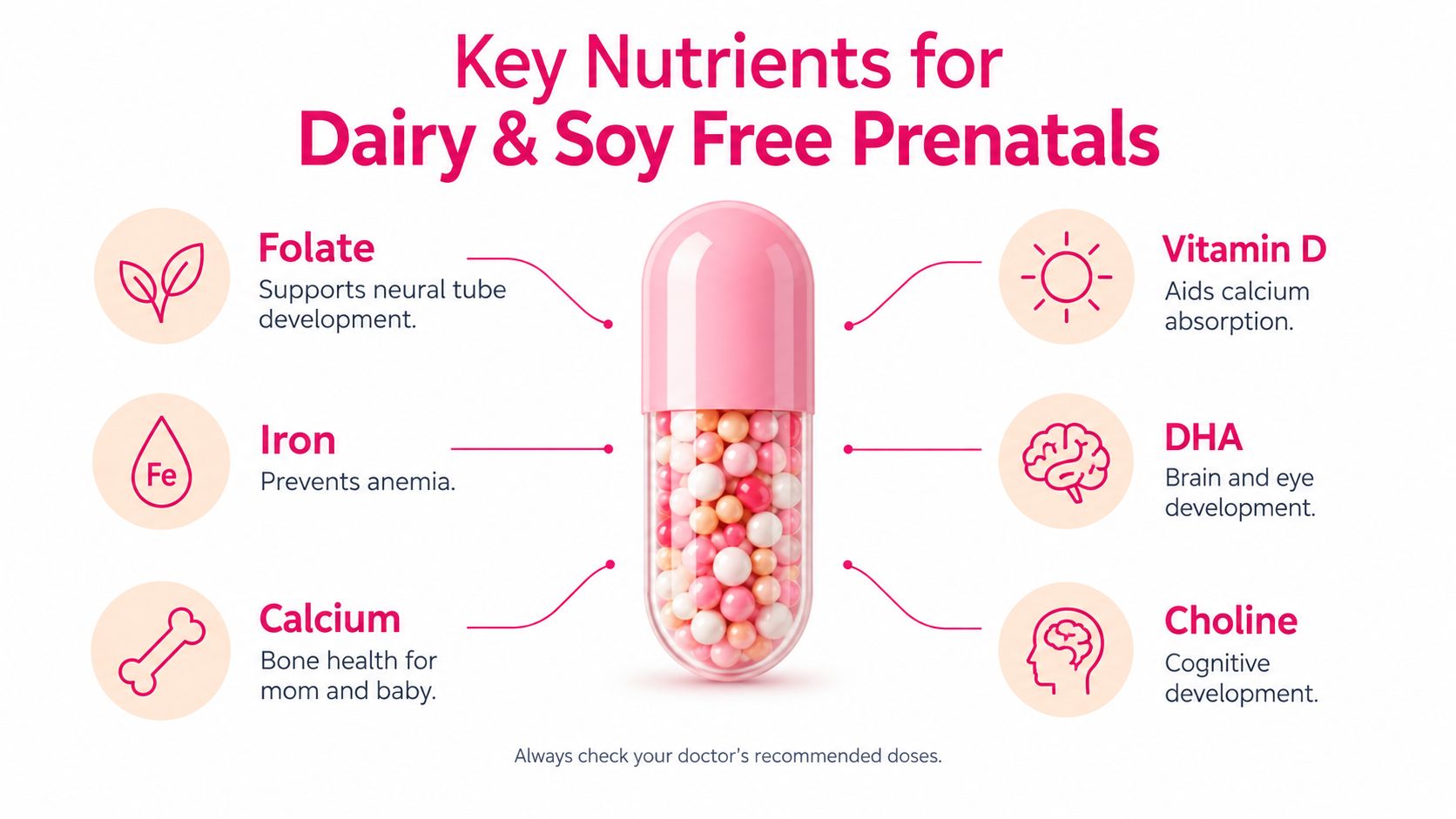
Start with the nutrients that deserve a close look
- Folate: Folate supports early development, including neural-tube development. Some labels list folic acid; others list a form such as L-5-MTHF, also called methylfolate. Ask your clinician which form and amount fit your care.
- Iron: Iron supports the body's increased demands during pregnancy. The right amount depends on your diet, health history, and clinical advice, so don't assume that more is automatically better.
- Iodine: Check whether iodine is included and in what amount. Don't assume a prenatal contains it just because it's marketed for pregnancy.
- Vitamin D: Dairy foods are often fortified with vitamin D, so if you avoid them, look at your overall food pattern as well as the supplement label.
- DHA: DHA is an omega-3 fat associated with fetal brain and eye development. Confirm whether it comes from fish or algae, especially if you have food restrictions or allergies.
- Choline: This nutrient deserves special attention in formulas that avoid soy or dairy. The pregnancy adequate intake for choline is 450 mg per day, and NIH reports that approximately 90%–95% of pregnant women consume less than this amount; prenatal supplements typically contain little or no choline. ACOG's healthy-eating guidance is a helpful starting point for discussing food sources and your overall intake.
The NIH Office of Dietary Supplements reports that prenatal use is common, but nutrient coverage can still be uneven. In analyses of U.S. data, supplement use ranged from approximately 64.4% to 70% among pregnant women, while only about 18–20% used iodine-containing supplements and just 5–8% used supplements containing choline. The same summary notes that about 35.8% consumed less folate from food than the estimated average requirement. NIH's pregnancy fact sheet explains why a bottle's nutrient list matters, not just whether you take a prenatal.
| Nutrient | Why it matters | Pregnancy target |
|---|---|---|
| Folate | Supports early development, including neural-tube development | Ask your healthcare provider about your individual target |
| Iron | Supports increased blood and nutrient needs | Individualize with your provider |
| Iodine | Supports pregnancy nutrition needs | Review the label and your diet with your provider |
| Vitamin D | Supports calcium use and overall nutrition | Individualize with your provider |
| DHA | Supports fetal brain and eye development | Ask your provider which source and amount suit you |
| Choline | Supports fetal growth and nervous-system development | 450 mg/day adequate intake |
For a broader perspective on prenatal formulations and ingredients, Yuve's prenatal vitamin guide can help you compare what brands choose to include. You can also bring your label questions to your appointment using this guide to prenatal vitamin dosage. Your clinician can help you weigh the supplement against your meals, restrictions, and care plan.
Why a Free From Label Is Not the Same as Allergy Safe
A “free-from” badge can help you shortlist products, but it doesn't automatically confirm that a prenatal is safe for someone with a severe allergy. The label may describe the ingredients intentionally added to the formula without explaining every manufacturing detail. For a daily supplement, it's worth checking the parts of the product that don't stand out on the front of the bottle.
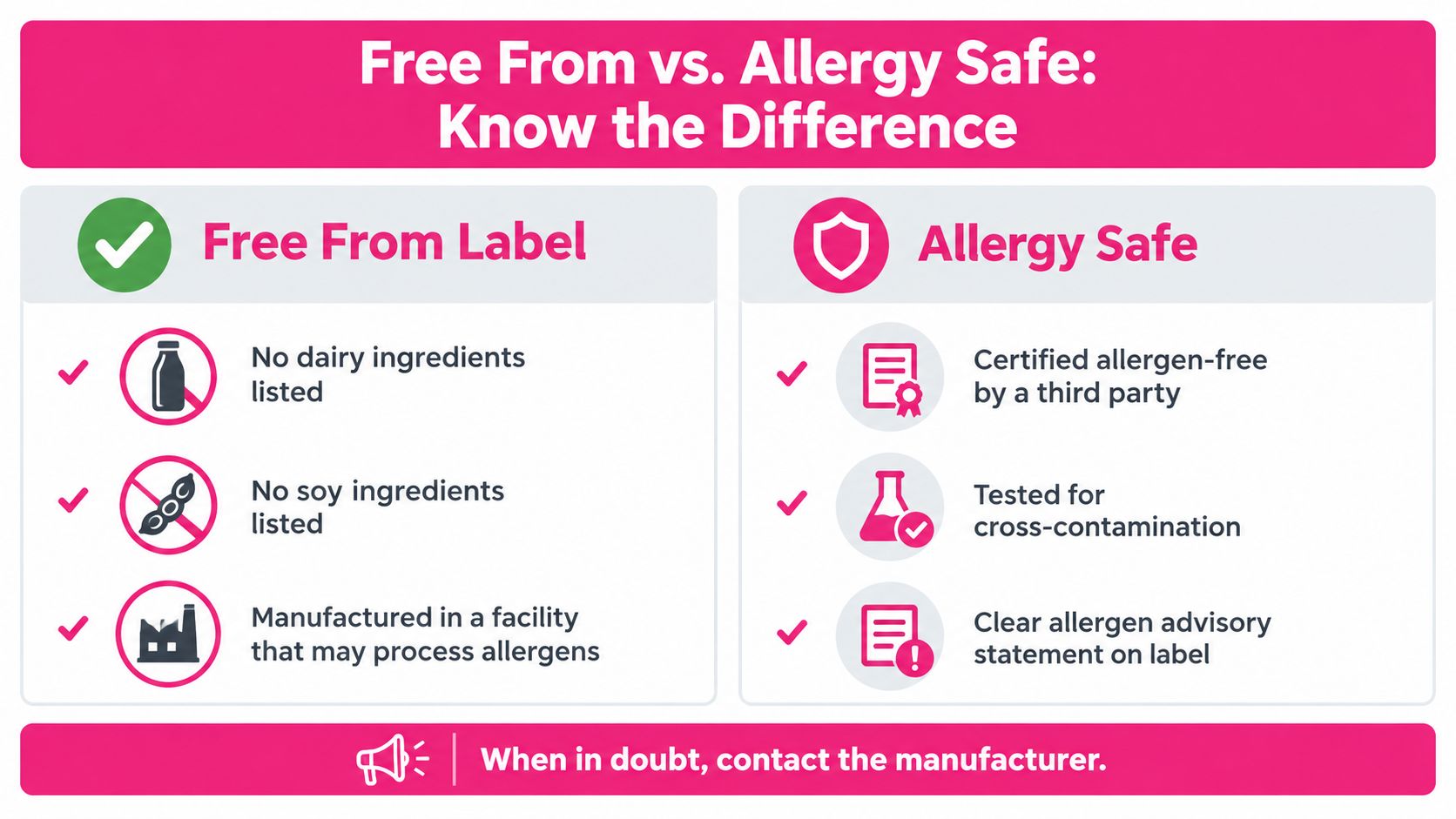
What might be easy to overlook
Look beyond the main vitamin ingredients. Inactive ingredients can include capsule materials, emulsifiers, carriers, or flavor systems. Soy lecithin is one ingredient to watch for if you avoid soy. A vegetarian capsule may be plant-derived, but “vegetarian” alone doesn't tell you whether every ingredient is free of dairy and soy.
DHA deserves its own check. Find out whether it comes from fish or algae, and ask whether the oil uses any carriers or processing aids relevant to your allergy. Don't assume a particular vitamin D source or flavoring is automatically suitable either. The ingredient list and manufacturer's explanation are more useful than guessing from a nutrient's name.
Questions that get you clearer answers
If you need strict avoidance, contact the brand and ask:
- Shared equipment: Is the product made on equipment that also processes milk or soy?
- Cross-contact controls: What steps does the manufacturer take to prevent cross-contact, and how are those steps verified?
- Supplier information: Do suppliers confirm the source of carriers, capsule materials, and other inactive ingredients?
- Allergen statements: Does the package list a “Contains” statement or an advisory about shared facilities?
- DHA source: Is the DHA fish-derived or algae-derived, and are there carriers or processing details I should know about?
A third-party certification or test may offer additional information, but ask what it specifically covers. It may address certain ingredients or quality checks without proving that every aspect of manufacturing is free from your allergen. If you're trying to understand allergy evaluation, this overview of accurate allergy test results can help frame a conversation with your clinician. For more detail on independent verification, see this guide to third-party tested supplements.
If your allergy is severe, bring the product label and the manufacturer's response to your allergist, OB, midwife, or dietitian. No marketing badge can replace that individualized safety conversation.
How to Read a Prenatal Label Like a Pro
Start with the back of the bottle. The Supplement Facts panel tells you which nutrients the product provides and the amount per serving. Check the serving size first: the listed amounts may refer to several capsules rather than one. Then review each nutrient and its form, and note anything your provider has asked you to avoid or supplement separately.
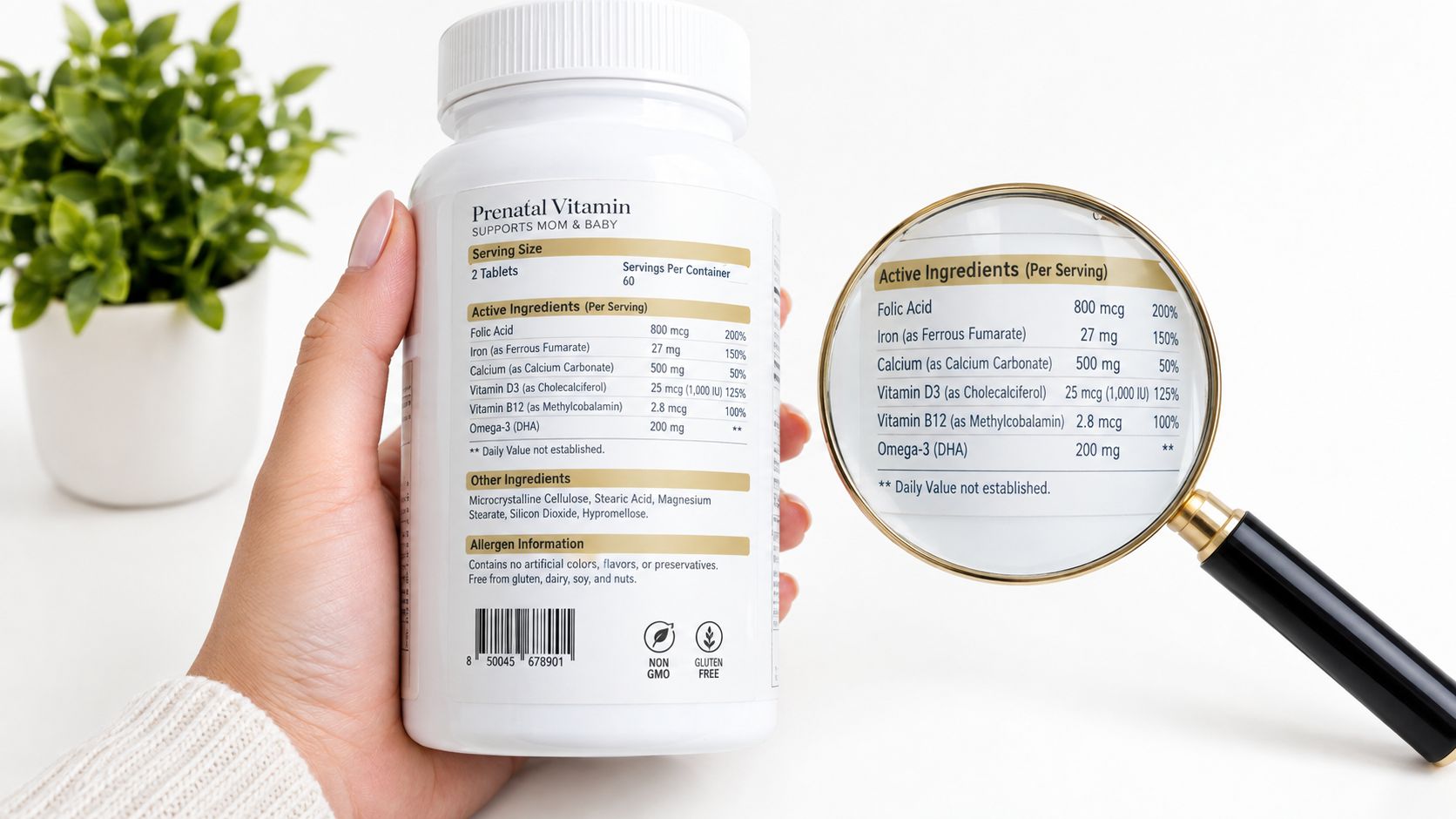
Scan the full label, not just the nutrient panel
The ingredient list includes active nutrients and inactive ingredients, such as binders, fillers, capsule materials, and flavorings. If you avoid milk or soy because of an allergy, scan both the ingredient list and any “Contains” statement. The FDA's rules help identify declared major allergens, but they don't settle every question about shared equipment or cross-contact.
Words that may signal a dairy ingredient include:
- Casein or caseinates, including sodium caseinate
- Whey or whey protein
- Lactose
- Milk protein concentrate
For soy, look for:
- Soy lecithin
- Soy protein isolate
- Soybean oil
Ingredient sourcing can vary, so don't rely on a short list as a guarantee. Ask the manufacturer about unclear terms, including the source of vitamin E, vitamin D carriers, flavors, and any DHA ingredients. Lactose-free doesn't necessarily mean milk-protein-free, and “vegetarian capsule” doesn't mean every part of the product is suitable for every allergy or dietary preference.
When a label uses a phrase you don't recognize, write it down and ask the pharmacist, manufacturer, or clinician. You don't need to become a supplement chemist to make a careful choice; you just need enough information to confirm that the product fits your needs.
Here's a short walkthrough to keep the label check practical.
After the video, compare the label with your diet and any separate supplements you take. That can help your provider spot possible gaps or duplication before you settle into a routine.
Vegetarian Capsules Fillers and Formats Worth Comparing
The best format is one you can tolerate and take consistently. A capsule may be convenient for one person and difficult to swallow for another. If nausea, food restrictions, or ingredient preferences shape your choice, compare the whole format rather than the front-label promise.
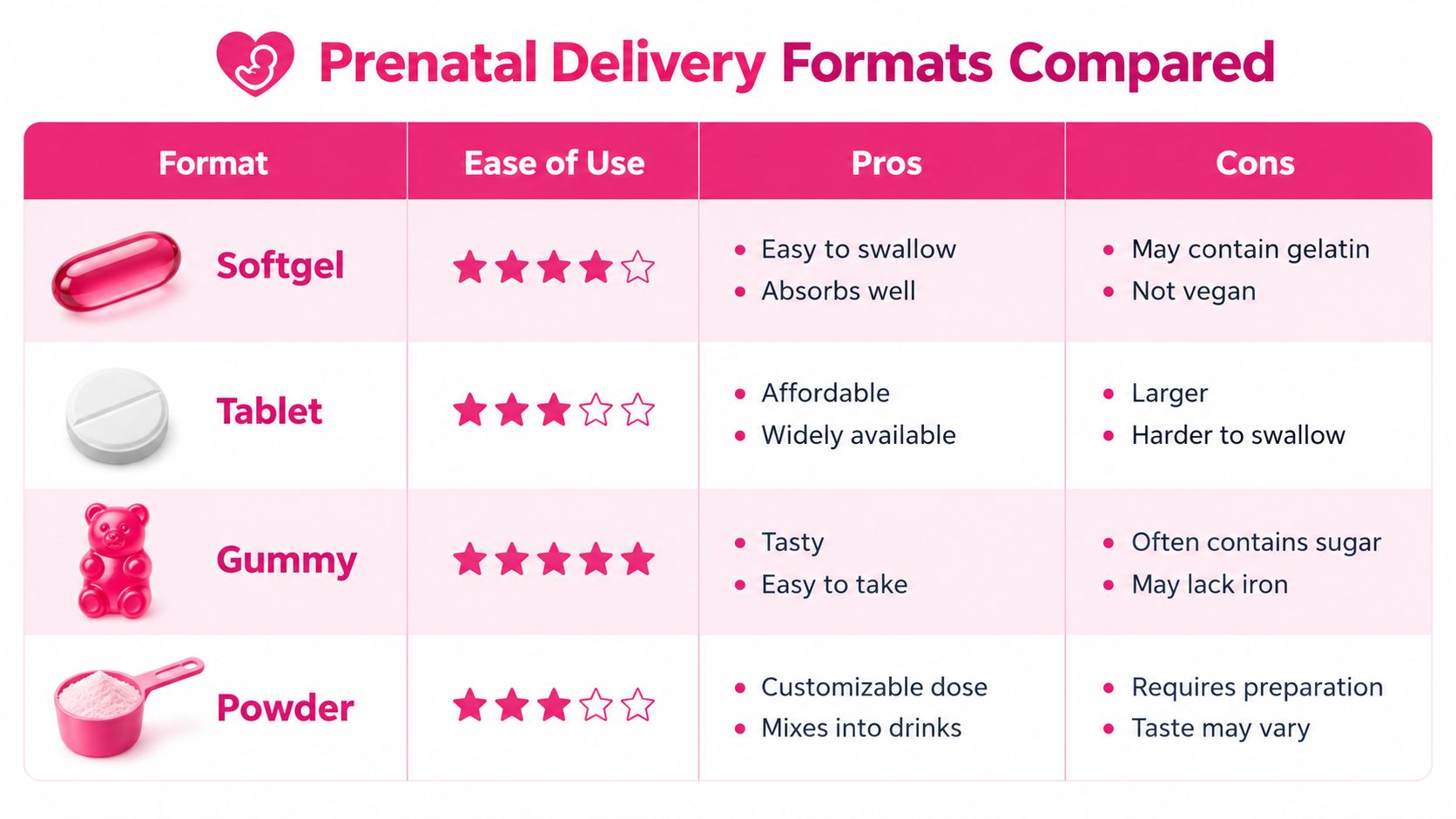
A vegetarian capsule is commonly made from plant-derived material, while a gelatin capsule can come from animal sources. But neither format automatically confirms dairy- or soy-free status. Check the full ingredient list for both the active formula and the shell.
Fillers such as rice flour, microcrystalline cellulose, or maltodextrin may be included to help make or stabilize a supplement. Their presence doesn't by itself tell you whether a product is suitable for your allergy. If a source isn't clear, ask the brand. Sweeteners and flavors matter, too, especially if you're sensitive to tastes or trying to avoid certain additives.
| Format | Best for | Watch for |
|---|---|---|
| Vegetarian capsule | People who prefer a plant-derived shell and a measured serving | Confirm the capsule and other ingredients meet your needs |
| Gelatin capsule or softgel | People who find a softgel easier to swallow | Gelatin may not suit vegetarian preferences; check carriers and allergens |
| Tablet | People who want a familiar, portable format | Size, coatings, and binders may affect comfort or ingredient preferences |
| Gummy | People who find chewables easier to take | Check sugar and nutrient coverage, including whether iron is included |
| Liquid or powder | People who prefer mixing or want a different swallowing experience | Review serving instructions, taste, sweeteners, and dose measurement |
Delayed-release capsules are designed to release their contents later in digestion, and some formulas include peppermint or ginger for palatability. Those features may suit some people, but they aren't a promise that nausea will disappear. If one format doesn't work for you, ask your clinician about alternatives rather than skipping a prenatal without discussing the change.
For another perspective on plant-based capsules and omega-3 options, see this guide to vegetarian prenatal vitamins with DHA. Your routine, ethics, allergies, and stomach comfort all belong in the comparison.
Pairing Your Prenatal With Real Meals Diet
A prenatal is meant to complement food, not replace it. That distinction matters especially if you avoid dairy or soy, because those foods can contribute nutrients and protein to a person's usual diet. The goal isn't to recreate every dairy- or soy-based meal exactly. It's to build a varied eating pattern with help from your care team.
For choline, eggs and some meats can contribute to intake. Beans and other legumes, nuts, and leafy greens can help round out meals, while your clinician or dietitian can suggest options that suit your allergy and preferences. If dairy is off the table, ask how to meet calcium needs through other foods or fortified alternatives that fit your restrictions. A supplement label alone can't tell you what your daily diet is missing.
Make the plan workable on ordinary days
For vitamin D and calcium, review the labels of any fortified dairy-free drinks or foods you use. Check whether they contain soy if that's an allergen for you, and don't assume all alternatives have the same nutrient profile. For iodine, ask your provider whether your food pattern and prenatal cover your needs. For protein, rotate among options that work for you, such as eggs, lean meats, legumes, or nuts, while following any pregnancy-specific food-safety advice from your clinician.
DHA can come from fish or algae-based products, depending on your needs and preferences. Confirm the source on a supplement label and discuss it with your provider, especially if you have fish or seafood allergies.
A realistic rhythm beats a perfect meal plan: Keep a few easy, tolerated protein options on hand, pair them with familiar meals, and use your prenatal as part of the routine rather than as a stand-in for food.
If planning meals feels like one more task, browsing meal prep diet guides can give you ideas to adapt to your restrictions and household routine. Feed Mom & Me's nutrition education for pregnant mothers is another place to build your questions before an appointment. A dietitian can help turn those ideas into a plan that reflects your specific allergy, appetite, and nutritional needs.
Buying and Using Your Prenatal With Confidence
Once a product looks promising, verify the details before buying a supply. A short message to the manufacturer can clear up questions about ingredients, shared equipment, supplier controls, and whether the DHA comes from fish or algae. Keep the answer with the product information so you can refer back to it if the formula changes.
A simple routine checklist
- Check the label and lot details: Review the serving size, expiration date, ingredient list, and any allergen statements. Keep the receipt and lot number in case you need to ask the brand about that specific product.
- Ask your provider before switching: Bring the bottle or a photo of the complete label to your OB, midwife, allergist, or dietitian, especially if you use other supplements or have a medical condition.
- Follow the label's directions: Don't change the serving or split a dose unless the product instructions and your provider support that plan.
- Notice your tolerance: If the product bothers your stomach or seems hard to keep down, tell your clinician. They can help you consider a different format or routine.
- Store it as directed: Follow the package instructions, keep the container closed, and store it away from heat or moisture if the label advises.
- Choose a purchasing plan that suits you: A single bottle lets you assess the product before committing. A subscription or multi-month bundle may help with continuity, but check the renewal and cancellation terms.
Your clinician can also help you decide whether a prenatal suits your stage, food pattern, and health history. This guide to choosing a prenatal vitamin can help you organize questions for that conversation.
A Prenatal Worth Talking to Your Provider About
A dairy- and soy-free claim matters most when the formula also provides nutrients relevant to your care. Feed Mom & Me Complete Prenatal Vitamin Plus DHA is one option to discuss with your provider. The product information lists methylfolate (L-5-MTHF), DHA, choline, selenium, peppermint, and organic ginger.
The formula is described as vegetarian, soy-free, gluten-free, dairy-free, Non-GMO, and free from artificial colors and flavors. It uses delayed-release vegetable capsules designed for tolerability. Those features may be worth reviewing if you're comparing ingredients and formats, but they don't replace checking the label or confirming allergy-related manufacturing details with the company.
Feed Mom & Me is women-owned and built by moms for moms, with educational content intended to support conversations about pregnancy and early parenthood. Whether you're pregnant or postpartum, bring the bottle and its full ingredient list to your next appointment. Your healthcare provider can help decide whether it fits your care plan and whether your diet calls for anything additional.
Feed Mom & Me offers a Complete Prenatal Vitamin Plus DHA with choline and methylfolate in a dairy- and soy-free formula, alongside pregnancy nutrition education. Visit Feed Mom & Me to review the product details and bring any questions about fit, ingredients, or allergy precautions to your healthcare provider.