
Pre Pregnancy Multivitamin: The Ultimate Guide for You
Published:Updated:
You may be standing in the bathroom with a positive pregnancy test in one hand and a bottle of prenatal vitamins in the other, wondering whether you should have started sooner. Or maybe you're planning to try soon and feel overwhelmed by labels promising everything from fertility support to perfect fetal development. Take a breath, mama. Choosing a pre pregnancy multivitamin is less about finding a magical formula and more about covering the nutrients that matter at the right time.
A prenatal can help prevent nutritional gaps, but it isn't a fertility treatment and it can't guarantee a healthy pregnancy. The strongest evidence centers on folic acid before conception and during early pregnancy, while other nutrients depend on your diet, health history, medications, and lab results. Your healthcare provider can help you turn general guidance into a plan that fits your body.
Table of Contents
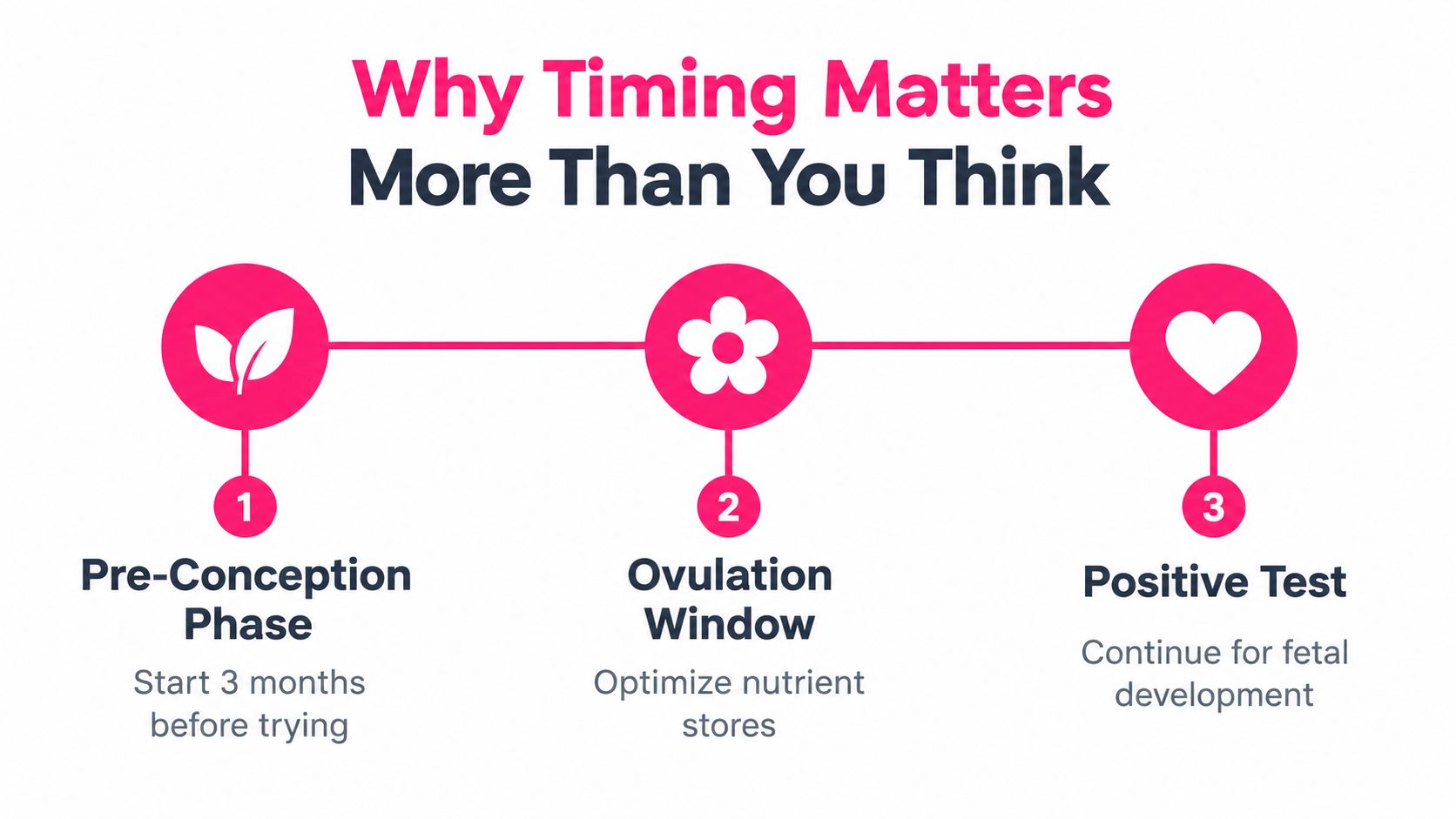
- Why Timing Matters More Than You Think
- The Star Nutrients You Should Prioritize
- How to Choose the Right Formula for Your Body
- Tackling Tolerability and Sensitive Stomachs
- Combining Supplements with a Nutrient-Rich Diet
- Your Next Steps Toward a Healthy Pregnancy
Why Timing Matters More Than You Think
When Elena decided to start trying for a baby, she planned to buy a prenatal after seeing a positive test. That seemed logical. Pregnancy would begin with the test, so why would supplementation need to begin earlier?
The surprise is that some of the earliest development happens before many people know they're pregnant. The neural tube, which develops into the baby's brain and spinal cord, forms very early. That's why folic acid works best as preparation, not as an emergency response after the first appointment.
Preparing the soil is like planting a garden. You don't wait until the first leaves appear to prepare the soil. You add what the soil needs before planting, so the roots have access to those nutrients from the beginning. A preconception supplement supports your nutrient stores before conception, while a balanced diet gives your body a wider range of nourishment to draw from.
The early window is easy to miss
The U.S. Preventive Services Task Force guidance on folic acid describes a familiar pattern. In survey data from 1998 to 2016, only about 20% to 40% of women who were recently pregnant or trying to become pregnant reported taking periconceptional folic acid supplements. The same guidance reports that women with unintended pregnancies were 4 to 5 times less likely to have used them.
Supplement use often increases after pregnancy begins, but that can still mean missing the earliest developmental window. One analysis cited by the USPSTF found prenatal supplement use at 52.4% in the first trimester, rising to 80.0% in the second trimester and 80.4% in the third trimester. These figures don't reflect personal failure. They show why preconception planning matters, especially when conception timing is uncertain.
The NIH recommends that women and adolescents who can become pregnant get 400 to 800 mcg of folic acid daily from supplements and fortified foods. The same guidance explains that taking folic acid before and during the first 28 days after conception lowers the risk of neural tube defects. The USPSTF recommendation is to begin at least 1 month before conception and continue through the first 2 to 3 months of pregnancy (NIH folate guidance).
A reassuring starting point: You don't need to predict the exact day you'll conceive. You need a consistent routine that begins before trying whenever possible.
The history of folic acid fortification tells the same story. A review in the National Library of Medicine notes that recommendations expanded by the mid-1990s to include all women of childbearing age because supplementation needs to begin before conception and continue through the first weeks of pregnancy. FDA materials cited in that review describe a landmark study finding a 71% reduction in neural tube defects when supplementation began before conception and continued through the first three months of pregnancy. The FDA's final rule on folic acid fortification was published on March 5, 1996.
For a practical look at preparing your nutrition before trying, you can also explore nutrition prior to pregnancy.
The Star Nutrients You Should Prioritize
A prenatal label can look like a chemistry exam, but the main idea is simple. Nutrients act like building materials, messengers, and delivery workers. Some help form cells, some support blood and thyroid function, and others contribute to early brain and nervous-system development.
Start with the most established foundation
Folic acid deserves first attention. It supports the rapid cell division involved in early development, particularly while the neural tube is forming. The most consistently supported routine amount is 400 to 800 mcg daily, beginning before conception and continuing through early pregnancy, as outlined by the NIH Office of Dietary Supplements.
Some people need a higher, clinician-directed dose. A history of a pregnancy affected by a neural tube defect, certain medications, or other medical circumstances may change the recommendation. AAFP preconception guidance notes that higher-risk patients commonly need 4 to 5 mg daily under clinician supervision, rather than choosing that amount independently (AAFP preconception care guidance).
Iron helps your body make red blood cells and move oxygen through your tissues. It's especially relevant when your dietary intake is low or blood work shows depleted stores. More isn't automatically better, though. Too much can worsen constipation or nausea, so ask your provider whether the amount in your formula fits your needs.
Iodine supports thyroid hormones, which help regulate metabolism and contribute to fetal growth and development. Iodine is one of the nutrients commonly considered for routine preconception supplementation, while the appropriate amount and total intake depend on your diet, prenatal formula, and local guidance.
Add the nutrients that round out the picture
Choline supports cell membranes, methylation pathways, neurotransmitter production, and fetal development. The pregnancy adequate intake is 450 mg per day, including for ages 14 to 18, according to NIH-derived reference information (NIH choline reference). Eggs, fish, poultry, soybeans, and cruciferous vegetables can contribute choline, but many prenatal formulas contain less than the full daily amount.
DHA, an omega-3 fatty acid, supports neurological and visual development. It's found in foods such as low-mercury oily fish and may be included in a prenatal supplement. The right supplemental amount depends on the product and your overall dietary pattern, so check the label rather than assuming every prenatal provides the same quantity.
| Nutrient | Primary benefit | Recommended daily intake |
|---|---|---|
| Folic acid | Supports early neural tube development | 400 to 800 mcg daily |
| Iron | Helps form red blood cells and transport oxygen | Individualized according to diet, formula, and clinical guidance |
| Iodine | Supports thyroid hormone production and development | Check the label and discuss total intake with your provider |
| Choline | Supports cell membranes, neurotransmitters, and fetal development | 450 mg daily in pregnancy |
| DHA | Supports fetal brain and eye development | Review the product label and your dietary intake |
Good digestion also affects how well you use nutrients. If you're trying to improve nutrient absorption naturally, focus on regular meals, adequate fluids, and a varied diet rather than adding more pills automatically. For a closer look at methyl donors and related nutrients, see methyl donor supplements.
How to Choose the Right Formula for Your Body
The best formula is one you can take consistently and that matches your nutritional and dietary needs. A beautiful label doesn't help if the capsule makes you sick, contains an ingredient you avoid, or leaves out a nutrient your clinician has asked you to prioritize.
Read the label in a deliberate order
First, check folic acid. Marketing often highlights methylfolate, also called L-5-MTHF, because it's a biologically active folate form. That doesn't make ordinary folic acid irrelevant. The Spina Bifida Association's folic acid guidance explains that folic acid remains the form shown to prevent neural tube defects, while other folate forms haven't been studied as extensively for that specific purpose.
Next, look at the full nutrient panel. Check whether the formula includes iron, iodine, choline, and DHA, then compare it with your diet and any advice from your provider. A prenatal that contains every possible ingredient isn't automatically more appropriate than a simpler formula.
Then, scan the serving instructions. Some products require multiple capsules, while others use a single serving. Choose the option you're most likely to remember, but don't change the serving size without checking with a healthcare professional.
Finally, review the inactive ingredients. Look for allergens, sweeteners, colors, and coatings that may affect you. A vegetarian, gluten-free, dairy-free, or soy-free formula can be useful when those restrictions are part of your everyday life. Certifications such as Non-GMO or third-party testing may offer additional information, but always read what the certification covers.
Match the formula to your circumstances
Dietary restrictions deserve more than a quick “free from” badge. Someone following a vegan diet may need to pay particular attention to B12, while someone who avoids dairy may need to review calcium and vitamin D intake. A person with heavy menstrual bleeding may approach iron differently from someone whose iron stores are already high.
Medication history matters too. Some medicines affect folate metabolism, and some medical histories call for clinician-guided dosing. The Mayo Clinic overview of prenatal vitamins emphasizes discussing your individual needs with a healthcare professional rather than assuming one standard prenatal works for everyone.
Methylfolate may be a reasonable feature to discuss, but don't let it distract you from the evidence-supported role of folic acid. A formula can also be vegetarian, soy-free, or gluten-free and still require careful review for nutrient coverage. Use the label as a map, not as a promise.
For a more detailed label-reading checklist, save how to choose a prenatal vitamin.
Tackling Tolerability and Sensitive Stomachs
A prenatal routine only works when your stomach agrees to participate. Iron can feel heavy for some people, and nausea may make any large capsule seem impossible. That doesn't mean you have to give up. It means the format and timing deserve as much attention as the nutrient panel.

Compare the routine, not just the ingredients
A standard capsule may be straightforward and affordable, but it can feel harsh when taken on an empty stomach. A delayed-release capsule may move farther through digestion before releasing its contents, which some people find gentler. Vegetarian capsules can also help if you avoid gelatin, while soy-free or dairy-free options reduce the need to scrutinize hidden sources.
The right choice depends on your body. Try these practical adjustments:
- Take it with a meal: Food can make a supplement easier to tolerate, particularly when the label permits taking it with food.
- Change the time of day: If morning nausea is strong, an evening routine may feel more manageable.
- Use a smaller food pairing: A few crackers, toast, yogurt, or a snack may be easier than a full meal.
- Ask about splitting the serving: Some formulas can be divided, but only do this if the product directions and your provider allow it.
- Consider ginger or peppermint: These ingredients may make a formula more pleasant for some people, but they shouldn't replace medical care for persistent or severe nausea.
- Avoid doubling up: Combining several prenatal or single-nutrient products can push your total intake higher than intended.
Your routine should feel sustainable: A tolerable formula taken consistently is more useful than an ideal-looking formula you avoid because it makes you miserable.
Pay attention to symptoms that persist, intensify, or interfere with eating and drinking. Contact your healthcare provider if nausea is severe, you can't keep fluids down, or you're unsure whether a symptom comes from the supplement or pregnancy.
You can compare additional strategies in this guide to the best prenatal vitamin for nausea, then bring the options to your provider.
Combining Supplements with a Nutrient-Rich Diet
A prenatal is a safety net, not a replacement for meals. Food brings fiber, protein, fluids, and a broad mix of compounds that a capsule can't reproduce. The supplement fills selected gaps, while your everyday meals provide the larger pattern your body uses for energy and repair.
Build meals around foods you already enjoy. If iron-rich foods are part of your diet, try lentils with tomatoes, leafy greens with citrus, beans in a grain bowl, or meat with roasted vegetables. Vitamin C-containing foods can support iron absorption from plant sources, while your clinician can tell you whether you need additional iron beyond food.
Let your plate do some of the work
For calcium, choose foods that fit your preferences, such as dairy products, calcium-fortified alternatives, tofu made with calcium, or leafy greens. Keep in mind that calcium and iron can compete for absorption in some circumstances, so ask your provider or pharmacist how to time separate supplements if you've been prescribed them.
Omega-3 sources can include salmon and other low-mercury fish, along with plant foods such as chia seeds, flaxseed, hemp seeds, and walnuts. If you don't eat fish, a DHA-containing supplement may be a practical option to discuss. Choline-rich foods include eggs, fish, chicken, soybeans, broccoli, and Brussels sprouts.
A simple day might look like this:
- Breakfast: Eggs with whole-grain toast and fruit.
- Lunch: Lentil soup with a leafy green salad and citrus.
- Snack: Yogurt or a fortified alternative with walnuts.
- Dinner: Salmon or beans with roasted vegetables and a grain.
- Supplement routine: Take your prenatal according to its label and pair it with the meal or time of day your stomach handles best.
Food patterns also need flexibility. Appetite changes, nausea, allergies, cultural preferences, budget, and access all matter. You don't need a perfect plate at every meal. You need supportive choices repeated in a way that feels realistic.
For approachable pregnancy nutrition ideas, explore nutrition education for pregnant mothers.
Your Next Steps Toward a Healthy Pregnancy
When Priya began planning for pregnancy, she wrote down three questions before scheduling her appointment: Which nutrients should I start now? Does my diet cover what I need? Could any medication or health condition change my dose? That small list helped her have a focused conversation instead of trying to remember everything in the exam room.
You can make your own list. Bring the supplement bottle or a photo of the complete label, including serving size and inactive ingredients. Mention dietary restrictions, previous pregnancies, medical conditions, medications, allergies, digestive symptoms, and whether you already take separate nutrients.
Use a simple decision path
- Start with timing. If you may become pregnant, ask your provider about beginning a formula that supplies the recommended folic acid before conception.
- Review the foundation. Check folic acid first, then examine iron, iodine, choline, and DHA in relation to your diet and health history.
- Personalize where needed. Lab results, a vegan or vegetarian diet, medication use, previous pregnancy history, or a diagnosed deficiency may call for a different plan.
- Choose tolerability on purpose. Consider the capsule type, serving instructions, and whether taking it with food is realistic.
- Reassess after pregnancy begins. Your nutritional needs and supplement plan may change, so keep the conversation open with your obstetrician, midwife, or dietitian.
The fertility question deserves an honest answer, too. A prenatal is primarily a deficiency-prevention and early-pregnancy support tool, not a guaranteed way to improve conception odds. A review in the National Library of Medicine notes that evidence doesn't support routine or universal vitamin supplementation as a fertility-enhancing intervention for everyone undergoing infertility treatment. That review also describes an umbrella analysis in which folic acid and/or multivitamin use was associated with a 57% reduction in neural tube defects, while the reduction was larger for folic acid alone than for multivitamins.
Targeted support makes more sense than taking every popular supplement. Guidance summarized in the same review highlights folic acid and iodine as priorities for many people, with vitamin D, iron, and other nutrients depending on intake, deficiency risk, medication use, or medical history. Separate calcium supplementation before pregnancy, for example, shouldn't be assumed to add benefit beyond a normal dietary intake without individualized advice.
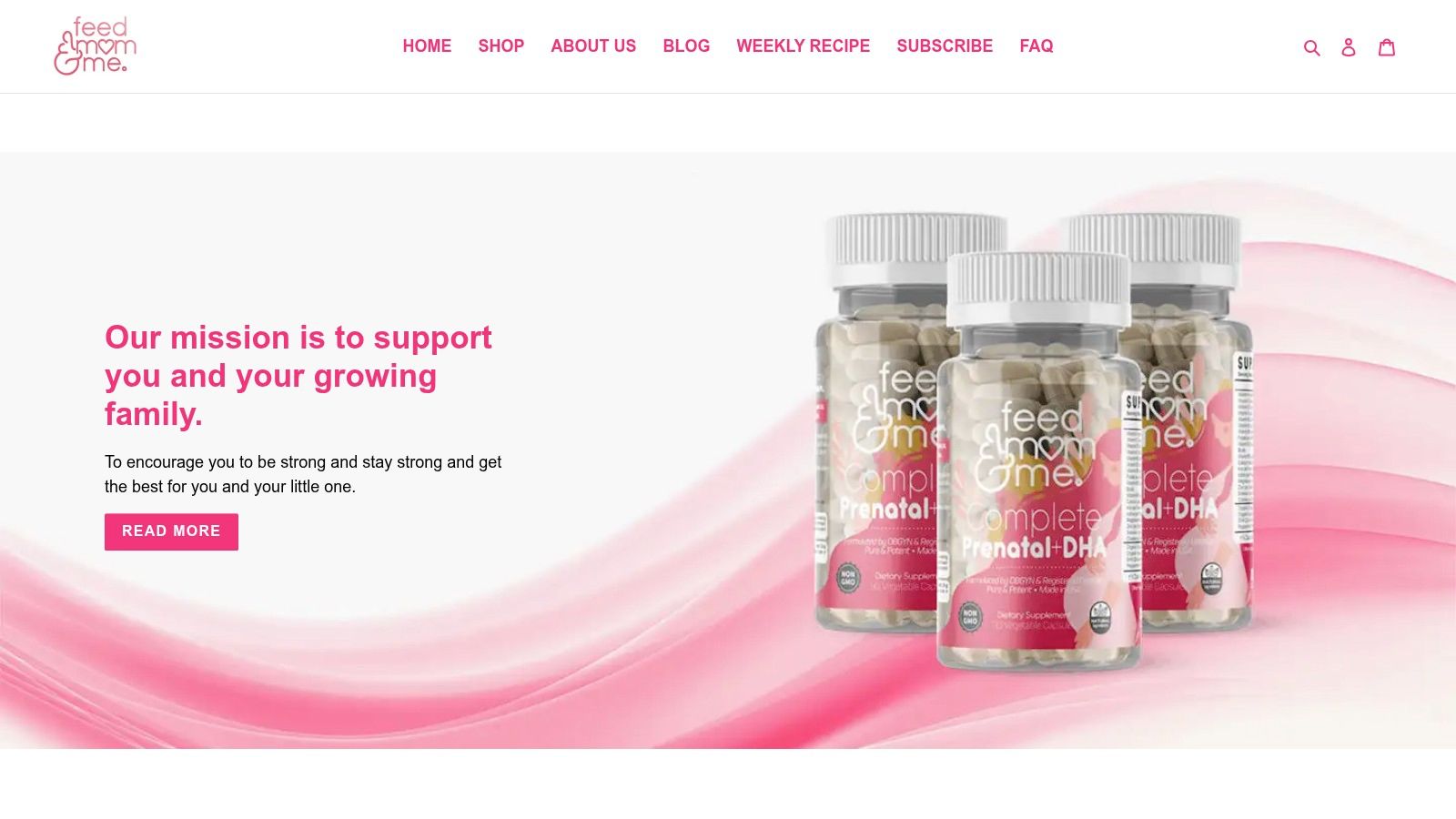
You're allowed to ask basic questions. You're allowed to change formulas if one doesn't suit your stomach. You're allowed to need more support than a standard label provides. Women-founded brands built by moms, including Feed Mom & Me, reflect a wider community of mothers who want practical education alongside products, and that community matters when the choices feel personal.
Feed Mom & Me offers the Complete Prenatal Vitamin Plus DHA, a vegetarian, soy-free, gluten-free, and dairy-free formula with folate, choline, DHA, delayed-release vegetable capsules, peppermint, and organic ginger. If you're comparing preconception options, visit Feed Mom & Me to review the product details and choose a routine to discuss with your healthcare provider.