
Vitamin D Supplement for Vegetarians: Vegan Labels Decoded
Published:Updated:
Could a vitamin D supplement be vegetarian but still not vegan, or even contain an animal-derived capsule? The dose on the front of the bottle won't answer that. For pregnancy and postpartum, you'll want to check both how much vitamin D you're getting and what the vitamin and capsule are made from.
The reassuring part is that you don't have to guess. Once you know how to read the ingredient list, add up vitamin D from your food and supplements, and bring personal risk factors to your clinician, you can make a plan that fits your diet and life stage.
Table of Contents
- Which Vitamin D Forms and Labels Fit a Vegetarian Diet?
- Why Do Vegetarians Often Run Low on Vitamin D?
- How Much Vitamin D Do You Need Each Day?
- What Helps Your Body Absorb Vitamin D?
- When Does a Vitamin D Blood Test Make Sense?
- How Do You Build a Vitamin D Plan by Stage?
Which Vitamin D Forms and Labels Fit a Vegetarian Diet?
The short answer: vitamin D2 is generally plant- or fungi-derived, while vitamin D3 may come from animals or vegan sources. D3 is often made from lanolin, a grease from sheep's wool. Some vegetarians accept lanolin, but it isn't vegan; D3 sourced from lichen or algae is an option for both vegetarians and vegans. Vitamin D2 and D3 can both raise vitamin D levels, so the label question is ingredient origin and your dietary preference. Two bottles with the same dose can still differ in the vitamin source, capsule shell, and coating ingredients, which is why a quick label check matters before you buy.
| Vitamin D forms and vegetarian or vegan fit | Typical source | Vegetarian? | Vegan? |
|---|---|---|---|
| Vitamin D2 (ergocalciferol) | Irradiated yeast or fungi | Yes | Usually yes |
| Vitamin D3 from lanolin | Grease from sheep's wool | Yes, if you accept lanolin | No |
| Vitamin D3 from lichen | Lichen extract | Yes | Yes |
| Vitamin D3 from algae | Algae | Yes | Yes |
| Gelatin capsule shell | Animal collagen | Usually no | No |
| Vegetable-cellulose capsule shell | Plant fiber | Yes | Yes |
A vegetarian label doesn't necessarily tell you whether the whole product is animal-free. The capsule can be the catch: a supplement with plant-derived D2 may still use a gelatin shell. If you avoid animal ingredients entirely, check the shell as carefully as the vitamin source.
A shelf-side label check
- Find the vitamin D form. Look for D2, lichen-based D3, algae-based D3, or an explicit vegan claim. Plain “D3” doesn't tell you whether the source is lanolin or a plant-based alternative.
- Check the capsule shell. Look for gelatin or vegetable cellulose. A plant-based vitamin inside a gelatin capsule won't meet a vegan preference.
- Scan the other ingredients. Coatings and excipients can include carmine, made from insects, or shellac, which comes from lac insects. If the label doesn't answer your question, contact the manufacturer.
- Confirm the units. Look for both IU and micrograms (mcg) when listed, so you can compare the amount with the daily intake guidance.
- Look for independent quality checks. USP Verified or NSF Certified seals can indicate that product contents were checked, but they don't certify that ingredients are vegan.
For more on what third-party testing does and doesn't tell you, see this guide to third-party testing for supplements.
Simple rule: If you avoid all animal ingredients, choose D2, lichen D3, or algae D3 in a non-gelatin capsule. If you accept lanolin, lanolin-derived D3 can fit a vegetarian diet.
Why Do Vegetarians Often Run Low on Vitamin D?
Think of vitamin D as a savings account that food and sunshine both need to fill. Many ordinary plant foods make very few deposits, so vegetarians often need to pay closer attention to fortified foods and other sources.
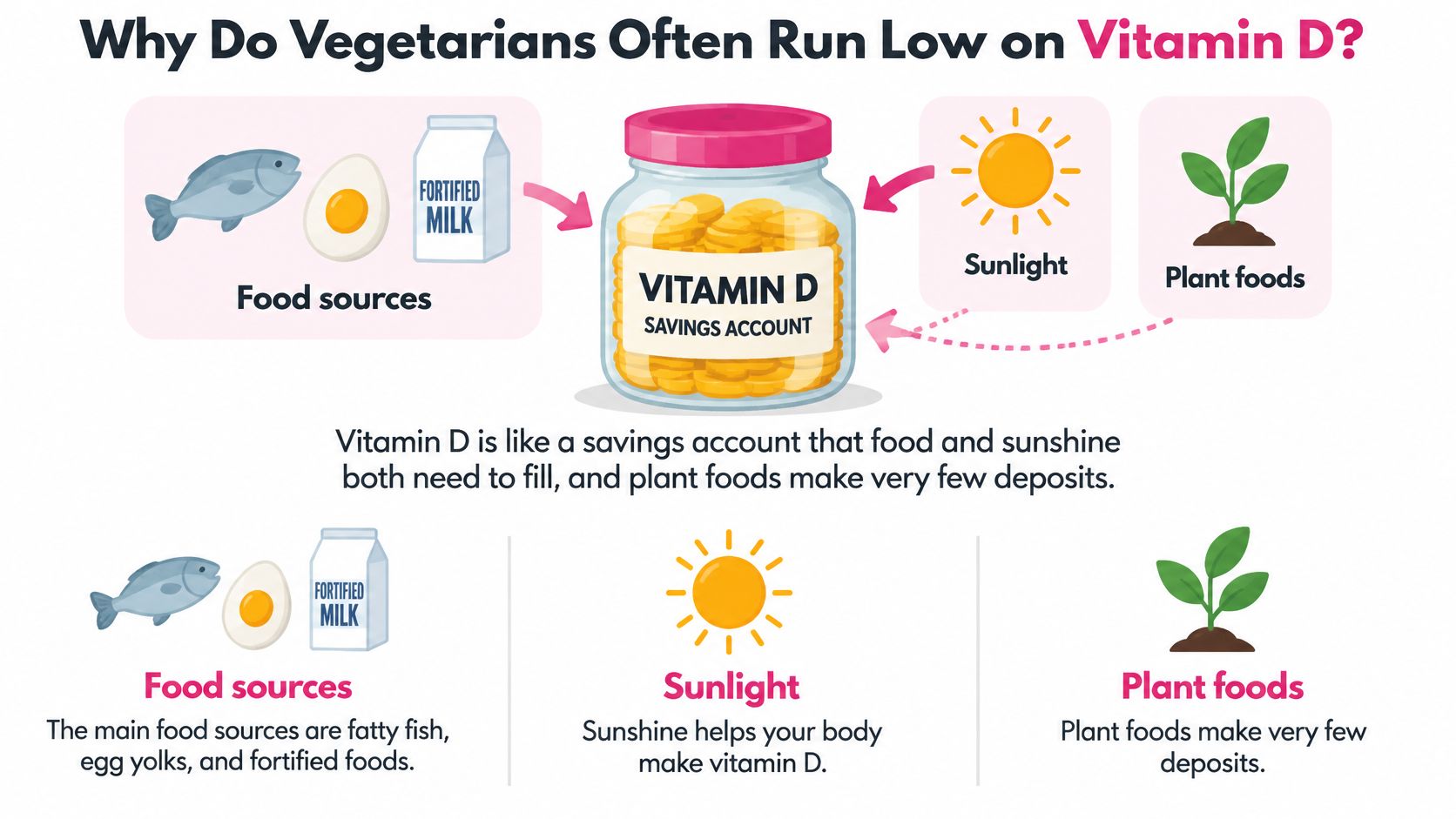
The main food sources include fatty fish, egg yolks, and fortified dairy or plant beverages. Beans, broccoli, and leafy greens can be nutritious parts of your meals, but they aren't reliable concentrated sources of vitamin D. Some wild mushrooms exposed to ultraviolet light can provide vitamin D as well. The peer-reviewed review of adults following plant-based diets found that reported deficiency ranged from 0% to 33% among vegetarians and 3% to 67% among vegans. The wide ranges reflect differences in country, season, fortification, sun exposure, and how deficiency was defined. Those figures describe study groups, not your personal likelihood of deficiency.
Useful food options include:
- Fortified cow's milk, if you include dairy.
- Fortified soy or other plant milks, with vitamin D amounts that differ by product.
- Egg yolks, if you eat eggs.
- Fatty fish, if fish is part of your diet.
- Some UV-exposed wild mushrooms, which can contain vitamin D.
Fatigue, bone aches, and low mood can have many possible causes, so symptoms alone can't tell you whether your vitamin D is low. A blood test measuring 25-hydroxyvitamin D is the main way a clinician assesses your vitamin D status.
Risk also varies with latitude, winter months, darker skin, clothing that covers most of the body, limited outdoor time, and problems absorbing nutrients. Your food choices matter, but they're only part of the picture. If you're also planning meals around pregnancy, this guide to vegetarian eating during pregnancy can help you think about the broader nutrition picture.
Noticing a possible gap is a planning step, not a failure. You can work with your clinician to decide whether fortified foods, a supplement, testing, or a combination makes sense for you.
How Much Vitamin D Do You Need Each Day?
A daily target works like a budget: enough to cover needs, with a ceiling you do not try to spend.
| Who | Daily target | Upper limit (all sources) |
|---|---|---|
| Adults 19 to 70 | 600 IU (15 mcg) | 4,000 IU (100 mcg) |
| Adults over 70 | 800 IU (20 mcg) | 4,000 IU (100 mcg) |
| Pregnancy | 600 IU (15 mcg) | 4,000 IU (100 mcg) |
| Breastfeeding | 600 IU (15 mcg) | 4,000 IU (100 mcg) |
| Breastfed infant up to 12 months | 400 IU (10 mcg) | 1,000 IU (25 mcg) |
The U.S. National Academies' Dietary Reference Intakes set 600 IU (15 mcg) daily for adults through age 70, including during pregnancy and breastfeeding, and 800 IU (20 mcg) after age 70. The adult upper limit is 4,000 IU (100 mcg) per day from food, fortified drinks, and supplements combined. For infants up to 12 months, the upper limit is 1,000 IU (25 mcg). Treat that ceiling as a guardrail, because vitamin D can add up across fortified milk, prenatal vitamins, multivitamins, and a separate capsule. Very high intakes can raise blood calcium, so a clinician may prescribe more only for a confirmed deficiency and with follow-up.
Add up your whole day
Start with the labels already in your kitchen. If fortified soy milk lists vitamin D per cup, count the cups you drink. Add a prenatal or multivitamin, then any separate D product. This is also where the vegetarian label check matters: confirm whether the product is D2 or D3, whether the D3 source fits your diet, whether the capsule is gelatin or plant-based, and whether the dose is listed in IU or mcg so you do not miscount the units.
The 2024 Endocrine Society guidance advises healthy adults under 75 not to routinely exceed age-specific reference amounts without a reason. Pregnancy and breastfeeding deserve an individualized conversation, especially if a prenatal already contains vitamin D. For help comparing how nutrients can share one routine, see this guide to zinc and vitamin D.
If limited sun, darker skin, absorption problems, higher body weight, or medicines apply, bring that full picture to your clinician instead of choosing a high dose because the ceiling allows it.
What Helps Your Body Absorb Vitamin D?
Vitamin D is fat-soluble, which means it travels through your digestive system more like a suitcase that needs a ride than a passenger who can travel alone. Dietary fat can help provide that ride, so taking a supplement with a meal that includes some fat is a practical habit.
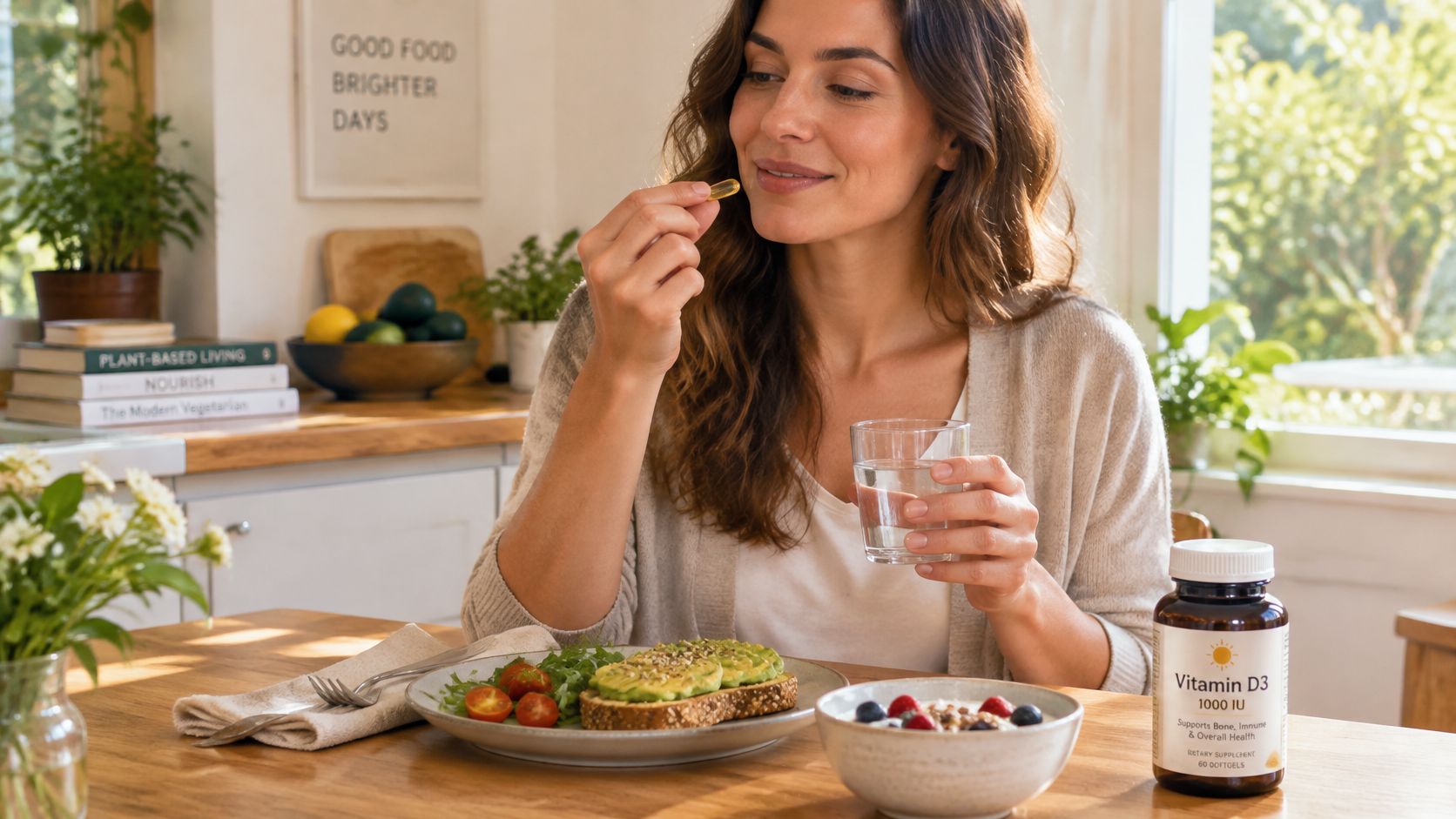
For example, you could take it with a bowl of oatmeal made with fortified soy milk and nut butter instead of taking it on an empty stomach with water. If you want a broader explanation of the difference between fat-soluble and water-soluble nutrients, read this guide to fat-soluble versus water-soluble vitamins.
Several health and medication factors can make absorption or vitamin D status harder to manage:
- Very low-fat eating patterns can leave little fat in a meal to help carry a fat-soluble vitamin.
- Gut conditions, including celiac disease, Crohn's disease, and cystic fibrosis, may affect nutrient absorption.
- Weight-loss or bariatric surgery can change how your body absorbs nutrients.
- Higher body weight is associated with lower vitamin D blood levels.
- Some medicines, including certain anti-seizure medicines and glucocorticoids, can affect vitamin D metabolism.
- Age can also influence vitamin D status.
The choice between D2 and D3 isn't only a question of diet compatibility. Several studies suggest D3 may raise and sustain blood levels more effectively than D2, but results vary between people. If you're choosing a product for a vegetarian or vegan diet, weigh that evidence alongside the source, capsule, and ingredients you're comfortable taking.
For an accessible overview of vitamin D and related considerations, you can watch this video:
A consistent daily routine is easier to assess than an occasional large dose. A self-made megadose plan isn't a shortcut, especially during pregnancy or breastfeeding; ask your healthcare provider what fits your situation.
When Does a Vitamin D Blood Test Make Sense?
Feeling well is usually a sign you can skip the lab slip. Routine vitamin D testing isn't recommended for every person who feels fine, including average-risk pregnant women. Testing may be useful when you have symptoms, a relevant medical condition, or a particular clinical risk factor, and the clinical guidance on vitamin D testing and supplementation stresses that a test earns its place when the result could change your care.
The test measures 25-hydroxyvitamin D, the circulating form that reflects your body's supply. Your diet alone doesn't determine that number. Sun exposure, skin pigmentation, latitude, clothing, season, absorption, body size, and fortified-food intake all feed into it, which is why your clinician can weigh your whole picture rather than treating vegetarianism as a diagnosis.
It helps to separate two situations before you ask for a test:
- Maintenance supplementation: You and your provider agree on a regular daily amount that fits your diet, life stage, and other sources of vitamin D.
- Treatment for confirmed deficiency: A clinician chooses the dose and follow-up plan. A suspected deficiency is not a reason to start a large loading dose on your own.
Pregnancy and breastfeeding deserve their own conversation. In the United States, the daily reference intake for these stages is 600 IU (15 mcg) from all sources, while treatment of a confirmed deficiency stays individualized and the dose is set by your clinician. Bring your full daily intake, including food, fortified drinks, and supplements, to that discussion so the reference amount is compared against everything you take.
One thing a blood test can never tell you is whether a supplement suits your diet. For that, you still check the label: whether the vitamin is D2, lanolin D3, or lichen or algae-based D3, and whether the capsule contains gelatin. If you're reviewing several health markers with your provider at the same visit, this resource on understanding blood panels with Vital iQ Health can help you arrive with a list of questions.
How Do You Build a Vitamin D Plan by Stage?
Your vitamin D routine can shift as you move from planning a pregnancy to pregnancy and postpartum. The aim is to understand what you get from food and supplements, choose a product that matches your diet, and ask your healthcare provider when your circumstances call for more guidance. Taking the biggest dose on the shelf rarely answers those questions.

- Preconception: Talk with your provider about your diet, supplement routine, and whether your personal history suggests a need for testing. Choose a supplement you can take consistently, and check that its vitamin D form and capsule shell suit your preferences.
- Pregnancy: The U.S. daily reference intake is 600 IU (15 mcg) from all sources. A review of vegetarian and vegan diets during pregnancy reports that vitamin D intake is often lower among vegans than among lacto-vegetarians and omnivores, and in one cited pregnancy population, nearly 42% of participants had vitamin D deficiency and 14% had insufficiency in the first trimester. Those findings describe that population, not every vegetarian pregnancy, so your own needs can't be inferred from those percentages alone. The same review notes that fortified foods and supplements can help meet needs, while ordinary plant foods such as beans, broccoli, and leafy greens aren't reliable concentrated sources.
- Postpartum: If you're breastfeeding, the adult daily reference intake is 600 IU (15 mcg) for you. Your breastfed baby generally needs 400 IU (10 mcg) daily, and your own supplement doesn't automatically cover that need. Talk with your pediatrician about your baby's plan. High maternal doses intended to raise vitamin D in breast milk require medical guidance, so taking more on your own is not a safe substitute for your baby's supplement.
Make the plan practical
Say you start the day with fortified plant milk, take a prenatal at lunch, and eat a meal that includes some fat. Check the vitamin D listed on the beverage and prenatal labels, then ask your clinician whether that total fits your needs. The routine you follow matters more than any single product in isolation.
Use this checklist before your next appointment:
- Write down every supplement and fortified beverage you take in a day.
- Add up the vitamin D amounts and compare the total with the daily intake guidance.
- Check each label for the vitamin D source, capsule shell, and other ingredients.
- Note personal factors, such as winter months, limited sun exposure, darker skin, or a gut condition.
- Ask whether testing makes sense for your symptoms, health history, and risk factors.
- Avoid self-prescribed loading doses or other high-dose plans.
- Bring your list to your OB, midwife, or pediatrician so you can make a plan together.
Vegetarian prenatal options can bring several nutrients into one routine, though vegetarian on the front of the bottle does not automatically mean vegan-safe, so the vitamin D form and capsule shell still need checking against your total intake and your preferences. If you eat fully plant-based, this guide to choosing a multivitamin for vegan women walks through the same label checks in more detail. Feed Mom & Me is a women-founded brand, and its vegetarian Complete Prenatal Vitamin Plus DHA includes DHA and choline; explore Feed Mom & Me and review the product label with your healthcare provider to see how it fits your diet and vitamin D plan.
You deserve a plan that respects your food choices and leaves room for personal medical guidance.