
What to Eat Before Getting Pregnant
Published:Updated:
You're scrolling baby names late at night when a quieter question slips in: Is my body ready for pregnancy? You don't need a perfect diet to begin answering it. A few thoughtful food choices can help you prepare, without turning every meal into a test you have to pass.
If you're wondering what to eat before getting pregnant, think of it as building a steady eating pattern before a positive test, not starting a strict plan on the day you conceive. The most useful approach is risk-based, not a long list of foods to fear: prioritize a few nutrients, choose foods you enjoy and can access, and ask a clinician about needs that depend on your health history.
Table of Contents
- Why Preconception Nutrition Matters
- The Key Nutrients to Build Up Before Pregnancy
- What a Balanced Preconception Plate Looks Like
- Foods to Limit and How to Think About Risk
- Eating Well on a Real Budget and Across Cultures
- When Food Is Not Enough and Prenatal Help Makes Sense
- Your Preconception Nutrition Starter Plan
Why Preconception Nutrition Matters
The weeks before pregnancy matter because some early development happens before you know you're pregnant. The neural tube, which develops into the brain and spinal cord, forms during the first month after conception, often before pregnancy is recognized. That timing makes folic acid a particularly important early priority. The National Institutes of Health's folate guidance explains the early-development connection and the importance of adequate folic-acid intake.
Nutrition is not a fertility switch. No single food can promise conception, and your meals don't determine everything about reproductive health. But a varied eating pattern can help you build nutrient stores and support general health while you're trying.
Think of this as preparation, not a test
Preconception nutrition is the pattern you build before pregnancy, not a magic diet you have to follow perfectly. If you're short on time, start with a practical change: add beans to a meal, choose whole-grain bread when it works for you, or keep frozen vegetables on hand. Small choices are easier to repeat than an ambitious overhaul.
Some nutrients, including iron and folate, are worth thinking about before pregnancy rather than waiting until a prenatal appointment. Food can contribute, while a clinician can help you decide whether a supplement or lab check makes sense for your circumstances.
A gentle rule: Aim for a pattern you can sustain, not a menu that makes you anxious.
The point isn't to eat flawlessly, mama. It's to make the next choice a little more supportive and to get personalized guidance when your health history calls for it.
As you read on, you'll see how the key nutrients connect to everyday foods, how to think clearly about common food-safety questions, and how to make the plan work on a real budget. You can take it one meal at a time.
The Key Nutrients to Build Up Before Pregnancy
Some nutrients deserve attention before pregnancy because they support early development and everyday body functions. They aren't separate switches, and you don't need to approach food with a fear-based list of rules. A few steady priorities can help you build a practical foundation.
Folate helps cells grow and divide. Folic acid is the form used in supplements and fortified foods, with established evidence for reducing neural-tube-defect risk. The neural tube forms very early, so waiting for a positive test to consider folic acid may mean missing an important window. Read more about the benefits of folate during pregnancy.
Iron is part of hemoglobin, the protein that carries oxygen in your blood. Your iron status can depend on what you eat, menstrual blood loss, absorption, and health history. A clinician can help you decide whether testing or a supplement is appropriate.
Iodine helps your body make thyroid hormones, which support metabolism and development. Choline supports cell structure and nervous-system function. Both come from foods, though intake can vary with your food choices and access to fortified products. Familiar, affordable foods can contribute, so these nutrients don't require specialty ingredients.
The building blocks, in everyday terms
Omega-3 DHA is a type of fat that contributes to the structure of the brain and eyes. It is structural material, not a magic ingredient. Fatty fish can provide DHA, while some supplements offer another option if you don't eat fish.
Vitamin D helps your body use calcium and supports bone health. Sun exposure, food, and supplements can all affect vitamin D status. A healthcare professional can help you decide whether testing is useful.
Your needs may differ from someone else's. A vegetarian diet, thyroid condition, digestive issue, medication use, or previous pregnancy history can change which choices make sense. A personal review can be more useful than copying another person's supplement routine.
The goal is to connect nutrients with foods you already eat. Eggs, beans, leafy greens, fortified grains, and fish can each play a role, depending on your preferences and access. Like building with familiar materials, a flexible approach can bring several nutrients into your routine without making every meal a project.
What a Balanced Preconception Plate Looks Like
A useful starting point is a plate with half vegetables and fruit, one quarter protein, and one quarter whole grains, plus a calcium-rich food or a source of healthy fat. It's a template, not a rulebook. The vegetables could be frozen spinach, fruit could be an apple, protein could be beans, and the grain could be brown rice.
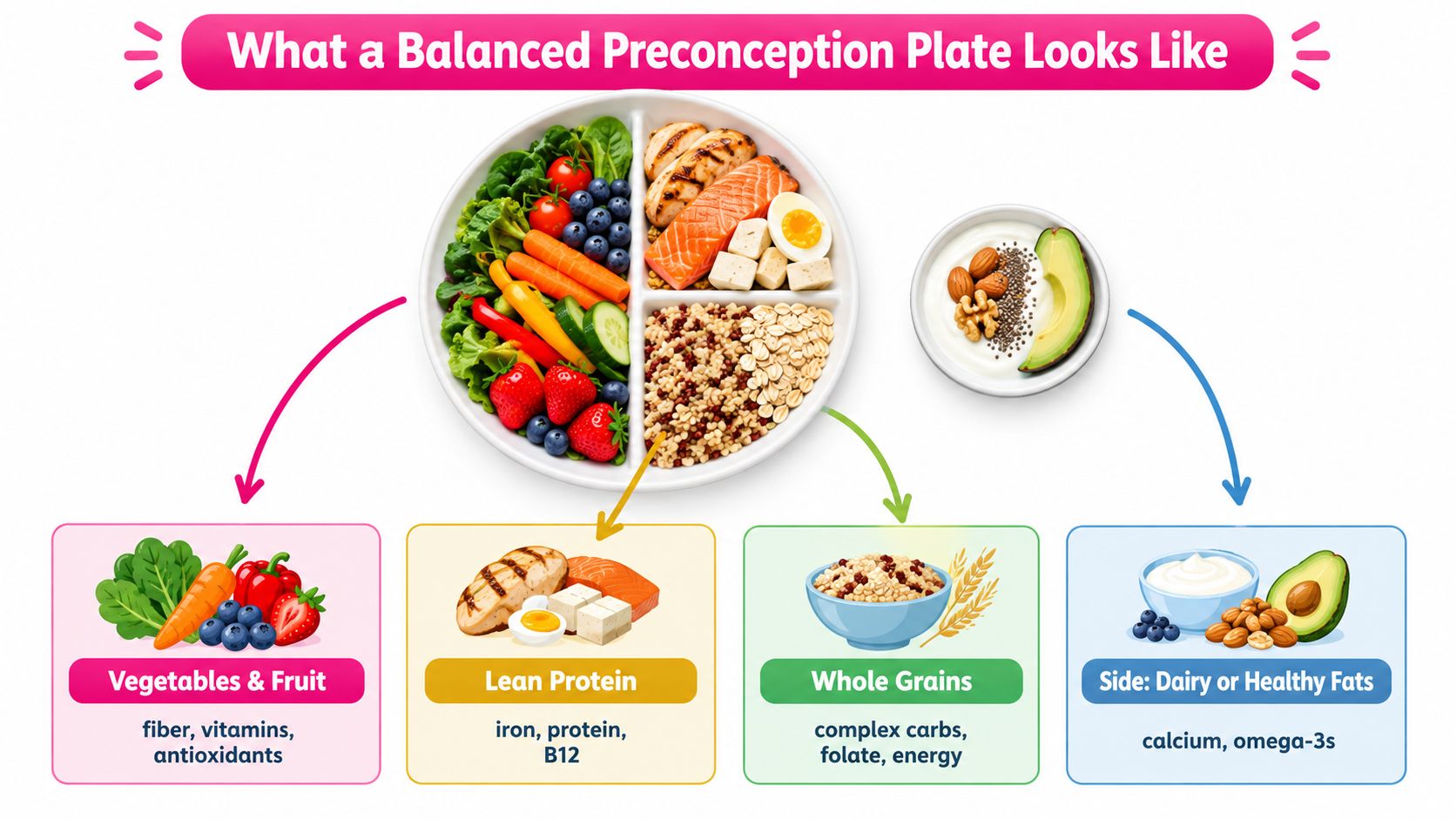
Here's how the earlier nutrients might show up in a grocery basket. You don't need every food on the list. Choose a few that fit your taste, budget, and household.
| Nutrient | Why it matters | Everyday food sources |
|---|---|---|
| Folate | Supports cell growth and early development | Lentils, beans, leafy greens, fortified grains |
| Iron | Helps carry oxygen through the body | Beans, lentils, lean meat, fortified cereals |
| Iodine | Helps the body make thyroid hormones | Dairy foods, eggs, iodized salt where appropriate, fortified foods |
| Choline | Supports cell structure and nervous-system function | Eggs, beans, fish, meat |
| Omega-3 DHA | Contributes to brain and eye structure | Salmon, sardines, low-mercury fish, DHA-fortified foods |
| Vitamin D | Helps the body use calcium and supports bones | Fortified milk or plant milk, eggs, salmon, fortified foods |
An ordinary meal can cover more than one nutritional job. Eggs with whole-grain toast and fruit offer protein and choline alongside fiber and carbohydrates. Lentil soup with spinach and bread brings plant protein, iron, folate-rich ingredients, and grains to the table. For more meal inspiration, browse these registered-dietitian-approved pregnancy recipes.
A Mediterranean-style pattern can also be adapted to your kitchen, with vegetables, beans, whole grains, olive oil, and suitable protein choices. This abundant Mediterranean eating plan offers another way to think about combinations rather than a rigid menu.
A Tuesday-night dinner of eggs, beans, and toast still counts. Consistency matters more than culinary perfection.
Food is the foundation because meals bring fiber, protein, and a range of nutrients together. Supplements can help fill specific gaps, but they don't replace meals or make food variety irrelevant.
Foods to Limit and How to Think About Risk
“Is this safe?” is a better question than “Is this food forbidden?” Risk depends on the food, its form and amount, how it's prepared, and your own health history. A thoughtful pattern doesn't require treating every fish, cheese, or supplement as dangerous.
For fish, the concern is mercury, which can build up more in larger predatory species. You don't have to avoid seafood altogether: salmon, shrimp, cod, tilapia, and light canned tuna are examples of lower-mercury options. Larger fish such as swordfish need more caution. For personalized choices, use current advice from your healthcare provider.
The form of a nutrient matters, too. Preformed vitamin A, or retinol, in excessive amounts can be harmful, while beta-carotene from foods such as carrots and leafy vegetables isn't the same thing. If you take a supplement or eat liver products regularly, check the label and ask a clinician rather than making assumptions based on the words “vitamin A.”
Use food-safety basics, not blanket fear
Unpasteurized dairy products and juices can carry foodborne pathogens, including listeria. Check labels for pasteurization, and follow food-handling and cooking guidance. Raw or undercooked eggs and meats also warrant care; cook them thoroughly and handle raw ingredients safely.
Caffeine and alcohol deserve an honest conversation with your clinician, especially if you're actively trying to conceive. The safest alcohol plan can depend on your situation, and avoiding alcohol is the clearest choice if pregnancy is possible. If you're cutting back on coffee, exploring decaf beans for a wellness-minded routine may help you keep a comforting ritual while changing what's in your cup.
When a food choice feels uncertain, ask what the actual concern is: contamination, mercury, dose, or a medical condition. That question can help you find a practical swap instead of eliminating whole food groups. If you want a more detailed overview of pregnancy-related food choices, see foods to avoid during pregnancy.
One less-than-ideal meal isn't a reason to panic. Focus on the pattern you can maintain, and seek individualized advice if you have a history or condition that changes your risk.
Eating Well on a Real Budget and Across Cultures
A nutrition plan only helps if it fits your kitchen. Fresh produce, seafood, specialty products, and time to cook aren't equally available to everyone. You may be vegetarian or vegan, follow halal or kosher practices, avoid dairy, share meals with family, or be working with a tight grocery budget. Those realities aren't obstacles to caring for yourself. They're part of the plan.
The global picture reinforces why flexible advice matters: the World Health Organization's report on food insecurity and the cost of a healthy diet estimates that 2.1 billion people, or 25.8% of the world's population, experienced moderate or severe food insecurity in 2025, and gives the average global cost of a healthy diet as 4.28 purchasing-power-parity dollars per person per day. Those figures describe a broad global challenge, not what every household spends. The practical takeaway is to focus on accessible foods, not an idealized shopping list.
| What you need | More costly or less accessible option | Flexible everyday alternative |
|---|---|---|
| Protein and iron | Fresh meat at every meal | Beans, lentils, eggs, tofu, or canned fish that fits your dietary rules |
| Vegetables | Fresh produce that spoils before you use it | Frozen or canned vegetables, rinsed when appropriate |
| Whole grains | Specialty grain products | Oats, brown rice, whole-grain bread, or familiar staple grains |
| DHA | Fresh seafood | Low-mercury canned fish if it works for your household |
| Calcium or iodine | A specific dairy product | Fortified plant milk or another suitable fortified food, checked against the label |
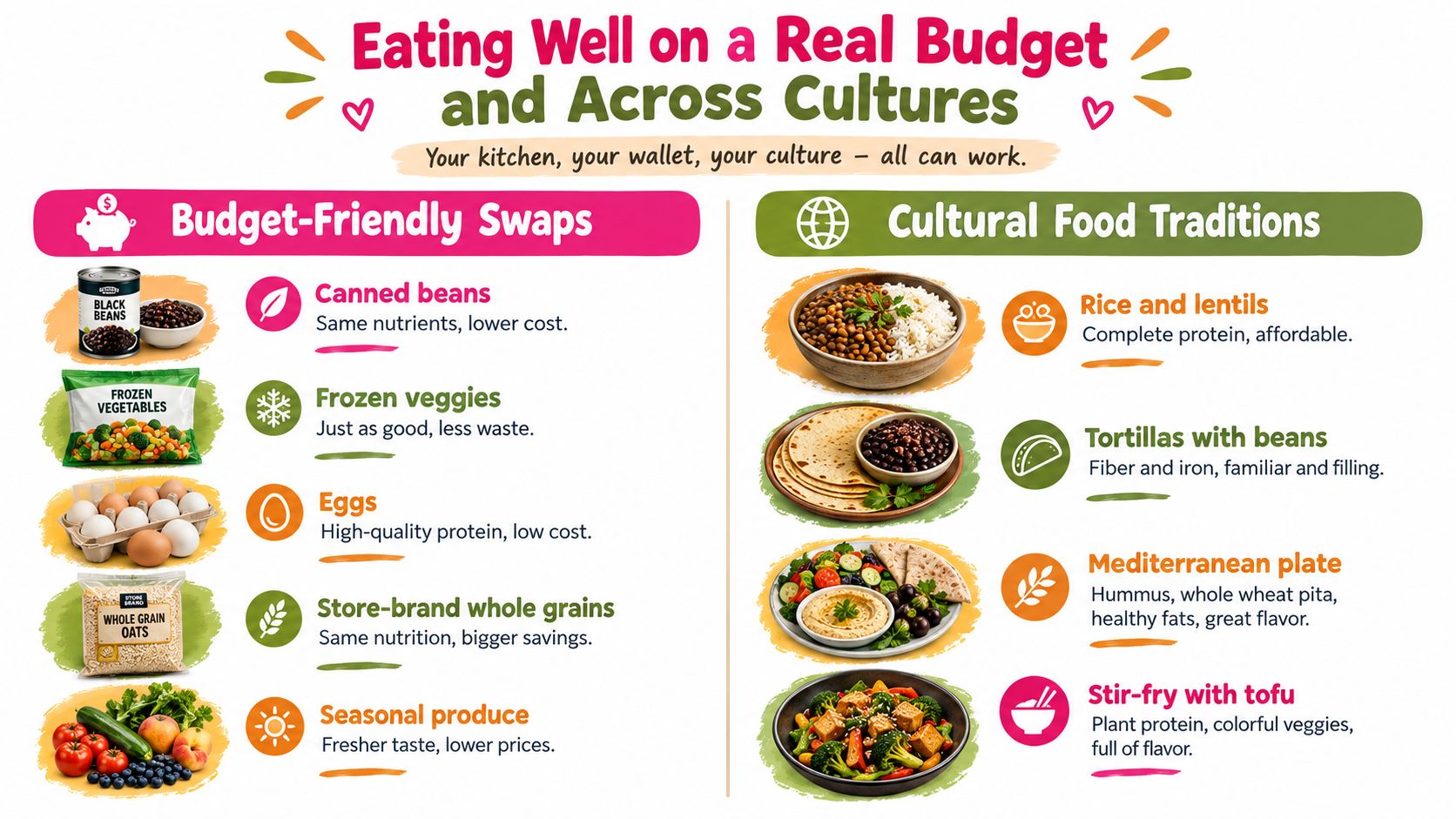
Keep the priorities, change the ingredients
Rice and lentils, tortillas with beans, hummus with whole-wheat pita, or tofu with vegetables can all contribute to a nourishing pattern. Eggs can be an affordable source of protein and choline for people who eat them; fortified alternatives may help fill specific gaps for people who don't. A vegetarian pregnancy food guide can help you think through plant-based choices.
For vegan, lactose-free, halal, or kosher households, the details of fortification and ingredient sourcing matter. Iodine needs can vary with access to iodized salt, and vitamin B12 supplementation isn't a universal preconception rule for everyone. Your clinician or dietitian can help you identify what applies to your diet and medical circumstances.
When meals are unpredictable, a clinician-guided supplement can act as a backup for selected nutrients. It can't replace food access or provide every part of a nourishing meal, but it may make one piece of the plan more reliable. Progress can look like one more serving of beans or keeping frozen vegetables ready, not recreating an ideal menu.
When Food Is Not Enough and Prenatal Help Makes Sense
Food remains the foundation, but a supplement can make sense when a nutrient is difficult to get consistently through meals or when your clinician identifies a particular need. This is especially important for folic acid, because the early developmental window can arrive before you know you're pregnant.
Folate is the naturally occurring form found in foods such as leafy greens and beans. Folic acid is the form used in many supplements and fortified foods, with established evidence for neural-tube-defect prevention. Some products contain methylfolate instead. Check the label for the actual folic-acid amount, and ask a healthcare professional whether a methylfolate-containing product meets your needs rather than assuming the forms are interchangeable for your situation.
The CDC's guidance on neural tube defects recommends 400 micrograms (mcg) of folic acid daily for people who could become pregnant, beginning at least one month before conception and continuing through early pregnancy. If you've previously had a pregnancy affected by a neural-tube defect, the guidance calls for 4,000 mcg daily, starting one month before conception and continuing through the first three months of pregnancy, under medical supervision. Don't increase your dose on your own.
Let the label and your history guide the choice
A prenatal can contain folate, DHA, choline, iodine, or other nutrients, but products differ. Read the ingredient panel and consider your diet, medications, medical history, and ability to tolerate the formula with an OB, midwife, or dietitian. If you're comparing options, this guide to prenatal vitamins before pregnancy can help you frame questions for that conversation.
Feed Mom & Me Complete Prenatal Vitamin Plus DHA is one option in this category. The brand describes it as a vegetarian formula with methylfolate, DHA, choline, and selenium, in delayed-release capsules with ginger and peppermint; review the current product label to confirm ingredients and amounts. Feed Mom & Me is women-owned and built by moms, and its nutrition resources are designed to support conversations with healthcare professionals.
A product's ingredient list doesn't tell you whether it's right for you. Confirm the actual amounts, especially if you already take a multivitamin or prescription, and ask your clinician to review your choice.
Your Preconception Nutrition Starter Plan
You don't need to change everything at once. Try a gentle eight-week rhythm, then keep the habits that fit. The checklist is a starting point, not a promise that a particular timeline suits every body.
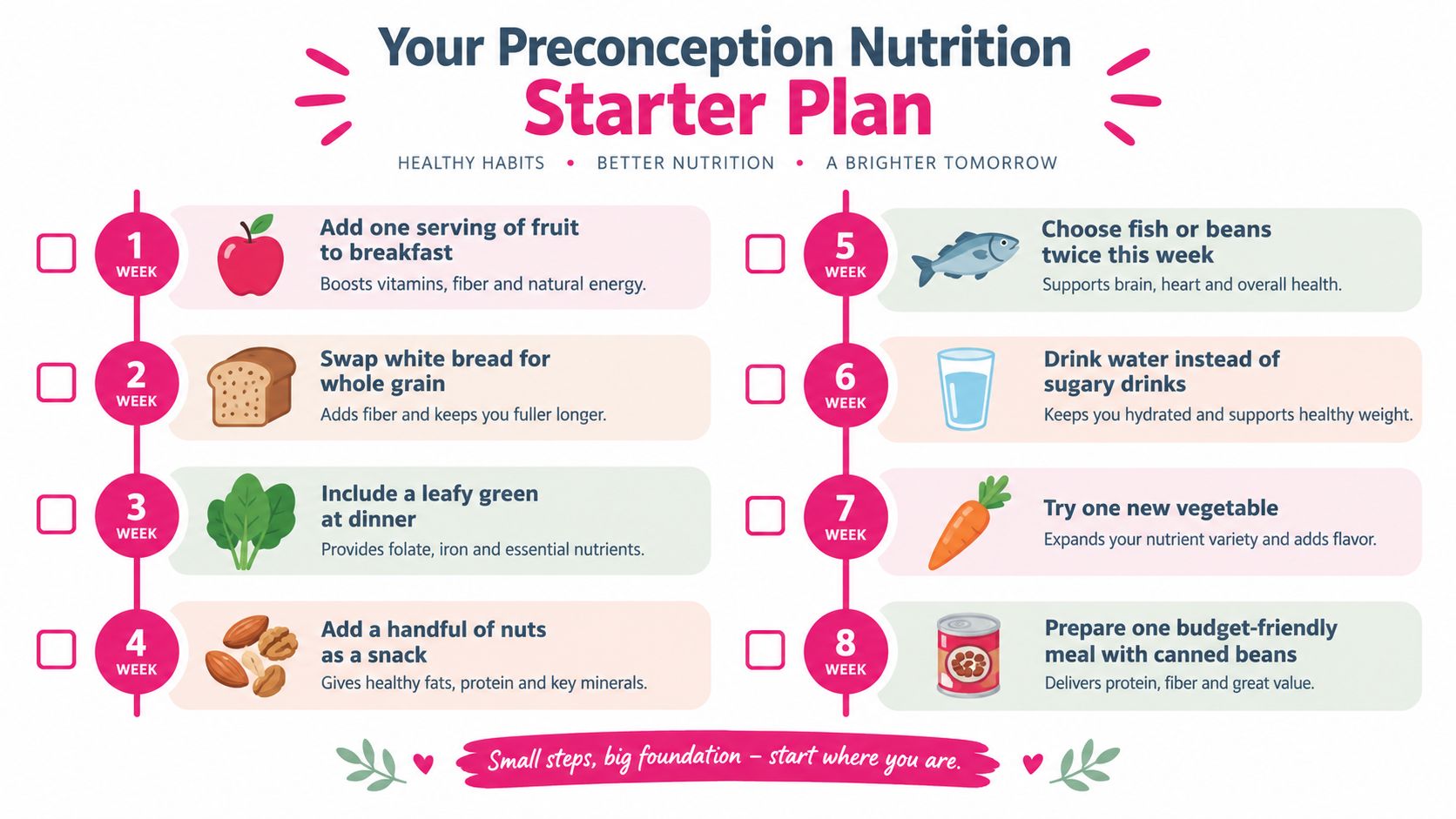
- Week one: Add a serving of fruit to breakfast most days. Keep it simple with an apple, banana, or whatever's available.
- Week two: Try a whole-grain bread, oats, or another whole grain you enjoy. Pair it with a protein food for a more filling meal.
- Week three: Add a leafy green to dinner, fresh or frozen. Stir it into soup, beans, eggs, or pasta.
- Week four: Keep nuts or seeds on hand if they're safe for you and fit your budget. Add them to a snack or oatmeal.
- Week five: Include fish or beans in meals during the week. If you choose fish, ask your clinician about current low-mercury choices.
- Week six: Ask your clinician whether your iron or vitamin D status should be checked, especially if you have symptoms or relevant health history.
- Week seven: Try a vegetable you don't often buy, or prepare a familiar one in a new way.
- Week eight: Make a low-cost meal with canned beans, such as soup, tacos, or rice and beans. If you're already trying to conceive, ask your OB, midwife, or dietitian to review folic acid and prenatal choices now rather than waiting for a positive test.
This plan is meant to be adaptable. If a week gets busy, repeat a habit you already like. If you have dietary restrictions, a medical condition, or a previous pregnancy affected by a neural-tube defect, personalize the steps with your healthcare provider.
Small choices can add up without requiring perfection. As always, check in with your healthcare provider for advice suited to your body, and consider whether a mom-built prenatal fits your needs.
Feed Mom & Me offers prenatal nutrition supplements, including Complete Prenatal Vitamin Plus DHA, alongside practical nutrition education for pregnancy and early parenthood. If you're planning what to eat before getting pregnant and want to compare a supplement option with your clinician, visit Feed Mom & Me.