
6s 5 Methyltetrahydrofolate
Published:Updated:
You're standing in the prenatal aisle, one hand on a bottle and the other on your phone, wondering why one label says folic acid, another says methylfolate, and a third uses a name that looks like it belongs in a chemistry exam. You want to make a thoughtful choice for your baby, but you also don't want to turn every supplement decision into a research project.
You're not alone, mama. 6S-5-methyltetrahydrofolate, often written as 6S-5-MTHF, L-5-MTHF, or methylfolate, is a form of folate designed to be directly available for use in the body. It has a meaningful place in prenatal nutrition, but the most accurate explanation isn't that it's universally better than folic acid. It's that it may help lower exposure to unmetabolized folic acid while maintaining folate status, whereas folic acid remains the only form proven to reduce neural tube defect risk.
Table of Contents
- Introduction to Folate and Your Pregnancy Journey
- What Is 6S 5 Methyltetrahydrofolate and Why Does It Matter
- How Does 6S 5 Methyltetrahydrofolate Compare to Folic Acid
- Why Is Active Folate Important for Methylation and Baby Development
- How Much Folate Do You Need During Pregnancy
- How Does 6S 5 Methyltetrahydrofolate Fit Into Prenatal Vitamins Like Feed Mom and Me
- Choosing Your Folate Path With Confidence and Support
Introduction to Folate and Your Pregnancy Journey
You're preparing for pregnancy or reading a prenatal label when familiar words start to blur together: folate, folic acid, methylfolate. All three relate to vitamin B9, yet they describe different forms. Understanding that distinction can make your supplement choice feel much less overwhelming.
Folate supports the rapid cell growth that begins before conception and continues throughout pregnancy. Your body uses it for DNA production, red blood cell formation, and fetal development. That is why it comes up so often in prenatal nutrition. For a gentle overview, see this guide to the benefits of folate during pregnancy.
Here is the basic vocabulary:
- Folate is the umbrella term for vitamin B9 compounds found in foods and supplements.
- Folic acid is a synthetic form used in supplements and fortified foods.
- 6S-5-MTHF is an active folate form that can enter circulation without the same initial intestinal reduction step required by folic acid.
Why the label feels confusing
A prenatal label works a little like a recipe card. It may list folate as the nutrient category, then name the particular form used in the product. Two prenatals can therefore use different folate ingredients while both support adequate folate status.
The useful question is evidence, not which label sounds more advanced. 6S-5-MTHF has been studied in pregnancy. Canadian research found similar erythrocyte and serum folate concentrations with 6S-5-MTHF and folic acid, while maternal plasma unmetabolized folic acid was lower with 6S-5-MTHF (Canadian pregnancy trial and review).
Folic acid still has the clearest proof for one specific outcome. The NIH Office of Dietary Supplements states that folic acid remains the only form proven in clinical trials to prevent neural tube defects. The CDC also recommends folic acid rather than 5-MTHF for people with MTHFR polymorphisms (NIH Office of Dietary Supplements review).
The reassuring takeaway is simple: you do not need to choose from fear. Look at what each form does, what the research supports, and what suits your medical history. Keep your healthcare provider involved, especially during pregnancy, while trying to conceive, when taking medication, or when managing a known nutrient deficiency.
What Is 6S 5 Methyltetrahydrofolate and Why Does It Matter
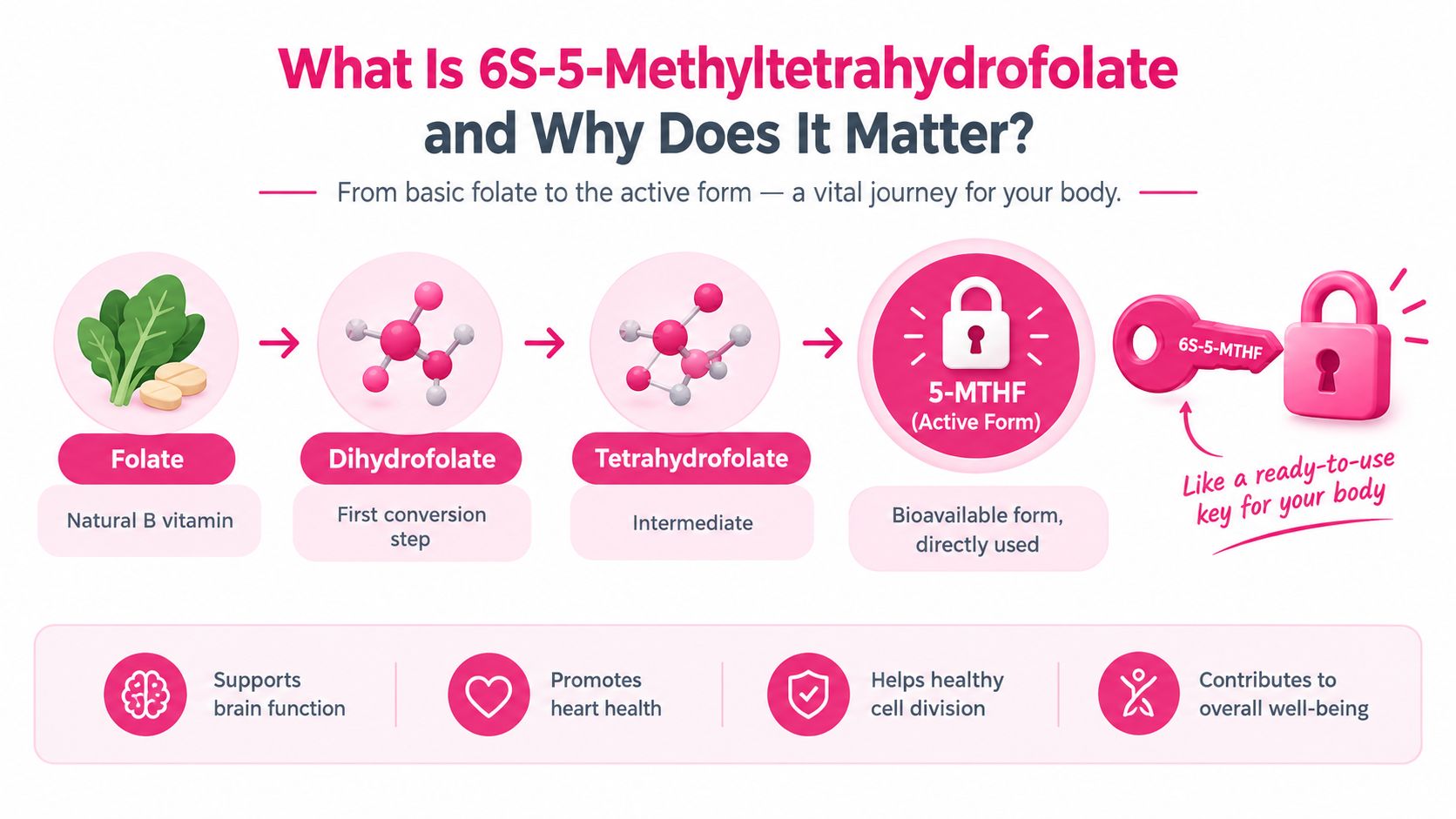
You may be comparing prenatal labels and wondering why one lists 6S-5-methyltetrahydrofolate while another lists folic acid. 6S-5-MTHF is an active form of folate. Labels may also call it L-5-MTHF or 5-MTHF. The “6S” designation identifies the biologically relevant form used in many prenatal formulations.
The main difference is how each form begins its journey through the body. Folic acid requires enzymatic processing before it becomes usable folate, while 6S-5-MTHF is already in the active methylfolate form. It can enter circulation without the same initial intestinal reduction step required by folic acid. That direct starting point is why some prenatal formulas use it.
Where 5-MTHF fits in the body
Reviews describe 5-MTHF as the predominant circulating folate species. It serves as a direct methyl donor in the conversion of homocysteine back into methionine. This reaction depends on vitamin B12 and supports production of S-adenosylmethionine, commonly called SAM (review of folate metabolism and 5-MTHF).
That role does not mean every person needs a methylfolate supplement. Your folate status reflects several factors, including intake, absorption, metabolism, and supporting nutrients such as vitamin B12. A direct-use form may fit one prenatal formula, while another may appropriately use folic acid.
The practical distinction is straightforward:
- Folic acid must undergo enzymatic processing before it becomes usable folate.
- 6S-5-MTHF is supplied in the active methylfolate form.
- A prenatal may choose 6S-5-MTHF when its goal is to provide folate in a direct, biologically available format.
Why “active” does not mean automatically superior
Active folate describes how the ingredient is supplied, not a guarantee that it produces better pregnancy outcomes for everyone. Pregnancy research has found that 6S-5-MTHF can maintain maternal folate status comparably to folic acid while reducing exposure to unmetabolized folic acid, or UMFA. That finding supports a meaningful difference in exposure, but it does not make 6S-5-MTHF universally superior.
6S-5-MTHF and folinic acid are also different folate-related compounds. Do not treat them as interchangeable without professional guidance. Your healthcare provider can help you read the label and choose a folate form and amount that fit your medical history, pregnancy, medications, and nutrient needs.
How Does 6S 5 Methyltetrahydrofolate Compare to Folic Acid
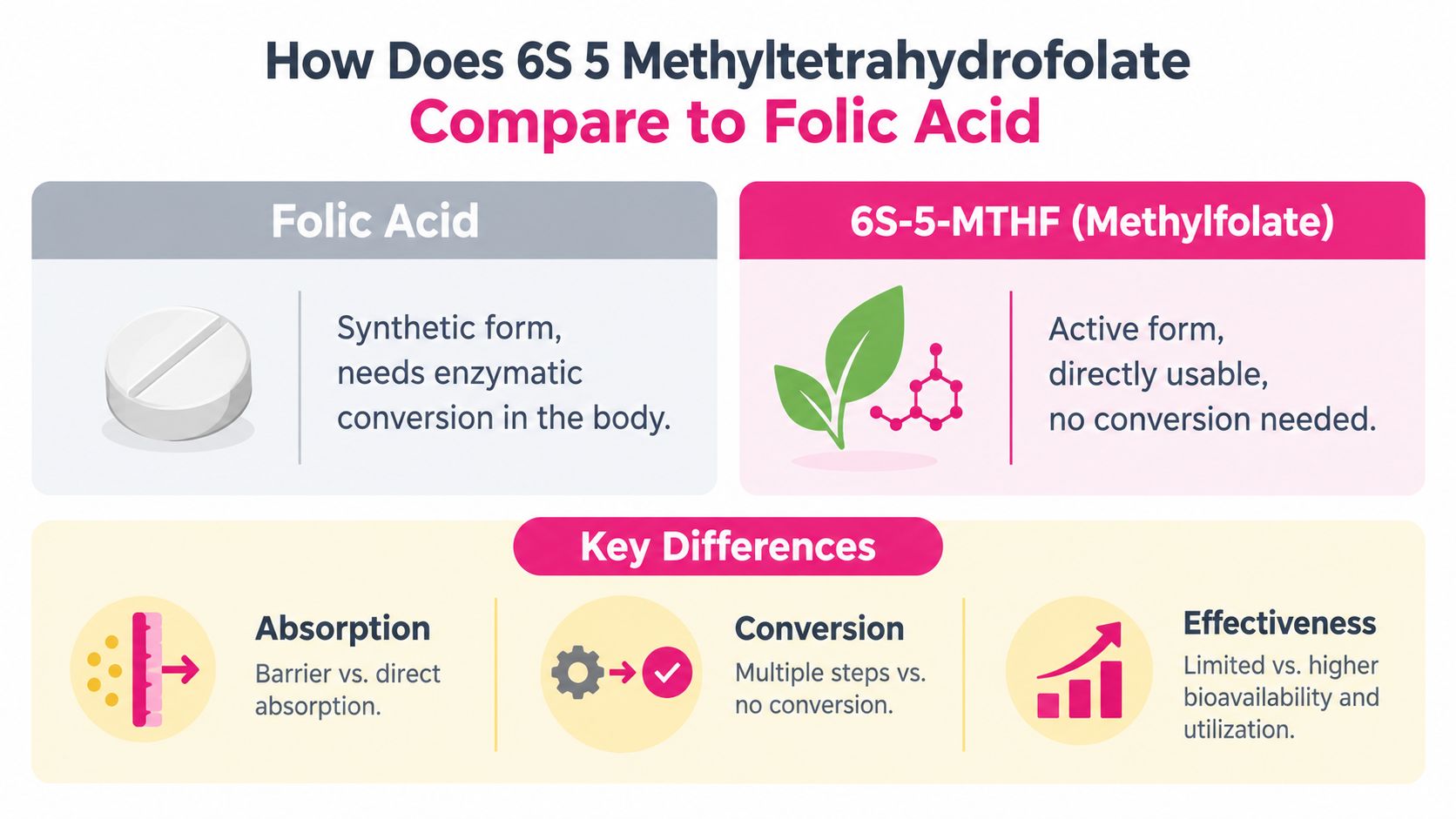
The most common question is simple: Is methylfolate better than folic acid? A responsible answer is, “It depends on what you mean by better.”
If you mean maintaining folate status, pregnancy trials suggest that 6S-5-MTHF can perform similarly to folic acid. If you mean proven protection against neural tube defects, the evidence remains with folic acid. If you mean reducing unmetabolized folic acid in the blood, 6S-5-MTHF has shown an advantage in randomized pregnancy research.
A side-by-side look
| Feature | Folic Acid | 6S-5-MTHF |
|---|---|---|
| Form | Synthetic folate form | Active methylfolate form |
| Initial processing | Requires enzymatic conversion | Can enter circulation without the same initial intestinal reduction step |
| Pregnancy evidence | The only form proven to reduce neural tube defect risk | Studied in pregnancy and shown to maintain similar folate status |
| UMFA | Can contribute to measurable unmetabolized folic acid exposure | Associated with lower maternal plasma UMFA in pregnancy trials |
| Best interpretation | Established public-health standard | A researched alternative with a narrower evidence-based advantage |
A randomized Canadian trial in 60 folate-replete, low-risk pregnancies compared 0.625 mg/day of 6S-5-MTHF with 0.6 mg/day of folic acid. Folate status stayed similar, while maternal plasma UMFA was lower with 6S-5-MTHF (randomized pregnancy trial).
A newer 24-week randomized trial found detectable UMFA in 7% of participants receiving 5-MTHF compared with 31% receiving folic acid, while total folate levels didn't differ (pregnancy review and trial summary). Another review summarizes a study finding about a 50% reduction in plasma UMFA with 5-MTHF, while emphasizing that the clinical significance of that reduction remains unclear (PubMed review of 6S-5-MTHF).
Watch this explanation if you prefer a visual overview:
For a more detailed label-focused discussion, you can read this comparison of methylfolate and folic acid.
What UMFA does and doesn't tell you
Unmetabolized folic acid, or UMFA, is folic acid that remains in the bloodstream without being converted into another folate form. In this context, it's best understood as a pharmacokinetic signal. It suggests that folic acid exposure has exceeded the body's immediate handling capacity, but the presence of UMFA alone doesn't prove harm or predict a poor pregnancy outcome.
That distinction matters. Lower UMFA is a potential formulation benefit, not proof that 6S-5-MTHF improves every important pregnancy outcome. Your provider may reasonably recommend folic acid because it has the clearest neural tube defect prevention evidence, or discuss 6S-5-MTHF as an alternative depending on your circumstances.
Why Is Active Folate Important for Methylation and Baby Development
As your baby's cells multiply and tissues take shape, your body is managing many folate-dependent reactions at once. Folate supports cell division, fetal development, blood production, and changes in your metabolism during pregnancy.
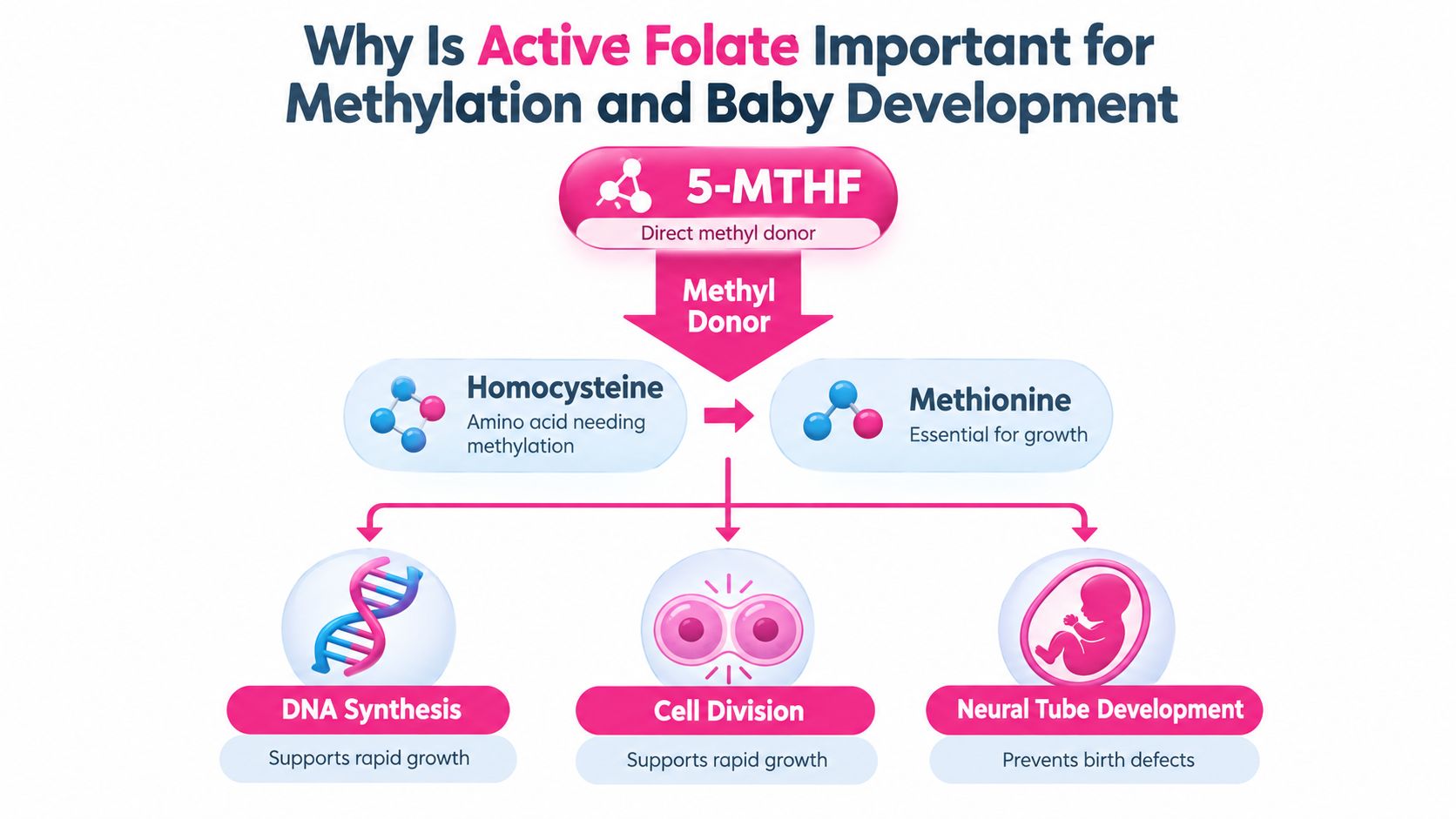
5-MTHF acts as a direct methyl donor. With vitamin B12, it transfers a methyl group to homocysteine, helping convert homocysteine into methionine. Methionine then contributes to S-adenosylmethionine, or SAM, a molecule used in methylation reactions. This pathway is described in the folate, methylation, and pregnancy review.
The methylation pathway in plain language
Methyl groups work like small tags that help cells manage chemical instructions. Those instructions influence DNA regulation, neurotransmitter chemistry, and other cellular processes. Folate and vitamin B12 are partners here, so a prenatal routine needs to support the pathway rather than focus on folate alone.
The simplified pathway looks like this:
- 5-MTHF supplies a methyl group.
- Vitamin B12 helps transfer it.
- Homocysteine becomes methionine.
- Methionine contributes to SAM production.
- SAM supports cellular methylation reactions.
Why this matters while your baby grows
Folate supports DNA synthesis and cell division, both of which matter during fetal development. Adequate folate status before conception and during pregnancy also belongs in the neural tube prevention conversation. A large meta-analysis of dietary folate and neural tube defects found that higher dietary folate intake was associated with fewer neural tube defects.
The practical takeaway is simple: choose a prenatal that provides folate and supports the nutrients involved in using it, especially vitamin B12. 6S-5-MTHF may suit you if you prefer a folate form your body can use directly and want to reduce exposure to unmetabolized folic acid, but that does not make it universally superior. Folic acid remains the proven form for neural tube defect prevention.
A clinician can help you decide whether another folate form, such as folinic acid, fits your situation. For a separate discussion of folinic acid and autism language skills, keep the topic distinct from prenatal neural tube prevention.
You can also review this guide to methyl-donor supplements before discussing your complete nutrient routine with your provider.
How Much Folate Do You Need During Pregnancy
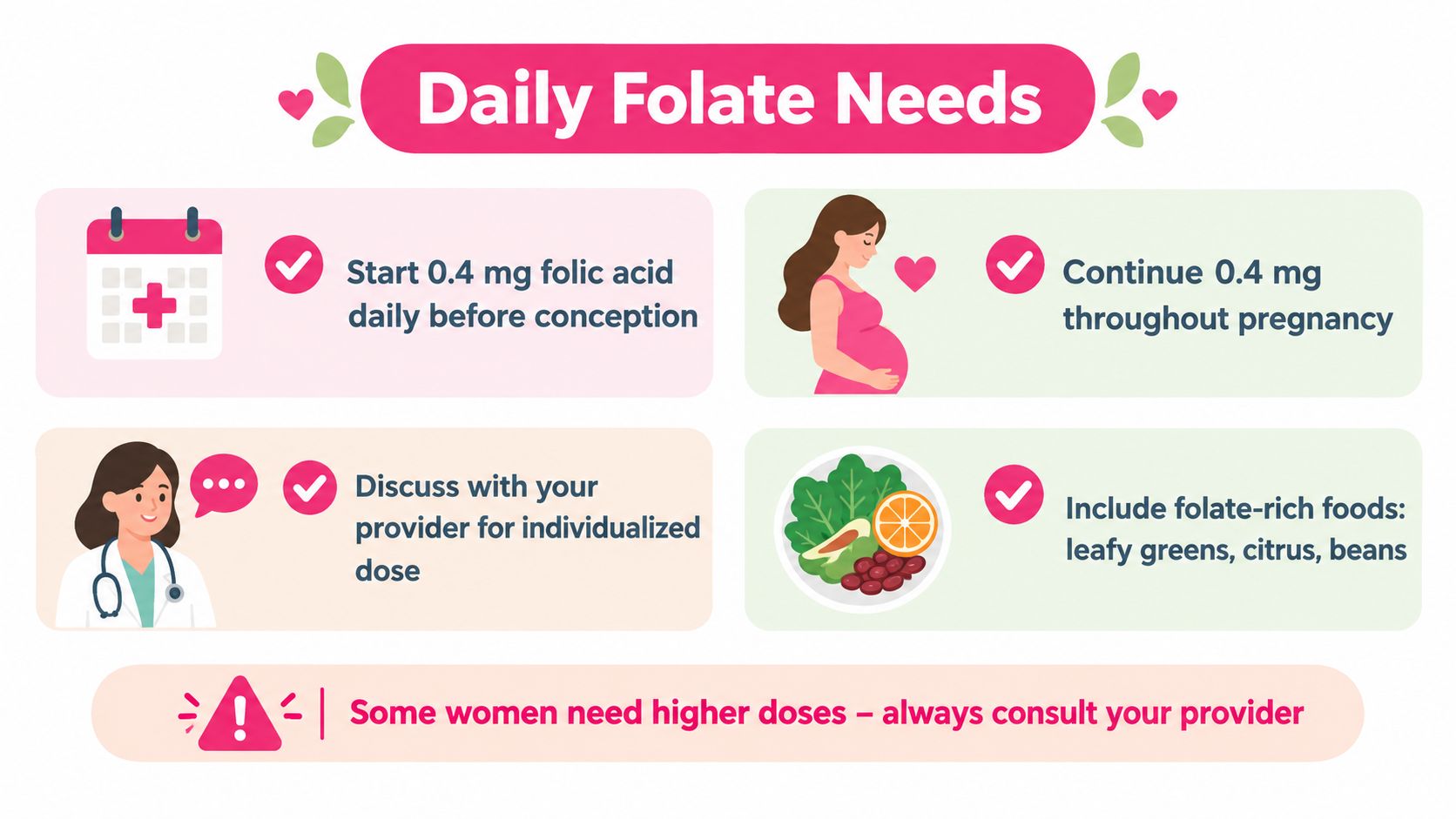
You are comparing prenatal labels before trying to conceive, and one lists folic acid while another lists methylfolate. The starting point is the established public-health recommendation: North American health authorities recommend 0.4 mg/day of folic acid before conception and throughout pregnancy to reduce the risk of neural tube defects. This recommendation is also reflected in guidance from the U.S. Preventive Services Task Force.
That advice still matters if you are considering 6S-5-MTHF. 6S-5-MTHF is a directly usable folate form that may help reduce exposure to unmetabolized folic acid, but it is not universally superior. Folic acid remains the form with established evidence for neural tube defect prevention. A methylfolate-containing prenatal may be reasonable for some people, but choosing it should not mean assuming it offers the same prevention evidence.
What to discuss with your clinician
Use these points to prepare for a conversation, not as a personalized prescription:
- Before conception: Ask whether 0.4 mg/day of folic acid is appropriate for you before trying to conceive.
- Throughout pregnancy: Confirm whether you should continue 0.4 mg/day of folic acid during pregnancy.
- Methylfolate choice: Ask whether a prenatal containing 6S-5-MTHF fits your medical history, diet, and current supplements.
- MTHFR considerations: An MTHFR polymorphism does not automatically mean you should replace folic acid. CDC guidance favors folic acid for people with MTHFR polymorphisms.
- Higher-dose needs: If you have had a previous pregnancy affected by a neural tube defect or have another risk factor, ask your provider about individualized dosing. Do not change the amount on your own.
Food sources still matter
A prenatal supplement adds to your diet rather than replacing it. Folate-rich choices include:
- Leafy greens: Spinach, kale, and other dark green vegetables.
- Beans and lentils: Plant sources that work well in soups, salads, and grain bowls.
- Citrus fruits: Oranges and other citrus foods can contribute folate.
- Fortified grain products: These may provide folic acid, especially where fortification is required.
Food fortification can support folate status across a population, while your prenatal plan still needs to match your circumstances. A U.S. folate deficiency summary reports serum folate deficiency and insufficiency findings among adults and describes the effect of U.S. enriched-grain fortification. Those population findings show why fortified foods matter, but they cannot determine the right supplement or dose for your pregnancy.
How Does 6S 5 Methyltetrahydrofolate Fit Into Prenatal Vitamins Like Feed Mom and Me
A prenatal isn't just a folate delivery system. It's part of a daily routine that has to work when you're tired, nauseated, busy, or caring for an older child. That's why label reading should include both nutrient forms and tolerability features.
Feed Mom & Me Complete Prenatal Vitamin Plus DHA uses L-methylfolate calcium, alongside DHA, choline, and selenium, according to the product information. You can review the Complete Prenatal Vitamin Plus DHA label and discuss it with your healthcare provider.
What to look for on a prenatal label
Start with the folate line. It should clearly name the form and amount, rather than leaving you to guess whether “folate” means folic acid or 5-MTHF.
Then check the surrounding formulation:
- DHA: A fatty acid commonly included in prenatal formulas.
- Choline: A nutrient included in this formulation and relevant to maternal nutrition.
- Selenium: Another listed nutrient that contributes to the formula's broader nutrient profile.
- Vitamin B12: Important to consider because it partners with 5-MTHF in methylation.
- Dietary fit: Feed Mom & Me describes this formula as vegetarian, soy-free, gluten-free, and dairy-free.
- Tolerability design: Delayed-release vegetable capsules, peppermint, and organic ginger are included with the aim of making the routine easier to tolerate.
Those features don't make a supplement right for every person. They give you specific questions to bring to your OB/GYN, midwife, or dietitian. If nausea, reflux, allergies, medication use, or a history of nutrient deficiency affects your routine, mention those details before starting or switching products.
Feed Mom & Me is a women-owned brand built by moms for moms, and its broader resources include pregnancy nutrition education, recipes, and postpartum-focused support. Subscription and multi-month options may also help you maintain a steady supply from preconception through postpartum, but your clinician's advice should guide whether the product fits your needs.
Choosing Your Folate Path With Confidence and Support
You don't have to turn folate into a competition between two ingredients. Folic acid remains the only form proven to reduce neural tube defect risk, while 6S-5-MTHF offers a direct-use folate form that has maintained similar folate status and reduced UMFA exposure in pregnancy research. Those are both useful facts, and they can coexist.
Your decision may depend on your current prenatal, dietary pattern, health history, other supplements, and provider guidance. If you're thinking about an MTHFR result, this discussion of a prenatal vitamin for an MTHFR mutation can help you prepare better questions, but it shouldn't replace individualized care.
Feed Mom & Me Complete Prenatal Vitamin Plus DHA is one option that provides L-methylfolate calcium alongside DHA and choline in a maternal wellness formula. The women-owned, mom-built brand focuses on supporting routines from preconception through postpartum, while your healthcare provider can help you decide whether its nutrient profile suits you.
You're allowed to choose carefully without feeling frightened or judged. Take your prenatal consistently, eat as varied a diet as you can, and ask for guidance whenever the label leaves you uncertain.
Feed Mom & Me offers a Complete Prenatal Vitamin Plus DHA with L-methylfolate calcium, DHA, choline, and a tolerability-focused capsule design. Visit Feed Mom & Me to explore the formula and related pregnancy nutrition resources, then bring the label to your healthcare provider for a personal recommendation.