
Best Vegan Prenatal Vitamins: How to Choose Well
Published:Updated:
You're standing in the supplement aisle, phone in hand, trying to compare prenatal bottles while nausea, ingredient lists, and conflicting recommendations blur together. One product highlights methylfolate, another promises whole-food nutrition, and a third includes algae-based DHA but leaves you wondering whether it contains enough iron or choline.
The key question isn't, “Which brand is best?” It's “How can I tell whether a vegan prenatal fits my diet, pregnancy needs, and medical history?” This guide treats choosing a prenatal as a label-auditing exercise, not a ranked-product contest. You'll learn which nutrients deserve the closest look, how to compare forms and doses, and which questions to bring to your prenatal-care professional.
A vegan label also requires more than checking for gelatin or fish oil. If you're still learning how ingredient sourcing works, this explanation of what makes a body wash vegan offers a useful reminder: “vegan” can involve the full ingredient and manufacturing picture. For prenatal vitamins, that picture includes nutrient sources, capsule materials, algae sourcing, allergens, and quality testing. You can also explore this practical guide to a multivitamin for vegan women as you think about how pregnancy changes your supplement needs.
Table of Contents
- Why Picking a Vegan Prenatal Feels So Hard Right Now
- What Nutrients Matter Most in a Vegan Prenatal
- How to Read a Vegan Prenatal Label Like a Pro
- Comparing Common Vegan Prenatal Options
- Matching the Prenatal to Your Actual Diet
- Tolerability and Everyday Use Scenarios
- Putting It All Together for Your Pregnancy
Why Picking a Vegan Prenatal Feels So Hard Right Now
Searching for best vegan prenatal vitamins can make pregnancy nutrition feel like a shopping competition. Brand names compete with capsule counts, “clean” claims, influencer recommendations, and long ingredient panels. A longer label may look more complete, but it can still hide the exact amount of a nutrient you need to evaluate.
Vegan pregnancy can be well supported with thoughtful planning. The challenge is that some nutrients are harder to obtain consistently from unfortified plant foods, and pregnancy changes the targets you're trying to meet. That means a product can be vegan without being a good fit for your actual diet.
The two questions that matter
Start with two separate questions:
- What does this prenatal provide? Look for transparent amounts of folate, iron, iodine, vitamin B12, vitamin D, choline, and DHA.
- What do I still need? Consider fortified foods, iodized salt, existing supplements, your eating pattern, laboratory results, and guidance from your healthcare provider.
Those questions prevent a common mistake: treating one prenatal as a complete replacement for food, medical care, or individualized nutrition advice. A supplement may contain B12 but provide little choline. It may include iron but cause constipation. It may offer algae oil while failing to disclose the actual DHA amount.
A useful mindset: “Vegan” tells you what a product leaves out. It doesn't tell you whether the formula covers what you need.
The World Health Organization recommends beginning folic acid supplementation as early as possible, ideally before conception, and continuing throughout pregnancy. Its standard antenatal recommendation is 400 micrograms, or 0.4 milligrams, of folic acid daily, alongside 30–60 milligrams of elemental iron, with individualized care still important when you have anemia, a prior neural-tube-defect pregnancy, or another higher-risk circumstance (WHO antenatal iron supplementation guidance).
So, mama, you don't need to memorize every marketing phrase. You need a calm way to inspect the label, identify gaps, and discuss the result with your prenatal-care professional.
What Nutrients Matter Most in a Vegan Prenatal
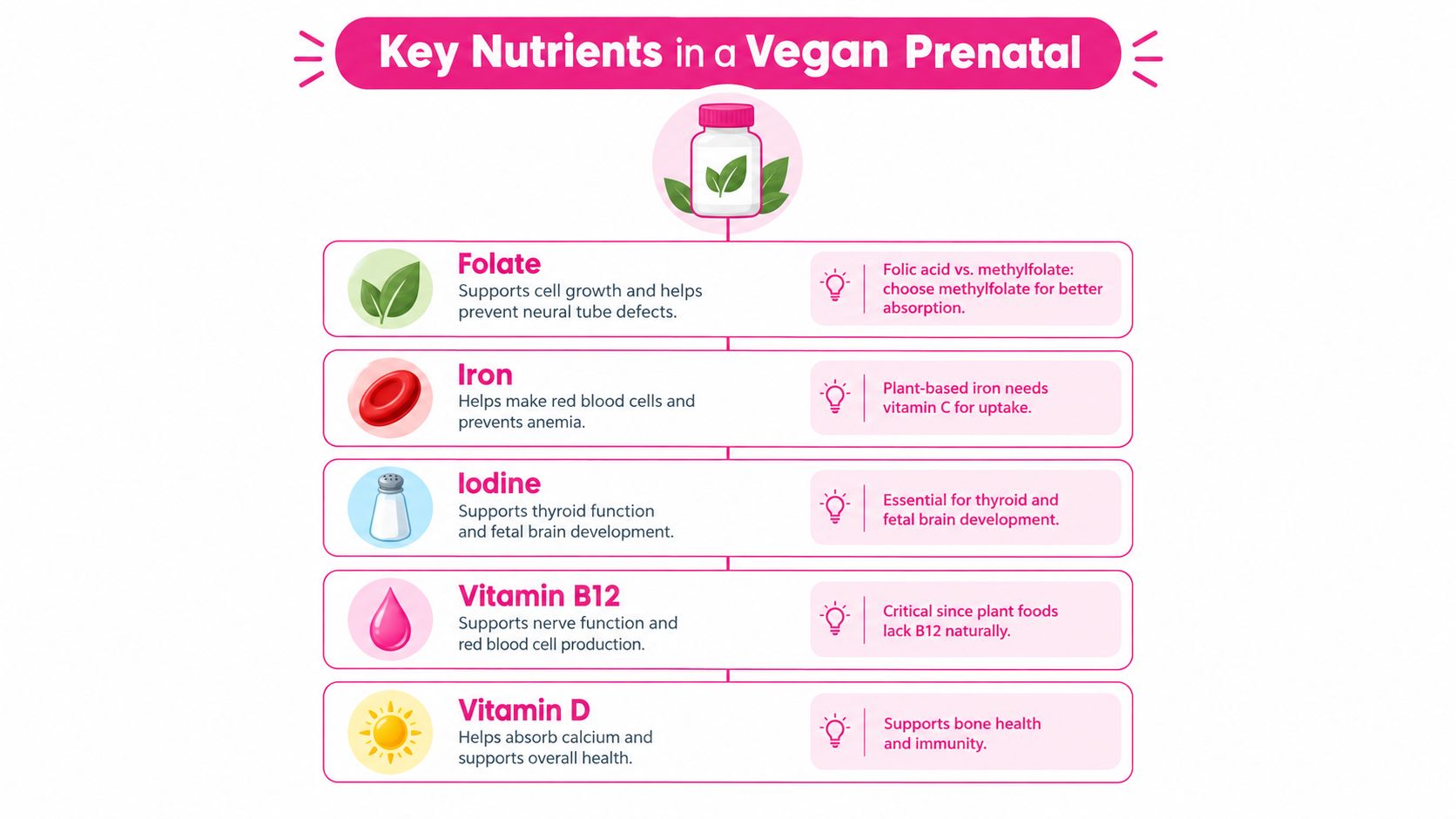
Choosing a vegan prenatal is less like collecting every available ingredient and more like assigning jobs to a small support crew. Folate helps with early neural-tube development, iron supports oxygen delivery, and other nutrients contribute to thyroid function, bones, nerves, and fetal growth. The useful question is whether the label and your diet cover those roles together.
The early blueprint crew
Folate supports neural-tube development, which occurs very early in pregnancy, sometimes before you know you are pregnant. In the United States, pregnancy raises the recommended intake to 600 micrograms of dietary folate equivalents. Preconception guidance commonly uses 400–800 micrograms of folic acid daily, beginning at least one month before conception and continuing through early pregnancy (ACOG healthy eating guidance).
A label may list folic acid or methylfolate. The form is only one part of the check. Review the disclosed amount, the intended timing of use, and whether the formula fits your medical circumstances. Folic acid is the form identified as proven to prevent neural-tube defects, and WHO guidance on starting folic acid early supports beginning supplementation before pregnancy when possible.
The oxygen highway
Iron helps your body expand blood volume and produce hemoglobin, the protein that carries oxygen to you and your developing baby. The pregnancy recommended dietary allowance is 27 milligrams per day, compared with an estimated average requirement of 22 milligrams per day (NCBI Bookshelf iron overview). The WHO antenatal iron supplementation guidance also addresses iron use during pregnancy.
Plant foods provide non-heme iron, which the body absorbs less efficiently than heme iron from animal foods. Beans, lentils, tofu, fortified cereals, pumpkin seeds, and leafy greens can all contribute. Pairing these foods with vitamin-C-rich choices can support absorption.
Thyroid, nerves, and development
Iodine supports thyroid function and fetal brain development. In the United States, the pregnancy target is 220 micrograms per day. Vegan diets can provide inconsistent iodine, particularly without iodized salt, so check whether the prenatal discloses an actual amount.
Vitamin B12 needs close attention because dependable vegan sources are usually fortified foods or supplements. Vitamin D supports bone health and immune function, while choline supports fetal growth and central nervous-system development. Pregnancy raises adequate intake for choline to 450 milligrams per day, yet many pregnant women in the United States do not consume the recommended amount. Review these nutrients with your healthcare provider, along with zinc and EPA/DHA, as recommended in NIH pregnancy and dietary supplements guidance.
DHA supports fetal brain and eye development. Vegan formulas may provide EPA and DHA from microalgae, so check both the source and the actual DHA amount. This guide to an algae-based DHA supplement explains why algae is the fish-free option many vegan families consider.
How to Read a Vegan Prenatal Label Like a Pro
Picture two bottles on your kitchen counter. One promises a complete vegan formula in large type; the other lists every nutrient with exact amounts. The Supplement Facts panel, not the front label, determines how well either product fits your pregnancy, diet, and provider's advice. Keep the panel open while you compare options.
Start with pregnancy-specific amounts
Check folate first. Look for the chemical form, labeled amount, and directions for preconception and pregnancy use. Methylfolate may appear on the label, but the total dose still matters. Folic acid is the form identified in CDC guidance on folic acid and neural-tube defects as proven to help prevent neural-tube defects.
For iron, find elemental iron rather than only the weight of an iron compound. Pregnancy needs are commonly discussed as 27 milligrams per day, but a higher number is not automatically better. More iron can worsen constipation or nausea, so your blood counts, ferritin, diet, and clinician's advice matter more than choosing the largest dose.
Then inspect each line:
- Iodine: Verify the amount and discuss it with your provider, particularly if you use iodized salt or have thyroid concerns.
- Vitamin B12: Confirm that B12 is present at a meaningful supplemental dose. A tiny amount may not match your diet or individual needs.
- Vitamin D: Note the exact amount and form, then compare it with your diet and laboratory results.
- Vitamin A: Look for a formula that supplies vitamin A predominantly as beta-carotene rather than high-dose preformed retinol.
- Choline: Treat a small amount as partial coverage, not a complete solution to the 450-milligram pregnancy target. Your food intake may supply the rest, or your provider may recommend another approach.
- DHA: Look for actual milligrams of DHA, not just the total weight of algae oil, and verify that the source is microalgae.
The label should make these answers easy to find. A proprietary blend makes the task harder by grouping ingredients without showing each amount.
Use a simple comparison grid
A table keeps marketing language from taking over when several bottles look similar. The same label-reading approach described in Rip Van health snack advice applies here: separate serving details from claims printed on the front.
| Criterion | What to verify | Why it matters |
|---|---|---|
| Folate | Form and clearly disclosed amount | Folate timing and neural-tube development make it a foundational check |
| Iron | Elemental iron per daily serving | The compound name alone does not show how much elemental iron you receive |
| Iodine | Exact amount and source | Plant-based intake can vary, and thyroid conditions need individualized care |
| B12 | Presence, form, and dose | Reliable supplemental intake deserves attention on a vegan diet |
| Vitamin D | Exact amount and form | Intake and blood status vary from person to person |
| Vitamin A | Beta-carotene versus preformed retinol | This separates plant-derived provitamin A from preformed retinol |
| DHA | Actual DHA milligrams and microalgae source | Total algae oil is not the same as DHA |
| Choline | Milligrams per daily serving | Many products provide only part of the pregnancy adequate intake |
| Quality verification | NSF, USP, Non-GMO Project Verified, or vegan third-party verification where available | Quality marks add context, but the full Supplement Facts panel still matters |
Check the serving size before comparing numbers. A label listing four capsules per day can appear more generous than one requiring a single capsule, even when the daily totals differ. Also check whether the formula duplicates nutrients in another supplement, fortified food, or separate algae-DHA product.
Be cautious with “proprietary blend” labels that hide individual amounts. You cannot compare undisclosed doses with pregnancy-specific needs or spot overlapping ingredients easily. Look for transparent testing information, then review this third-party-tested prenatal resource and bring questions about dose, form, and gaps to your provider.
Comparing Common Vegan Prenatal Options
There isn't one universal winner because the right format depends on your diet, tolerance, schedule, and laboratory results. Think in categories rather than rankings.
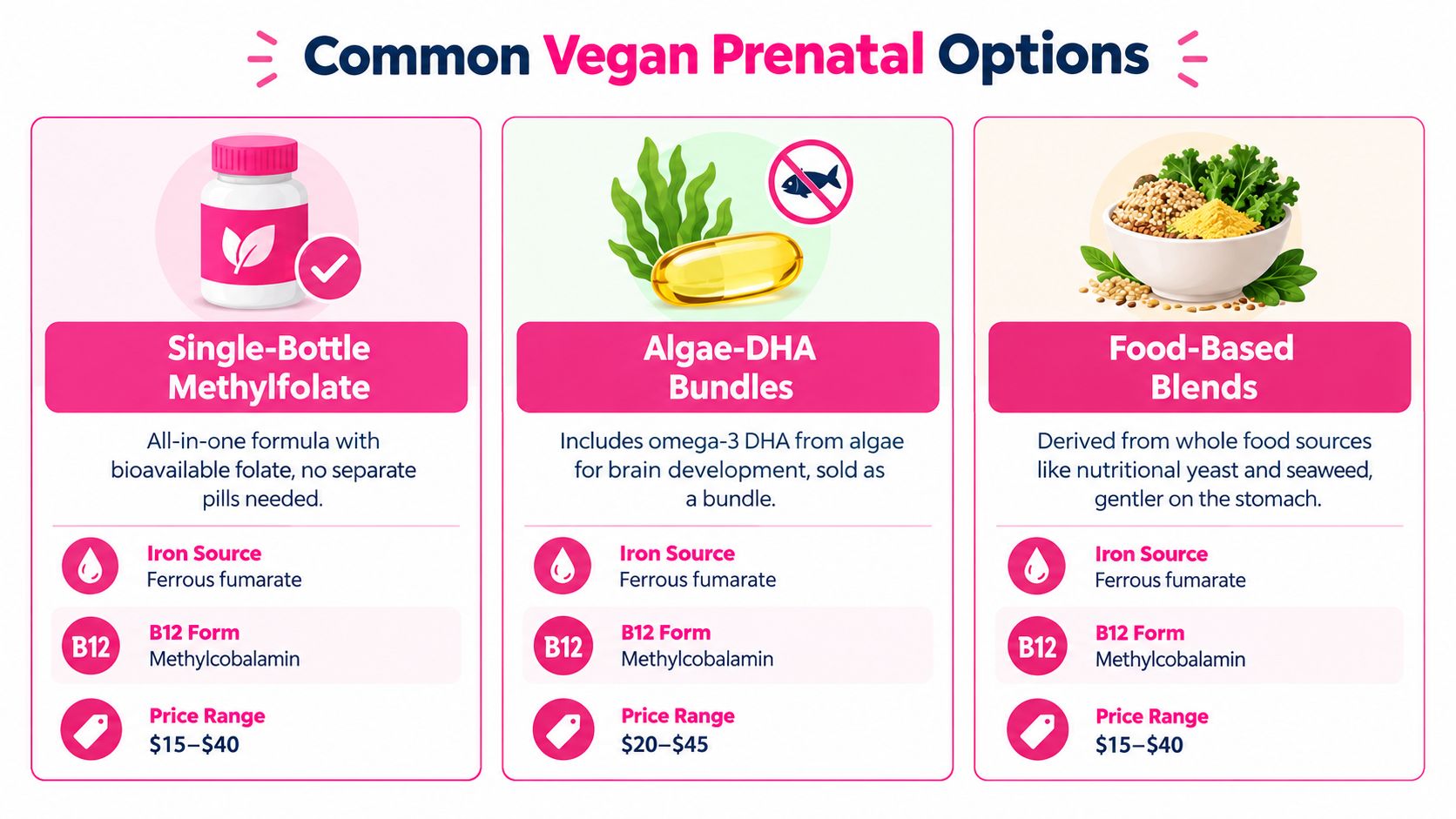
A single-bottle methylfolate option may simplify your routine. It can be appealing if you want one daily serving and a clearly stated folate form. Check whether it also includes DHA and choline, because “all-in-one” doesn't always mean complete coverage.
An algae-DHA bundle separates the prenatal from the omega-3 supplement. That arrangement can make sense if you already have a prenatal you tolerate and want to adjust DHA independently. The tradeoff is another capsule and another label to verify.
A food-based blend may appeal to you if you prefer ingredients associated with foods such as nutritional yeast or seaweed. “Food-based” doesn't automatically tell you the amount of folate, iron, iodine, B12, or DHA, so the Supplement Facts panel still decides whether the product fits.
A subscription or multi-month supply can reduce the chance of running out during a busy pregnancy. Convenience matters, but it shouldn't replace checking the daily serving, capsule count, testing information, and cancellation terms.
| Option | Potential advantage | What to question |
|---|---|---|
| Single-bottle formula | Fewer separate products to manage | Does it include enough DHA and choline, or only the basic vitamins? |
| Prenatal plus algae-DHA bundle | Flexible DHA choice and fish-free sourcing | What is the actual DHA amount, and how many capsules are required? |
| Food-based blend | May feel familiar and food-oriented | Are exact nutrient doses disclosed, especially for iodine and B12? |
| Subscription supply | Can support routine and continuity | Can you change, pause, or cancel deliveries easily? |
The best prenatal is the one that matches your diet, your tolerance, and your laboratory-informed care plan.
For a closer look at how a vegetarian prenatal with DHA can fit into this decision, review this vegetarian prenatal vitamins with DHA guide. The useful comparison isn't which bottle has the longest panel. It's whether the product gives you transparent doses with a routine you can follow.
Matching the Prenatal to Your Actual Diet
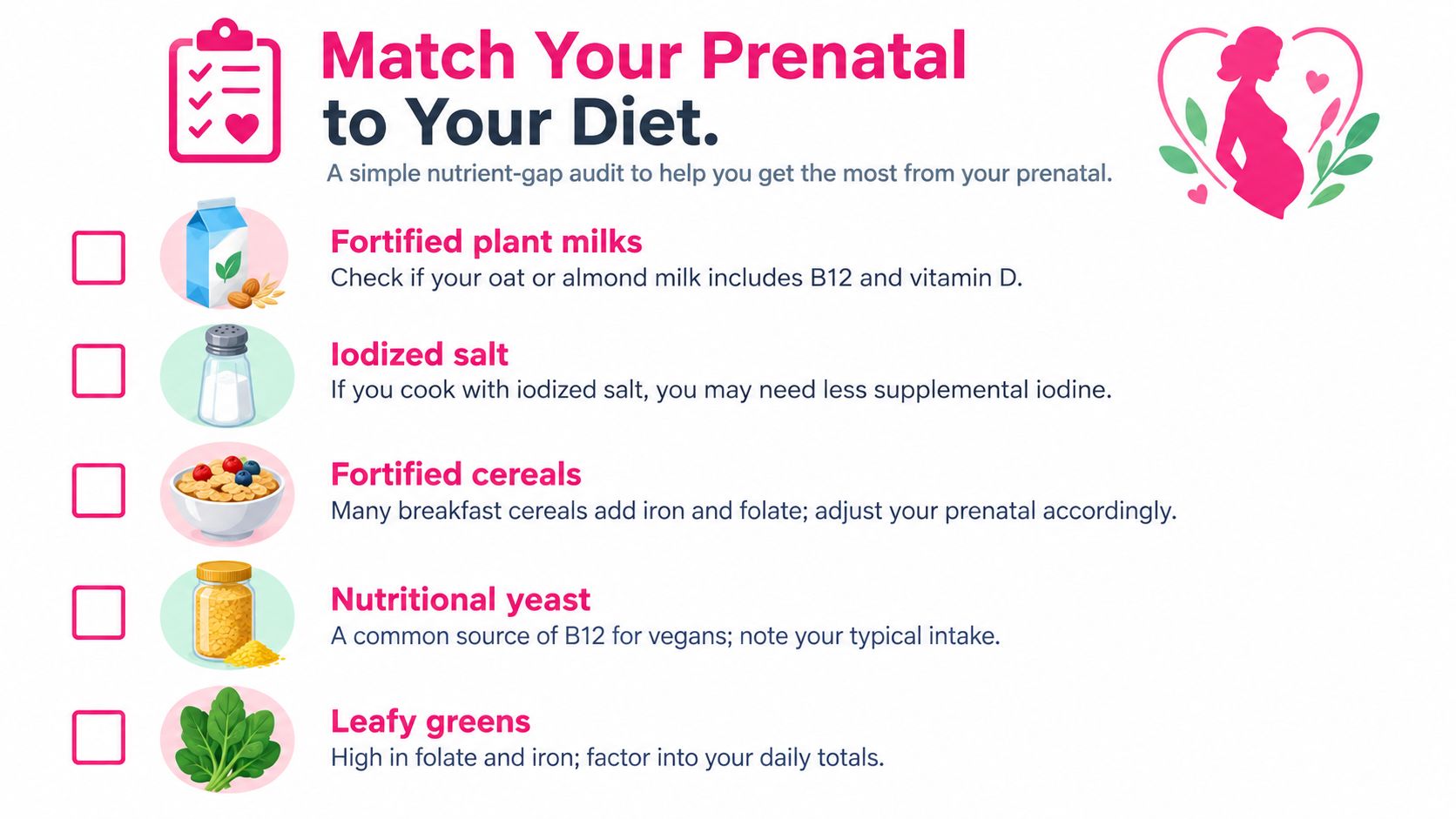
A label audit becomes much more useful when you place it beside your usual meals. Start by writing down the fortified foods and supplements you already use, then compare that list with the prenatal. This helps you avoid both false reassurance and unnecessary megadosing.
Look at the foods already doing some work
You might regularly eat fortified plant milk, fortified cereal, nutritional yeast, tofu, beans, leafy greens, or foods prepared with iodized salt. These foods can contribute important nutrients, but their amounts vary by product and serving. Check the package instead of relying on memory.
- Fortified plant milks: See whether your oat, soy, or almond milk includes B12 and vitamin D.
- Fortified cereals: Check for iron and folate, especially if cereal is part of your regular breakfast.
- Nutritional yeast: Record whether your preferred brand contains B12 and how much you usually eat.
- Iodized salt: Note whether the salt in your kitchen is iodized. Sea salt isn't automatically a reliable iodine source.
- Leafy greens and legumes: Count them as valuable food sources, while remembering that food alone may not cover every pregnancy need.
If you use an app to understand your overall pattern, you can track macros from restaurant meals as part of the picture. Macro tracking won't replace a nutrient-focused review, but it can reveal how often fortified foods, legumes, tofu, seeds, or leafy greens appear in your meals.
Bring useful information to your appointment
A provider can interpret your prenatal alongside symptoms, medications, health history, and laboratory results. Ask whether ferritin, B12, vitamin D, or thyroid testing is appropriate for you. Don't order or add high-dose supplements on your own because a label looks incomplete.
Questions worth asking include:
- Iron: Do my blood counts and ferritin suggest that the iron in this prenatal is appropriate?
- Iodine: Does my diet, salt use, or thyroid history change how I should approach iodine?
- B12: Is my current fortified-food and supplement intake adequate?
- Choline: How much am I likely getting from food, and should I discuss additional support?
- DHA: Should I use the algae-derived DHA in this product or take a separate supplement?
- Overlapping products: Do my prenatal, individual supplements, and fortified foods create unnecessary duplication?
A 2024 systematic review found that vegan pregnant women generally had lower intakes of vitamin B12, vitamin D, calcium, iodine, and retinol than omnivorous women, while folate and beta-carotene intake was higher and iron intake wasn't significantly different (2024 systematic review of vegan pregnancy nutrition). That pattern explains why a nutrient-gap audit is more helpful than assuming every vegan diet has the same needs.
Tolerability and Everyday Use Scenarios
Some prenatals look excellent on paper but become difficult to take once nausea, reflux, or constipation enters the day. If your stomach objects, that's not a personal failure. It's a sign that the routine may need adjusting with professional guidance.

You might tolerate a prenatal better with a small snack rather than on an empty stomach. Ginger or peppermint may make the experience more pleasant for some people, although flavors can bother others during the first trimester. A smaller capsule, a delayed-release design, or taking the dose later in the day may also help, depending on the product and your provider's advice.
Iron is a frequent source of constipation or nausea. Don't remove it without asking your prenatal-care professional, especially if you have anemia or low iron stores. If your clinician approves a separate iron schedule, follow that plan rather than improvising with extra doses.
Busy days create another common problem. A subscription or multi-month supply can be practical if it prevents an empty bottle from interrupting your routine, but convenience should come after dose and quality checks. If swallowing capsules is the issue, compare a standard capsule with a gummy carefully. This resource on vegan prenatal vitamins in gummy form can help you think through format tradeoffs.
Some readers prefer a short visual explanation before deciding how to handle a difficult routine.
Your goal isn't to force yourself through a product you can't tolerate. It's to find a medically appropriate formula and timing that you can use consistently, then tell your provider if symptoms continue.
Putting It All Together for Your Pregnancy
A strong vegan prenatal label should make the important information easy to find. You're looking for transparent amounts of folate, iron, iodine, vitamin B12, vitamin D, choline, and algae-derived DHA, not the longest list of ingredients.
The product also needs to fit your real life. A formula that causes severe nausea won't support a reliable routine, and a product that omits DHA or choline may leave you managing additional supplements. Your dietary pattern, fortified foods, laboratory results, medications, thyroid history, and prior pregnancy history all belong in the conversation.
Feed Mom & Me Complete Prenatal Vitamin Plus DHA is one option to evaluate against this checklist. The brand describes it as a vegetarian, gluten-free, soy-free, and dairy-free formula with methylfolate, choline, selenium, algae-sourced DHA, and delayed-release capsules containing peppermint and organic ginger. Review the current label and discuss its suitability with your healthcare provider, particularly if you follow a strictly vegan diet or need individualized iron, iodine, B12, vitamin D, or choline support.
Before your next appointment, take the bottle or a clear label photo and ask:
- Does the folate form and amount suit my preconception or pregnancy stage?
- Is the elemental iron appropriate for my blood counts and ferritin?
- Do I need separate DHA, choline, B12, vitamin D, or iodine support?
- Are my fortified foods and current supplements creating overlap?
- Could my medications, thyroid history, or other health conditions change this plan?
You're allowed to choose carefully without feeling frightened by every ingredient panel. A thoughtful prenatal supports your food pattern and your care plan. Your provider can help turn label information into advice that's specific to you and your baby.
Feed Mom & Me offers a Complete Prenatal Vitamin Plus DHA, related supply options, and nutrition education for pregnancy and early parenthood. If you want a formula to audit for nutrients such as methylfolate, choline, and algae-derived DHA in a delayed-release capsule, visit Feed Mom & Me and bring the current label to your healthcare provider for a personalized discussion.