
Cold Milled Flax Seeds: What They Are and How to Use Them
Published:Updated:
If a bag says cold milled, does that mean the flax inside is automatically fresh, gentle, and right for pregnancy? It's a fair question, mama, because the words sound like a promise. They're really describing how the seed was ground, not how old it is, how it was stored, or how much fits your personal plan. Once you know how to judge the milling date, the packaging, and your portion, cold milled flax seeds become much easier to buy, use, and talk about with your provider.
Table of Contents
- What Cold Milled Flax Seeds Are and How Milling Works
- Nutrition Per Tablespoon of Whole, Ground and Oil Flax
- Why Ground Flax Works Differently Than Flax Oil
- How Much Flax Is Safe During Pregnancy and Postpartum
- Easy Pregnancy-Friendly Ways to Add Flax to Your Day
- Choosing and Storing Flax Products Without Guesswork
- Confirm Your Flax Plan With Your Provider
What Cold Milled Flax Seeds Are and How Milling Works
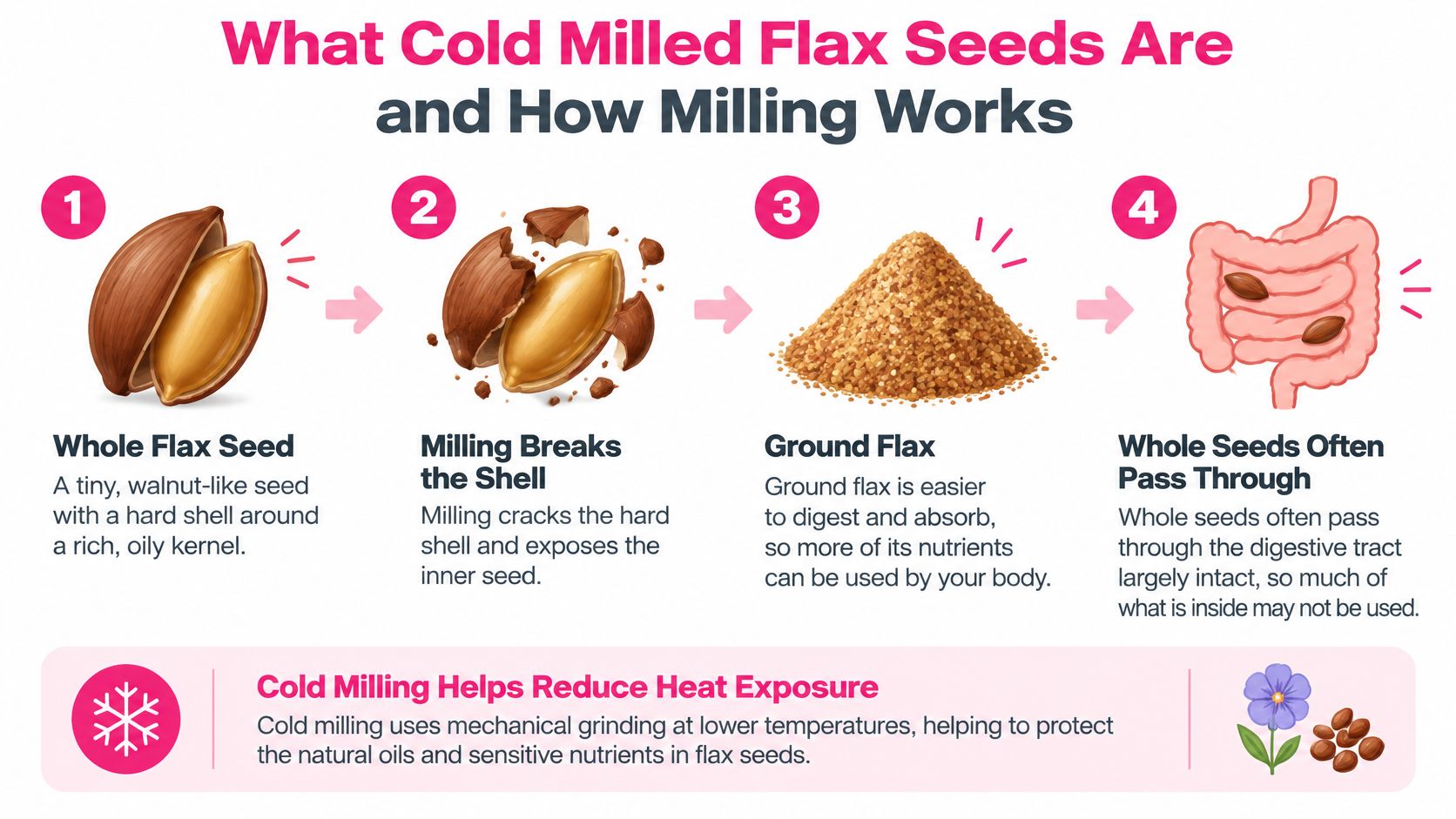
Think of a flax seed like a tiny walnut. A hard shell protects a rich, oily kernel inside, and that shell is great at keeping the goodness locked away. When you eat whole seeds, many can travel through you largely intact, so you may not get much of what's inside.
Cold milling cracks that little walnut open for you. Cold milled flax seeds have been ground without deliberate heating, and BBC guidance on flaxseed explains that disrupting the seed coat improves access to nutrients inside, including alpha-linolenic acid (ALA), and improves the bioavailability of enterolignan precursors compared with whole seeds.
How to Mill Flax at Home in Four Steps
Say you're standing in your kitchen on a Sunday with a bag of whole seeds and a small coffee grinder. You don't need special equipment, but the order matters because ground seed meets more air than whole seed does.
- Start with a sealed bag: Look for a clear packing or milling date, and choose the freshest bag you can find.
- Grind a small batch: Pulse only what you'll use soon in a clean, dry grinder, and stop if the grinder feels warm.
- Use it or chill it: Stir it into food right away, or move it to an opaque, airtight container in the fridge.
- Write the date down: A strip of tape with the grinding date saves you from guessing weeks later.
Aim for a grind fine enough to fracture most seed coats, like coarse sand turning soft. Grinding far longer than needed makes tinier particles with more surface facing the air, and that extra contact is what you want to limit. A short pulse, a shake, and one more short pulse usually does the job.
Practical rule: "Cold" tells you heat wasn't deliberately added. It doesn't tell you when the seed was milled or how it's been stored since.
That distinction clears up a common mix-up. Cold milling doesn't create a special variety of flax, and it doesn't guarantee a fixed nutrient level, because cultivar, moisture, and growing conditions all shift the final numbers a little. The same habit of checking dates and sealing containers applies to other ground ingredients too, and tips for storing ground coriander for lasting flavour follow the same logic of airtight, dark, and dry.
So treat cold-milled flax as a helpful food ingredient that makes a nutrient-rich seed easier to use. It's not a prenatal supplement, and it isn't standardized like one. What it can do, in modest spoonfuls, is add fiber, plant omega-3, and a mild nutty flavor to foods you already enjoy.
Nutrition Per Tablespoon of Whole, Ground and Oil Flax
Three products can all carry the word “flax” and still deliver very different nutrition in the same spoon. Whole seeds, milled seeds and pressed oil act like three different packages: intact seed meal, exposed seed meal and concentrated fat. That is why matching the table row to your product matters more than relying on the words on the front label.
| Form | Serving | Calories | Fiber | ALA omega-3 |
|---|---|---|---|---|
| Cold-milled (ground) flaxseed | 1 tablespoon (about 7 g) | about 36 | about 1.6 g | about 1.6 g |
| Whole flaxseed | 1 tablespoon (about 10 g) | about 51 | about 2.3 g | about 2.35 g |
| Flaxseed oil | 1 tablespoon (about 14 g) | about 120 | 0 g | about 7.3 g |
For the ground row, USDA FoodData Central data for ground flaxseed reports approximately 514 calories, 18.0 grams of protein, 37.3 grams of fat, 34.4 grams of carbohydrate, 23.1 grams of fiber, 230 milligrams of calcium, 5.78 milligrams of iron, 793 milligrams of potassium and 0.54 milligrams of thiamin per 100 grams; scaled to a 1-tablespoon portion of about 7 grams, that works out to roughly 36 calories, 1.3 grams of protein, 2.6 grams of fat, 1.6 grams of fiber and 1.6 grams of ALA.
The Numbers That Matter Most
Start with the two seed rows. Both contain the seed's meal, so both provide fiber, protein, fat and small amounts of minerals. Milling breaks the seed coat, which makes those contents easier for your body to reach than when many seeds remain intact. For a mama working toward comfortable, regular digestion, that fiber is often the most practical benefit, and our guide to foods that help relieve pregnancy constipation shows how flax fits alongside other gentle choices.
The oil row follows a different pattern. Pressing concentrates the fat and its ALA into a smaller package, while leaving the seed meal behind. That makes oil a concentrated fat source rather than a way to add fiber.
Minerals also come along with the ground seed, though a tablespoon supplies them in modest amounts. Treat that spoon as one contribution within a varied day of eating, rather than expecting it to cover a nutrient by itself.
Why Labels Don't All Match
Values can differ slightly between bags and databases because cultivar, moisture and testing methods all affect the measured result. Read the figures as rounded, typical amounts rather than exact promises.
“Cold milled” also needs the same careful reading. It describes the milling technique and does not establish when the seed was milled or how fresh the product remains. Serving weight tells you what the tablespoon contributes, while the milling date and protective packaging give you a better picture of quality. If you like comparing health claims across everyday pantry foods, you can compare science-backed functional food benefits to see where flax fits.
Match the row to the product in your kitchen, then use the tablespoon as a steady, food-sized addition. The form and portion tell you more about nutrition than the milling claim alone.
Why Ground Flax Works Differently Than Flax Oil
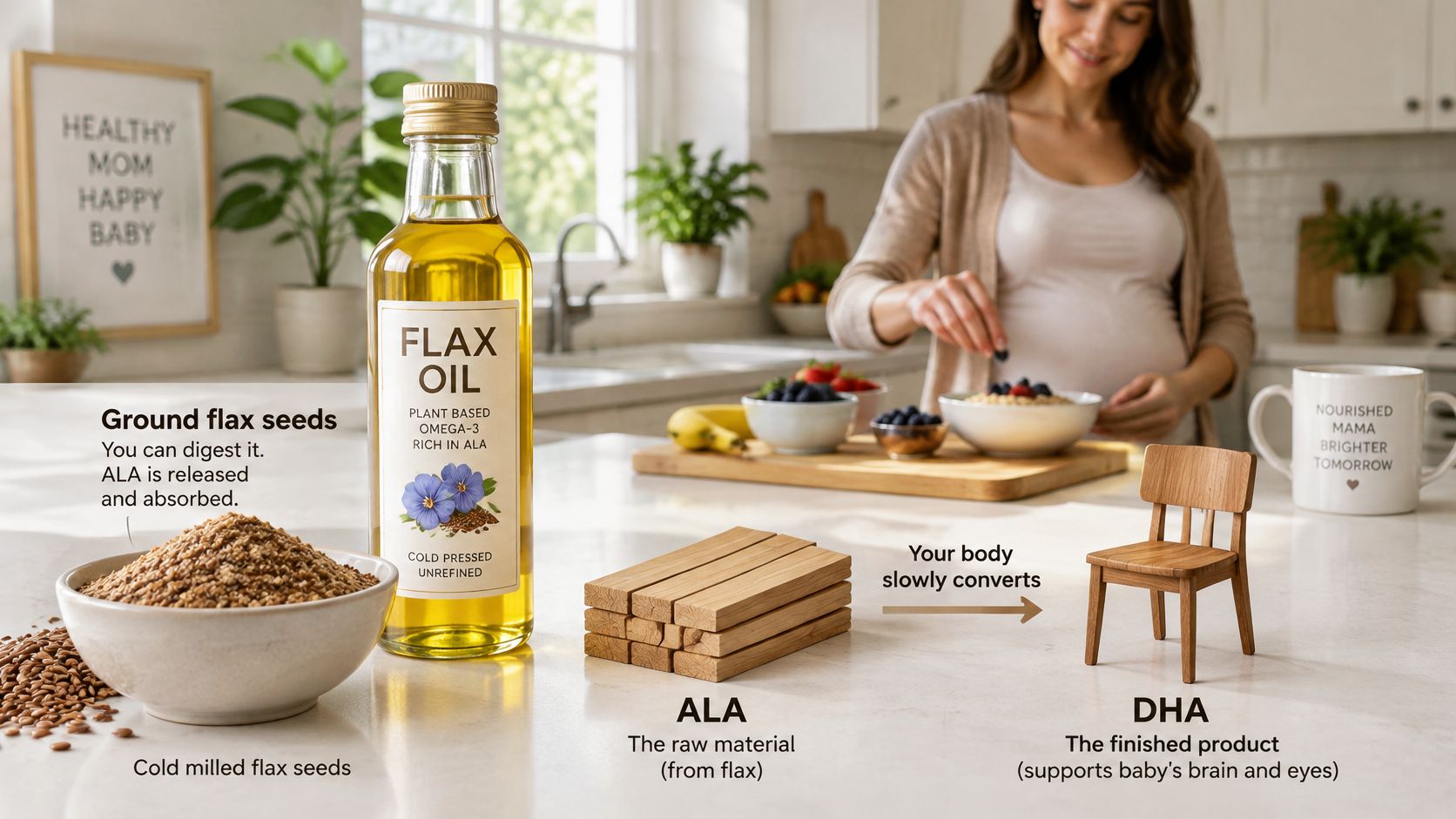
Here's an analogy that makes omega-3s click. ALA is like raw lumber, and DHA is the finished furniture your baby's brain and eyes use. Your body can build a little furniture from that lumber, but the workshop runs slowly, so lumber alone doesn't furnish the room.
The NIH Office of Dietary Supplements fact sheet on omega-3 fatty acids lists 1.4 grams of ALA per day as the adequate intake for pregnant teenagers and women, and one tablespoon of whole flaxseed provides approximately 2.35 grams of ALA. That's why a modest sprinkle contributes, mama. It also explains the limit, because your body converts only a limited amount of ALA into the longer-chain fats EPA and DHA, so flax isn't a direct replacement for a source that supplies DHA itself.
What the Ground Seed Keeps and the Oil Loses
Ground flax is a package deal. Alongside ALA you get fiber that adds bulk and holds water in stool, which can support regular bowel movements, plus lignans, plant compounds with mild estrogen-like activity that researchers are still studying. Flaxseed oil keeps the fat portion only, so you lose that fiber and those lignans the moment you swap seed for oil.
A study described in Drugs.com information on flax gave healthy women 50 grams of ground raw flaxseed daily for four weeks and observed increases in blood ALA and certain long-chain omega-3 fatty acids. That tells us ground seed can raise blood levels in healthy adults, but it was not a pregnancy-safety study, and that amount is far beyond a culinary sprinkle.
Putting Flax in Its Proper Place
So the goal isn't flax instead of everything else. It's flax alongside other sources, so your overall pattern covers both plant omega-3 and ready-made DHA. Our overview of omega-3 rich foods for pregnancy can help you mix and match fish, fortified foods, seeds, and supplements in a way that suits your taste and budget.
Ground flax gives you ALA plus fiber plus lignans. Oil gives you fat alone. Same plant, different tools.
If you remember the lumber picture, you won't be misled by labels that blur ALA and DHA together. Enjoy flax for what it does well, and let a true DHA source do the separate job that flax can't do for you.
How Much Flax Is Safe During Pregnancy and Postpartum
Take a breath first, mama. Incomplete evidence isn't the same as proof of harm, and it doesn't mean you need to fear a muffin. It means pregnancy guidance stays cautious and food-sized while researchers still have unanswered questions.
| Use | Typical amount | Pregnancy and postpartum guidance |
|---|---|---|
| Cold-milled flax sprinkled in food | Up to 1 tablespoon (15 mL) per day | Acceptable food amount per Alberta Health Services; confirm with your clinician |
| Flaxseed oil | Spoonfuls used as a supplement oil | Avoid, per Alberta Health Services |
| Concentrated capsules or lignan extracts | Follow the product label dose | Ask your provider before use |
| Large daily amounts (50 g in the research study) | 50 g per day | Studied only in healthy non-pregnant women; not for pregnancy without clinician approval |
Healthy Parents Healthy Children pregnancy food safety guidance notes that Alberta Health Services finds evidence about flaxseed's effects on pregnancy outcomes insufficient and recommends limiting flaxseed to amounts commonly found in foods or a maximum of 1 tablespoon (15 mL) per day, while avoiding flaxseed oil. The same Canadian resource considers the small amounts of ground or whole flaxseed found in foods such as whole-grain bread or muffins acceptable.
Why Guidance Stays Cautious
The cautious tone comes from a gap, not a verdict. Some pregnancy studies raise possible safety concerns, although the evidence is not conclusive, and little is known about flaxseed safety during breastfeeding. That's exactly the kind of situation where "natural" and "proven safe in pregnancy" shouldn't be treated as the same claim, especially for oils, capsules, and extracts that concentrate one part of the seed.
Your stage matters too. An occasional culinary amount before conception, a daily tablespoon during pregnancy, and use while breastfeeding are three different questions, and our trimester-by-trimester guide to food nutrients to consume each trimester can help you frame the conversation for the stage you're in.
Signs You've Had Too Much
Your gut usually sends the first memo when a portion is too big for you. Watch for:
- Bloating: A puffy, gassy feeling after eating.
- Fullness: Feeling stuffed out of proportion to the meal.
- Diarrhea: Loose, urgent stools that weren't there before.
Stop the flax and contact your clinician if diarrhea persists, if you develop severe abdominal pain, or if you notice allergic symptoms such as itching, swelling, or trouble breathing. Postpartum, constipation, breastfeeding fluid needs, iron supplements, pain medicines, and plain recovery can all change how fiber feels, so a portion that suited you before birth may need adjusting.
Before you settle on a daily amount, ask your clinician how flax sits with any blood-thinning, blood-pressure, or blood-sugar medicines you take. Then agree on a personal amount together. A food ingredient with a clear, small portion is a calm place to land, and it's exactly how the guidance above is written.
Easy Pregnancy-Friendly Ways to Add Flax to Your Day
You don't need new recipes, mama. Flax slips into foods you're already making, and its mild flavor hides well in anything creamy, fruity, or warmly spiced.
Simple Ideas With Portions
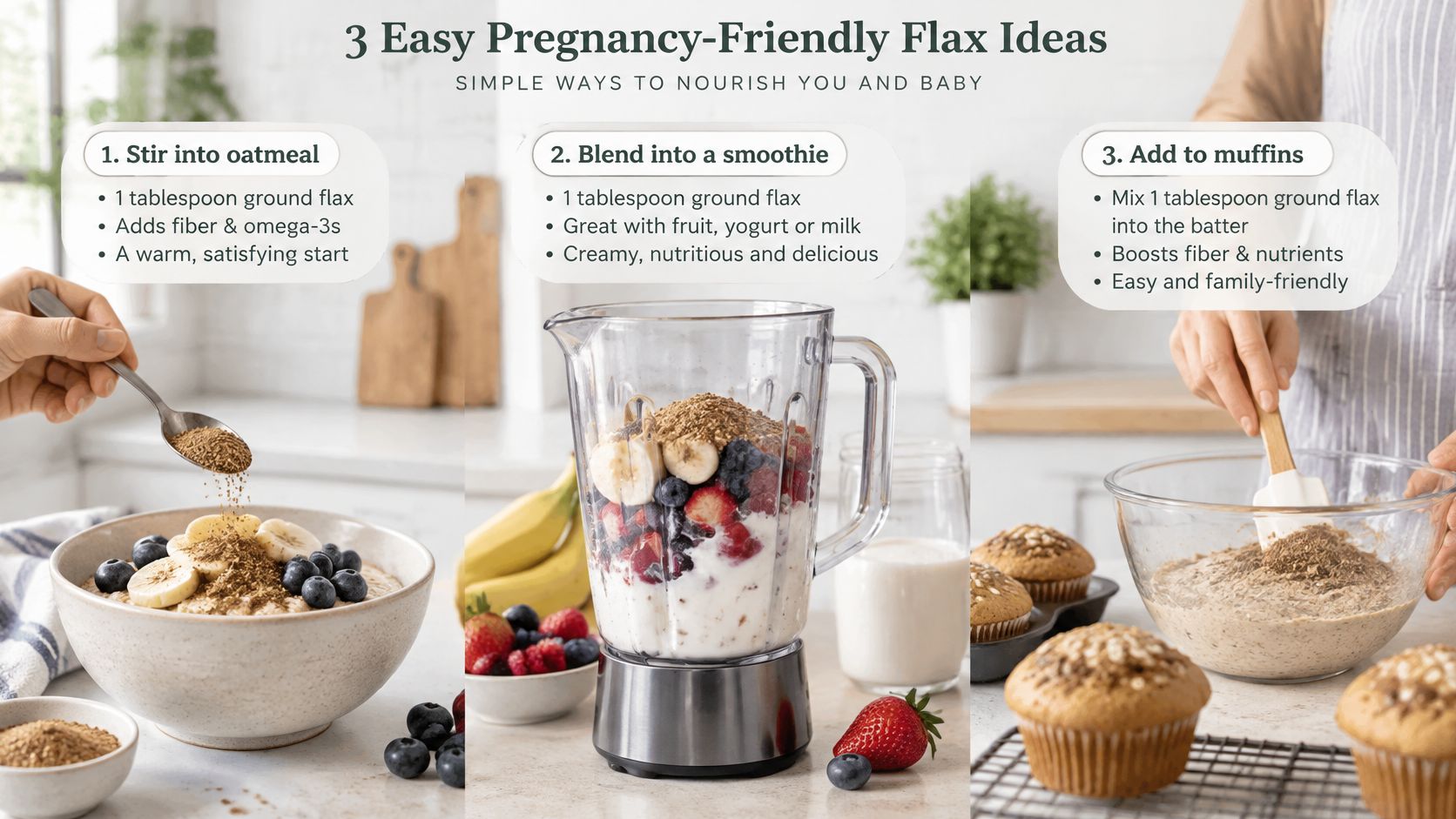
- Oatmeal or yogurt: Stir 1 tablespoon of cold-milled flax into warm oatmeal or plain yogurt, then add fruit on top.
- Smoothies: Blend 1 tablespoon with banana, berries, and milk or a fortified alternative for a thicker texture.
- Baking: Fold flax into whole-grain muffin or bread batter, where it disappears into the crumb.
- Snacks: Sprinkle a smaller spoonful over cottage cheese or sliced fruit when you want a light option.
Those same sprinkles work in no-bake snacks too, and our recipe for protein balls with dates is an easy place to try a small amount mixed through rather than eaten straight. If baking worries you, be reassured that flax holds up reasonably well in the oven, so muffins and breads are sensible vehicles.
This short video walks through simple serving ideas you can copy at home.
Start Gently and Build a Rhythm
The NIH complementary health guidance on flaxseed and flaxseed oil reports that higher doses of flaxseed or flaxseed oil supplements may produce bloating, fullness, and diarrhea. Ground flax absorbs liquid as it moves through you, so jumping straight to big spoonfuls can feel like adding too many passengers to a digestive system that's already moving slowly in pregnancy.
Begin with a small food portion, drink a full glass of fluid with it, and increase only if your clinician agrees. A sample week might look like flax in oatmeal on three mornings, a smoothie on two afternoons, and muffins on the weekend, with days off in between to see how you feel. Grind or open only what you'll use within a few days so each spoonful tastes fresh.
Small, steady habits count more than big doses. Your body notices consistency, not heroics.
Choosing and Storing Flax Products Without Guesswork
"Cold milled" on the front of the bag is the beginning of your decision, not the end. Milling opens the seed and exposes its delicate oils to air, so the date on the package and the way you store it at home matter more than the marketing phrase.
Your Buying and Storage Checklist
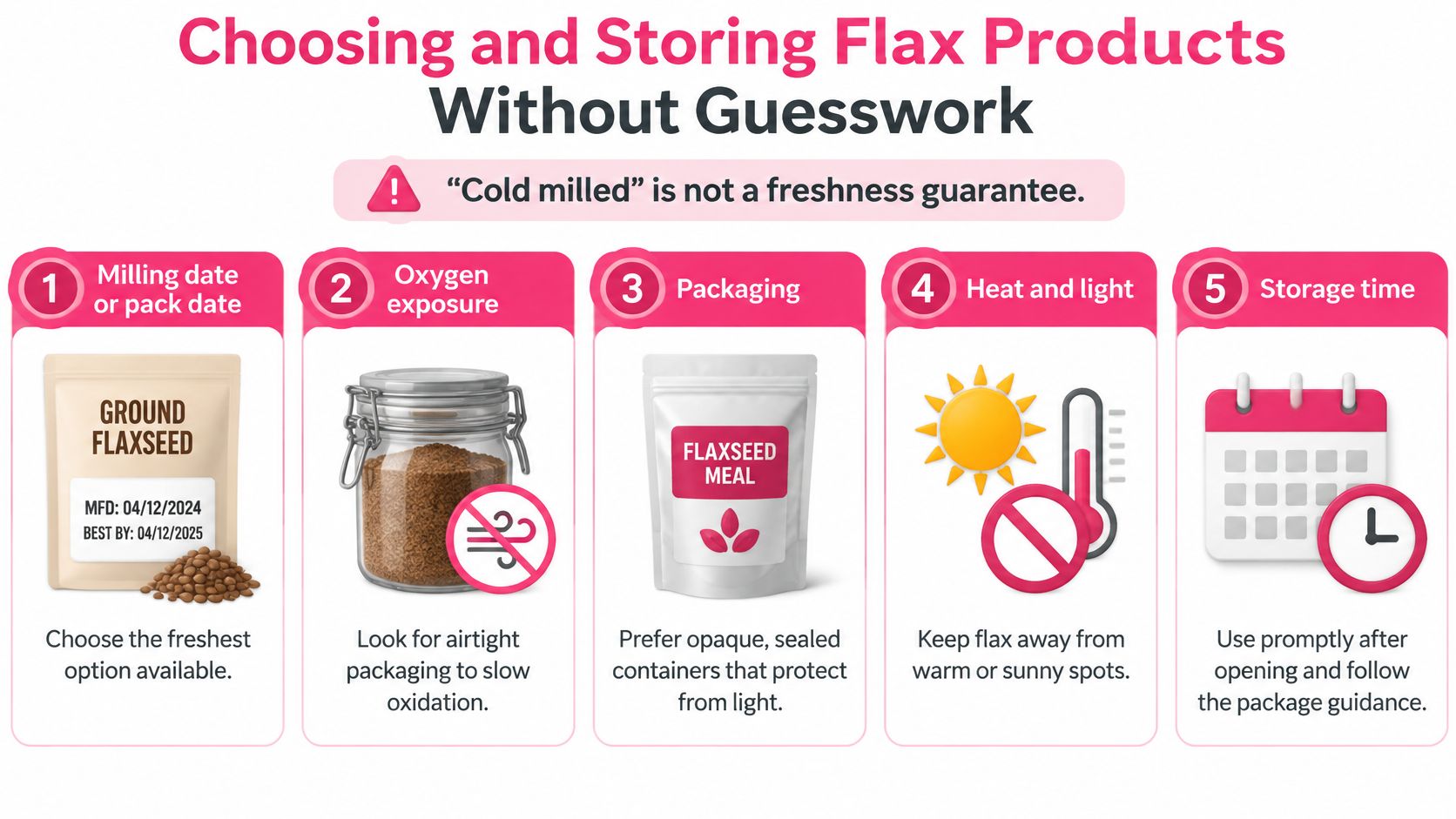
- Check the milling or pack date: Choose the most recently dated bag, since freshness starts at grinding.
- Choose opaque, airtight packaging: Light and air both work against ground seed, so sealed and dark wins.
- Buy a size you'll finish soon: Pick a quantity you'll use within a few weeks rather than a giant bargain bag.
- Refrigerate after opening: Keep ground flax cold in a sealed container, and freeze any portion you won't use soon.
What the Storage Evidence Actually Says
The picture is nuanced rather than alarming. A storage review in Quality Assurance and Safety of Crops and Foods reports that whole and coarsely ground flaxseed can remain stable at room temperature for extended periods, while milled samples show some increases in peroxide values and changes in ALA over time. A 2024 study also found that antioxidant activity and phenolic content declined during storage and that semi-closed packaging performed better under cold storage conditions.
In plain language, whole seeds are the most forgiving, and ground flax deserves a little more care. Oxygen exposure, package barrier, heat, light, and storage duration decide how your particular bag ages. Cold storage and a tight seal slow that clock, which is why the checklist above works even if you forget every technical term.
The Smell Test You Can Trust
Your nose gives you the most useful answer at home. Fresh ground flax smells mild and nutty, while flax that has oxidized smells sharp, bitter, stale, or like old paint. That paint-like smell is your cue to discard it rather than taste-test your way through doubt.
Don't confuse oxidation with harmless changes. Gentle clumping from the seed's natural fiber absorbing kitchen moisture, or a slightly soft texture in a smoothie, doesn't mean the flax has gone bad. Smell is the signal that matters, and when it smells off, replace the bag and note the new date.
Confirm Your Flax Plan With Your Provider
You've learned to judge a bag by its milling date and packaging rather than the words "cold milled" on the front. The last judgment call is your own portion, and that one belongs to a short conversation with your provider at a visit you're already attending.
Three Steps for Your Next Appointment
- Bring the exact product: Show your provider the bag, oil, or capsules, and say how much you eat on a typical day.
- Ask about medicines and DHA: Check blood-thinning, blood-pressure, or blood-sugar medicines, and ask whether your diet still needs a separate DHA source.
- Agree on your amount: Set a personal daily portion together, plus a plan to check in if bloating or diarrhea shows up.
If you'd like background reading before that chat, our primer on nutrition education for pregnant mothers shows how food choices and supplements work together.
That pairing matters here. Flax supplies ALA and fiber, and a prenatal is designed to deliver ready-made DHA, choline, and folate alongside them.
That's why many mamas pair food habits like these with Feed Mom & Me Complete Prenatal Vitamin Plus DHA, which is designed to cover key prenatal nutrients including DHA, choline, selenium, and methylfolate (L-5-MTHF). We're a women-owned brand, and our prenatal vitamins use L-Methylfolate Calcium instead of synthetic Folic Acid. A third party lab tests each batch twice for heavy metals, microbes, allergens, and other contaminants, so you know what's in every bottle.
Bring your provider the flax questions and the supplement label in the same visit, mama. Flax can be one friendly piece of your nutrition, and your provider is the person who makes it personal.
Flax gives you plant omega-3 and fiber, and our Complete Prenatal Vitamin Plus DHA covers the ready-made DHA and other key nutrients flax can't supply on its own. Visit Feed Mom & Me to see the formula, read our mama-friendly nutrition guides, and choose the supply that fits your stage from preconception through postpartum.