
How to Eat Soy Free While Pregnant in 2026
Published:Updated:
You're standing in the grocery aisle with soy milk in one hand and a meatless patty in the other, wondering whether skipping soy is safer for your baby. It's an understandable question, especially when labels seem to hide soy in places you wouldn't expect. The reassuring starting point is that soy-free eating isn't a pregnancy rule for everyone. If you need to avoid soy, you can make a nourishing plan without turning every meal into a puzzle.
Table of Contents
- Why Would You Eat Soy Free During Pregnancy
- What Can You Eat Instead of Soy While Pregnant
- Which Nutrients Need Extra Care Without Soy
- How Do You Spot Hidden Soy on Labels
- How Do You Plan a Soy Free Day of Meals
- How Do You Keep Nutrients Covered This Week
Why Would You Eat Soy Free During Pregnancy
Soy-free eating is usually for someone with a confirmed allergy, a repeat reaction, or advice from an OB, midwife, or allergist. It isn't generally necessary just because you're pregnant. A U.S. evidence review estimated challenge-confirmed soy allergy in 0.27% of the general population, with a range of 0.1% to 0.44%. Self-reported soy allergy was estimated at 0.2%, while the estimate among people referred to allergy centers was 1.9% based on food-challenge outcomes, according to the U.S. evidence review of soy allergy.
Those figures don't diagnose you, and they don't mean a reaction should be ignored. They do help explain why broad avoidance isn't automatically the right choice for every mama. The same review found that only 11.2% of people sensitized to soy reacted when they ate it. A positive allergy test, by itself, doesn't always mean someone has a clinical food allergy.
When to ask for medical guidance
If soy seems to trigger hives, swelling, vomiting, or breathing trouble, talk with a clinician before trying a long elimination diet. Breathing difficulty or a severe reaction needs urgent medical care. An allergist can help determine whether soy is the cause and what level of avoidance is appropriate.
The review estimated soy allergy in infants younger than 6 months at approximately 0.1%, based on two likely cases among 1,430 infants. That finding isn't a reason to restrict your own diet to prevent an allergy in your baby. A varied soy-free plate can support you and your pregnancy; the key is replacing the foods and nutrients soy was contributing.
Cutting tofu, tempeh, edamame, and fortified soy milk without a plan can reduce your access to protein and fortified nutrients. Eggs, dairy or appropriately fortified substitutes, tolerated legumes, poultry, fish, meat, nuts, and seeds can all help fill the gaps. You don't need to remake every meal today. Check any planned elimination with your provider, then choose a few practical swaps to start.
What Can You Eat Instead of Soy While Pregnant
| Soy food | Swap to try | Nutrients you keep |
|---|---|---|
| Soy milk | Dairy milk or fortified pea milk | Protein, calcium, vitamin D, B12 |
| Firm tofu | Eggs, chicken, or lentils | Protein and iron |
| Tempeh | Chickpeas or a quinoa bowl | Protein and fiber |
| Edamame snack | Roasted chickpeas or pumpkin seeds | Protein, iron, and zinc |
| Soy yogurt | Greek yogurt or fortified coconut yogurt | Protein and calcium |
| Soy sauce or tamari | Coconut aminos, with sodium in mind | Savory flavor without soy protein |
| Textured soy or soy meat | Ground turkey, beans, or lentils | Protein, iron, and zinc |
| Miso | White beans with ginger and rice vinegar | Umami plus bean protein |
The biggest swap to check carefully is the milk in your mug or cereal bowl. An unfortified almond or coconut drink may look like a stand-in for soy milk but can leave out protein, calcium, vitamin D, and B12. Dairy milk or a fortified pea milk may be a closer fit if you tolerate it. Read the label for protein and fortification instead of choosing by the front-of-carton wording alone.
An unfortified plant drink isn't automatically nutritionally equal to fortified soy milk. Check what the carton actually provides.
For meals, think about what tofu was doing on your plate. If it was the protein in a stir-fry, try chicken, eggs, lentils, chickpeas, or quinoa. If you're vegetarian, pairing a few plant foods across the day can make meals more satisfying. You can find more ideas in this guide to pregnancy protein requirements.
Coconut aminos can bring a savory taste to a sauce, but check the sodium on the bottle and use an amount that suits your preferences and your provider's advice. For a quick miso-style base, mash white beans with ginger and a splash of rice vinegar. And remember, peanut, tree-nut, and sesame allergies are separate. A nut butter is only a good option if you already tolerate that nut.
Circle three swaps you already like and add them to this week's grocery list. Starting with familiar foods is easier than redesigning every meal at once.
Which Nutrients Need Extra Care Without Soy
Soy isn't magic, but foods like tofu, tempeh, edamame, and fortified soy milk can do several jobs on one plate. Avoiding soy isn't the same thing as eating vegan, and a plant-based drink isn't automatically a complete replacement. During pregnancy and breastfeeding, build your plan around the nutrients each food supplied.
| Nutrient | Why it matters | Soy-free sources |
|---|---|---|
| Protein | Builds you and the baby | Eggs, dairy, fish, poultry, beans, lentils, quinoa |
| Calcium | Supports bones and muscle signals | Dairy, fortified drinks, yogurt |
| Vitamin D | Helps calcium do its job | Fortified milk or drinks, provider-guided supplement |
| Iron | Carries oxygen as blood volume rises | Meat, lentils, fortified cereal plus vitamin C |
| Iodine | Supports thyroid and brain development | Iodized salt if your provider agrees, dairy, fish |
| Choline | Supports brain and placenta | Eggs and meat |
| Zinc | Supports growth and immune function | Meat, pumpkin seeds, beans |
| Vitamin B12 | Supports nerves and red blood cells | Dairy, eggs, fish, fortified foods |
| DHA | Supports baby's brain and eyes | Salmon or other low-mercury fish, or a clinician-approved DHA source |
Look for the nutrients your usual meals lose
Protein can be easier to spread across the day than to squeeze into one large meal. Put eggs, dairy, fish, poultry, beans, or lentils into meals you already eat. If you're vegetarian or vegan, pregnancy makes it especially important to review protein, calcium, iodine, vitamin D, iron, zinc, vitamin B12, and EPA/DHA with your care team. The FDA's guidance on food allergens and dietary supplements is a useful place to consider alongside individualized supplement advice.
Calcium and vitamin D are easy to miss if soy milk was your main fortified drink. Choose a fortified alternative or dairy you tolerate, and check the nutrition label. For iron, combine lentils, meat, or fortified cereal with a vitamin C food such as peppers or berries. Ask your provider before adding iron supplements, since your needs and your prenatal's contents should guide that choice.
Iodine deserves a little attention, too. If you avoid iodized salt, your iodine intake may be harder to cover, so ask your provider whether your food choices or prenatal fit your needs. Eggs and meat can provide choline, while beans, meat, and pumpkin seeds are useful zinc sources. If you also avoid dairy and fortified foods, bring up vitamin B12 specifically. For an accessible look at more pregnancy nutrition topics, you can browse nutrition articles. You may also want to read about the importance of choline during pregnancy.
DHA is another nutrient to plan for rather than assume a soy substitute will provide. Salmon and other low-mercury fish can be part of your plan, or your clinician can help you choose a suitable supplement. These nutrient needs still matter while breastfeeding, particularly iodine, choline, and DHA. Mark any table row your usual meals don't cover and bring that list to your next visit.
How Do You Spot Hidden Soy on Labels
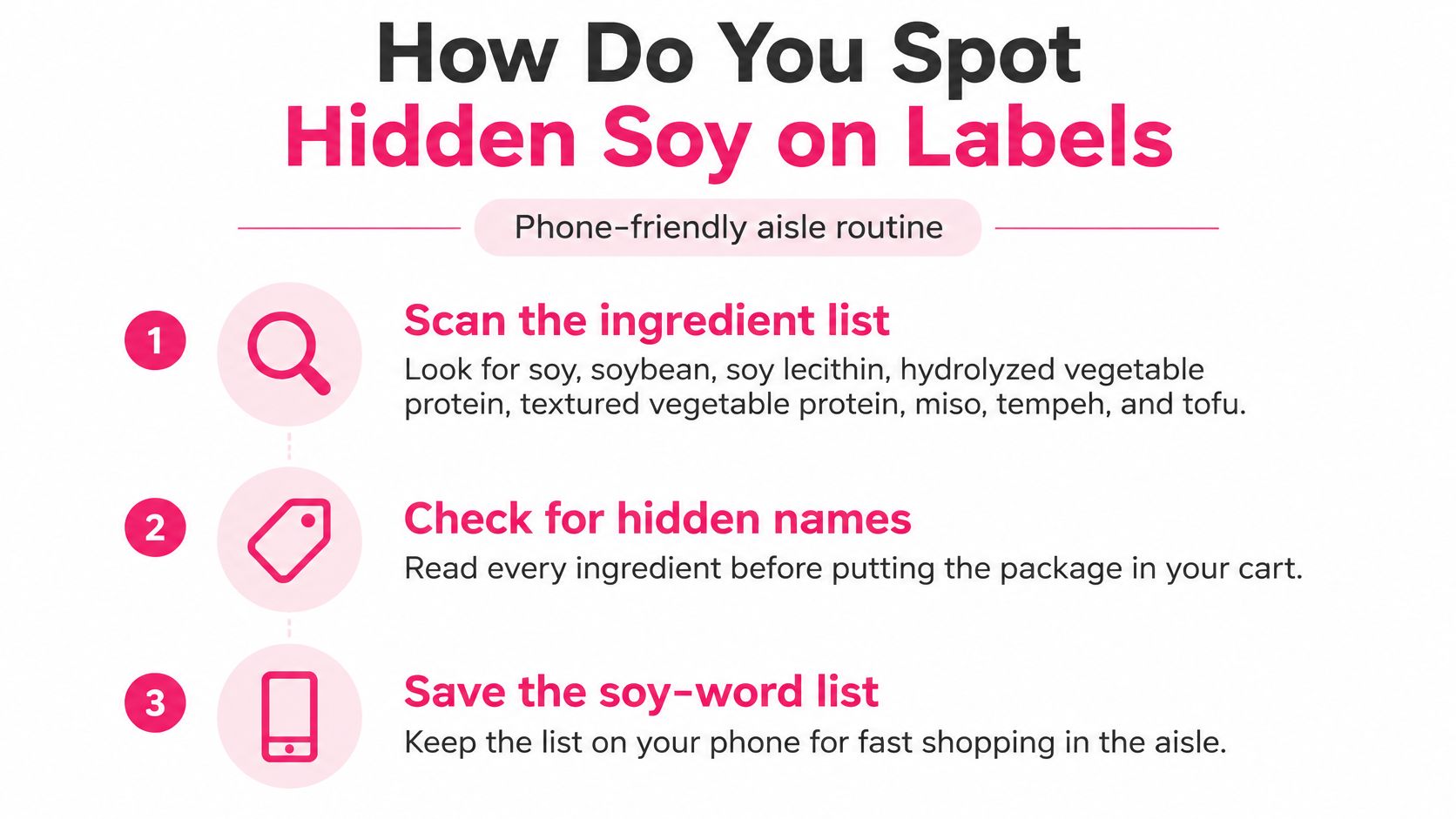
A package can look soy-free and still contain an ingredient derived from soy. When you're shopping, a phone-friendly routine makes label checks quicker and helps you focus on what matters.
Follow these label steps
- Scan the ingredient list. Look for soy, soybean, soy lecithin, hydrolyzed vegetable protein, textured vegetable protein, miso, tempeh, and tofu. Also check for soybean oil, soy flour, and soy protein isolate. If a label says “lecithin (soy),” the source is clearly identified.
- Read the separate allergen statement. In the U.S., regulated packaged foods must identify soy when it's an ingredient or when a soy-derived protein is used. Check the “Contains” line as well as the ingredient list, as described in FDA allergen-labeling guidance.
- Treat “may contain soy” as a separate clue. Precautionary statements like this are voluntary. Their absence doesn't prove that accidental cross-contact didn't happen.
Cross-contact means soy gets unintentionally into a food, for example when products share equipment and crumbs remain on a belt. U.S. allergen-labeling requirements don't cover that unintended incorporation. They also don't automatically cover every food category, including most meat, poultry, and alcoholic products.
Match your choices to your medical situation. If you've had anaphylaxis, shared fryers or equipment may be a serious concern, and your clinician or allergist can help you make a strict avoidance plan. If you're avoiding soy by preference, focusing on intentionally added soy may be enough for your needs. At restaurants and bakeries, ask about shared fryers, marinades, and bakery cases instead of relying on a menu photo.
Use the same two-step read for supplements and imported foods. If a vegetable oil blend doesn't name its source, contact the manufacturer before buying, especially when the medical risk is significant. For packaged snacks, a resource that helps you check snack bar allergens can also prompt useful label questions. If you're comparing prenatal products, review this guide to dairy- and soy-free prenatal vitamins.
Save this quick list in your phone: soy, soybean, soy lecithin, hydrolyzed vegetable protein, textured vegetable protein, miso, tempeh, tofu, soy flour, soy protein isolate, and soybean oil. A suspected allergy belongs with a clinician or allergist, not a self-test through broad food elimination.
How Do You Plan a Soy Free Day of Meals
Start with a protein you tolerate at each meal. Then add the sides and snacks that make the day workable. This keeps planning grounded in foods you can actually eat, rather than in a list of products you have to buy.
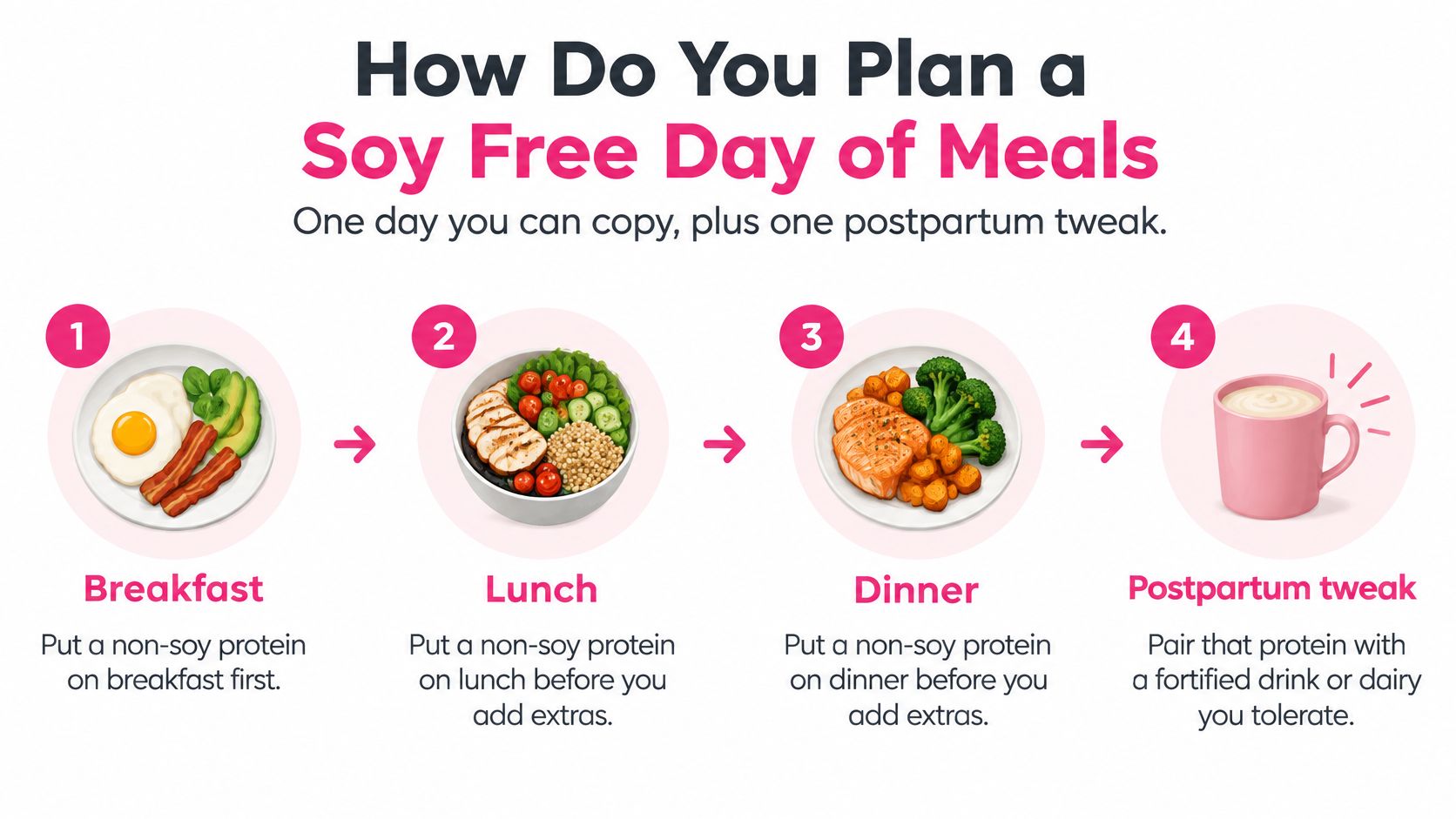
- Choose breakfast protein first. Eggs, yogurt, or dairy milk can anchor breakfast. Add fruit or toast once you've picked the protein.
- Build lunch around a non-soy main ingredient. Lentils with quinoa and peppers make a filling bowl. Pairing iron-rich lentils with peppers adds a vitamin C food to the meal.
- Give dinner its own protein. Baked salmon, broccoli, and rice make one simple combination. If you don't eat fish, choose eggs, dairy, poultry, beans, or lentils instead.
- Plan a useful snack. Pumpkin seeds and an orange offer a simple break between meals, especially if you don't want a large snack.
- Use iodized salt only if your provider agrees. Don't assume that a sea salt product supplies iodine; ask your provider what fits your plan.
- Keep DHA on your radar. Include fish you're comfortable eating, or ask your clinician about an appropriate alternative if you don't eat fish.
A sample day might look like this:
- Breakfast: Two eggs, fortified milk, and berries.
- Lunch: A lentil and quinoa bowl with peppers.
- Snack: Pumpkin seeds and an orange.
- Dinner: Baked salmon, broccoli, and rice.
If you're vegetarian, swap the salmon for extra eggs or dairy you tolerate and keep a fortified drink in the mix. For breastfeeding, you can keep the same meals and add a second snack, such as Greek yogurt and fruit, rather than inventing a whole new diet. If nausea makes hot meals unappealing, try cold lentils, a smoothie with a fortified drink, or ginger tea with a boiled egg. You can find more ideas in these gluten-free, soy-free vegetarian recipes.
Here's the finished day in a simple visual format:
Repeat a meal pattern you like for a few days before worrying about having a different menu every day. A familiar plan can be a relief when pregnancy or postpartum life already asks a lot of you.
How Do You Keep Nutrients Covered This Week
You don't need a perfect new meal plan to get started. Choose a few reliable swaps, repeat a meal pattern you enjoy, and keep your questions for your provider specific. The aim is a practical routine that helps you eat enough variety without making every grocery trip feel high-stakes.
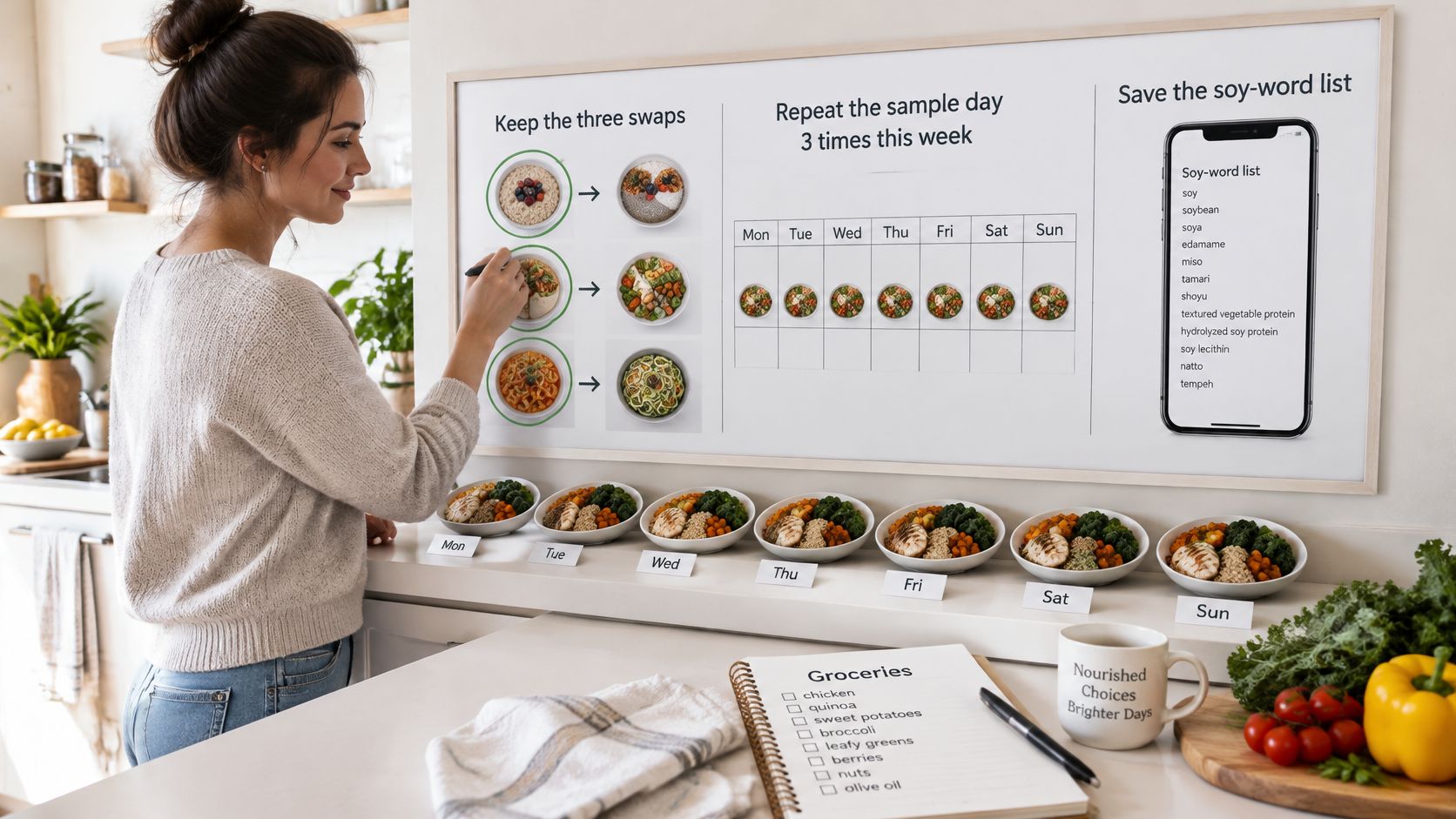
For the week ahead, start with these three actions:
- Keep three swaps you like. Add the ones you circled from the comparison chart to your grocery list.
- Repeat the sample meal pattern. Make the example day a few times this week, adjusting the ingredients to suit your appetite and preferences.
- Save your label list. Keep the soy terms on your phone so you can check packages quickly.
If nausea makes a meal difficult, try the same protein cold or blended instead of skipping it. A Greek yogurt smoothie with fortified milk, a chilled lentil salad, or ginger tea alongside a boiled egg can be gentler options when a hot meal doesn't appeal.
At your next visit, ask your OB, midwife, or dietitian whether your reaction history calls for an allergist's evaluation before you make further eliminations. Also ask whether your current prenatal covers the nutrients you need, including folate, iodine, choline, iron, and DHA. The nutrition education for pregnant mothers can give you additional topics to discuss with your care team.
Food still does the daily work that a capsule can't do alone. If you and your provider are comparing soy-free prenatal options, Feed Mom & Me Complete Prenatal Vitamin Plus DHA is soy-free and includes choline, iron, and DHA. The formula also uses L-Methylfolate Calcium instead of synthetic folic acid, and includes selenium, which helps regulate immune-system and thyroid function important in reproduction.
Feed Mom & Me is a women-owned maternal wellness brand built by moms for moms, with prenatal nutrition and education for pregnancy and early parenthood. If you're looking for a soy-free prenatal option to discuss with your healthcare provider, visit Feed Mom & Me and explore the Complete Prenatal Vitamin Plus DHA.