
Easy Greens Powder Smoothie Ideas for Pregnancy in 2026
Published:Updated:
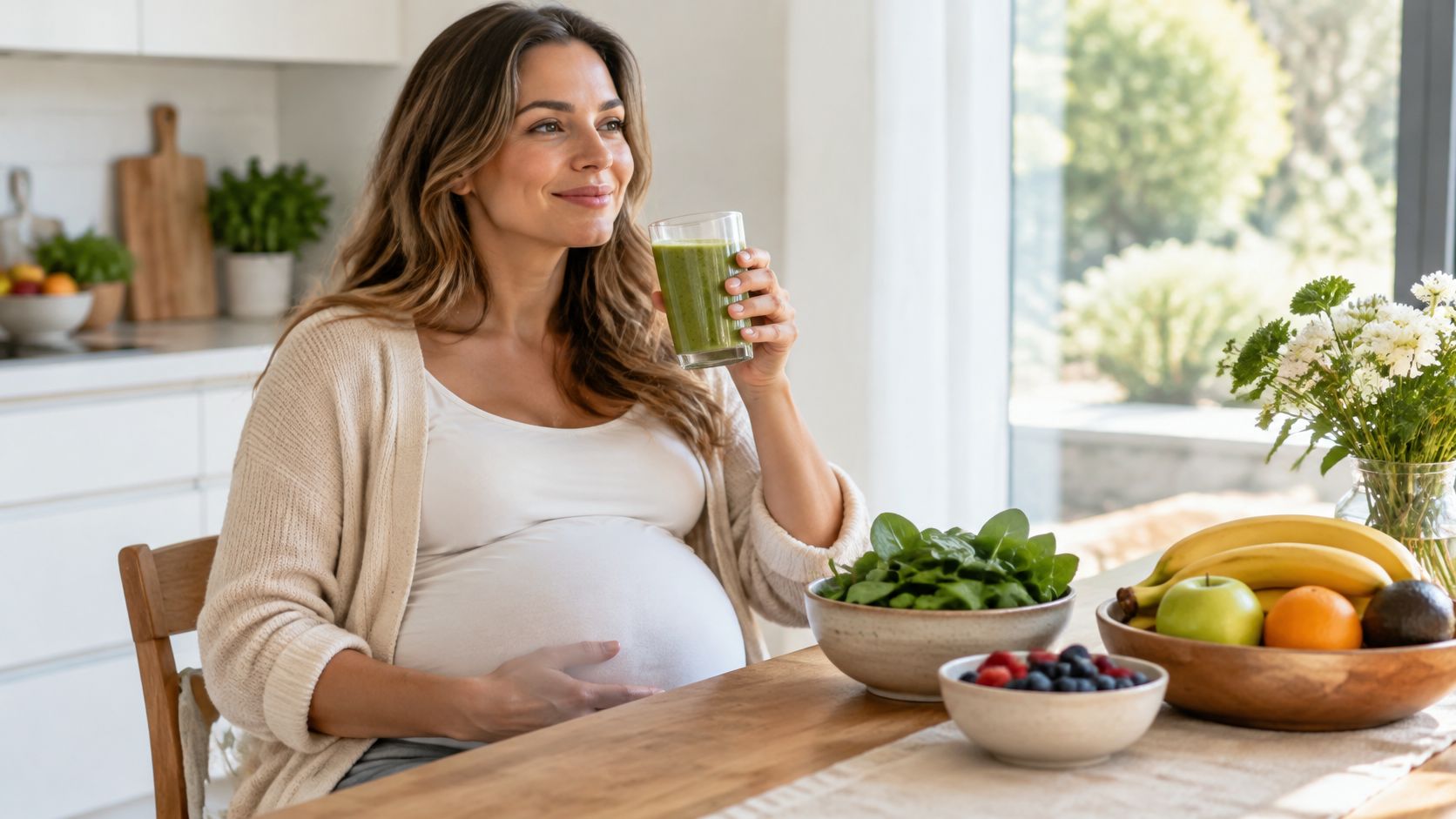
A greens powder smoothie can be a lifesaver when the smell of cooking makes you queasy or a big crunchy salad just sounds impossible, mama. Think of it as a helpful add-on to balanced meals and your prenatal vitamin — not a replacement for either.
On This Page
- Why Does a Greens Powder Smoothie Help During Pregnancy?
- How Do You Build a Nourishing Greens Powder Smoothie?
- Which Greens Powder Smoothie Variations Should You Try?
- How Do You Choose a Safe Greens Powder?
- How Does a Smoothie Fit With Your Prenatal Routine?
- How Can You Fix Taste, Texture, and Queasiness?
- What Are Common Questions About Greens Powder Smoothies?
Table of Contents
- Why Does a Greens Powder Smoothie Help During Pregnancy?
- How Do You Build a Nourishing Greens Powder Smoothie?
- Which Greens Powder Smoothie Variations Should You Try?
- How Do You Choose a Safe Greens Powder?
- How Does a Smoothie Fit With Your Prenatal Routine?
- How Can You Fix Taste, Texture, and Queasiness?
- What Are Common Questions About Greens Powder Smoothies?
Why Does a Greens Powder Smoothie Help During Pregnancy?
When nausea, food aversions, or just a hectic day get in the way, getting your veggies in can feel like a chore, mama. You are doing your best, and a greens powder smoothie makes those leafy greens sippable, while adding folate, fiber, and other plant goodness to your day.
Why Is Folate Important During Pregnancy?
Your nutrient needs climb during pregnancy because your body is working overtime to support your growing baby. Folate is a big one early on, since it supports cell division and healthy neural-tube development.
I like to think of folate as a daily building supply, like delivering bricks to a construction site little by little. One extra-large dose doesn’t make up for missing it day after day, which is why your prenatal and regular meals still do the heavy lifting.
According to the NIH Office of Dietary Supplements and Mayo Clinic guidance:
- If you might become pregnant: 400 micrograms of folic acid daily
- During pregnancy: 600 micrograms of folic acid daily
-
Best food sources:
- Dark leafy greens like spinach and kale
- Beans, lentils, and peas
- Fortified cereals and breads
- Asparagus and Brussels sprouts
And yes, nausea makes that easier said than done, mama. If raw spinach or salads turn your stomach, a blended drink is often much more tolerable — it just depends on the powder and what you mix it with.
What Can a Greens Powder Smoothie Do for You? What Can It Not Do?
| Greens Powder Smoothie | Quick Answer |
|---|---|
| Add vegetables | It can make leafy greens easier to sip |
| Support nutrient intake | It can contribute folate and other nutrients |
| Help with meal variety | It can complement meals during food aversions |
| Replace a prenatal | No, it should not |
| Prove complete nutrition | No, a green color or “detox” claim cannot do that |
Not all powders are created equal, either. Take a peek at the ingredients behind nutrient-dense blends in this guide to boost energy with greens powder, then always read the label for yourself.
A greens powder smoothie can support your food choices, but it does not replace a prenatal vitamin or personalized prenatal care.
When Should You Contact Your Provider?
You deserve support, never stress, mama. Check in with your OB, midwife, or dietitian before making it a daily habit — especially if you have:
- Allergies or intolerances
- Thyroid or kidney concerns
- Nausea or vomiting that keeps you from eating or drinking
- Questions about your prenatal dose
- A product label with herbs, high-dose vitamins, caffeine, or a proprietary blend
Give yourself grace on the imperfect days. If a smoothie helps you sneak in one more nourishing meal, that absolutely counts.
For a simple routine to run by your provider, consider Feed Mom & Me Complete Prenatal Vitamin Plus DHA, with folate, choline, and DHA. You can also learn about pregnancy nutrition from Feed Mom & Me.
How Do You Build a Nourishing Greens Powder Smoothie?
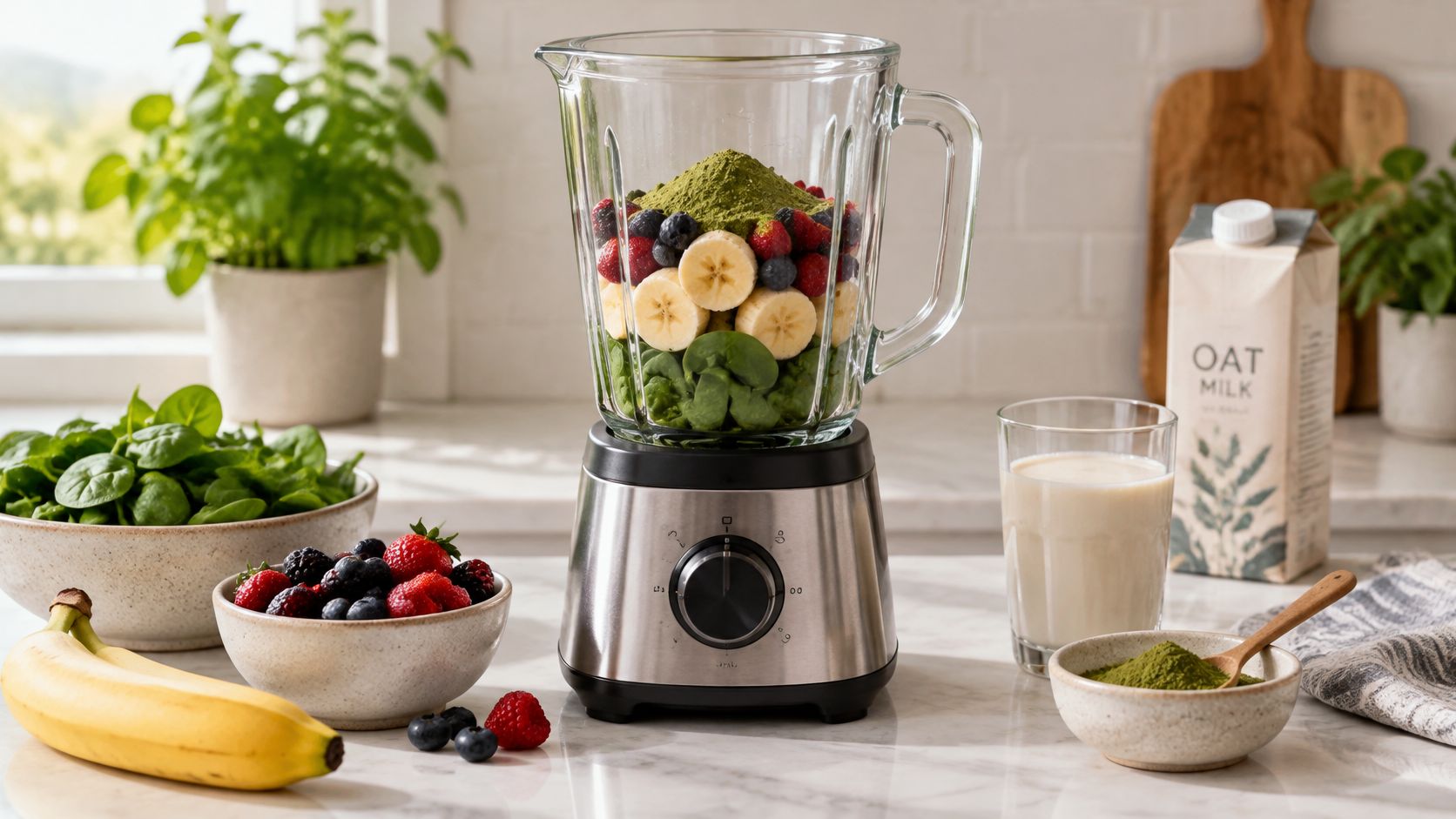
Before you blend anything, get set up, mama. Grab a clean blender, your greens powder, a liquid you can actually tolerate right now, and some soft fruit to make it taste good. A pregnancy-safe smoothie works so much better when you have a little plan first.
Order really does matter here. Pour your liquid in first, then add your measured scoop of powder, then fruit and ice on top. It helps everything mix evenly instead of leaving those dry, chalky clumps stuck to the sides.
Check the label and run any new powder by your OB, midwife, or dietitian first. And if you open your prenatal capsule into the drink, you have to drink the full glass. Whatever gets left behind in the jar doesn’t count toward your serving.
How Do You Choose Your Base?
- For liquids, stick with water, coconut water, or whatever milk you’re already drinking comfortably. Start with a good pour and only add more if it’s too thick to sip.
- For fruit, ripe banana, berries, mango, or soft pear all work great. Frozen fruit is a lifesaver too, especially when nothing warm sounds good.
- For texture, a spoonful of yogurt is nice if dairy sits well, or use a creamy dairy-free milk instead. A teaspoon of chia or flax can thicken things up, but go easy if you’re not used to extra fiber.
Don’t feel like you have to follow this to the letter. The whole point is just making it tasty enough that you’ll actually finish it.
How Do You Match Your Smoothie to Your Morning?
On a queasy morning, keep it small and cold. Banana with a little ginger sipped slow through a straw tends to go down easiest. If the blender noise or smell turns your stomach, ask someone else to make it or just wait until afternoon when food sounds better.
For an afternoon snack, try half a banana with coconut water, berries, and your measured powder. Add ice until it’s nice and cold, but don’t go overboard. Too much ice turns it into a slush and it’s hard to tell how much powder you’re actually getting.
Keep using the measured scoop, even in a lighter drink. A watered-down smoothie isn’t the same as a full serving.
This makes portions so much easier to track on busy days.
How Do You Make Sure You Finish Every Dose?
Once you’re done blending, scrape down the sides. Then add a little water to the jar at the sink, swirl it around, and pour that into your glass too.
Drink it all before the powder settles to the bottom.
Which Greens Powder Smoothie Variations Should You Try?
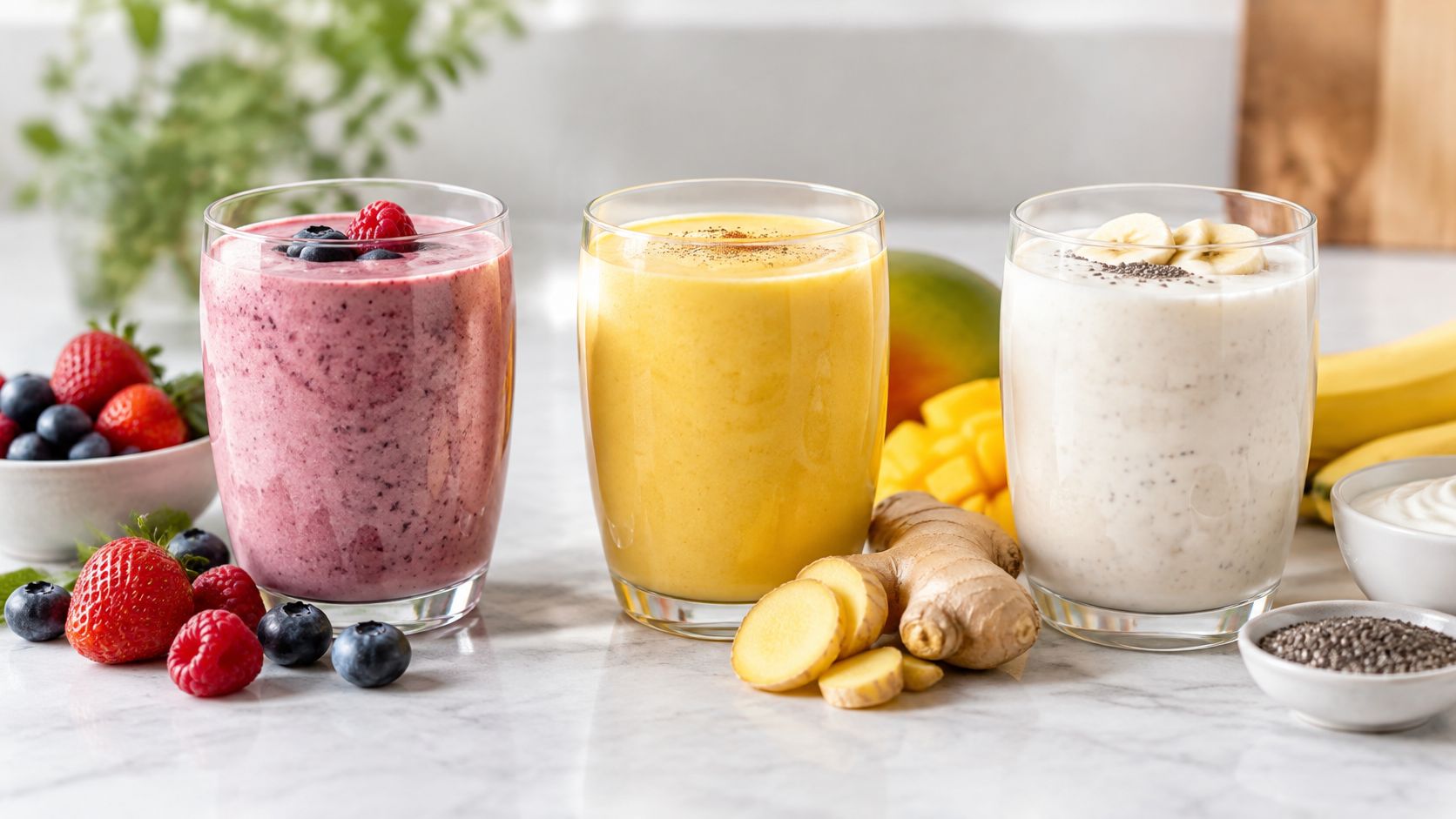
I always tell moms to start with the same simple greens powder smoothie base, then play with it, mama. Make it sweeter, colder, or thicker depending on what sounds good that day.
There's no perfect recipe here. Think of these as starting points you can bend to fit your appetite.
Which Blend Fits How You Feel Today?
Some days fruit sounds amazing, other days nothing does. Here's a quick cheat sheet for matching your blend to how you're actually feeling.
| Variation | Best moment | Flavor and texture notes | Watch-outs |
|---|---|---|---|
| Mild berry blend | Metallic taste | Soft, fruity, and easy to sip | Added sugar may feel heavy |
| Cold ginger blend | Queasy mornings | Bright and refreshing | Ginger can taste sharp |
| Creamy snack blend | Postpartum hunger | Thick, satisfying, and smooth | Use yogurt only if dairy suits you |
| Dairy-free blend | Lactose intolerance | Familiar and easy to drink | Check the milk ingredient label |
Pick the one that feels doable right now. You can always rotate through them as cravings and nausea shift.
How Do You Match Taste to the Moment?
For a mild berry blend, just blend water with half a banana, a handful of blueberries, and your measured greens powder. If everything tastes a little metallic, strawberries, blueberries, or soft pear tend to go down best.
Fruit does a great job covering that grassy flavor. But it does add natural sugars, too.
So skip the extra honey or sweetener if you're already feeling full. Go by how your stomach feels, not by any detox rules.
What Flavor Swaps Can Make It Easier to Sip?
Keep this list on your fridge for those low-energy mornings, mama:
- More mellow: banana, pear, or berries
- Cooler: frozen mango or a few ice cubes
- Slightly spicy: a small amount of ginger
- Creamier: yogurt, only if you tolerate dairy
- Dairy-free: coconut, oat, or another milk already familiar to you
Feeling queasy? Try a cold ginger-forward blend with water, frozen mango, banana, and just a touch of ginger. Sip it slow through a straw, and give yourself permission to pause.
When you're starving between feeds, go for a thicker snack blend. Blend yogurt, banana, berries, and greens powder, then thin it with liquid until it's sippable. It holds up really well in a sealed cup for a postpartum snack run.
And for a dairy-free option, stick with a milk alternative you already know and like. Add a little more or less until the texture feels easy to swallow.
The best greens powder smoothie is the one you can comfortably finish.
Just remember, needs around ingredient safety and total vitamin intake can look different in pregnancy and while breastfeeding. Run labels by your clinician, especially when you're adding prenatal powder to a smoothie.
And if you're sipping alongside your prenatal, the full capsule contents must be consumed. Feed Mom & Me Complete Prenatal Vitamin Plus DHA includes folate, choline, and DHA to discuss as part of your care routine.
Want another fruity idea? try the chocolate protein strawberry smoothie recipe.
How Do You Choose a Safe Greens Powder?
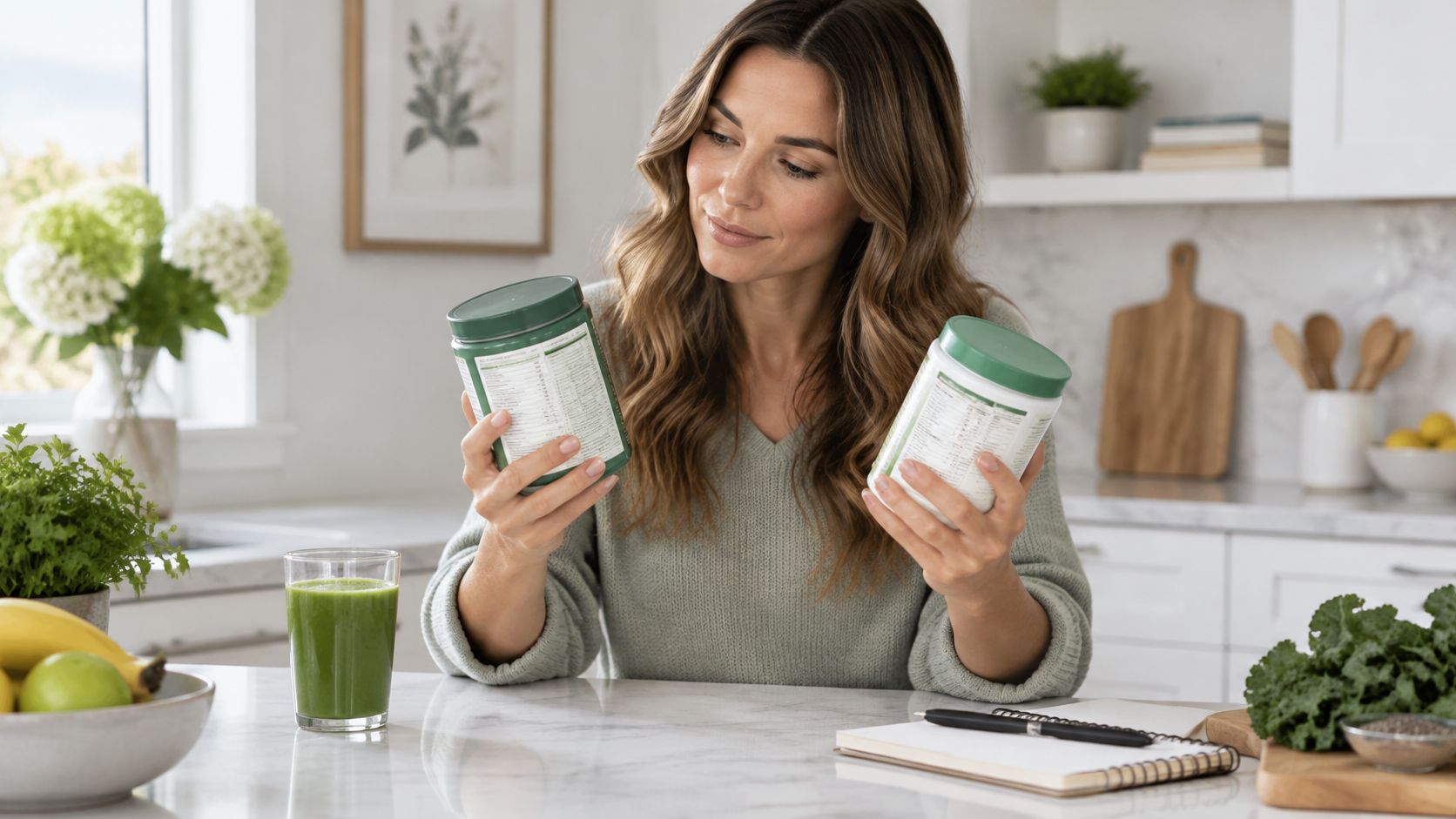
Standing at the counter with two jars in your hands is pretty familiar if you're shopping for a greens powder smoothie, mama. Pretty labels don't tell you much, though.
What actually matters is what's inside and whether it fits your prenatal routine.
What Should You Look For on the Label?
Flip it over and start with the serving size. Sometimes one scoop isn't actually one serving, and that changes everything else on the panel.
Then scan for added vitamins that might double up with your prenatal, plus caffeine, sweeteners, herbs, and any extracts you don't recognize.
Ask yourself these quick questions:
- Is it actually made for pregnancy or nursing?
- Does it list every ingredient, or hide behind a proprietary blend?
- Is it selling you on "detox," "cleanse," or weight loss?
- Do you need it gluten-, soy-, or dairy-free?
- Is third-party testing, Non-GMO, or purity testing spelled out clearly?
You can only count these as pluses if you can verify them on the product or brand website. Reading up on supplement guidance for whole-person health can make those claims a little easier to sort through.
How Does It Fit With Everything Else You Take?
Most of us aren't taking just one thing. A prenatal plus a greens powder plus anything else in your cabinet can add up fast, mama.
Bring the full ingredient panel to your OB-GYN, midwife, or dietitian. That's especially important with thyroid, kidney, or medication concerns.
Just because everyone is buying it doesn't mean it beats real vegetables.
If you want to understand the testing piece better, check Feed Mom & Me’s guide to third-party testing.
For something simple to bring to your next appointment, Feed Mom & Me Complete Prenatal Vitamin Plus DHA has folate, choline, and DHA in a soy-free, gluten-free, dairy-free vegetarian formula. Ask your provider if it works with the greens powder you like.
How Does a Smoothie Fit With Your Prenatal Routine?
A greens powder smoothie is great next to your prenatal — not as a swap for it, mama. Think of your smoothie as extra help from real food, like a friendly sidekick, while your prenatal covers what food alone usually misses. Check with your OB-GYN, midwife, or dietitian to land on the combo that makes sense for you.
What Are Three Important Nutrients to Know?
Folate, choline, and DHA all do something different:
-
Folate is early building material. It supports cell division and healthy neural tube development. During pregnancy you need about 600 micrograms a day. Good sources include:
- Leafy greens, beans, and lentils
- Fortified breads and cereals
- Asparagus and citrus fruits
-
Choline helps build the brain. It supports brain and nervous system development. The pregnancy target is 450 milligrams a day. Good sources include:
- Eggs, meat, and fish
- Dairy, soybeans, and cruciferous veggies like broccoli
- DHA is a separate supporting fat. It helps with brain and eye development, with a recommended 200 milligrams a day. Leafy greens just don’t supply it reliably, so fish, eggs, and an algae-based source are safer bets, per peer-reviewed studies.
Your smoothie can sneak more veggies into your day, but your prenatal rounds out the plan.
What If You Open a Prenatal Capsule Into Your Smoothie?
Feed Mom & Me capsules can be opened right into a smoothie or another snack, mama. Just drink every bit of the powder so you’re getting the same as swallowing the capsule whole.
If some settles in the blender or sticks to your glass, you didn’t get the full serving. Add a splash of water, swirl it around, and drink that too.
How Do You Build a Complete Routine?
Feed Mom & Me Complete Prenatal Vitamin Plus DHA pairs well with greens because it offers DHA and choline, two nutrients your smoothie probably won’t cover on its own. It also comes with a smoothie recipes ebook when you need a quick idea.
For dosage help, read our guide to how to take prenatal vitamins correctly. Then have your provider look over the whole routine — your greens powder, your prenatal, and what you’re eating day to day.
How Can You Fix Taste, Texture, and Queasiness?
Blending should feel easier than drinking it with a grimace, mama. If yours tastes grassy, add berries, citrus, or pour it over extra ice.
Even a handful of strawberry or blueberry can take that bitter edge off. It won't turn it into dessert, just something you actually want to finish.
How Do You Fix Taste and Texture?
For a chalky blend, add another splash of liquid and let it run longer. Stop once to scrape down the sides, then blend again.
Still powdery? Some greens powders just need more time to fully break down.
How Can You Calm a Queasy Morning?
For nausea, go small, cold, and slow through a straw. If the blender sound or smell bothers you, hit pause and step away, mama.
Common queasy-morning struggles include:
- Smell sensitivity to cooking or the blender
- Metallic taste that makes water unappealing
- Full, heavy feeling after sweet drinks
- Morning vomiting that makes big meals impossible
A greens powder smoothie is not a treatment for morning sickness. Call your provider if symptoms feel severe or hard to manage.
For more ideas on queasiness, read natural pregnancy nausea relief options and learn about gentle exercise for pregnancy nausea if movement feels comfortable for you.
Prep what you can ahead, but drink the finished smoothie the same day. If you have to refrigerate it, use a covered container and keep it brief.
Never save a partial medicated smoothie as a guessed dose. You won't know how much active powder is left in that sip.
If the drink separates, stir it well before the last sip.
This matters most when you've opened a prenatal capsule into the blend. That settled powder hides at the bottom, so swirl the jar and rinse it with water to get it all.
What Are Common Questions About Greens Powder Smoothies?
Can You Have One Every Day?
Yes, mama — if your provider gives that specific product the thumbs-up. Make it a daily thing only after you've scanned the label for added vitamins, herbs, caffeine, and sweeteners, and you're sticking to the full labeled serving.
One more thing to know. If you open a prenatal capsule into your smoothie, you have to finish the whole glass to get what you'd get from swallowing it whole.
Does Blending Destroy Nutrients?
Not really. Blending mostly just changes the texture, like turning a salad into a soup — same ingredients, easier to swallow. It can nudge some heat-sensitive nutrients, but what you're actually getting still comes down to ingredients, portions, and how much you drink.
Cold fruit, fresh greens, and a measured scoop can make sipping so much easier, and this simple green smoothie recipe is a great base to start from and tweak.
Can It Replace a Prenatal Vitamin?
Short answer: no, mama. A greens powder can add some folate and other helpful nutrients, but it can't reliably cover what a prenatal does — especially choline and DHA.
Think of your smoothie as sitting next to your prenatal, not instead of it. And the same rule applies to a prenatal powder: it only counts if you drink the entire serving.
What About Detox or Weight-Loss Blends?
Skip those completely while you're pregnant or breastfeeding. Anything that says “detox,” “cleanse,” or weight-loss is not made for this season, mama.
Always check for full ingredients, serving size, third-party testing, and flag anything questionable for your provider to review.
Imperfect sips still count when they fit your care plan.
You’ve got this, mama — every nourishing sip is a loving step for you and your baby. For a prenatal supplement to discuss with your clinician, consider Feed Mom & Me Complete Prenatal Vitamin Plus DHA, with folate, choline, and DHA from our women-owned brand built by moms, for moms. Learn more at Feed Mom & Me and always check with your healthcare provider for what’s right for you.