
Slow Release Iron Pregnancy Guide for Expecting Moms
Published:Updated:
You're staring at a prenatal bottle, one hand on your belly, wondering whether slow-release iron is the gentler answer or just clever wording on a label. Maybe standard iron has already brought nausea, constipation, or stomach discomfort into your pregnancy routine. Maybe your blood test showed low iron, and now every product seems to promise a different kind of solution.
The useful question isn't just whether slow release is “better.” It's whether the release mechanism, elemental iron amount, dosing schedule, laboratory results, and side-effect history fit your situation. During pregnancy, slow release can be a tolerability tool, but it isn't automatically a treatment upgrade or a substitute for medical guidance.
Table of Contents
- Why Slow-Release Iron Deserves a Closer Look in Pregnancy
- Why Iron Matters So Much During Pregnancy
- Understanding Elemental Iron and How to Read a Supplement Label
- How Slow-Release and Enteric-Coated Iron Actually Work
- Slow-Release Iron Compared with Standard and Alternate-Day Options
- Smart Timing, Food Pairings, and What to Avoid
- Preventing Deficiency Versus Treating Anemia and When to Escalate
- Talking With Your Provider and Choosing a Gentle Prenatal
Why Slow-Release Iron Deserves a Closer Look in Pregnancy
Slow-release iron is designed to spread iron exposure through the digestive tract instead of delivering the full amount at once. That may feel easier on your stomach, especially if standard tablets trigger nausea or constipation. But gradual release can also change where iron becomes available for absorption, so gentler doesn't always mean more effective.
Your prenatal bottle may contain routine iron for prevention, while a separate treatment plan may require a different amount and formulation. The number printed beside elemental iron matters more than the total weight of the iron compound. Your provider may also consider your hemoglobin, ferritin, diet, gestational age, symptoms, and whether you've been able to take the product consistently.
The reassuring takeaway: slow release is one option in a larger toolkit. It may help you keep taking iron, but it doesn't decide your dose or diagnose anemia.
Pregnancy makes this decision more important because your body's iron needs rise as your blood supply expands and your baby grows. This guide will help you understand why that happens, how to read an iron label, what slow-release and enteric-coated products do differently, and how they compare with standard and alternate-day options.
You'll also find practical ideas for timing iron around meals, calcium, tea, coffee, and nausea. Above all, you'll learn when a product choice is reasonable to discuss and when your next step should be testing or a conversation with your obstetric clinician, midwife, or pharmacist.
Why Iron Matters So Much During Pregnancy
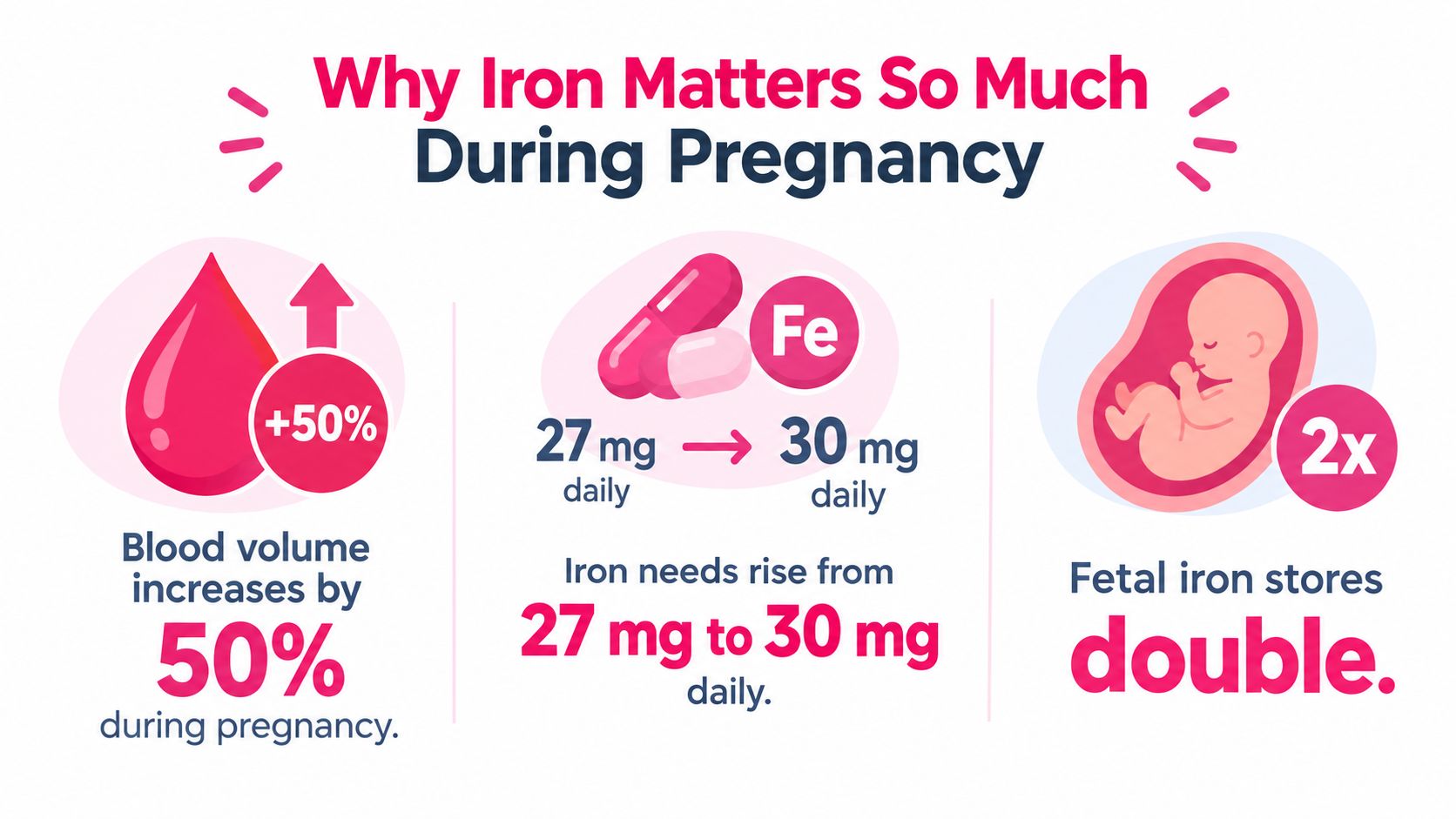
Pregnancy asks your body to build a larger oxygen-delivery system while also supplying a developing baby and placenta. Iron is the raw material your body uses to make hemoglobin, the protein in red blood cells that carries oxygen where it needs to go.
As pregnancy progresses, your blood volume expands by about 35%, and iron needs rise with it. WHO antenatal guidance notes that iron demand increases about threefold during the second and third trimesters, reaching approximately 5.0 mg of absorbed iron per day (WHO antenatal iron supplementation guidance). That helps explain why iron can become a bigger issue even for someone who ate reasonably well before pregnancy.
Absorption is part of the story. Food iron is not absorbed completely, and first-trimester nausea, food aversions, constipation, or a smaller appetite can make iron-rich meals harder to manage. In other words, the gap is not always about doing something wrong. Sometimes the math changes faster than your usual routine can keep up.
Anemia also becomes more common later in pregnancy. Historical U.S. surveillance of low-income pregnant women enrolled in public health programs found anemia in 9% of the first trimester, 14% of the second, and 37% of the third. That pattern is one reason prevention gets so much attention in prenatal care.
Prevention and treatment are different jobs
This distinction matters. A daily prenatal iron dose is usually meant to help prevent deficiency as demands rise. Treatment for confirmed iron-deficiency anemia is a separate job, and it may involve a different dose, different schedule, and follow-up testing.
Globally, WHO estimates that more than 40% of pregnant women are anaemic, and recommends daily supplementation with 30–60 mg of elemental iron plus 400 micrograms of folic acid during pregnancy, starting as early as possible after conception. Slow-release products fit into this conversation mainly as a tolerability tool, not as an automatic treatment upgrade.
If you're also looking at the wider nutrient picture before or during pregnancy, this guide to magnesium for conception can help round out that discussion.
Understanding Elemental Iron and How to Read a Supplement Label
Supplement labels can feel like tiny puzzles. You may see a compound such as ferrous fumarate or ferrous sulfate, followed by a number that doesn't seem to match the amount of iron your clinician mentioned.
Use an orange-juice analogy. The compound is like frozen concentrate, while elemental iron is the actual orange juice available in the glass. The compound's total weight includes the chemical partner attached to iron. For comparing products, the amount of elemental iron is the number that matters.
Find the number that answers the real question
Look for “Iron” in the Supplement Facts panel and check the amount per serving. Don't compare capsules by their total milligram weight, capsule size, or the name “slow release.” Two products can contain different compounds and still need to be compared by elemental iron.
The main reference points are:
| Reference | Amount | Purpose |
|---|---|---|
| WHO antenatal prevention | 30–60 mg elemental iron daily with 400 micrograms folic acid | Routine pregnancy supplementation |
| U.S. prenatal guidance | 27 mg elemental iron daily | Daily pregnancy target used in U.S. prenatal supplementation |
| Pregnancy Tolerable Upper Intake Level | 45 mg per day from food, supplements, and medications combined | Safety boundary, not a treatment target |
The WHO recommendation appears in its antenatal iron supplementation guidance, while U.S. nutrient guidance is available from the National Institutes of Health Office of Dietary Supplements. About 27.9% of pregnant women in the United States exceed 45 mg per day when food and supplements are counted, according to that NIH resource.
That upper limit isn't a number to chase. If blood tests show anemia, your clinician may recommend a higher therapeutic dose while monitoring your response. Don't add a separate slow-release tablet to your prenatal just because the label appears low. Start by checking the actual elemental iron amount and discussing it with your care team. This breakdown of iron in a prenatal vitamin can also help you become more comfortable reading labels.
How Slow-Release and Enteric-Coated Iron Actually Work
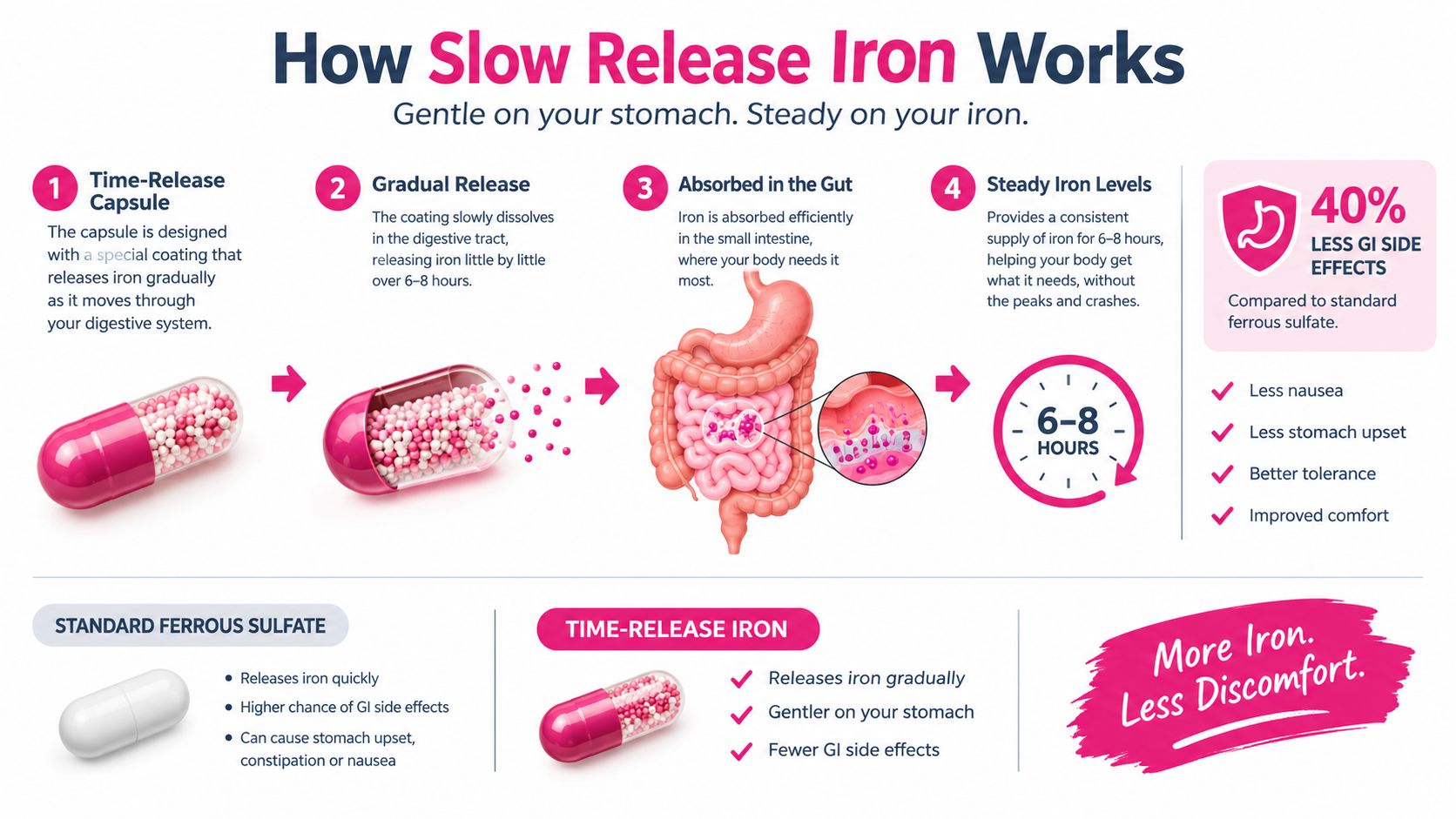
Think of immediate-release iron as opening a garden sprinkler fully for a short burst. Slow-release iron is more like a timed sprinkler that releases water gradually. The goal isn't necessarily to deliver more water. It's to change the pace and location of delivery.
Iron that remains unabsorbed can irritate the digestive tract. WHO notes that gastrointestinal effects increase with the amount of elemental iron released in the stomach, particularly when iron is taken on an empty stomach (WHO guideline on daily iron and folic acid supplementation). A gradual release may lower the local concentration that contributes to nausea, constipation, abdominal discomfort, vomiting, or diarrhea for some people.
Slower delivery can create an absorption trade-off
The upper small intestine is an important site for iron absorption. If a formulation releases much of its iron farther along the digestive tract, less iron may contact the areas best suited to absorb it. That means a product can feel gentler while delivering a lower absorbed amount than expected.
Slow-release generally means the tablet or capsule releases iron over time as it moves through the gastrointestinal tract. Enteric-coated means the product has an acid-resistant coating designed to remain intact in the stomach and open later. These terms overlap in purpose, but they aren't identical technologies.
A recent clinical review advises caution with slow-release and enteric-coated forms because releasing iron beyond the upper small intestine may reduce contact with primary absorption sites. It also discusses 40–80 mg of elemental iron once daily or on alternate days as an approach to consider when nausea or stomach discomfort limits adherence (oral iron clinical review).
If you're exploring broader supplement categories with a qualified practitioner, you can find functional medicine supplements as part of that wider conversation. For pregnancy constipation specifically, this guide to constipation from prenatal vitamins offers practical context.
Slow-Release Iron Compared with Standard and Alternate-Day Options
There isn't one winning iron format for every mama. The right choice depends on whether you're preventing deficiency or treating confirmed anemia, how your stomach responds, and what your laboratory results show.
| Option | How it works | Best for |
|---|---|---|
| Slow-release iron | Releases elemental iron more gradually through the gastrointestinal tract | Someone who struggles with digestive symptoms and needs a tolerability discussion with a provider |
| Standard ferrous salts | Delivers iron in a form that commonly exposes absorption sites in the upper digestive tract | A clinician-directed prevention or treatment plan when absorption and dose are priorities |
| Alternate-day dosing | Changes the rhythm of exposure rather than necessarily changing the formulation | Someone whose side effects or adherence problems may improve with a different schedule, when a clinician approves it |
Standard products may contain ferrous sulfate, ferrous fumarate, or ferrous gluconate. Their compound names don't tell you the full story, because the elemental iron amount differs by product. Your provider or pharmacist can compare the label with your intended dose.
What pregnancy research adds
The PANDA dose-finding trial found that daily, alternate-day, and three-times-weekly regimens all saw iron-status decline during pregnancy. At 26–30 weeks, 69%–72% of participants remained iron deficient despite supplementation (review of oral iron evidence). That result doesn't mean supplementation is pointless. It shows why a comfortable product still needs an adequate dose and follow-up.
A pilot trial from 2024–2025 found overall tablet-taking adherence of 82.5%, with adherence lower for daily dosing at 47% than for alternate-day dosing at 62% or three-times-weekly dosing at 61% (Global Health at Oxford publication). Those findings can help explain why schedule matters, but they don't give you permission to switch independently.
A practical match: choose the option by your symptoms, blood work, elemental iron amount, and provider's plan, not by the words “slow release” alone.
Smart Timing, Food Pairings, and What to Avoid
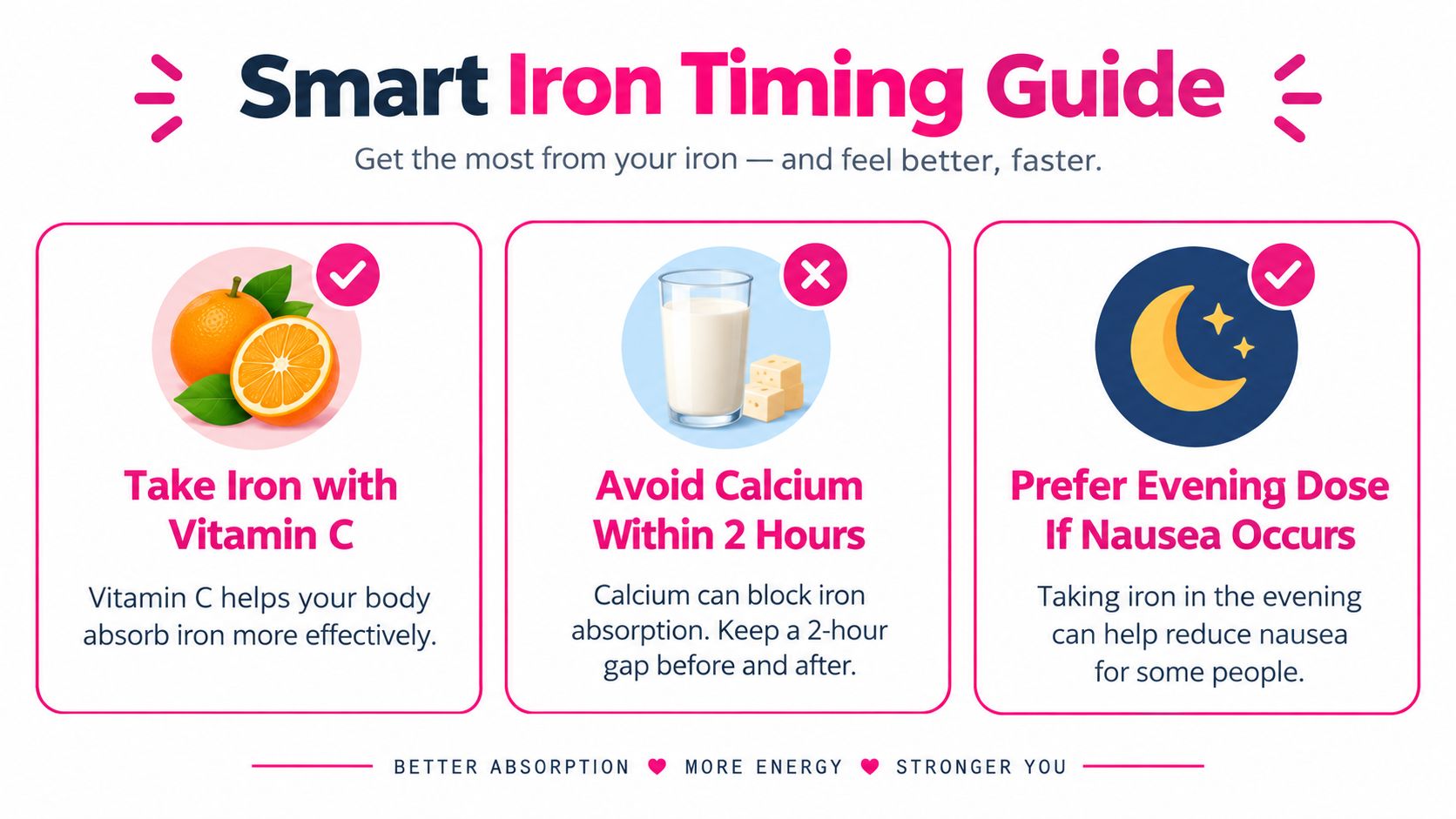
Iron timing often becomes a small daily experiment. If mornings already bring nausea, your clinician may be comfortable with an evening dose or a small snack, depending on the product and your treatment plan. Taking iron with food can improve tolerability, although food may reduce absorption.
Vitamin C foods can be useful partners. Try pairing your supplement or iron-containing meal with:
- Citrus fruit: Oranges and grapefruit can add a vitamin C source.
- Berries: Strawberries are an easy snack pairing.
- Vegetables: Bell peppers can provide vitamin C alongside meals.
Some items can interfere with absorption, so spacing is often more helpful than skipping:
- Calcium: Dairy foods and calcium supplements may interfere with iron absorption.
- Tea and coffee: These drinks can reduce absorption when taken too close to iron.
- Antacids: Some antacids can interfere with iron and need individualized spacing.
- Other minerals: Large supplemental iron doses can reduce zinc absorption.
Your pharmacist can help create a timing plan that fits your prenatal, calcium supplement, medications, meals, and sleep schedule. The vitamin C benefits during pregnancy guide may also help you build food pairings without making your routine complicated.
Keep all iron supplements away from children. Very large amounts can cause severe intestinal injury, organ failure, coma, seizures, or death, according to the NIH Office of Dietary Supplements iron fact sheet. If you suspect an overdose, seek urgent medical help.
Preventing Deficiency Versus Treating Anemia and When to Escalate
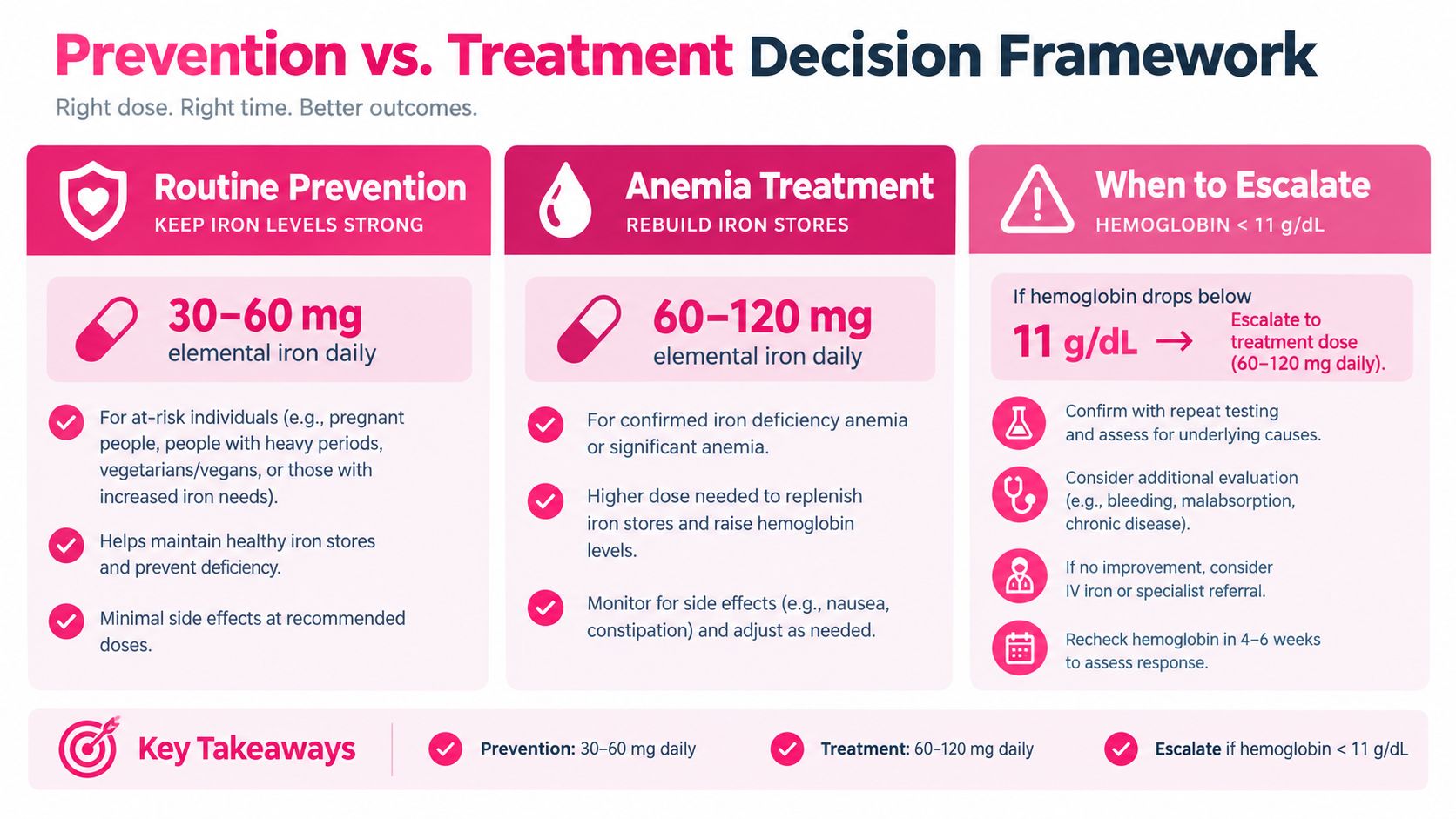
This is the decision point that prevents many label misunderstandings. Routine prevention supports everyday pregnancy needs. Anemia treatment responds to a diagnosed problem and usually requires a clinician-directed dose, laboratory monitoring, and a plan for follow-up.
For routine antenatal prevention, WHO recommends 30–60 mg of elemental iron daily with folic acid, while many U.S. prenatal supplements provide 27 mg daily. For diagnosed iron-deficiency anemia, contemporary clinical guidance describes treatment doses of approximately 60–120 mg elemental iron daily (clinical guidance review on oral iron in pregnancy).
A simple monitoring pathway
Your clinician may use this sequence:
- Start with testing: Hemoglobin and ferritin help assess anemia and iron stores.
- Choose the plan: The dose and formulation should reflect your results, diet, gestational age, symptoms, and tolerance.
- Recheck after starting: Follow-up testing helps confirm whether your hemoglobin and iron indices are responding.
- Investigate nonresponse: Persistent deficiency may relate to missed doses, ongoing blood loss, malabsorption, inflammation, or an incorrect diagnosis.
- Escalate when needed: A different oral preparation, intravenous iron, or further evaluation may be appropriate for some people.
Iron loss can have more than one possible source. If bleeding concerns you, ask your clinician whether issues such as iron loss from hemorrhoids need evaluation.
Don't self-escalate a slow-release prenatal or combine several iron products. Excess iron can increase gastrointestinal toxicity and create dosing errors. Persistent fatigue, shortness of breath, unusual weakness, or worsening symptoms deserve a conversation and, when appropriate, testing rather than guesswork. You can also review food-based ideas in this guide on how to increase iron intake during pregnancy.
Talking With Your Provider and Choosing a Gentle Prenatal
Bring the bottle, not just the question, to your appointment. Ask your provider:
- About your results: What are your current hemoglobin and ferritin levels?
- About your history: Have you had constipation, nausea, reflux, or other reactions to iron?
- About your health: Could a gastrointestinal condition, dietary restriction, inflammation, or blood loss affect your iron status?
- About the product: Does its elemental iron amount and release mechanism fit your needs?
- About follow-up: When should you repeat testing, and what response should you expect?
A prenatal is one part of your nutrition plan, not a replacement for individualized care. For more help comparing features, you can read this guide on how to choose a prenatal vitamin.
Feed Mom & Me Complete Prenatal Vitamin Plus DHA is one option to discuss with your provider. It contains 18 mg of iron as ferrous fumarate in a delayed-release vegetable capsule, along with methylfolate, choline, selenium, and DHA; the formula also includes peppermint and organic ginger. Feed Mom & Me is women-owned and built by moms, for moms, with nutrition education intended to support conversations with your healthcare team.
Feed Mom & Me offers a Complete Prenatal Vitamin Plus DHA with a delayed-release capsule and nutrients including iron, methylfolate, choline, selenium, and DHA. If you're comparing prenatal options for pregnancy or postpartum support, visit Feed Mom & Me and bring the product details to your OB, midwife, or dietitian.