
Vitamin B6 Pregnancy Guide: Dosage, Safety, and Nausea
Published:Updated:
You're tired, queasy, and probably staring at several bottles on the kitchen counter, wondering whether your prenatal vitamin already contains enough vitamin B6, whether your nausea medicine adds more, and whether “a little extra” could be harmful. That confusion is understandable, especially when pregnancy advice often treats B6 as both an everyday nutrient and a remedy for morning sickness.
Vitamin B6 can be helpful, but the safest approach is thoughtful rather than automatic. You need to consider the total amount from your prenatal, separate supplements, nausea products, and fortified foods, then match that total to the reason you're taking it. This guide will help you understand vitamin B6 in pregnancy without fear or guesswork.
Table of Contents
- What Is Vitamin B6 and Why Do You Need It During Pregnancy?
- How Does Vitamin B6 Help With Morning Sickness and Nausea?
- What Is the Safe Dosage of Vitamin B6 During Pregnancy?
- Which Foods Are Rich in Vitamin B6 for Pregnant Moms?
- Can You Take Too Much Vitamin B6 While Pregnant?
- How to Choose the Right Prenatal Vitamin With Vitamin B6?
What Is Vitamin B6 and Why Do You Need It During Pregnancy?
After a restless night and a breakfast of crackers, it may be hard to picture the chemistry happening inside your body. Vitamin B6, also called pyridoxine, supports more than 100 enzyme reactions involved in protein metabolism, neurotransmitter production, hemoglobin formation, and immune function, according to the National Institutes of Health Office of Dietary Supplements.
Pregnancy increases the body's work of building tissues, adapting to change, and transporting oxygen. B6 helps process amino acids from protein-rich foods and contributes to neurotransmitter production. These chemical messengers support communication throughout the nervous system as your baby's brain and nervous system develop.
Your daily requirement is a baseline
For pregnant adolescents and adults, the NIH lists a recommended dietary allowance of 1.9 mg of vitamin B6 per day. The recommendation is 1.3 mg per day for nonpregnant adults ages 19–50 and 2.0 mg per day during lactation, as summarized by the National Institutes of Health Office of Dietary Supplements.
That amount supports normal nutrition. It is not automatically a treatment dose for nausea. Food and a properly formulated prenatal may cover your daily need, while extra B6 from a separate supplement, nausea product, or fortified food can raise your overall intake without being obvious.
Read every label as if you were adding receipts. Record the B6 in your prenatal, then add amounts from nausea medicines, standalone supplements, energy drinks, and fortified foods. The total matters more than any single bottle. B6 is water-soluble, but that does not make unlimited intake appropriate. A guide to fat-soluble versus water-soluble vitamins can clarify the difference.
Prenatal nutrition also extends beyond pregnancy. If you are preparing for birth and recovery, you can browse postpartum vulvar care tips for practical comfort guidance after delivery.
How Does Vitamin B6 Help With Morning Sickness and Nausea?
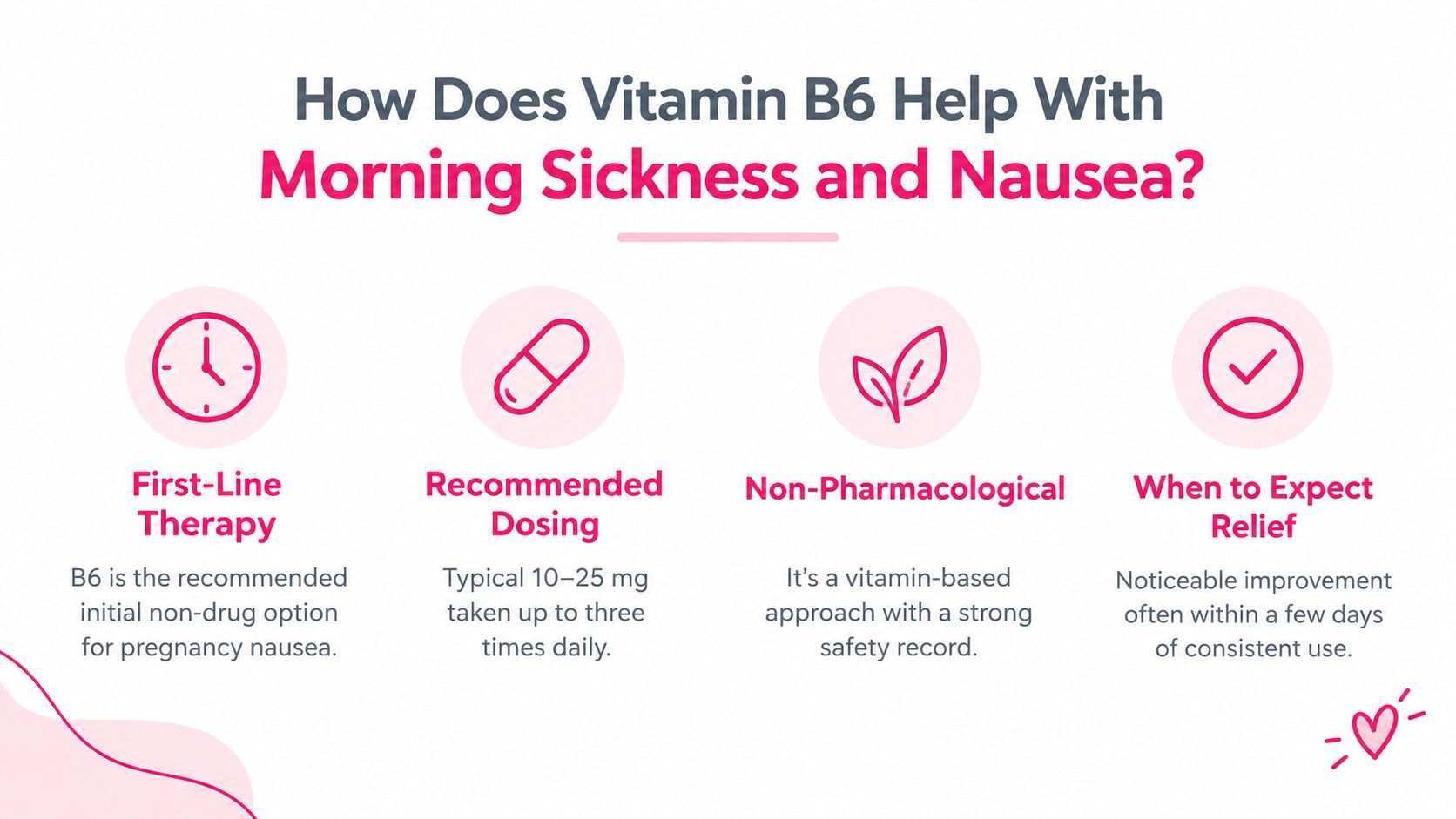
A day can start with nausea before breakfast, followed by trouble keeping water down. You may avoid strong smells and choose bland foods, yet still feel miserable. Vitamin B6 is commonly used under medical supervision as an initial treatment for pregnancy-related nausea and vomiting. It may help, but it is not a guaranteed cure and cannot replace assessment for dehydration or severe symptoms.
The American College of Obstetricians and Gynecologists recommends 10–25 mg three or four times daily for vitamin B6 monotherapy, according to the NIH consumer vitamin B6 fact sheet. If nausea continues, a clinician may suggest adding doxylamine. The schedule can total 30–100 mg per day, so check the exact product, dose, and duration with a healthcare professional.
What the evidence can and can't tell you
A systematic review evaluating 18 studies found that B6 alone improved nausea measures in several trials, although results varied. Your clinician should consider symptom severity, hydration, other medicines, and your health history before recommending treatment.
B6 may reduce nausea for some people without making a high-dose supplement appropriate for everyone. Treating nausea and meeting daily nutrition needs are separate decisions with separate doses. That distinction matters when you audit your total intake, because a prenatal, nausea medicine, standalone supplement, or fortified food may each contribute B6.
Small routines can make eating and drinking more manageable alongside clinician-approved treatment:
- Eat before your stomach is empty: Keep a simple snack nearby and try small amounts instead of waiting for a large meal.
- Separate drinks from difficult foods: Sip fluids in the way your stomach tolerates best, particularly if drinking with meals worsens nausea.
- Choose tolerable textures: Cold, plain, soft, or dry foods may feel easier than rich or strongly scented dishes.
- Track hydration: Tell your healthcare professional if vomiting makes it difficult to keep fluids down.
- Review every medicine: Bring prescription products, over-the-counter nausea remedies, supplements, and fortified drinks into the same B6 check.
For more food-based approaches, explore natural pregnancy nausea relief strategies. A clinician can help determine whether B6 alone fits your symptoms or whether another treatment is needed.
What Is the Safe Dosage of Vitamin B6 During Pregnancy?
A prenatal, a nausea medicine, and a fortified drink can all place B6 on the same daily tally. The practical safety question is therefore, “How much B6 am I getting from every source, and why am I taking it?”
The 1.9 mg pregnancy RDA noted above covers ordinary nutritional needs. Nausea treatment may use a larger amount under clinician direction. Upper limits also differ by guidance: U.S. standards list 100 mg per day during pregnancy, while a newer European Food Safety Authority-derived limit lists 12 mg per day for adults, including pregnancy and lactation. The lower European limit reflects concern about peripheral neuropathy with excessive or prolonged intake.
These limits are not interchangeable instructions. They show why “safe in pregnancy” depends on the dose, duration, and product. A label audit helps turn several small contributions into one clear daily total.
Use a simple label audit
Make one list before adding a new supplement:
- Prenatal vitamin: Find “vitamin B6” or “pyridoxine” in the Supplement Facts panel.
- Standalone B6: Record the amount per tablet or serving.
- Nausea medicine: Check whether a doxylamine-pyridoxine product contains B6.
- Fortified foods and drinks: Include products listing added pyridoxine or vitamin B6.
- Daily total: Add the amounts used in one day.
A separate B6 supplement should wait until your obstetric clinician or midwife reviews the complete list.
Check whether a label names pyridoxine hydrochloride or gives total vitamin B6. For your audit, use the declared vitamin B6 contribution. If the wording is unclear, ask a pharmacist rather than guessing. A phone note with product names, serving sizes, and timing makes the review easier.
If your clinician recommends B6 for nausea, ask: What total daily amount should I use? How long should I take it? Does my prenatal or nausea medicine already contribute to that amount? You can review this guide to prenatal vitamin dosing before the appointment.
Which Foods Are Rich in Vitamin B6 for Pregnant Moms?
Food can provide B6 alongside protein, fiber, and other nutrients that make meals more satisfying. For many people, a varied diet plus a standard prenatal creates a sensible foundation for meeting the 1.9 mg pregnancy requirement, without turning every snack into a supplement calculation.
Because the verified guidance available here doesn't provide B6 amounts for individual foods, the table focuses on useful food choices and realistic serving ideas rather than invented milligram values.
| Food Source | Approximate B6 (mg) | Pregnancy-Friendly Serving Idea |
|---|---|---|
| Poultry | Not specified | Add cooked chicken or turkey to soup, rice, or a sandwich. |
| Fish | Not specified | Choose a pregnancy-safe fish preparation and serve it with potatoes or grains. |
| Potatoes | Not specified | Bake or mash them and pair them with eggs, beans, or vegetables. |
| Chickpeas | Not specified | Stir them into a mild hummus, salad, or warm bowl. |
| Bananas | Not specified | Try one with yogurt, oats, or a tolerated nut butter. |
| Spinach | Not specified | Fold cooked spinach into eggs, pasta, or a soft grain dish. |
| Pistachios and sunflower seeds | Not specified | Sprinkle a small portion over oatmeal or a yogurt snack. |
Make the meal work for your symptoms
If nausea is strong, start with the food you can tolerate, not the food that looks perfect on paper. A plain potato, a few bites of chicken, or a banana may be more realistic than a complicated recipe. As your appetite returns, combine B6-containing foods with protein and carbohydrates to create steadier meals.
Pregnancy food safety still matters. Cook animal foods thoroughly, follow guidance on fish choices, and discuss any concern about liver or other concentrated foods with your healthcare professional. For more meal-planning inspiration, see these top pregnancy foods selected by a registered dietitian.
Can You Take Too Much Vitamin B6 While Pregnant?
Pyridoxine toxicity affects the nerves first. Tingling, numbness, burning sensations, or unsteady hands can signal sensory neuropathy, a type of nerve damage. Pregnancy makes a hidden-dose check worthwhile because B6 may come from a prenatal, a nausea medicine, fortified foods, and a separate supplement.
Severe, progressive nerve damage has been reported after prolonged oral doses of 1–6 g per day for 12–40 months, amounts far above ordinary nutritional intake. The NIH professional vitamin B6 fact sheet summarizes this evidence. These figures do not describe a typical prenatal dose, but they show why total intake matters. Add the B6 listed on each product label before taking another supplement, and ask a pharmacist or clinician to review the combination.
Contact your healthcare professional promptly if you develop:
- Tingling or numbness: Pay attention to your hands, feet, or other limbs.
- Worsening coordination: Report difficulty walking, clumsiness, or balance changes.
- New nerve symptoms: Mention burning, altered sensation, or unexplained weakness.
- Cumulative exposure: Bring every bottle, including products used only occasionally, so the full daily intake can be checked.
Why B6 blood tests can be confusing
Pregnancy changes B-vitamin metabolism and circulating concentrations. A review in the Proceedings of the Nutrition Society reports that no pregnancy-specific reference ranges have been established for B-vitamin biomarkers that reliably show adequate maternal stores without risking maternal or fetal depletion.
A lower circulating result does not automatically prove dietary deficiency, while a higher result does not show that extra supplementation will improve pregnancy outcomes. Routine “optimal level” testing is not a simple wellness score.
A clinician may investigate B6 when your history raises concern, including prolonged vomiting, malabsorption, a restrictive diet, or another medical issue. Treating nausea, correcting documented deficiency, and meeting general prenatal nutrition needs are separate decisions.
How to Choose the Right Prenatal Vitamin With Vitamin B6?
A thoughtful prenatal label should help you answer basic questions without detective work. Look for a clearly stated serving size, transparent B6 content, and a formulation you can tolerate consistently. If the capsule makes you nauseated every time, even a nutritionally sound formula may not fit your routine.
What to compare on the label
- B6 amount: Record it before adding a standalone product or nausea medicine.
- Core prenatal nutrients: Consider whether the formula includes nutrients such as methylfolate, choline, and DHA that your healthcare professional wants you to take.
- Capsule design: Delayed-release vegetable capsules may be worth considering if standard prenatals upset your stomach.
- Ingredient transparency: Check for dietary restrictions, allergens, and unnecessary duplicate supplements.
- Your care plan: Ask your OB/GYN, midwife, or pharmacist to review the full combination.
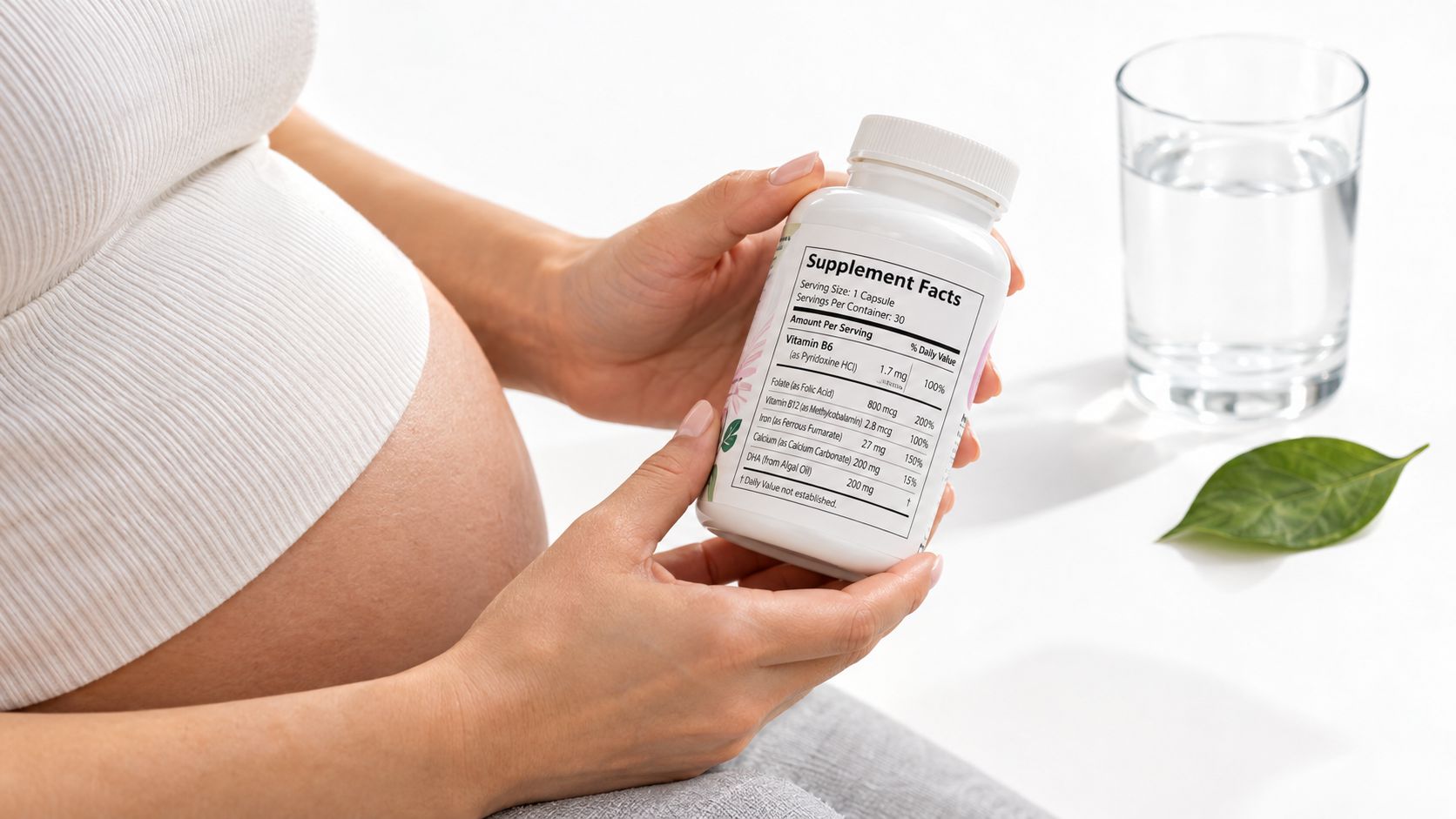
Feed Mom & Me Complete Prenatal Vitamin Plus DHA is one option that contains vitamin B6 alongside methylfolate, choline, and DHA. Its delayed-release vegetable capsules include peppermint and organic ginger, and the brand describes the formula as vegetarian, soy-free, gluten-free, dairy-free, and free of artificial colors, flavors, and chemical additives. Feed Mom & Me is women-owned and built by moms, for moms, with nutrition education intended to support conversations with healthcare providers.
The guide to choosing a prenatal vitamin can help you compare labels and tolerability. The World Health Organization reports insufficient evidence that routine pyridoxine supplementation improves overall maternal or newborn outcomes, while acknowledging that it may relieve pregnancy-related nausea, as summarized in this Cochrane review record. That distinction keeps the decision grounded: choose a prenatal for complete nutritional support, and use additional B6 for a clear clinical reason.
Feed Mom & Me offers a Complete Prenatal Vitamin Plus DHA with vitamin B6, methylfolate, choline, and DHA in a delayed-release capsule designed with sensitive stomachs in mind. Visit Feed Mom & Me to review the formula, educational resources, and options for supporting your nutrition from preconception through postpartum.