
How Much DHA While Breastfeeding: A Simple Guide
Published:Updated:
A tired nursing mama stands at the kitchen counter, holding a fish-oil bottle in one hand and a half-finished cup of tea in the other. She's wondering whether she ate enough fish this week, whether she should take another capsule, and whether missing DHA for a few days could somehow affect her baby forever.
If you're asking how much DHA while breastfeeding, the practical benchmark is usually 200–300 mg of DHA daily. International expert assessments have generally converged around that range, while the Food and Agriculture Organization's assessment of fats and fatty acids explains that recommendations vary by country and organization. The important part is that your total can come from lower-mercury seafood, fortified foods, and supplements, not necessarily from a capsule alone.
DHA is one supportive nutrient in a much larger picture that includes your overall diet, your health, responsive care, and your baby's individual needs. You don't need to achieve a perfect number every day, and taking more doesn't guarantee a smarter baby. You need a realistic plan that helps you maintain an adequate intake without adding unnecessary stress.
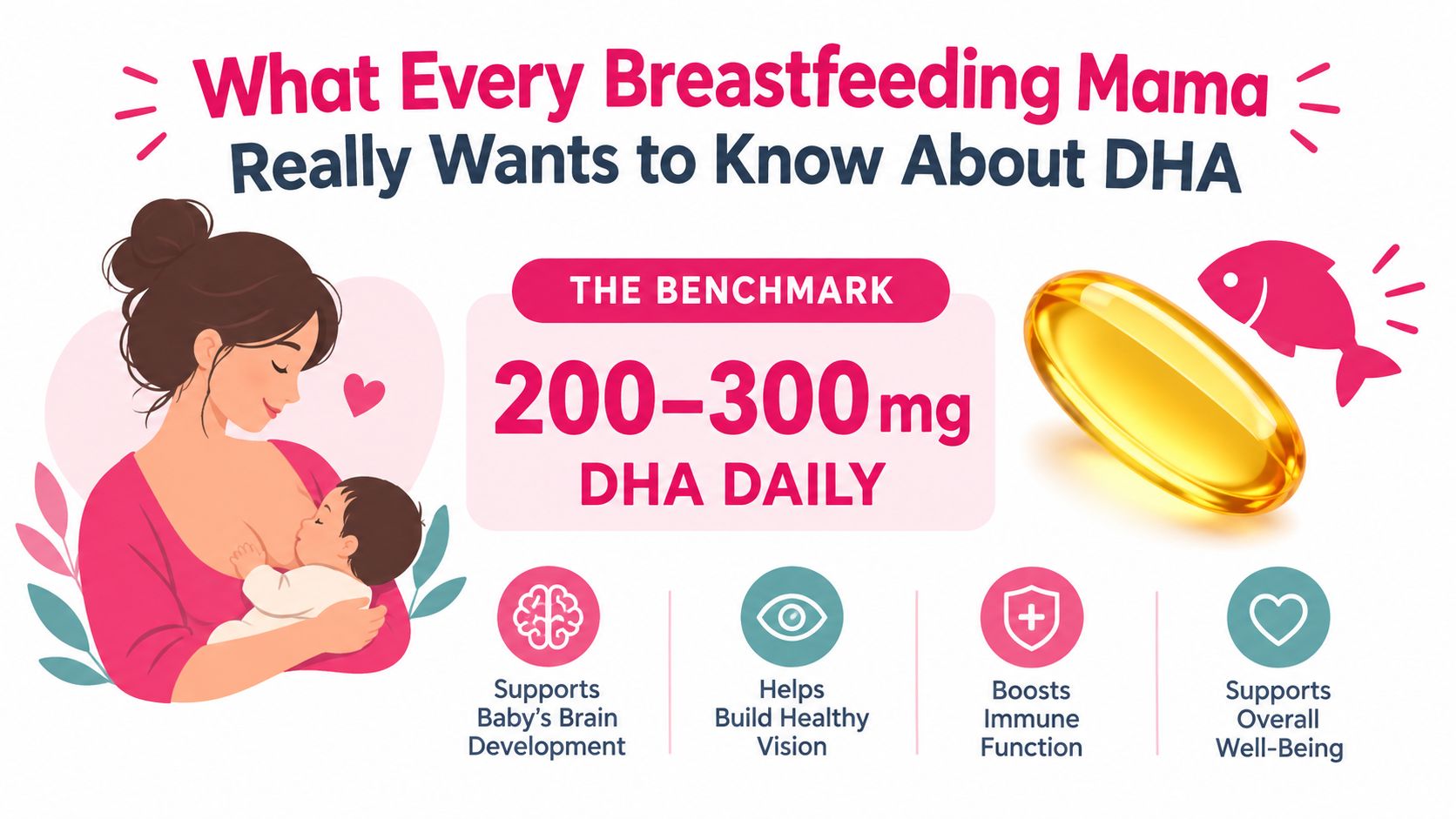
Table of Contents
- What Every Breastfeeding Mama Really Wants to Know About DHA
- What DHA Is and Why It Travels Into Breast Milk
- What the Research Says About DHA Doses During Lactation
- DHA From Food Versus From a Supplement
- Building Your Own DHA Plan Week by Week
- Setting Realistic Expectations for You and Baby
- Your Simple Takeaway and What to Ask Your Clinician
What Every Breastfeeding Mama Really Wants to Know About DHA
The short answer
The 200–300 mg of DHA per day figure is a planning benchmark, not a pass-or-fail test. The FAO assessment describes at least 200 mg of DHA within combined EPA and DHA intake for lactating adults and explains that recommendations can vary by organization and country. You can review the full context in the FAO report on fats and fatty acids.
Your daily total can come from several places. Lower-mercury seafood, fortified foods, and supplements all count, so the source matters less than building a routine that is realistic for you. A fish meal may cover part of your intake, while fortified foods or a supplement can help on days when cooking feels difficult. Vegetarian or vegan mamas can ask their clinician about algae-based DHA.
A practical rule: Count DHA across your usual routine, not only the amount printed on a supplement bottle.
A few clear questions can make the choice easier:
- How much do you need? Use the 200–300 mg daily range as a helpful target.
- Can food count? Yes. Seafood and fortified foods contribute to your total.
- Do you need a supplement? It depends on your usual diet, preferences, and medical advice.
- Will more improve development? Higher DHA exposure can raise DHA levels in milk and infant blood, but research has not shown consistent long-term developmental benefits.
Missing the target on a busy day, forgetting a capsule, or eating little fish for a week does not mean you have harmed your baby. DHA is one part of nutrition, alongside your overall diet, health, responsive care, and your baby's individual needs. A steady plan is more useful than chasing a perfect number, and taking more does not guarantee a smarter baby.
What DHA Is and Why It Travels Into Breast Milk
DHA, or docosahexaenoic acid, is a long-chain omega-3 fatty acid. It forms part of the membranes of cells in the brain and retina, which helps explain why researchers pay attention to DHA during infancy, a period of rapid growth and visual development.
Think of your bloodstream as a delivery route. After you eat DHA or absorb it from a supplement, it circulates through your body. Your mammary glands then use available fatty acids when they produce milk fat. Some DHA reaches your baby through nursing, so your intake can influence the DHA concentration in breast milk.
The FAO assessment estimated that exclusively breastfeeding mothers transfer approximately 110 mg of DHA per day to their infants on average. That doesn't mean every mother transfers the same amount. Seafood intake, body stores, lactation stage, dietary pattern, and whether an infant was born prematurely can all affect the situation.
DHA is not the same as every omega-3
Plant foods can provide ALA, another omega-3 fatty acid. Your body can convert some ALA into longer-chain omega-3s, but that conversion is limited, so plant sources aren't a dependable substitute for preformed DHA when you're trying to increase DHA specifically.
Preformed DHA comes mainly from marine foods, fortified products, fish oil, and algae oil. Algae is especially useful for people who avoid seafood because it provides DHA without requiring a fish-based supplement. If you're comparing products or wondering about the difference between DHA and fish oil, this DHA versus fish oil guide can help clarify the terms.
Breast-milk DHA responds to intake. In lactation studies summarized by LactMed through the National Library of Medicine, breast-milk DHA rose after mothers used DHA supplements, and concentrations depended more on ongoing intake than on only the previous few days.
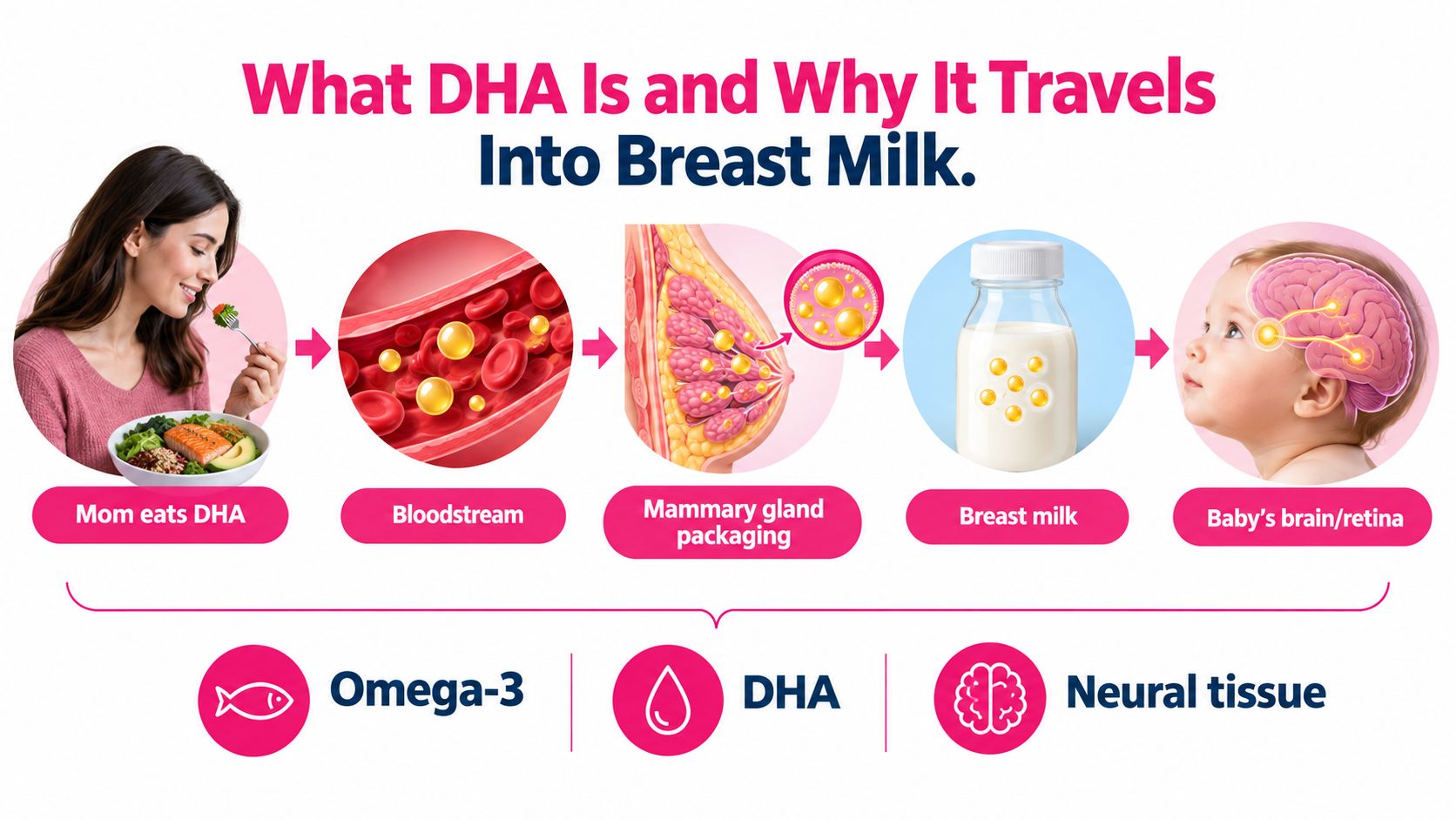
This short video offers another visual explanation of how dietary fats move through the body and into milk.
What the Research Says About DHA Doses During Lactation
DHA research answers two separate questions. First, can a mother's intake raise DHA in breast milk and infant blood? Second, does that higher exposure produce clear, lasting developmental benefits? Keeping those questions separate helps prevent a higher milk level from being mistaken for a guaranteed outcome.
The first answer is fairly consistent. Randomized trials found that daily DHA intake at 200 mg increased breast-milk DHA compared with placebo, while a separate trial using 800 mg daily reported a larger increase. Together, these findings suggest a dose response: raising total DHA intake can raise the amount reaching milk. The pattern has limits, though. More DHA exposure does not automatically mean more developmental benefit.
A trial of 27 breastfeeding women who started 200 mg of microalgal DHA at about five weeks postpartum found that milk DHA increased after 10 weeks. A separate trial of 89 lactating women compared 200 mg and 400 mg of DHA daily for six weeks. Both doses raised maternal plasma and breast-milk DHA. Infant plasma DHA also rose, with a larger increase in the higher-dose group. These results show that intake from a supplement can change measurable DHA exposure, not that one dose is right for every mother.
What those changes do and don't prove
Higher DHA levels in milk or blood are biochemical outcomes. They do not prove that a child will become more intelligent, develop language more reliably, or have better motor skills. Those outcomes require separate clinical evidence.
A Cochrane review covering eight randomized trials involving 1,567 women, summarized in LactMed's evidence review, found no significant long-term differences across several developmental measures. An updated systematic review also found no demonstrated effect of DHA plus EPA during breastfeeding on infant or child cognitive development, with the evidence rated low certainty. In practical terms, improving DHA exposure and proving a lasting developmental advantage are different tasks.
| Daily DHA dose | What research found | How to interpret it |
|---|---|---|
| 200 mg | Raised breast-milk DHA in randomized trials | A practical benchmark for total daily intake |
| 400 mg | Raised maternal and breast-milk DHA, with a greater infant plasma response than 200 mg in one comparison | More exposure is not automatically more benefit |
| 800 mg | Produced a larger milk-DHA increase than placebo in one trial | A higher dose should have a specific reason |
| About 1 g of combined DHA plus EPA | Was studied as a higher omega-3 intake | It does not show that every breastfed infant needs this amount |
The useful conclusion is measured and reassuring. A total daily intake around 200–300 mg of DHA is well supported as a practical target, whether it comes from lower-mercury fish, fortified foods, a supplement, or a combination. Higher amounts can change milk DHA further, yet research has not shown a dependable developmental advantage from taking more. For help comparing combined omega-3 amounts with DHA alone, see this EPA and DHA dosage overview.
DHA From Food Versus From a Supplement
Food and supplements aren't competing teams. They can work together, and the right balance depends on what you eat.
The FDA and EPA guidance on eating fish recommends that breastfeeding people eat 8–12 ounces of lower-mercury fish per week, choosing a variety of suitable species. This guidance matters because fish provides DHA alongside protein and other nutrients, but mercury exposure can pass into breast milk and affect an infant's developing nervous system.
Lower-mercury choices may include salmon, sardines, trout, and some forms of canned tuna. Species and local advisories differ, so check local guidance when eating fish caught in nearby waters. If you don't eat seafood, algae-based DHA offers a non-fish alternative.
How the options compare
| Source | Serving size | Approximate DHA |
|---|---|---|
| Lower-mercury fatty fish | Varies by species and portion | Often a concentrated food source, but the amount varies |
| Fortified eggs | Check the package label | Usually a modest contribution |
| DHA-enriched yogurt or omega-3 milk | Check the package label | Usually a modest contribution |
| Fish-oil supplement | Check the supplement facts panel | Depends on the labeled DHA amount |
| Algae-oil supplement | Check the supplement facts panel | Provides preformed DHA without fish |
A supplement can be useful when fish is expensive, unavailable, unappealing, difficult to prepare, or a source of anxiety about mercury. It also gives you a more predictable labeled amount. Food offers variety and additional nutrients, but the DHA amount can vary from one fish species and product to another.
The best plan is the one you can follow safely and comfortably. A fish meal, a fortified food, and a supplement can all count toward the same overall goal.
If you're building meals around seafood, this guide to DHA-rich foods for pregnancy and postpartum nutrition offers ideas for using food as part of your routine. Choose purified supplements tested for contaminants, and remember that a capsule doesn't replace seafood-safety guidance.
Building Your Own DHA Plan Week by Week
A useful plan starts with your real life. You might have time for a fish dinner one evening, rely on a quick breakfast the next morning, and need a supplement on the days when the baby refuses to nap.
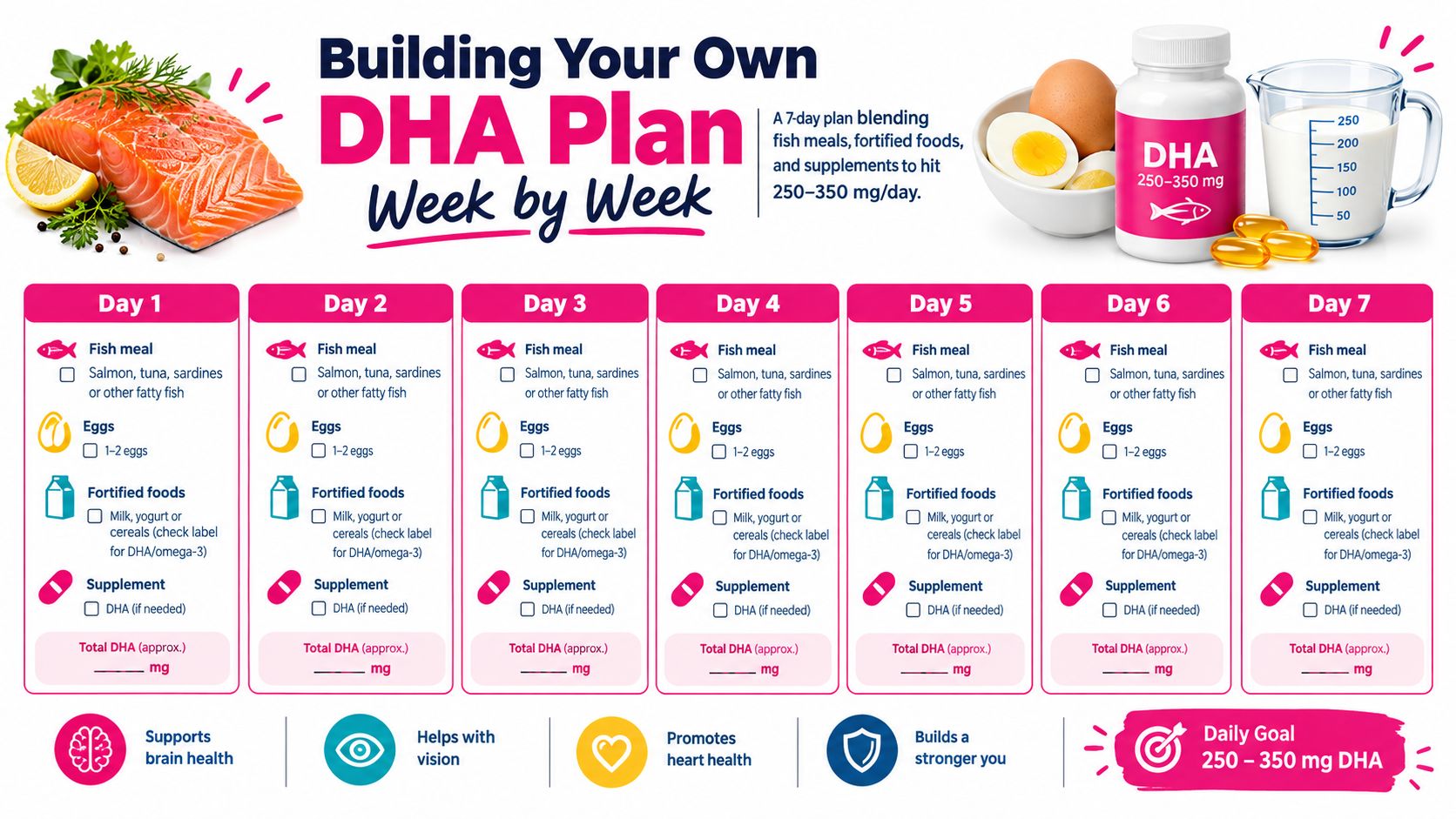
Here's a flexible weekly pattern:
- Monday: Choose a lower-mercury fish meal, such as salmon or sardines, and check local serving guidance.
- Tuesday: Use a DHA supplement if your clinician recommends one, especially if fish isn't part of the day.
- Wednesday: Add a fortified food, such as a DHA-enriched egg, yogurt, or omega-3 milk, if available.
- Thursday: Plan another lower-mercury fish meal and rotate the species you choose.
- Friday: Use your supplement or a fortified food to cover a gap in your usual intake.
- Weekend: Keep the plan flexible. Use leftovers, a suitable fish option, fortified foods, or an algae-based product according to your dietary pattern.
This isn't a prescription or a requirement to take fish oil every day. It's a way to see how several sources can fit together. The benchmark concerns your total intake, so a day with fish may look different from a day that relies on a labeled supplement.
Keep seafood safety simple
Avoid high-mercury fish, including king mackerel, swordfish, and tilefish, and check advisories for locally caught seafood. The FDA's guidance explains why species selection matters and provides consumer advice for choosing fish during breastfeeding.
Supplement quality deserves attention too:
- Read the label: Look for the actual DHA amount, not only the total fish-oil amount.
- Check testing information: Choose products that publish credible third-party testing, such as IFOS or USP verification when available.
- Store thoughtfully: Refrigerating fish oil may help slow oxidation and can make the product easier to tolerate.
- Ask before high doses: People with bleeding disorders, those taking anticoagulants, or anyone preparing for surgery should obtain medical advice before using higher-dose products.
LactMed reports that fish oil up to 3 g per day is generally recognized as safe as a food in the United States, but that doesn't mean every person should take that amount. Product quality, total EPA and DHA, medications, allergies, and your health history all matter. A premature infant may also need a separate neonatal nutrition plan rather than a change to your own supplement.
For mamas avoiding fish, this information about an algae-based DHA supplement can help you prepare questions for your clinician.
Setting Realistic Expectations for You and Baby
Many mothers ask the same question: Will more DHA make my baby smarter? The honest answer is no supplement can promise that outcome.
DHA supplementation can reliably raise DHA concentrations in breast milk and infant blood. The developmental findings are much less uniform. The updated systematic review cited by RTI International's review of omega-3 fatty acids and maternal-child health found no demonstrated effect of DHA plus EPA supplementation during breastfeeding on infant or child cognitive development, and rated the evidence low certainty.
That result doesn't mean development is unimportant or that DHA has no biological role. It means the body can respond to a nutrient without producing a measurable difference on every developmental test. Infant development reflects many influences, including genetics, health, sleep, relationships, feeding, and the broader nutritional environment.
Aim for adequacy, not optimization
A higher dose may be clinically relevant when the goal is to raise breast-milk DHA substantially or when a baby is premature. LactMed notes that current nursing-mother recommendations are approximately 250–375 mg of combined DHA plus EPA daily, while about 1 g of combined DHA plus EPA has been used in research to reach a higher breast-milk concentration. Those situations call for individualized guidance, not automatic self-escalation.
For many families, a steady intake around the practical 200–300 mg DHA daily benchmark makes more sense than chasing a large dose. The FAO assessment also emphasizes that requirements concern total intake from seafood, fortified foods, and supplements.
Your baby doesn't need a perfect nutritional performance from you. DHA is one ingredient in a much larger recipe that includes your nourishment, medical care, rest when you can get it, and warm, responsive caregiving. Meeting a reasonable target can support good nutrition, but it can't replace the rest of what helps a baby grow.
Your Simple Takeaway and What to Ask Your Clinician
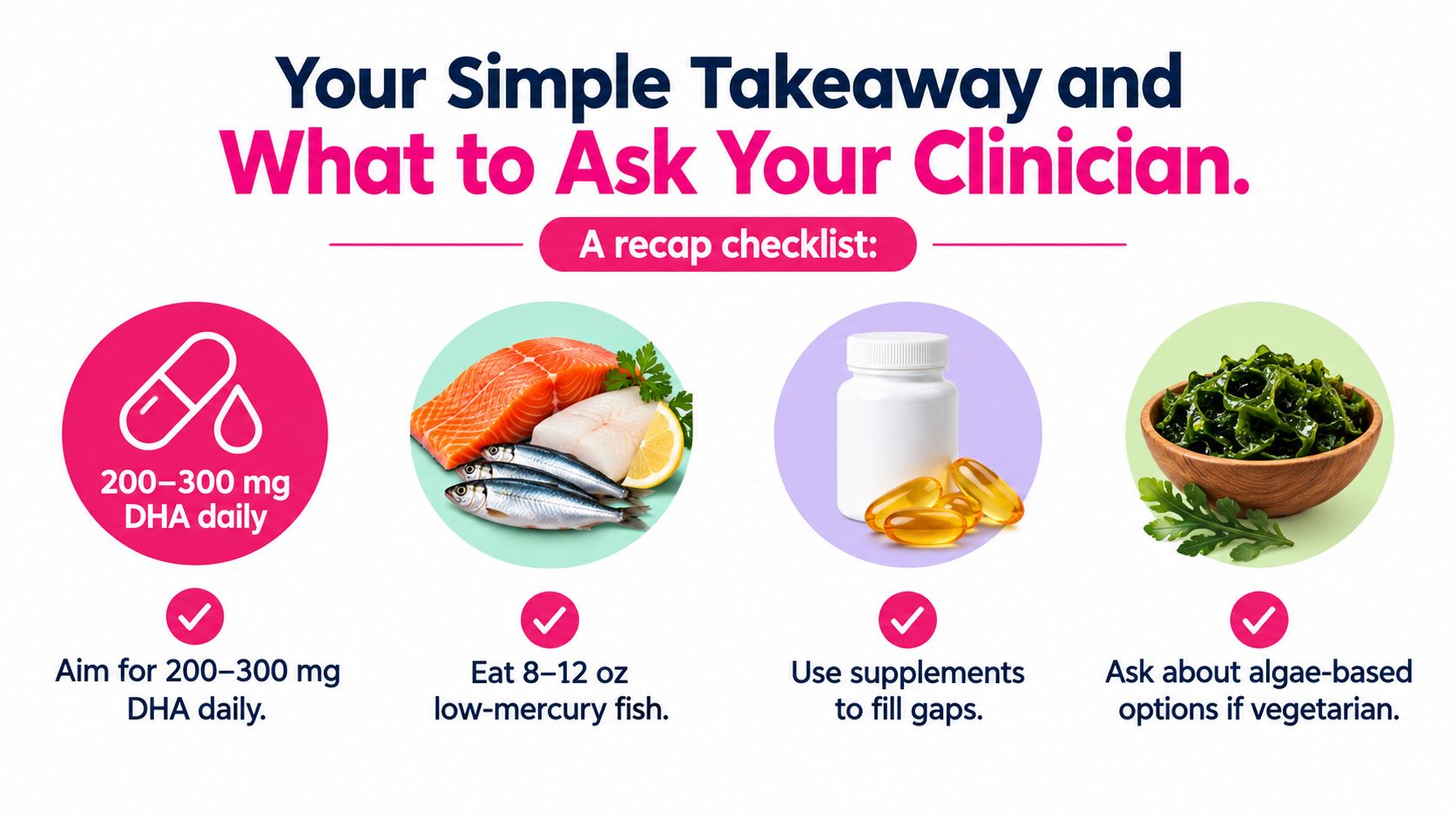
If you want the shortest answer to how much DHA while breastfeeding, aim for roughly 200–300 mg of DHA daily from your combined food and supplement intake. Use the FDA and EPA pattern of 8–12 ounces of lower-mercury fish per week as a food-based framework, then use fortified foods or a supplement to fill gaps. Higher doses can raise DHA in milk and infant blood, but they haven't consistently produced better long-term developmental outcomes.
Bring these questions to your obstetric clinician, midwife, pediatrician, or lactation professional:
- Your usual fish intake: Which species do you eat, and how often?
- Your supplement label: How much DHA does each serving provide, and is it fish oil or algae oil?
- Mercury concerns: Do local advisories affect the fish you buy or catch?
- Allergies and medications: Do seafood allergies, bleeding disorders, anticoagulants, or an upcoming surgery change your options?
- Your baby's needs: Was your baby premature or given a specialist-directed nutrition plan?
- Your postpartum routine: Should you continue your prenatal vitamin while breastfeeding, and does the full formula fit your current needs?
A combined product such as Feed Mom & Me Complete Prenatal Vitamin Plus DHA can simplify a postpartum routine by combining prenatal nutrients with DHA in one product. Feed Mom & Me is a women-owned brand built by moms for moms, and its formula emphasizes nutrients including DHA, choline, selenium, and methylfolate. You can compare that option with your current prenatal and discuss whether it fits your needs in this guide to DHA supplements for breastfeeding mothers.
The most reassuring plan is usually the one you can maintain. Eat suitable fish when you enjoy it, use fortified foods or a supplement when they make life easier, and ask for personalized advice when your health or your baby's needs are more complex.
Feed Mom & Me offers prenatal nutrition support for the postpartum and breastfeeding window, including a Complete Prenatal Vitamin Plus DHA with nutrients such as DHA, choline, selenium, and methylfolate. Visit Feed Mom & Me to explore the formula, recipes, and practical resources that can help you build a steady routine with your healthcare provider.